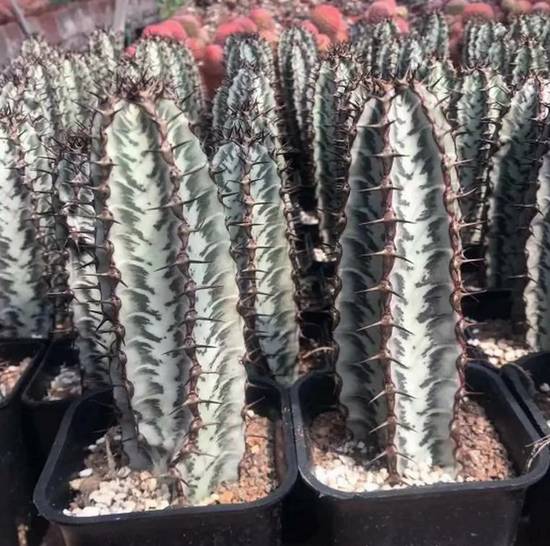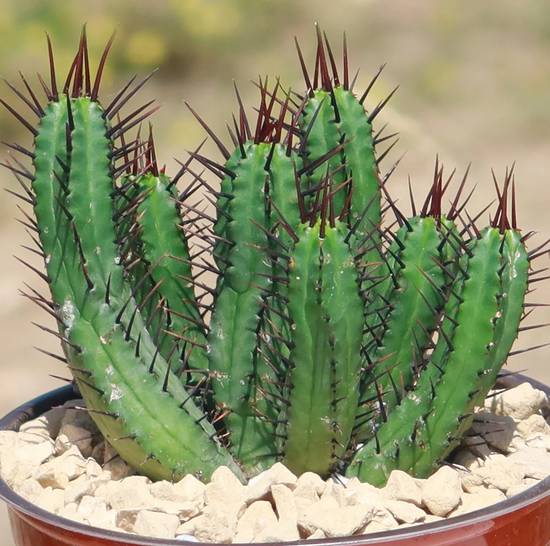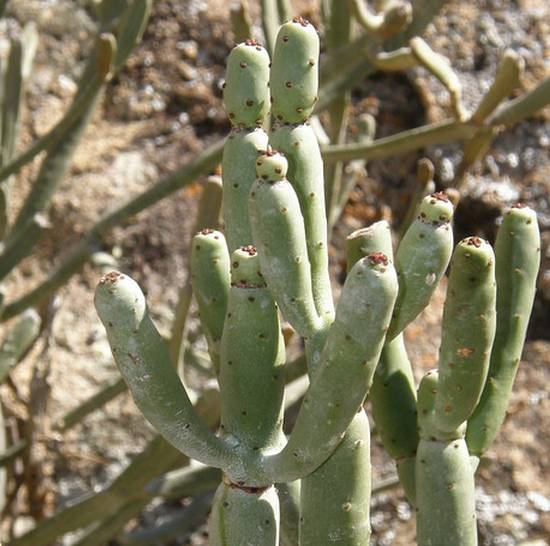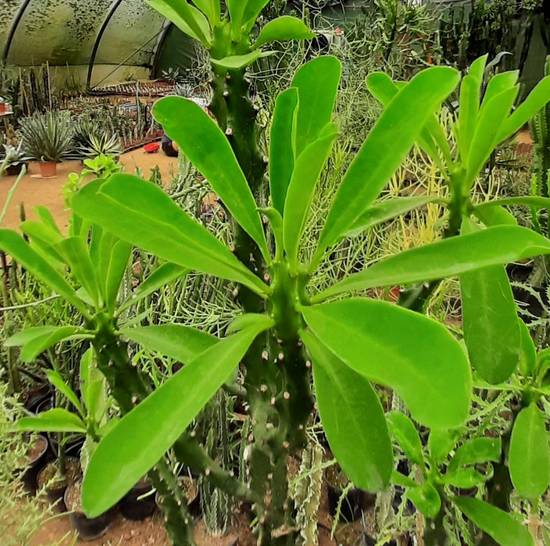
Euphorbia Triangularis
Cristata

Euphorbia Triangularis Cristata

Euphorbia Triangularis Cristata

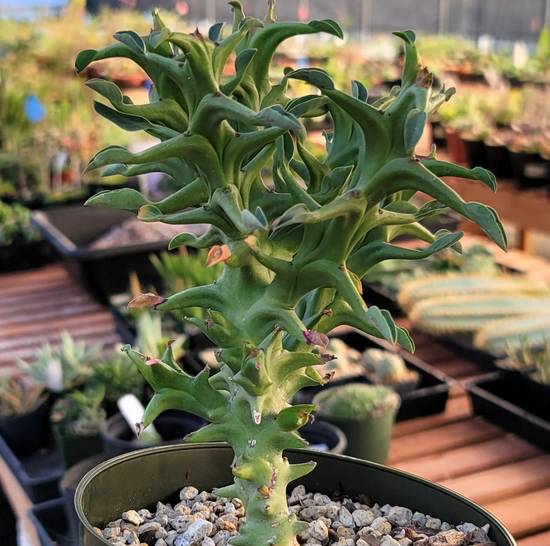
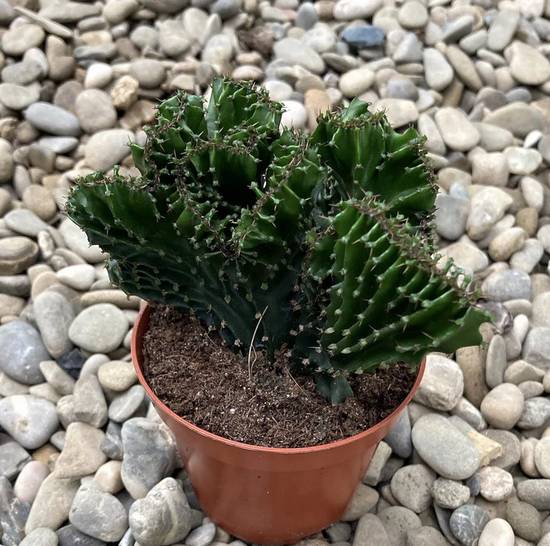
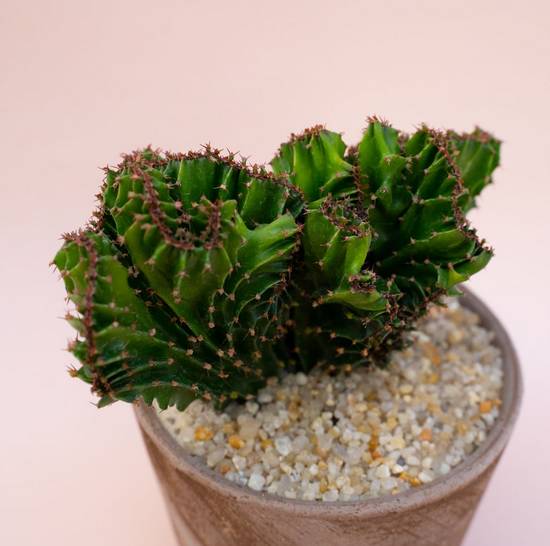
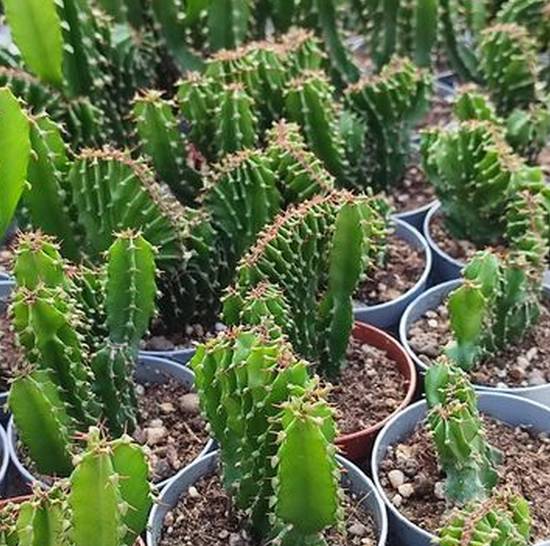
The Euphorbia Triangularis Cristata is a true botanical curiosity that immediately fascinates with its undulating and extravagant shape. Resulting from a crested mutation of the classic Euphorbia Triangularis, this plant develops dense, tortuous crests, often dark green or bluish green, sometimes veined with purplish hues depending on exposure.

Its unique silhouette gives the impression of a vegetal sculpture resembling coral or a plant brain. Each specimen is a living work of art, entirely different from another, making it a highly sought-after plant among collectors of succulents and mutant euphorbias.

Unlike cacti, the Euphorbia Triangularis Cristata belongs to the Euphorbiaceae family. It produces a white, toxic sap (latex) that must be handled with care. Despite its appearance, it is therefore not a cactus, even if its water and light needs are similar.

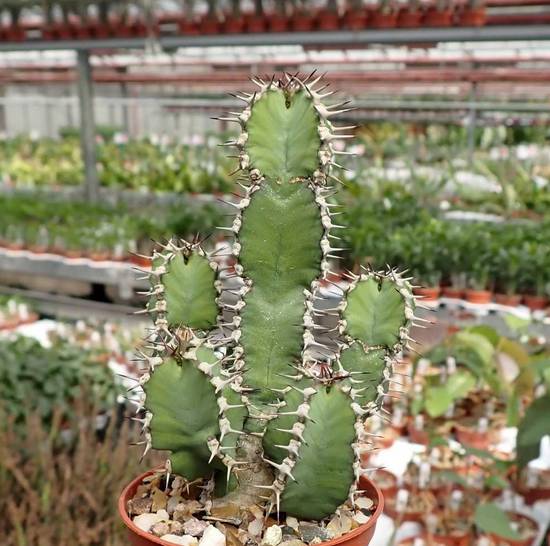
The Euphorbia Triangularis grows naturally in arid and rocky areas of southern Africa. In its crested form, it is almost exclusively propagated in cultivation, by grafting or cuttings, as this wild form does not exist as such in nature.
The Euphorbia Triangularis Cristata loves the sun and needs it to maintain its compact shape and vivid colors:

🌞 Direct sunlight: at least 5 to 6 hours of direct light per day are ideal.

🌤️ Summer protection: in case of extreme heat (+35°C), light shade can be provided to avoid burns, especially if grown behind glass.

📌 Insufficient light causes the crests to etiolate, becoming pale and soft.
Like all euphorbias, watering must be very moderate:

🌱 Spring / Summer: every 15 to 20 days, only when the substrate is dry deep down.

🍂 Autumn / Winter: greatly reduce watering or stop completely. Excess moisture in cold periods is a frequent cause of root rot.

⚠️ Toxic latex may escape if the plant is damaged or overwatered. Keep away from children and pets.
The Euphorbia Triangularis Cristata is heat-resistant but poorly tolerant of cold:

🌞 Ideal temperature: between 20°C and 30°C

❄️ Minimum tolerated: 5°C. Below this, bring the plant indoors to protect it from frost.

🏠 Indoor cultivation: it can live perfectly well in a bright apartment, near a south- or west-facing window.
The soil must be perfectly draining:

🪴 Recommended substrate: mix cactus soil with 50% pumice or pozzolana.

Good drainage is essential to prevent root rot. A layer of gravel or clay pebbles can be added to the bottom of the pot.
Flowering of the Euphorbia Triangularis Cristata remains rare in cultivation but is not impossible:

🌼 Season: often in spring or late summer

🌿 Characteristic: flowering consists of very small yellow-green flowers, of little ornamental interest, but a pleasant surprise for enthusiasts.

💡 Note: good water stress, warmth and intense sunlight encourage their appearance.
FAQ - Euphorbia Triangularis Cristata

How to recognize excess moisture on Euphorbia Triangularis Cristata?
The crests become soft, discolored, or even translucent. A smell of rot may come from the collar. Drastically reduce watering and check drainage.
How do I know if my Euphorbia Triangularis Cristata needs water?
Underwatering appears as wrinkled crests or slight collapse of the plant. If the substrate has been dry for several weeks, watering is recommended.
Is Euphorbia Triangularis Cristata toxic?
Yes. It secretes a white latex that is irritating to the skin and mucous membranes. Wear gloves when handling and keep it out of reach of children and animals.
Can Euphorbia Triangularis Cristata be grown indoors?
Yes, provided it receives as much natural light as possible. A full south exposure is ideal to maintain its compact shape.
Which fertilizer should be used for Euphorbia Triangularis Cristata?
Use a lightly dosed liquid cactus fertilizer, once a month during the growing period.
Should I prune my Euphorbia Triangularis Cristata?
No, pruning is not necessary except in case of injury or to remove a diseased part. The plant naturally keeps its aesthetic shape.
How to repot a Euphorbia Triangularis Cristata?
Use cactus potting soil enriched with pozzolana. Repot every 2–3 years in spring.
Why is my Euphorbia Triangularis Cristata deforming?
Lack of light or excess water can alter its shape. Ensure full sun exposure and a well-draining substrate.
How to propagate a Euphorbia Triangularis Cristata?
It is propagated by cutting the crests or grafting onto a vigorous base. Be careful, the latex is irritating when cutting.
What is the ideal substrate for a Euphorbia Triangularis Cristata?
A very well-draining substrate based on pozzolana and cactus potting soil is recommended to avoid any excess moisture.