Euphorbia Handiensis

Euphorbia Handiensis

Euphorbia Handiensis

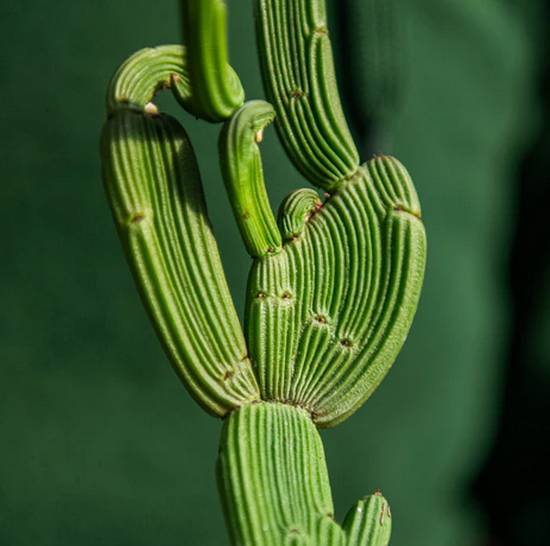
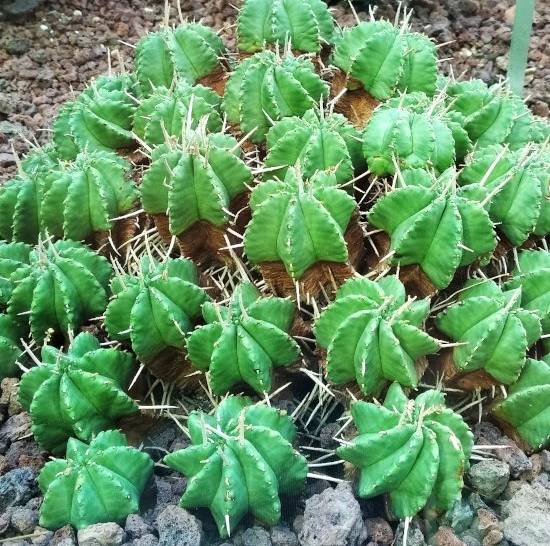
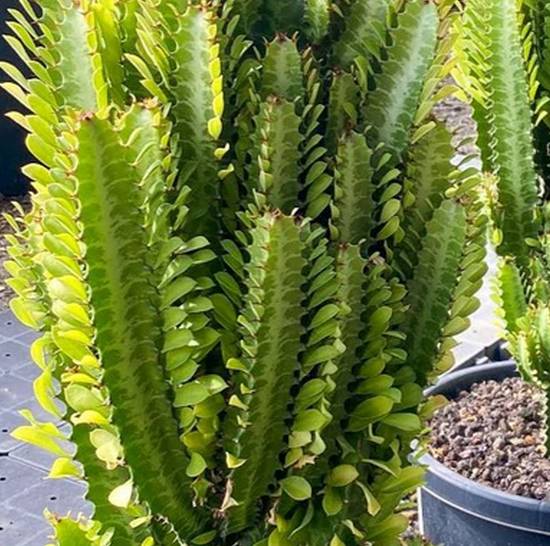
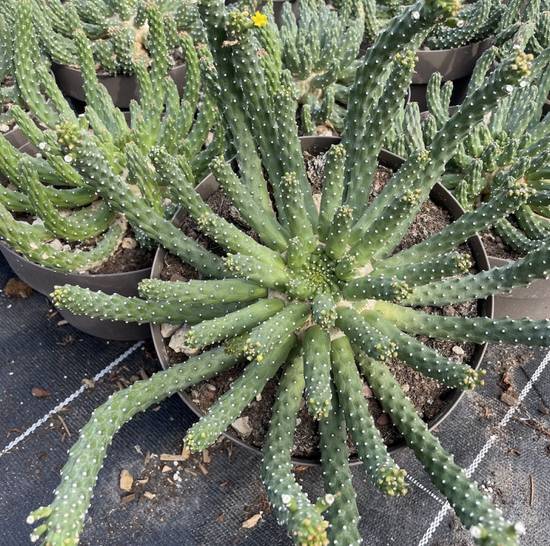
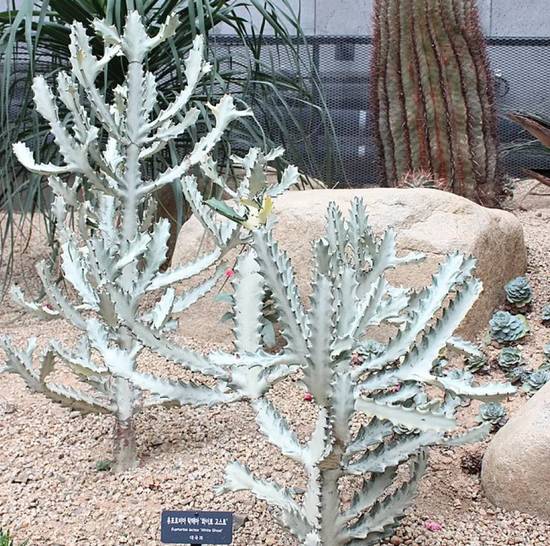
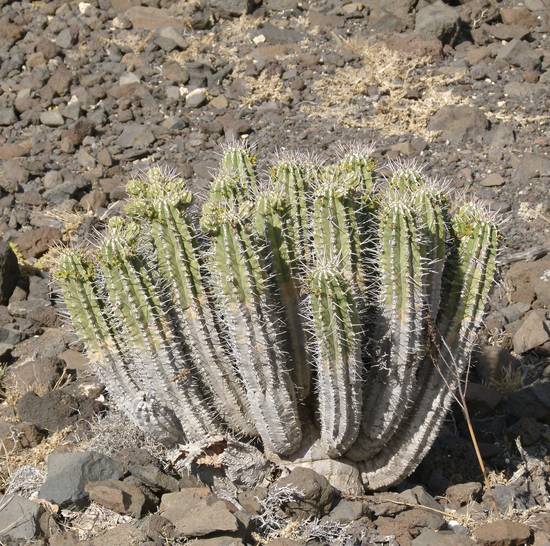
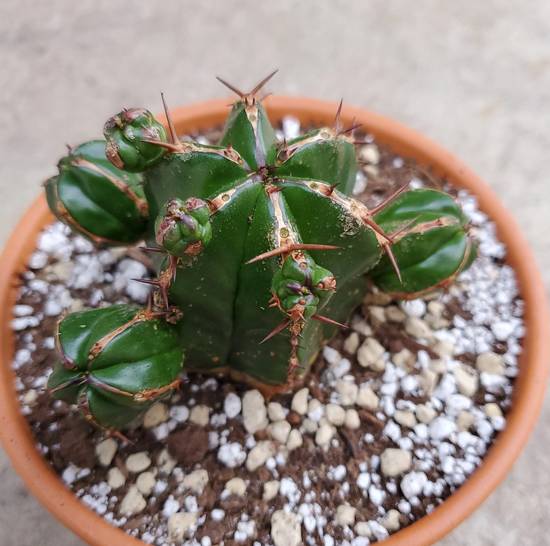
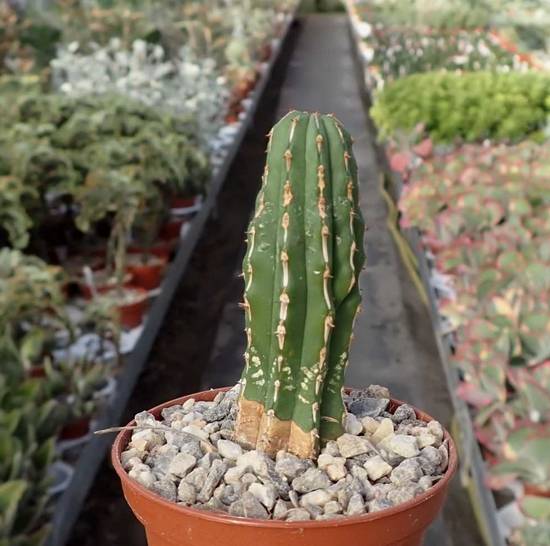
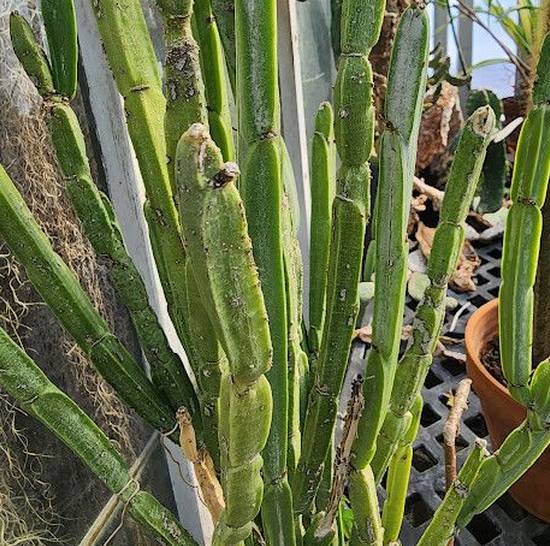
The Euphorbia Handiensis is a rare and spectacular succulent native to the Canary Islands, immediately attracting attention with its branched columnar habit, bluish-green color and areoles lined with small reddish to brown spines. Its silhouette resembles that of cacti, yet it retains all the botanical characteristics of a euphorbia. This plant forms long upright stems, sometimes branching at the base, which can reach over one meter in cultivation, creating a true mini-desert in a pot.

Uncommon in collections, it appeals to lovers of graphic plants with its robust yet slender appearance. Like all euphorbias, it contains toxic white latex, but it remains easy to handle with care. Its spiny appearance is purely defensive: it adapts to arid conditions by reducing water loss while maximizing photosynthesis through its fleshy stems.

In its natural habitat, the Euphorbia Handiensis grows in semi-desert areas on volcanic and poor soils. It thrives under intense sun, often alongside other insular euphorbias. The extreme conditions of Fuerteventura (salty winds, prolonged drought, draining soil) have shaped this species to be particularly resistant to heat and drought.
To express its full ornamental potential, the Euphorbia Handiensis requires abundant light:

🌞 Direct sun recommended: Place it in a very bright location, ideally in full sun for at least 6 hours per day.

🌤️ Acclimation: If moving it outdoors in spring, gradually acclimate it to prevent sunburn on young stems.
Watering must remain moderate to avoid any risk of rot:

💧 Growing period: Water every 2 to 3 weeks in spring and summer, when the substrate is dry deep down.

❄️ Rest period: In autumn and winter, greatly reduce watering, or even stop completely if kept cool.

⚠️ Beware of excess: As with all euphorbias, overwatering is its main enemy.
The Euphorbia Handiensis prefers warm and well-ventilated environments:

🌡️ Ideal temperature: between 20 and 30 °C during the active season.

❄️ Minimum tolerated: down to 5 °C occasionally, provided the soil is perfectly dry.

🏠 Indoor cultivation: Recommended in temperate climates. Provide a bright room or well-exposed veranda.
🪨 To prevent root asphyxiation, the substrate must be highly draining:

Base of special cactus substrate + addition of 50% perlite to improve aeration and cover the surface with pumice stone to limit evaporation
The flowering of the Euphorbia Handiensis is discreet but typical of euphorbias:

🌸 Season: in spring or summer, rarely in cultivation

🧪 Appearance: small greenish to yellowish cyathia grouped at the tips of the stems, often barely visible.
FAQ - Euphorbia Handiensis

How should Euphorbia Handiensis be exposed to light?
Euphorbia Handiensis needs very bright light to thrive. Full direct sun exposure is ideal, especially outdoors. Indoors, choose a south- or west-facing window. Gradual acclimation is recommended to avoid burns if moved suddenly to a very sunny location.
What is the proper watering schedule for Euphorbia Handiensis?
During the growing season, watering every 2 to 3 weeks is sufficient, provided the substrate is completely dry between waterings. In winter or if temperatures drop, it is best to stop watering entirely to avoid root rot.
What is the minimum temperature tolerated by Euphorbia Handiensis?
This euphorbia can occasionally tolerate temperatures down to 5 °C, but only if the substrate remains dry. It does not tolerate frost. In temperate climates, it is advisable to grow it in a pot and bring it indoors during winter.
What type of substrate is best suited for Euphorbia Handiensis?
Very well-draining soil is essential. Use a mix of cactus substrate with 50% perlite to ensure good aeration. On the surface, add pumice to improve drainage and limit evaporation.
Is Euphorbia Handiensis toxic?
Yes, like all euphorbias, Euphorbia Handiensis produces an irritating and potentially toxic white latex. Avoid contact with eyes or mouth and wear gloves when pruning or handling the plant.
Can Euphorbia Handiensis live indoors?
Absolutely. In cold climates, it grows very well in a pot indoors, provided it receives very bright light and a dry location. A bright veranda or well-exposed room is perfect.
What is the growth rate of Euphorbia Handiensis?
Growth is slow but steady. Under good conditions, it can form a branched clump of upright stems about 1 meter tall. It mainly develops in spring and summer.
How can you recognize overwatering or underwatering in Euphorbia Handiensis?
Overwatering causes stems to wilt at the base, a sign of rot. Underwatering results in a slight loss of firmness, but the plant remains solid. It is always better to underwater than overwater this species.
Can Euphorbia Handiensis flower in a pot?
Yes, but it is rare. Under optimal light conditions, with slight water stress, it can produce small discreet cyathia at the top of its stems, usually in spring or summer.
Can Euphorbia Handiensis be paired with other plants?
Yes, it pairs well with other succulents or cacti with similar needs. Its upright habit contrasts nicely with trailing or rosette plants, provided the same light and drainage requirements are respected.