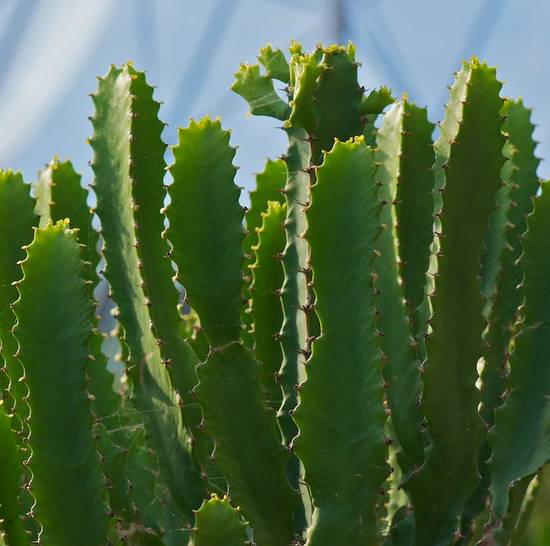
Euphorbia Triangularis

Euphorbia Triangularis

Euphorbia Triangularis

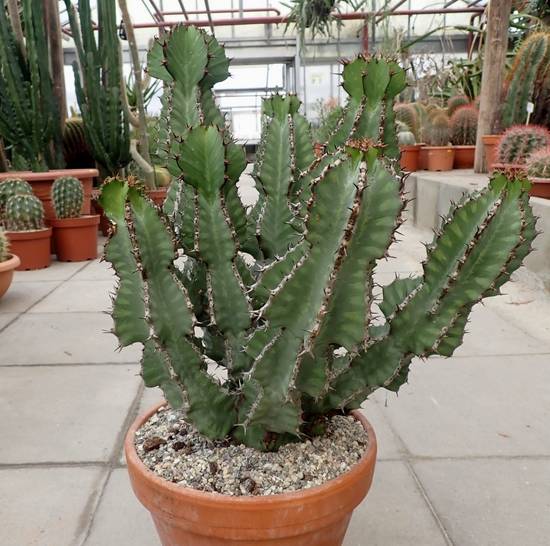
The Euphorbia Triangularis is a majestic succulent plant that never goes unnoticed. Native to southern Africa, this remarkable euphorbia is often mistaken for a cactus due to its fleshy, segmented appearance. However, it truly belongs to the Euphorbia genus, a vast family of plants as fascinating as they are robust.

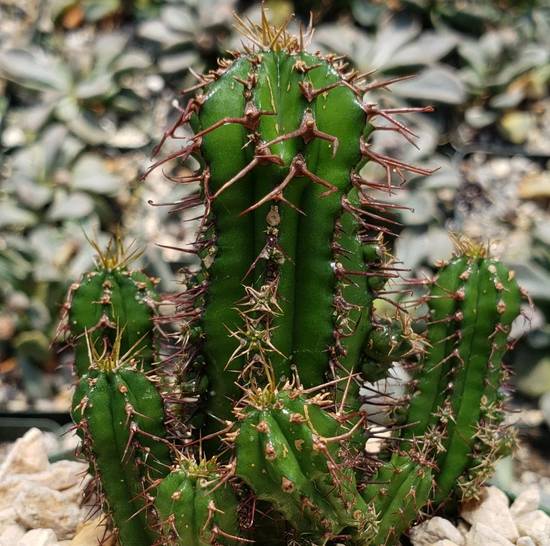
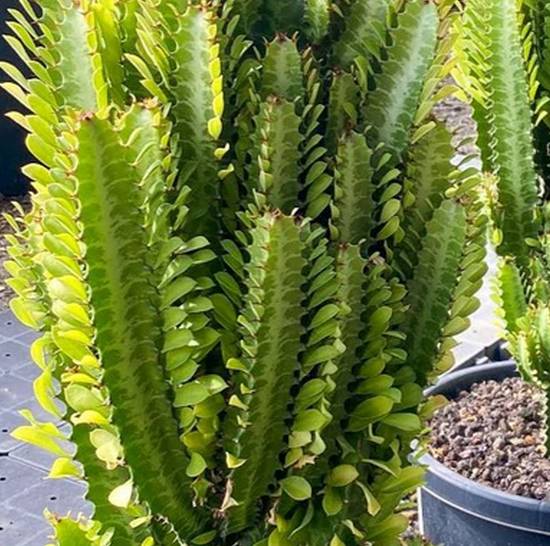
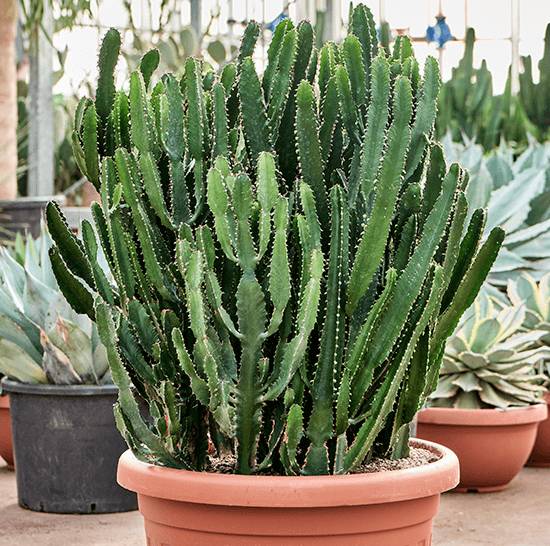
Its silhouette resembles a three-branched candelabra, hence its English nickname "Candelabra Tree". With its upright triangular stems, bright green, edged with small spines and sometimes adorned with deciduous leaves during the warm season, it imposes a graphic style and sculpts space.

Outdoors in mild climates or in a large pot indoors, the Euphorbia Triangularis can reach up to 2 to 3 meters in height, bringing an exotic and architectural touch highly sought after in dry gardens or modern interiors.

The Euphorbia Triangularis is native to the arid regions of Zimbabwe, Namibia and South Africa, where it grows wild in semi-desert areas. Its natural adaptation to drought makes it an ideal plant for low-maintenance gardening.
For optimal growth, the Euphorbia Triangularis needs abundant light:

🌞 Direct light: at least 6 hours per day, indoors or outdoors.

🌤️ Warning: in summer, especially behind glass, light shade can prevent heat stress.

💡 Tip: outdoors, favor a south or west orientation.
Although robust, it is not an aquatic plant:

🌱 Spring / Summer: water moderately every 15 to 20 days, once the substrate is completely dry.

🍂 Autumn / Winter: reduce watering to a strict minimum (once a month or less), as the plant enters dormancy.

⚠️ Excess water = danger. Euphorbias hate waterlogged roots.
🌞 Optimal range: between 20°C and 30°C.

❄️ Cold resistance: down to 5°C briefly. Below 10°C, bring it indoors.

🏠 Wintering: bright, dry and airy if kept indoors.
The Euphorbia Triangularis requires a very draining substrate to avoid rot:

🌵 Ideal: cactus soil mixed with 50% pumice or pozzolana.
The Euphorbia Triangularis may occasionally produce small yellow flowers in the leaf axils, but flowering is rare in pots and remains modest compared to its spectacular architecture.

🎨 Color: yellow to greenish
🕑 Period: spring or summer (rare)
💡 Tip: a well-exposed, lightly watered and mature plant has more chances to flower.
FAQ - Euphorbia Triangularis

How to recognize excess moisture on Euphorbia Triangularis?
Signs of excess water include soft stems, blackened at their base, or rapid yellowing. A constantly wet substrate can lead to rot.
What signs indicate underwatering in Euphorbia Triangularis?
Progressive wilting, slight wrinkling of the stems, or slowed growth indicate a need for watering.
Can Euphorbia Triangularis live indoors all year round?
Yes, provided it is given a very bright location near a sunny window. It adapts perfectly to life in a pot.
Should fertilizer be used for Euphorbia Triangularis?
Yes, you can use a cactus and succulent fertilizer once a month in spring and summer.
What is the growth potential of Euphorbia Triangularis?
It can reach 2 to 3 meters in height over time. Its growth is slow but steady if conditions are good.
Is this plant toxic to animals?
Yes, like most euphorbias, its sap is toxic. It can cause skin or digestive irritation if ingested.
Can Euphorbia Triangularis be pruned?
Yes, but with gloves and avoiding contact with the sap. Pruning helps control its shape or propagate the plant.
Which pot should be used for Euphorbia Triangularis?
A terracotta pot with drainage holes is ideal. Avoid pots without water drainage.
How to repot Euphorbia Triangularis?
Every 2 to 3 years in spring. Use a draining mix with cactus potting soil and pumice.
Is Euphorbia Triangularis a succulent or a cactus?
It is a succulent from the Euphorbiaceae family, but it is not a cactus despite appearances.