Euphorbia Horrida
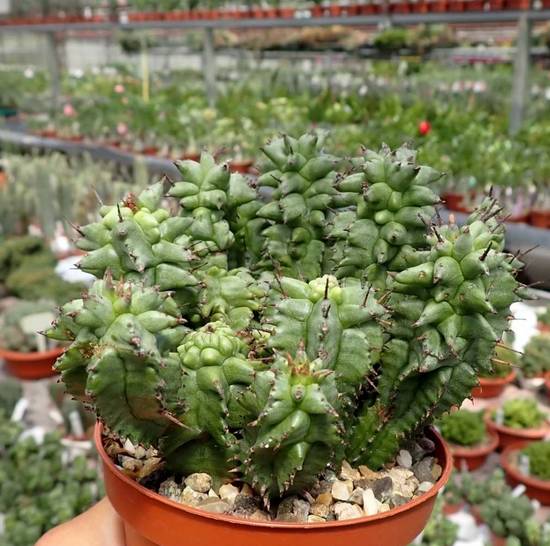
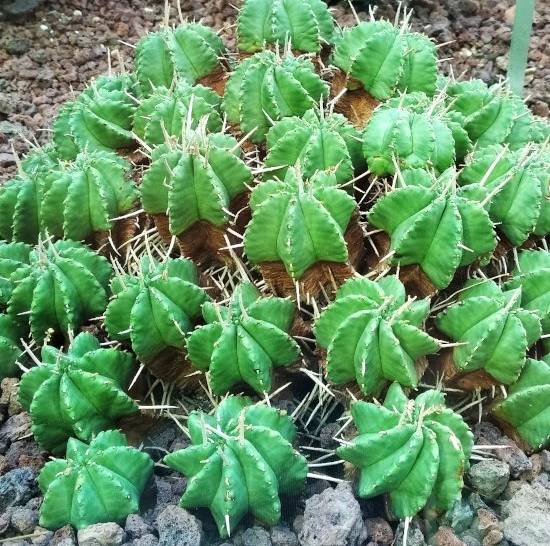
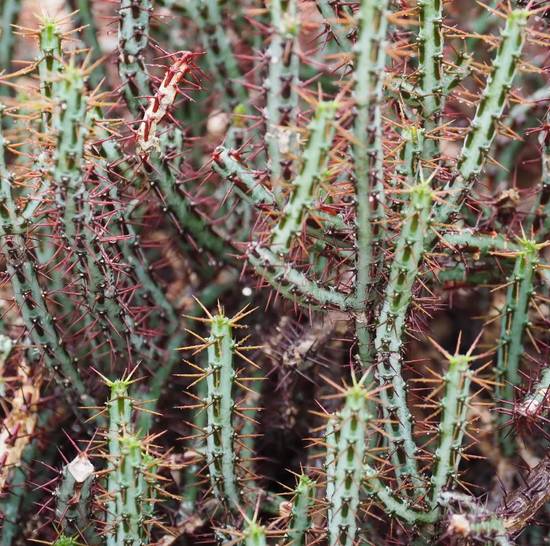
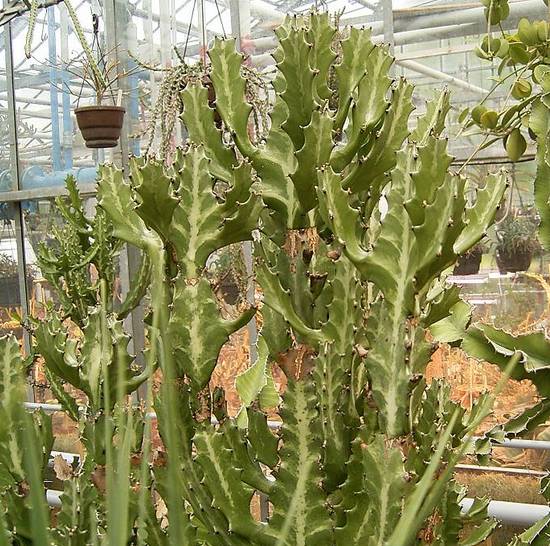
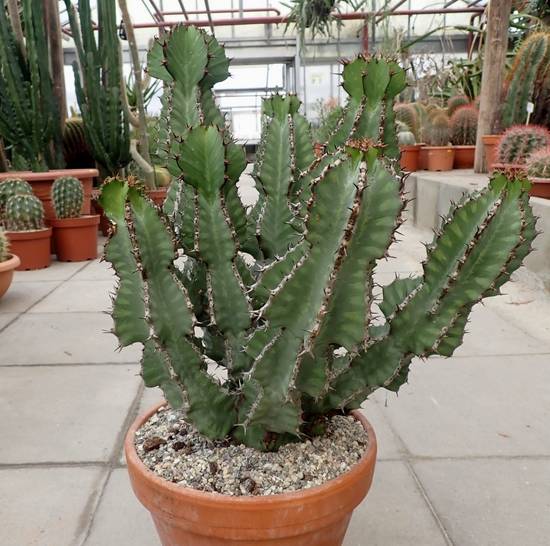
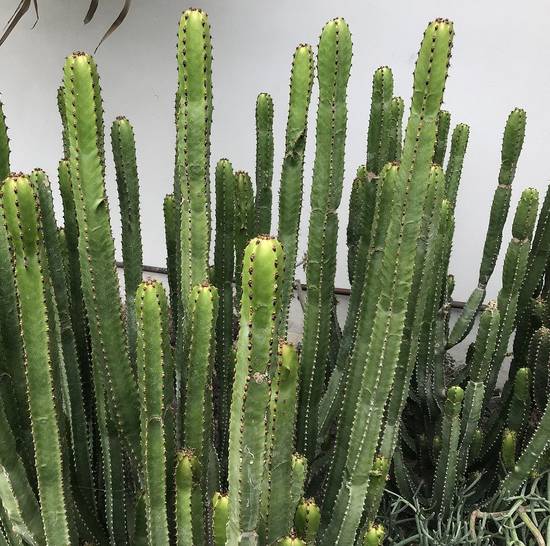
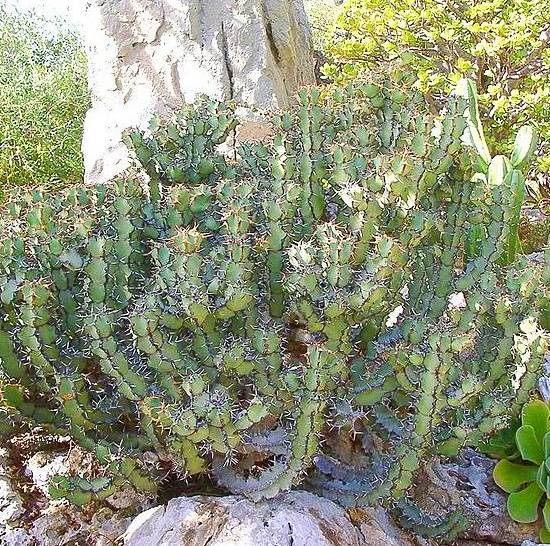
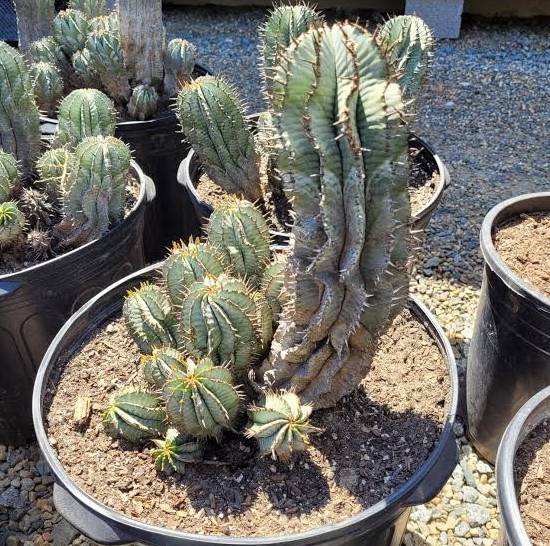
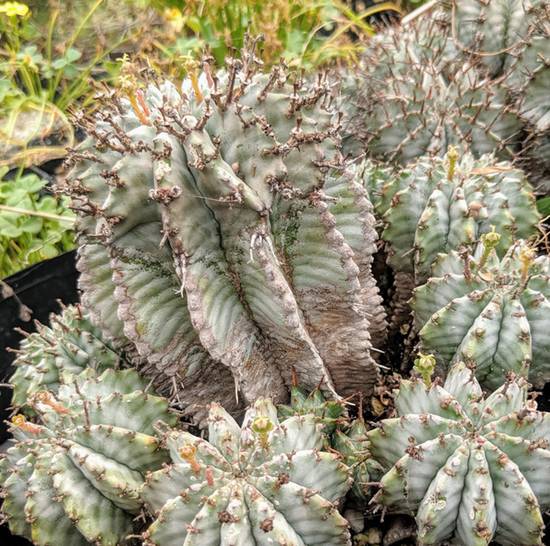
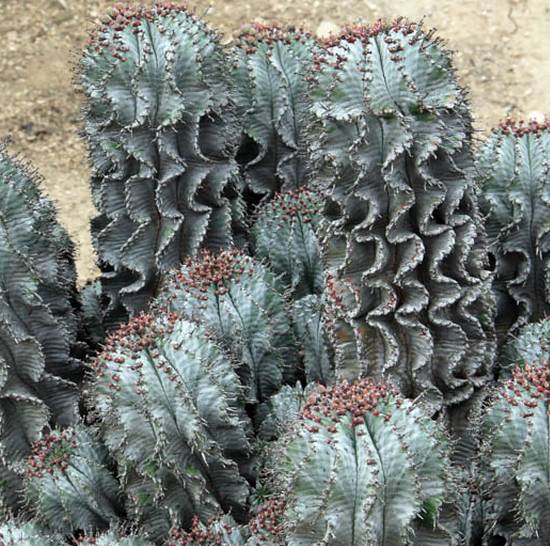
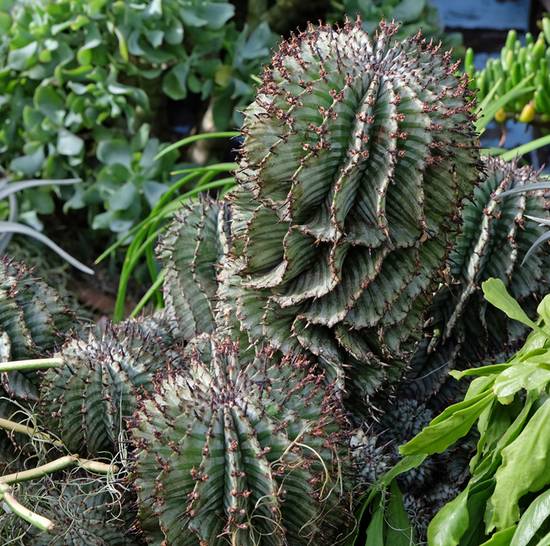
The Euphorbia Horrida is a succulent plant native to South Africa, appreciated for its wild and spectacular appearance, often compared to a cactus although it is not one. A member of the large Euphorbiaceae family, this euphorbia fascinates with its angular structure, impressive spines, and metallic colors ranging from bluish green to steel gray.
With its prominent ribs and rigid spines, Euphorbia Horrida can visually resemble certain cactus species such as the Echinocactus or Ferocactus. This resemblance often causes confusion, but it is its white, toxic sap (latex) that distinguishes it as a euphorbia. In cultivation, it can reach up to 50 cm in height in a pot, and sometimes more if conditions are optimal.
Often grown alone in a beautiful pot or integrated into a rock garden, Euphorbia Horrida is prized for its "armored" look and its drought resistance. It can also produce small lateral shoots that give it a bushier appearance over time.
🌞 Direct sunlight : Minimum 5 to 6 hours of light per day.
🌤️ Bright indirect light : Tolerated indoors if placed near a well-exposed window (south or west).
⚠️ Avoid prolonged shade : Lack of light causes etiolation, greening, and weakening of the plant.
🌱 Spring / Summer : Water every 2 to 3 weeks. Allow the substrate to dry thoroughly between waterings.
🍂 Autumn / Winter : Almost stop watering. A light watering once a month may be tolerated in a very dry environment.
⚡ Tip : Use a pot with drainage holes and never water if the substrate is still moist on the surface.
🌞 Ideal temperature : between 20°C and 30°C
❄️ Minimum tolerated : 5°C occasionally, provided the substrate remains dry
🏡 In winter : Bring it into a bright, cool room if you live in a frost-prone area.
🪴 Recommended substrate : a cactus potting mix enriched with 50% pumice or pozzolana.
🚫 Avoid compact substrates or overly rich mixes that retain moisture.
🌼 Season : late spring to summer
🌺 Flowers : small, green to yellow, often barely visible
💡 Tip : Successful flowering requires a well-rooted plant, plenty of sun, and moderate water stress.