Euphorbia Lactea
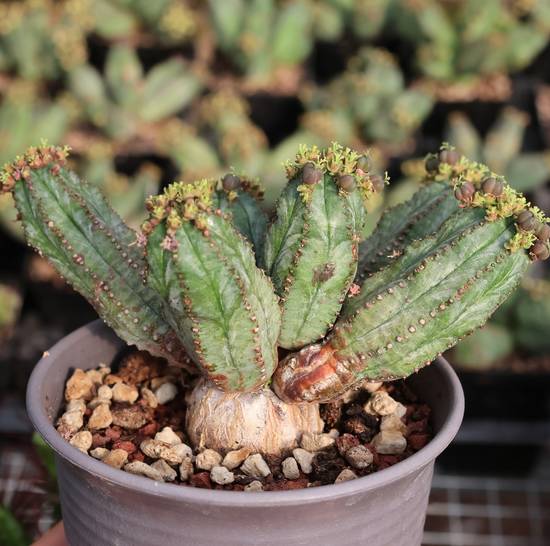
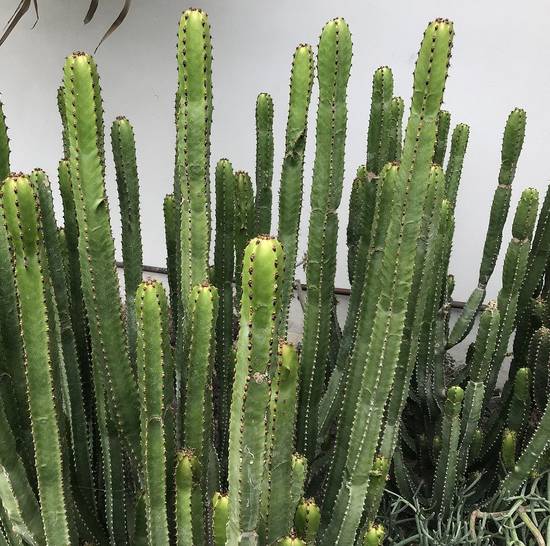
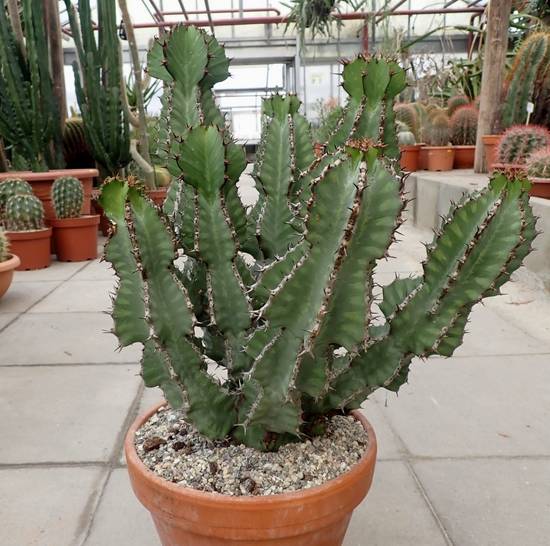
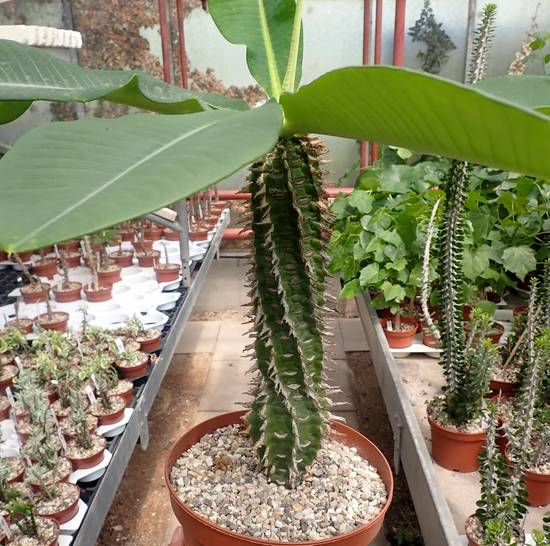
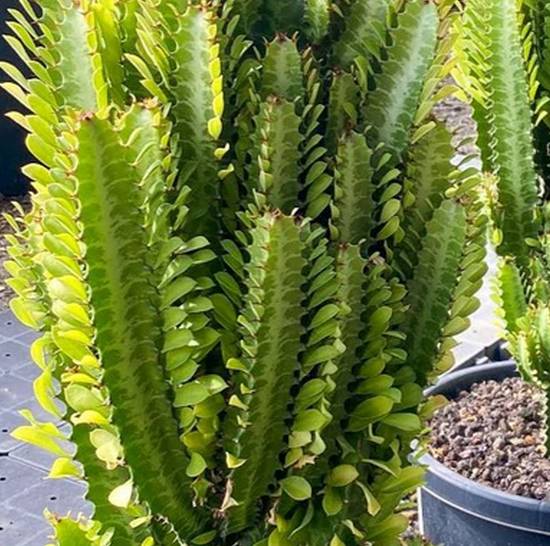
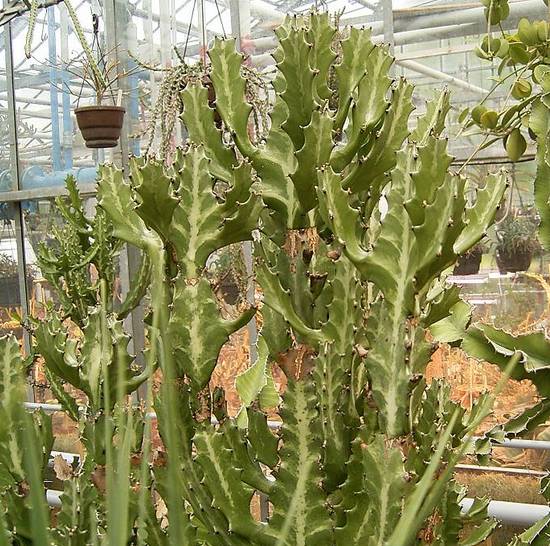
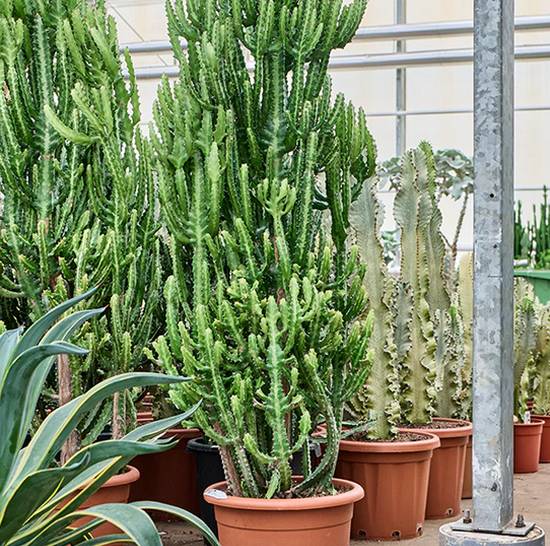
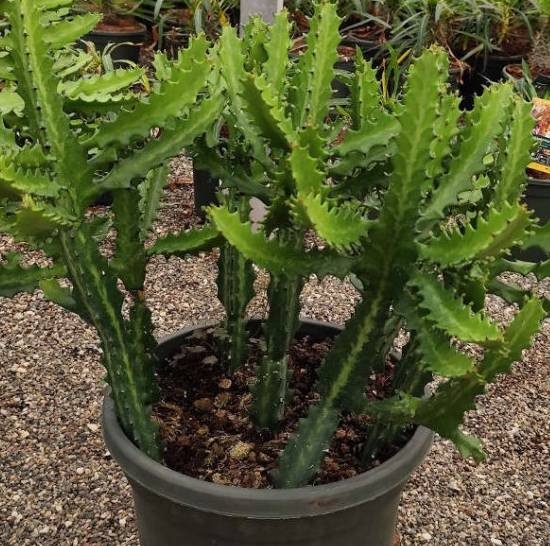
The Euphorbia Lactea is a fascinating succulent plant admired for both its architectural form and contrasting colors. Unlike cacti, it is an Euphorbia, though its appearance often causes confusion among beginners. Its angular structure and triangular ridged branches give it an almost reptilian look.
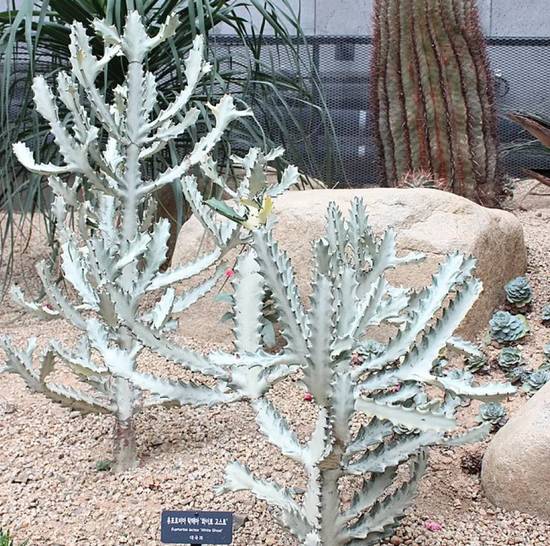
Its coloration ranges from dark green to light green marbled with milky white, which explains its name “lactea”. Some variegated or crested forms are even more spectacular. Sparsely spined, the Euphorbia Lactea is a graphic plant commonly grown in pots to decorate modern interiors or minimalist terraces.
Its growth is relatively slow, but over time it can form impressive shrubs, reaching over one meter in ideal conditions.
The Euphorbia Lactea originates from dry tropical regions of the Indian subcontinent, mainly in India and Sri Lanka. It grows in arid, sunny areas with poor organic soils. This origin explains its crucial need for light and excellent drainage.
The Euphorbia Lactea loves light:
🌞 Full sun: at least 5 to 6 hours of direct sunlight per day.
🌤️ In summer: avoid intense midday sun when grown in a greenhouse or behind glass (risk of burns).
🌱 Indoors: place near a large window or under a grow light.
🌞 Full sun: at least 5 to 6 hours of direct sunlight per day.
🌤️ In summer: avoid intense midday sun when grown in a greenhouse or behind glass (risk of burns).
🌱 Indoors: place near a large window or under a grow light.
The Euphorbia Lactea requires very little water:
💧 Spring / summer: water every 15 to 25 days depending on temperature. Let the substrate dry completely between waterings.
❄️ Autumn / winter: no watering if temperatures are cool. Indoors with heating, one light monthly watering may suffice.
⚠️ Warning: excess moisture leads quickly to rot. It is safer to underwater than overwater.
💧 Spring / summer: water every 15 to 25 days depending on temperature. Let the substrate dry completely between waterings.
❄️ Autumn / winter: no watering if temperatures are cool. Indoors with heating, one light monthly watering may suffice.
⚠️ Warning: excess moisture leads quickly to rot. It is safer to underwater than overwater.
🌡️ Ideal temperature: between 20 °C and 30 °C.
❄️ Minimum: 12 °C. Below this, the plant may suffer damage.
🏠 Winter: indoor cultivation only in cold regions.
❄️ Minimum: 12 °C. Below this, the plant may suffer damage.
🏠 Winter: indoor cultivation only in cold regions.
The Euphorbia Lactea requires an extremely well-drained substrate.
🪨 Ideal mix: cactus soil + pumice + pozzolana in equal parts.
🪨 Ideal mix: cactus soil + pumice + pozzolana in equal parts.
The flowering of the Euphorbia Lactea is extremely discreet and infrequent, especially in cultivation.
🌸 Season: rarely identifiable, sometimes late summer under optimal conditions.
🎨 Color: tiny greenish or yellowish flowers, almost invisible.
🕑 Duration: only a few days.
💡 Euphorbias rarely flower in pots. Flowering requires a mature, healthy plant with sufficient light and moderate water stress.
🌸 Season: rarely identifiable, sometimes late summer under optimal conditions.
🎨 Color: tiny greenish or yellowish flowers, almost invisible.
🕑 Duration: only a few days.
💡 Euphorbias rarely flower in pots. Flowering requires a mature, healthy plant with sufficient light and moderate water stress.
FAQ - Euphorbia Lactea
How do I know if Euphorbia Lactea has received too much water?
If the base becomes soft or shows dark spots, it is a sign of rot. Use a draining substrate with pumice and pozzolana to prevent this.
How do I know if my Euphorbia Lactea lacks water?
The stems may wrinkle or soften. Moderate watering and application of fertilizer can restart growth.
What substrate should be used for Euphorbia Lactea?
A very well-draining mix composed of cactus potting soil, pumice, and pozzolana is ideal.
Is Euphorbia Lactea toxic?
Yes. Its latex is irritating. Wear gloves when pruning or repotting.
Can Euphorbia Lactea be grown indoors?
Perfectly. It needs a bright location, preferably near a well-exposed window.
Which fertilizer should be used for Euphorbia Lactea?
Use a fertilizer specifically for cacti, diluted, once a month during the growing season.
How to propagate Euphorbia Lactea by cuttings?
Cut a stem, let it dry for 5 to 7 days, then plant it in dry substrate. Beware of the irritating latex.
Is Euphorbia Lactea frost-hardy?
No, it is sensitive to cold. Bring it indoors when temperatures drop below 12°C.
What is the growth rate of Euphorbia Lactea?
Slow, but it can become quite tall over time (over 1 meter).
How to protect Euphorbia Lactea from pests?
Monitor for mealybugs. In case of infestation, clean with a cloth soaked in alcohol.