Euphorbia Horrida Monstruosa
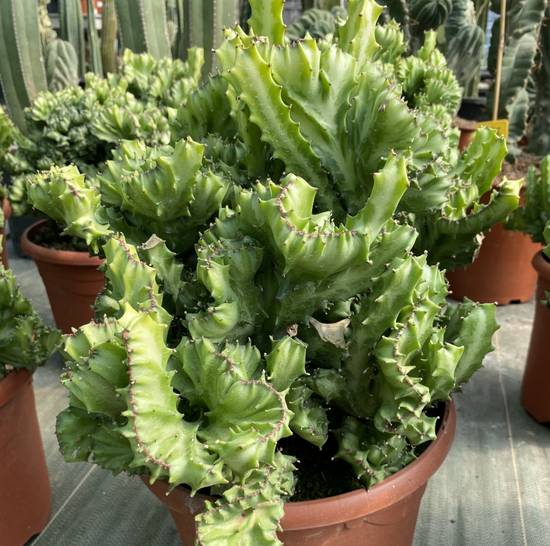
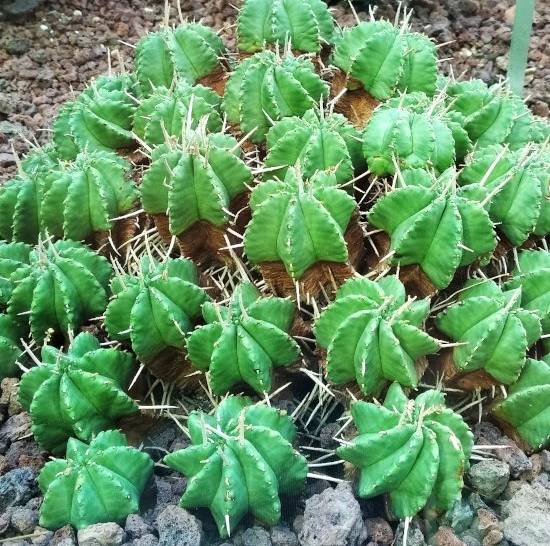
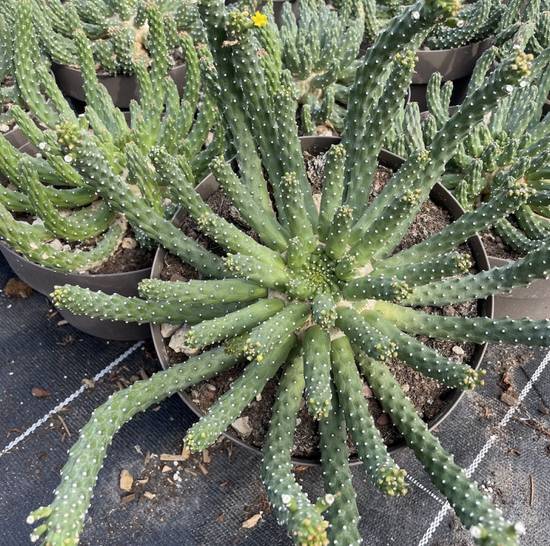
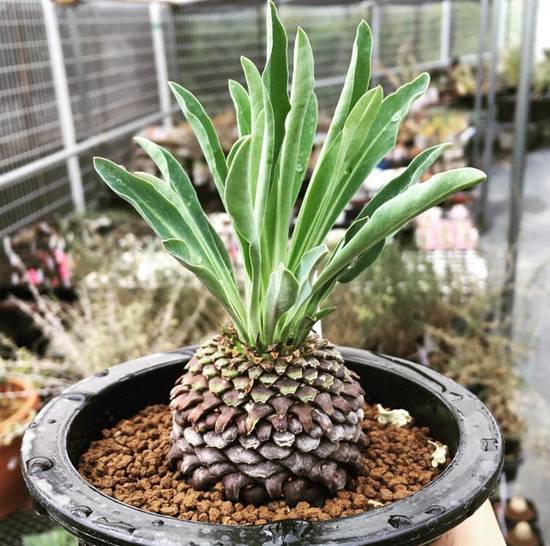
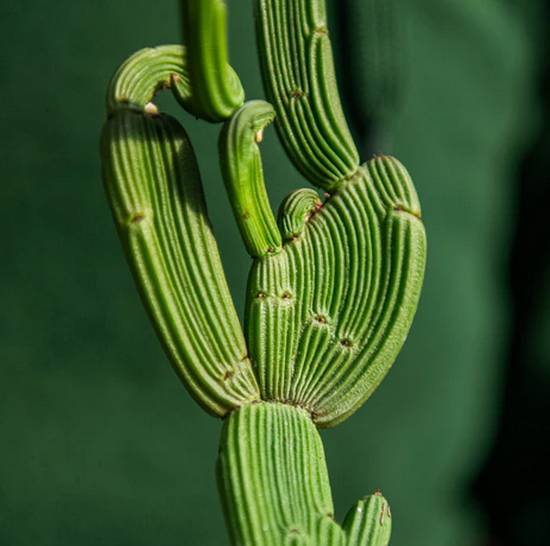
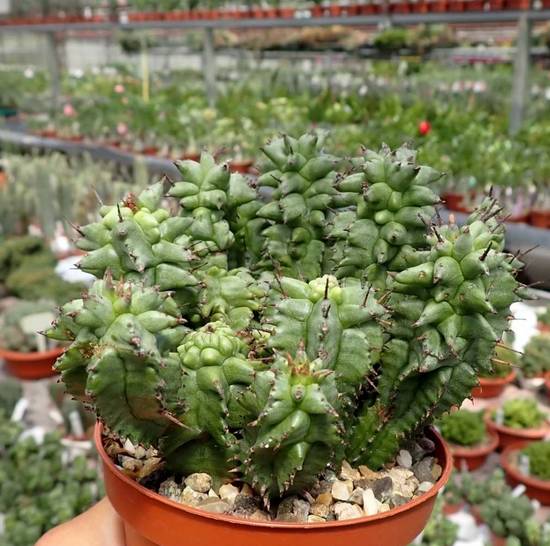
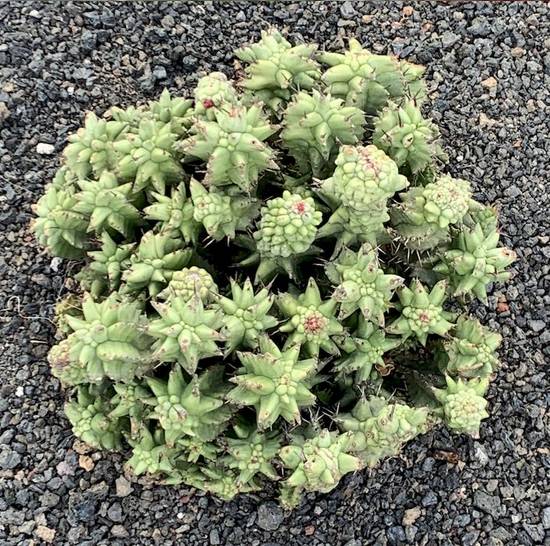
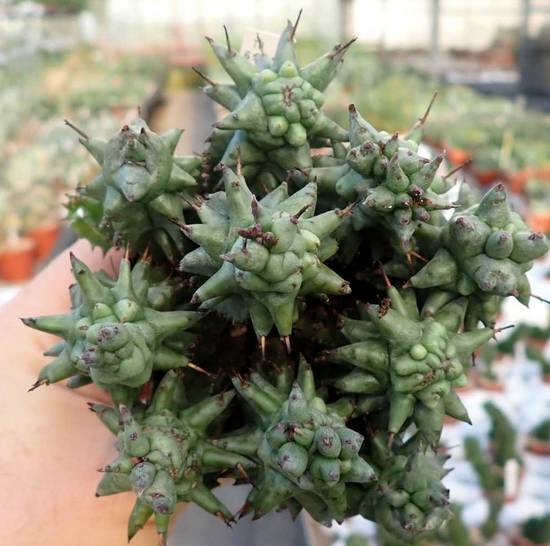
The Euphorbia Horrida Monstruosa is a fascinating and highly sculptural form of Euphorbia Horrida. This “monstruosa” variety stands out with its twisted stems, irregular ribs, and sometimes chaotic growth habit, making it a sought-after collector’s piece for enthusiasts of exotic and rare plants.
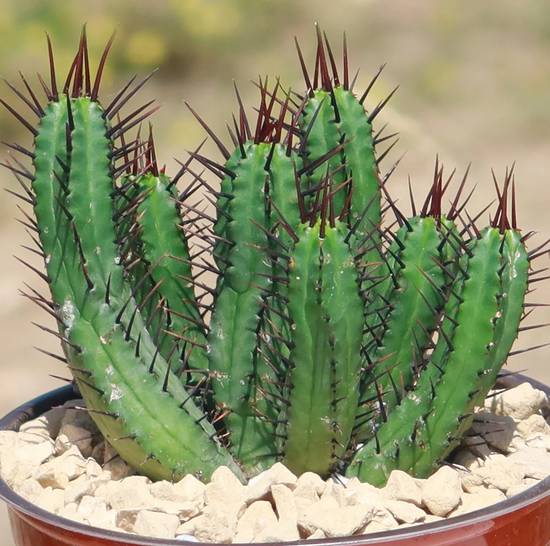
With its blue-green stems adorned with longitudinal bands and numerous red to brown spines, this euphorbia almost resembles a small desert monster with a futuristic look. Each specimen is unique due to its anarchic and mutated growth, characteristic of monstrous forms: a true living work of art.
Perfect for pot cultivation, it can reach between 20 and 40 cm in height at maturity, but its slow and unpredictable growth gives it a special charm. Over time, it can form dense and branched clumps.
It grows in dry environments, often in full sun, in poor but extremely well-drained soils. Its robust appearance reflects its adaptation to these extreme conditions.
🌞 Full sun: at least 5 to 6 hours of direct light per day
🌤️ Partial shade possible: it tolerates filtered light but growth will be slower
⚠️ Beware of burns with sudden exposure in summer: acclimate gradually to direct light.
🌱 Spring / Summer: water moderately only when the substrate is completely dry, on average once every 2 to 3 weeks
🍂 Autumn / Winter: almost no watering, unless the stems show extreme dehydration. Too much water in cold periods = risk of root rot
⚡ Key advice: it is better to underwater than to overwater.
🌞 Ideal: between 20°C and 30°C during the growing period
❄️ Minimum tolerated: down to 5°C if the substrate is perfectly dry. It does not tolerate frost
🏠 Indoor cultivation recommended in winter. Place it in a bright, cool room.
🪨 Recommended substrate: 50% pumice + 50% cactus soil
🛑 Avoid compact substrates or mixes containing too much humus.
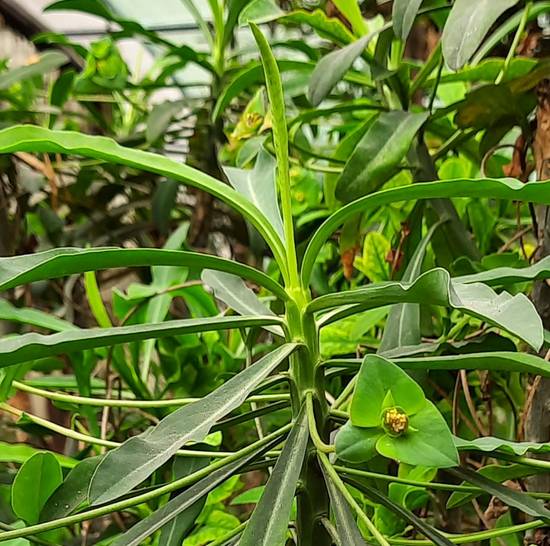
🌼 Flowers: small cyathia (typical euphorbia flowers) yellow-green in color
📅 Period: mainly in summer, if light and heat conditions are met
💡 Note: flowering is secondary in the interest of this plant; its main appeal lies in its twisted form and colored spines.