Euphorbia Obesa

Euphorbia Obesa
Euphorbia Obesa
Euphorbia Obesa
Euphorbia Obesa

Euphorbia Obesa

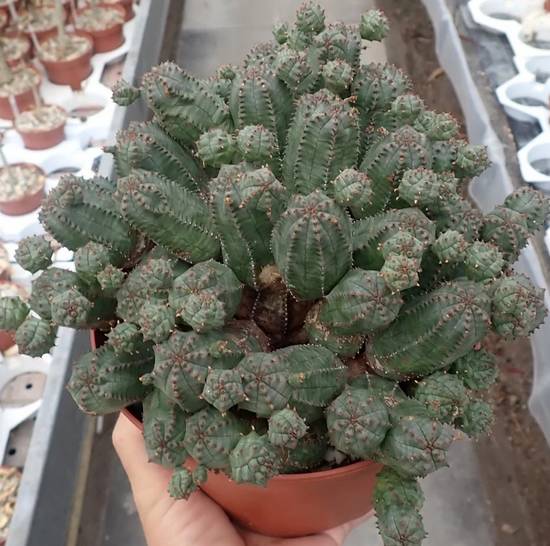
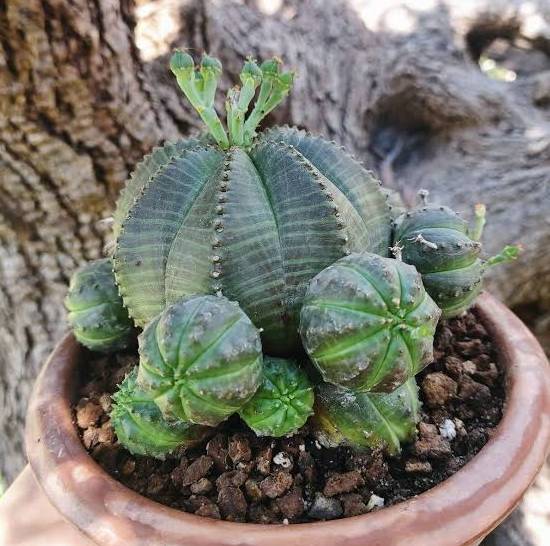
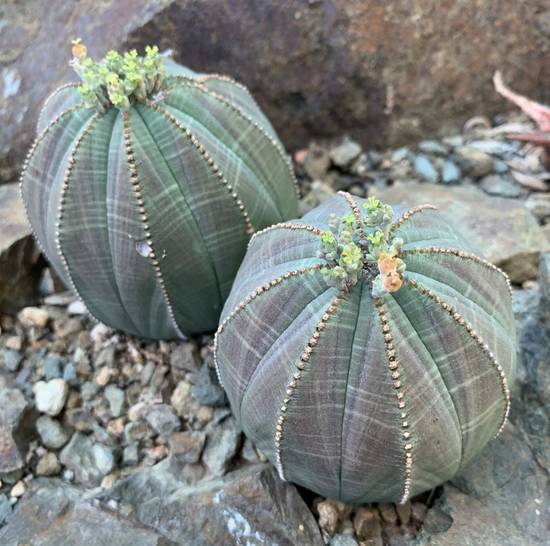
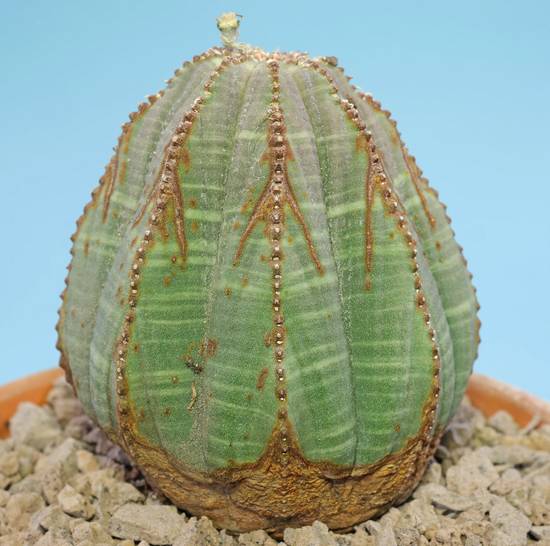
The Euphorbia Obesa, often nicknamed the "baseball plant" or "fat cactus", is an extremely original succulent plant that appeals to succulent lovers thanks to its unique spherical appearance and ease of cultivation. Native to South Africa, more precisely the semi-desert regions of the Cape, this fascinating specimen belongs to the Euphorbiaceae family — and not to the Cactaceae, despite its resemblance to some globular cacti.

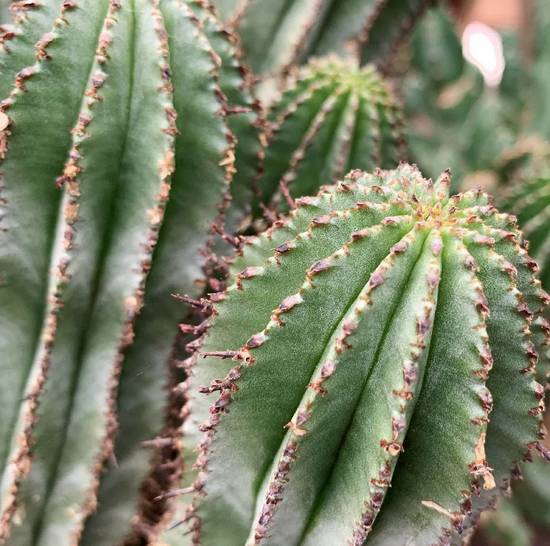
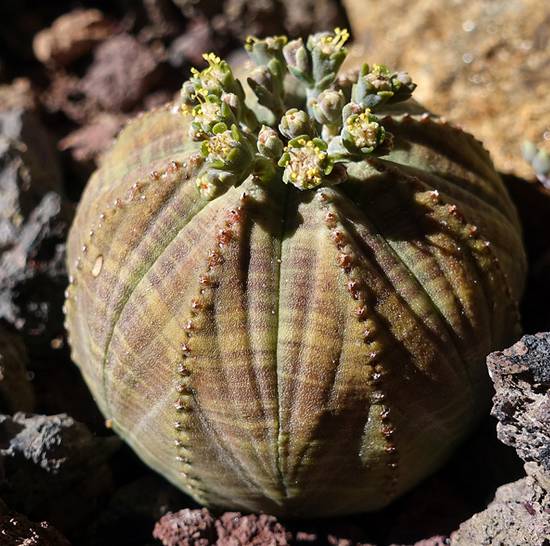
This small botanical gem presents an almost perfect spherical shape when young, gradually becoming cylindrical with age. Its surface is marked with vertical lines often adorned with small areoles or darker markings. It can display shades ranging from dark green to gray-green, sometimes punctuated with reddish hues depending on sun exposure.

One of the most charming aspects of the Euphorbia Obesa is its compact nature: it generally does not exceed 20 cm in height with a maximum diameter of 10 cm, making it an ideal plant for small spaces, modern interiors, or minimalist compositions. It is a slow-growing plant, but with strong ornamental value.

The Euphorbia Obesa grows naturally in the semi-arid regions of the Cape Province, in rocky, well-drained soils under a dry and hot climate. In the wild, it is now threatened by overexploitation and is listed among protected species.
To thrive, the Euphorbia Obesa needs light, without excess:

🌤️ Ideal exposure: bright light without prolonged direct sunlight, especially in summer. An east- or west-facing window is ideal.

☀️ Tip: a little direct morning sun can enhance its beautiful color nuances, but beware of burns in summer.
Like most succulents, watering of the Euphorbia Obesa must be moderate:

🌱 Spring / Summer: water every 2 to 3 weeks, only when the substrate is completely dry.

🍂 Autumn / Winter: almost no watering. During dormancy, excess moisture can be fatal.

⚠️ Important: always use a well-draining cactus soil and a pot with drainage holes to prevent root rot.
The Euphorbia Obesa is a heat-loving plant:

🌡️ Ideal temperature: between 20°C and 30°C during the growing season.

❄️ Cold tolerance: not below 10°C. It does not tolerate frost or prolonged humidity. Bring it indoors at the beginning of autumn.

🏠 Winter advice: place it in a bright, frost-free room, with little or no watering.
An adapted substrate is crucial to avoid rot risks:

🪨 Recommended substrate: mix cactus soil with 50% pumice or pozzolana for optimal drainage.
The flowering of the Euphorbia Obesa is as discreet as it is fascinating:

🌸 Season: late spring to summer, depending on maturity.

🎨 Color: pale green to yellowish.

🕑 Duration: a few days.

💡 Note: only a well-established adult plant, correctly exposed and having undergone slight water stress, can flower.
FAQ - Euphorbia Obesa

How to recognize excess moisture in Euphorbia Obesa?
Excess water results in softening of the plant, dark spots on its skin, and sometimes collapse of the body. It is crucial to use a well-draining substrate and a pot with drainage holes.
What signs indicate underwatering in Euphorbia Obesa?
Slight wilting or shrinkage of the plant may indicate underwatering. However, it tolerates drought well. Water only when the substrate is completely dry.
Is Euphorbia Obesa a true cactus?
No, despite its appearance, it belongs to the Euphorbiaceae family and not to the Cactaceae. It is therefore a succulent, but not a cactus.
Which fertilizer should be used for Euphorbia Obesa?
Use a liquid cactus fertilizer once a month in spring and summer to stimulate growth.
How can I get my Euphorbia Obesa to bloom?
You need a mature plant (at least 5 years old), well exposed and respecting a dry/wet cycle. Flowering is discreet and occurs in summer.
Is Euphorbia Obesa toxic?
Yes, its white sap is irritating to the skin and mucous membranes. Avoid contact with the eyes and wear gloves when repotting.
What is the lifespan of Euphorbia Obesa?
With good care, it can live for several decades. Its growth is slow but steady.
Can Euphorbia Obesa be propagated easily?
Propagation is delicate, as it rarely produces offsets. Reproduction is done by seed, often in laboratories or by experienced enthusiasts.
What substrate is recommended for Euphorbia Obesa?
Use a mix of cactus potting soil with pumice or pozzolana to ensure excellent drainage.
Is Euphorbia Obesa suitable for indoor cultivation?
Yes, it is perfect in a bright indoor environment. It does not take up much space, enjoys warmth, and requires little maintenance.