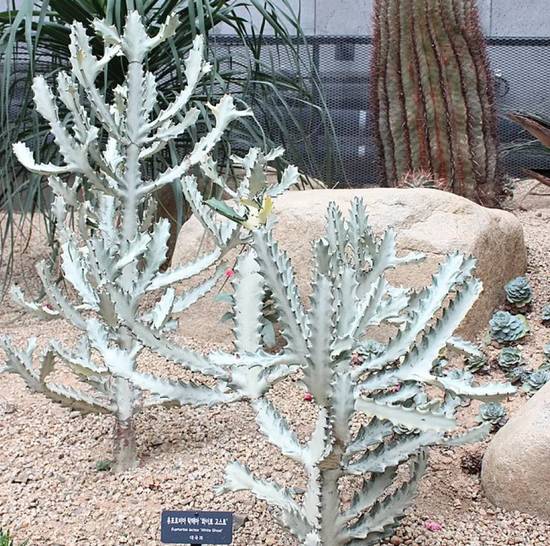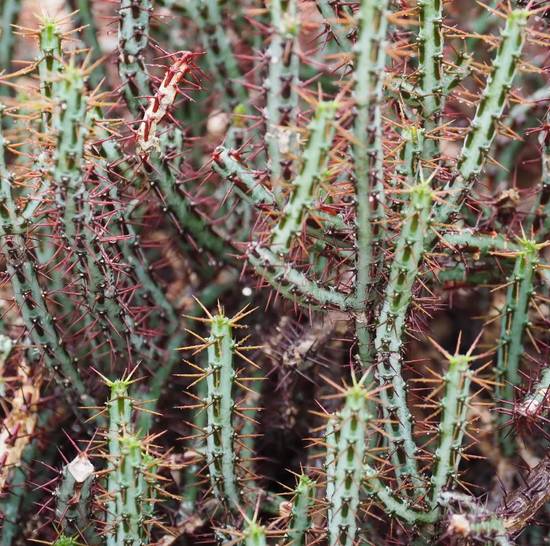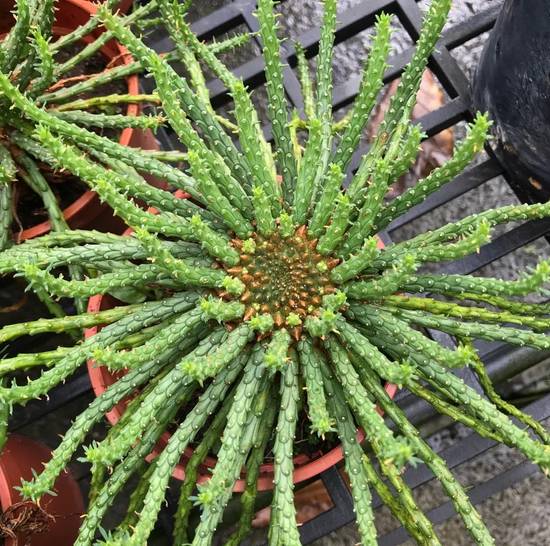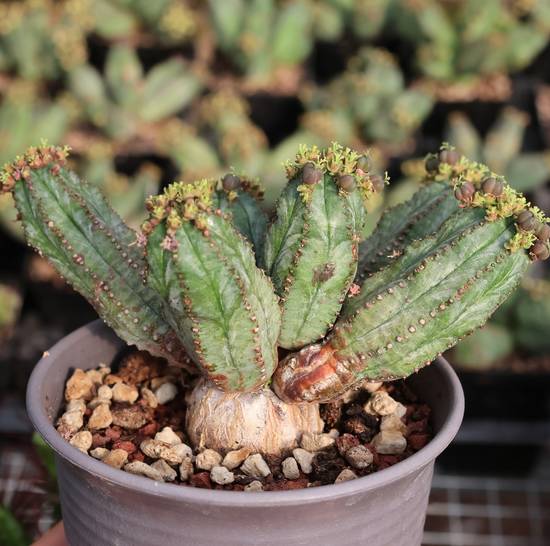
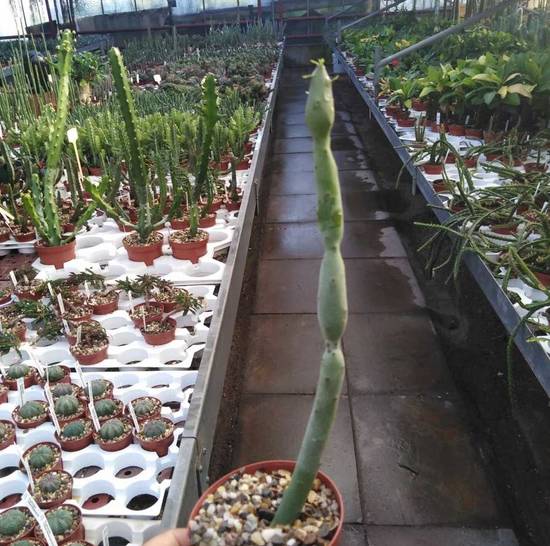
Euphorbia Oncoclada

Euphorbia Oncoclada
Euphorbia Oncoclada
Euphorbia Oncoclada

Euphorbia Oncoclada

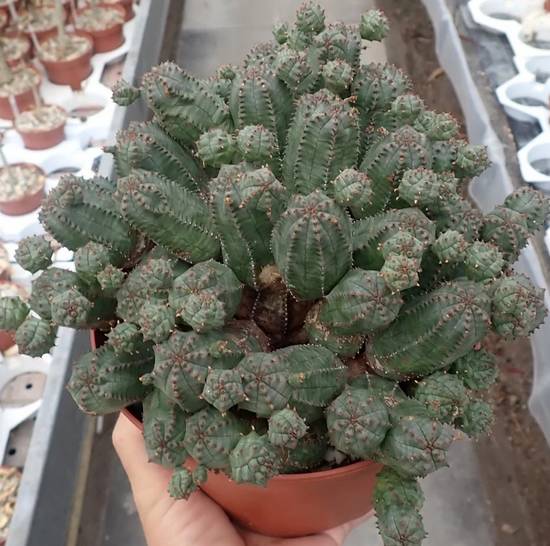
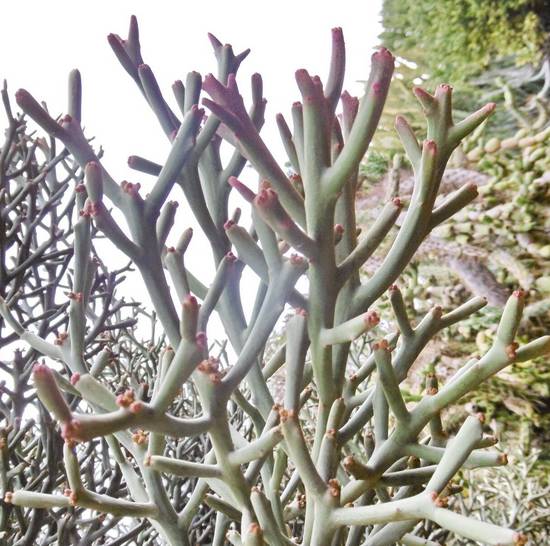
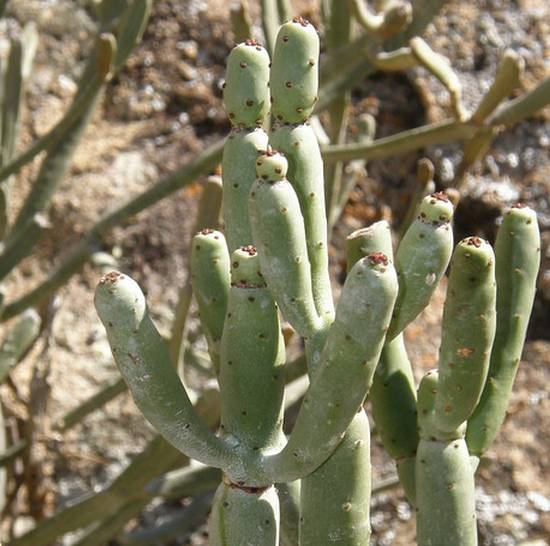
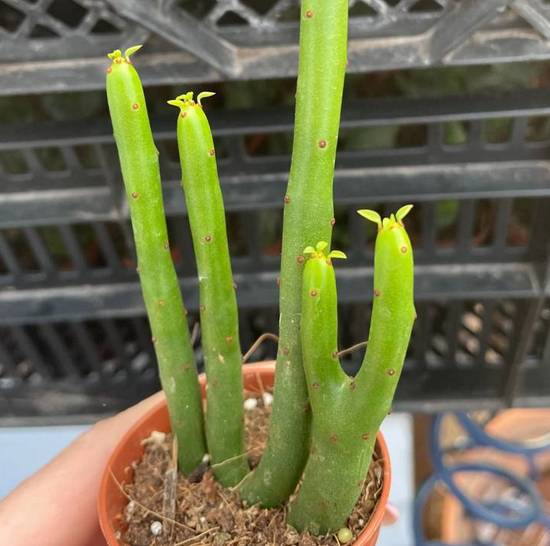
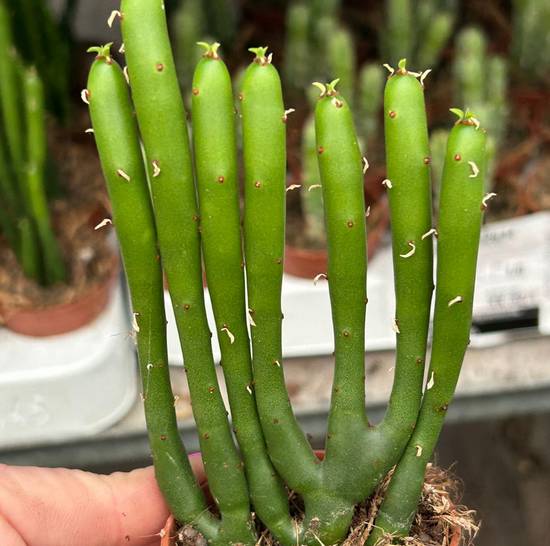
The Euphorbia Oncoclada is a very original species from the vast Euphorbiaceae family, appreciated for its graphic and almost extraterrestrial appearance. This small succulent grows as a dense bush composed of fleshy, branched stems that seem to burst from the soil in all directions. Its compact, sometimes intertwined habit makes it an intriguing plant, highly appreciated in rare succulent collections. The color of the stems varies from pale green to greyish, sometimes with slight pinkish shades at the tips of young growth.

With very little foliage, this euphorbia relies entirely on its stems for appeal. Small leaves may appear during the growing season, but they fall quickly, leaving a very clean silhouette. Robust and minimalist, the Euphorbia Oncoclada grows very well in pots, even indoors, provided it receives good light and a well-draining substrate.

Native to the dry and rocky areas of southern Madagascar, the Euphorbia Oncoclada naturally grows in arid environments exposed to sun and wind. Its branched structure and its ability to store water in its stems allow it to survive long periods of drought. It has adapted to these extreme conditions by almost completely losing its leaves.
The Euphorbia Oncoclada appreciates bright and consistent light:

🌞 Indoors: place it near a sunny window, preferably south- or west-facing.

🌤️ Outdoors: partial shade or full sun, but avoid the scorching midday sun if the plant is not accustomed to it.
Like many dry-climate euphorbias, it does not tolerate excess moisture:

💧 Spring / summer: water moderately, about every 3 to 4 weeks. Allow the substrate to dry completely before each new watering.

❄️ Winter: drastically reduce or stop watering if it is kept cool.

⚠️ Too much water is one of the main dangers for this plant. Good pot aeration is also recommended.
The Euphorbia Oncoclada prefers warmth but can adapt to cooler conditions:

🌡️ Ideal temperatures: between 20 and 30 °C during the growing period.

❄️ Minimum temperature: tolerates down to 8 °C occasionally. Below this, it must be protected from the cold.
🪨 A draining substrate is essential for its survival:

Use a good special cactus substrate then add 50% perlite to promote aeration and finish with a layer of pumice stone for surface drainage
Discreet but present:

🌸 Type: small yellow or greenish cyathia at the axils of the stems

🕑 Period: rather in spring or summer, but flowering remains secondary

👁️ Interest: this is not a plant grown for its flowers, but for its unique architectural structure.
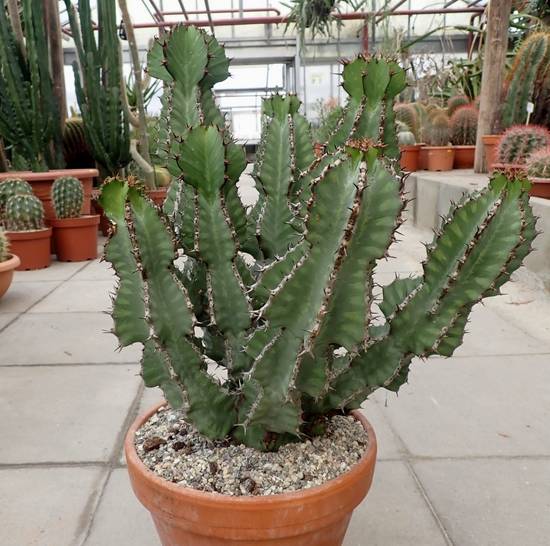
FAQ - Euphorbia Oncoclada

What type of exposure suits Euphorbia Oncoclada best?
Euphorbia Oncoclada prefers bright, well-filtered light. Place it near a very bright window, or outdoors in partial shade in sunny regions.
How should Euphorbia Oncoclada be watered safely?
Water only when the substrate is completely dry. In summer, this usually means watering every 3 to 4 weeks. In winter, space watering even further apart.
What substrate mix is ideal for Euphorbia Oncoclada?
To ensure good drainage, use a suitable substrate mixed with 50% perlite, and add a layer of pumice on the surface.
Why does Euphorbia Oncoclada lose its leaves?
This is completely normal. It keeps its leaves only briefly during the growing period. The rest of the time, it has a bare habit formed only of stems.
Should Euphorbia Oncoclada be fertilized?
Yes, but sparingly. During the growing period, you can apply succulent fertilizer once a month.
Is Euphorbia Oncoclada toxic?
Yes, like all euphorbias, it produces an irritating white latex. Wear gloves when pruning or handling broken stems.
Can Euphorbia Oncoclada be grown outdoors?
Yes, but only in mild and dry climates without winter frost. It fears stagnant moisture and intense cold.
What is the minimum temperature tolerated by Euphorbia Oncoclada?
It can tolerate temperatures around 8 °C, but it is advisable to keep it indoors in winter in cold regions.
How can the growth of Euphorbia Oncoclada be stimulated?
Good light, controlled watering, and well-draining substrate are key. You can also stimulate growth with a suitable fertilizer during the warm season.
What are the signs of overwatering in Euphorbia Oncoclada?
Soft stems, yellowing, or blackening at the base are the first signs of excess moisture. Reduce watering immediately and check drainage.