Opuntia Subulata Cristata
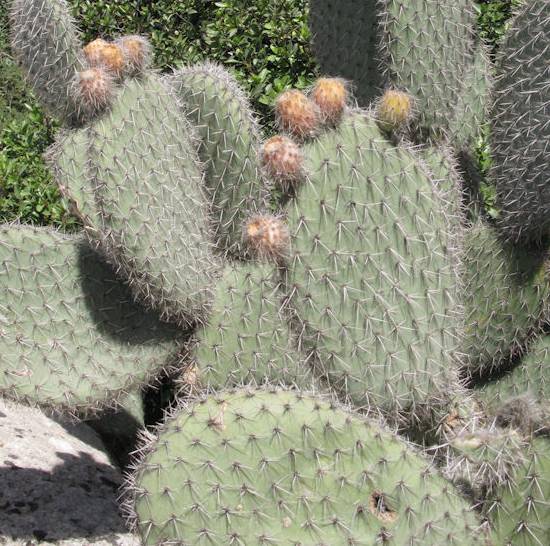
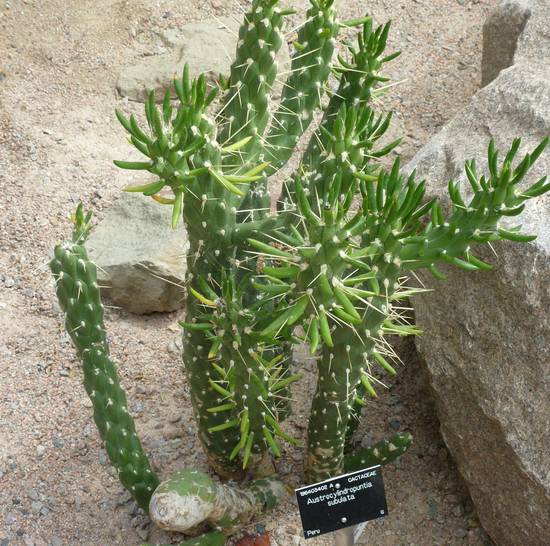
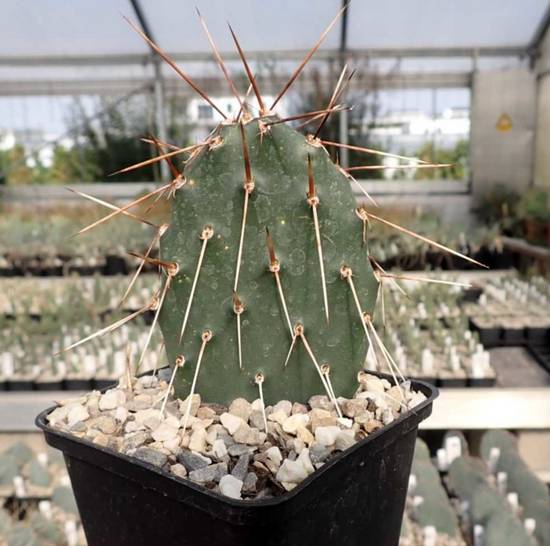
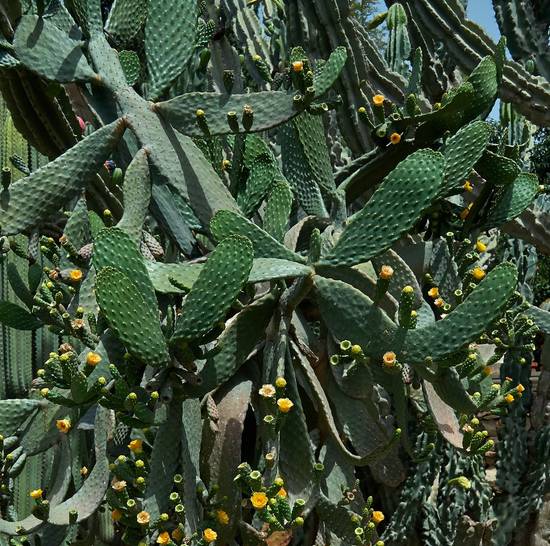
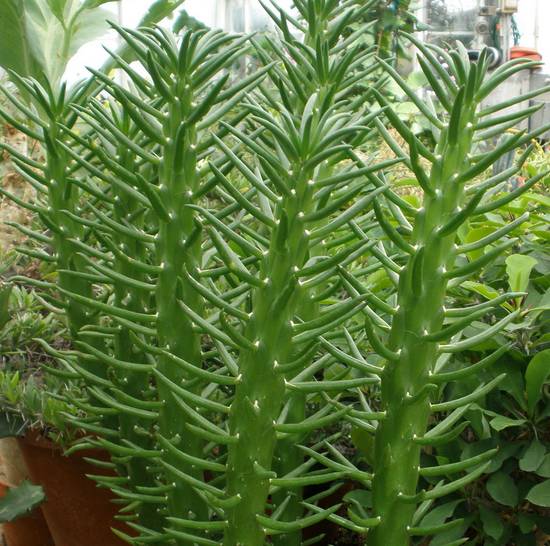
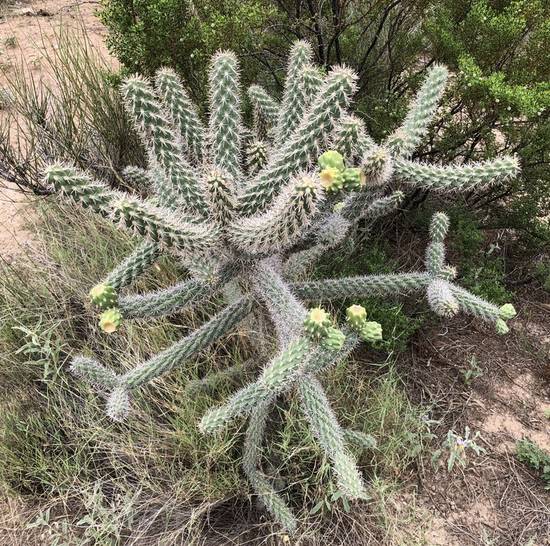
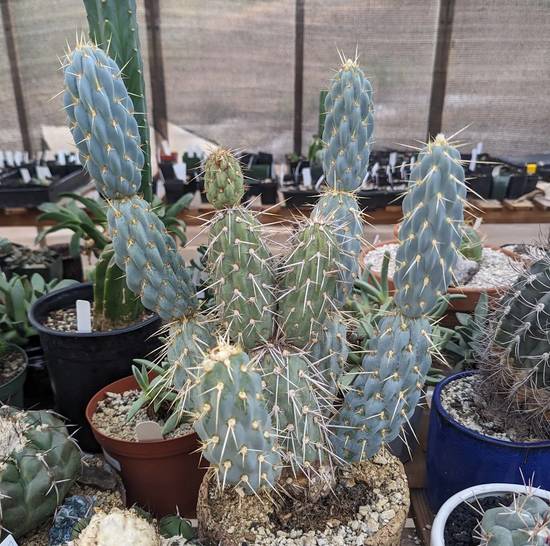
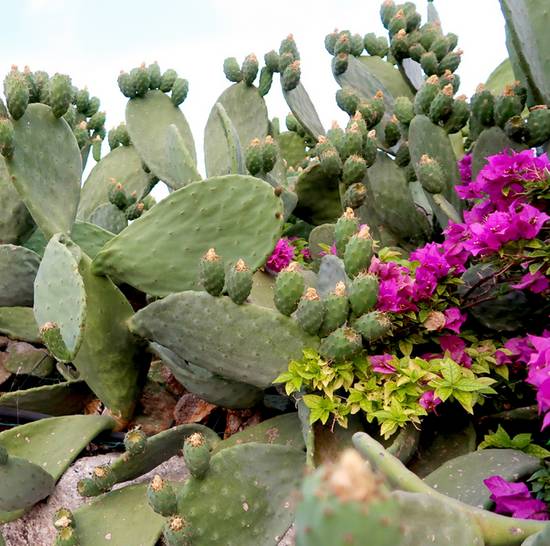
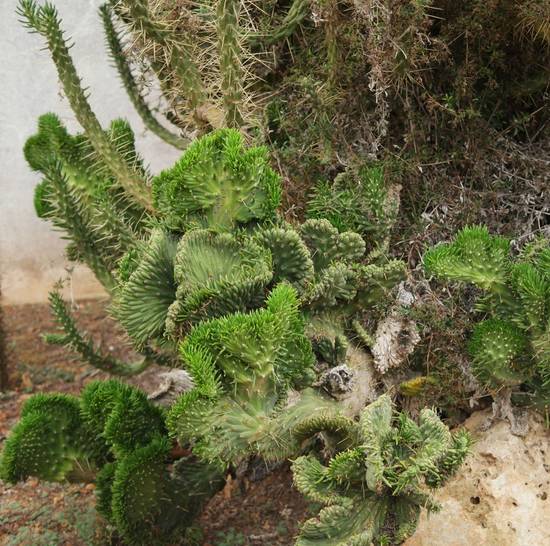
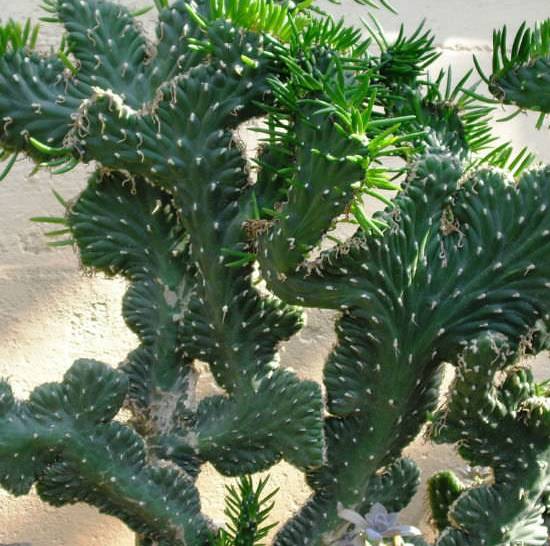
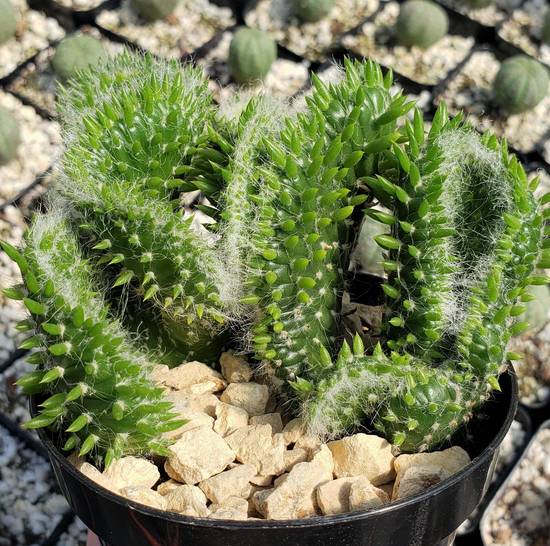
The Opuntia Subulata Cristata is a fascinating and highly ornamental form of the Opuntia Subulata, also known as the "Eve’s Needle Cactus." This crested version displays a natural mutation that causes fan-shaped, undulating growth, forming irregular ridges rather than the typical flat segments of Opuntias. It is a spectacular, sculptural plant highly sought after by collectors for its unique graphic appearance.
Its crest-like segments, reminiscent of a rooster’s comb, range from pale to dark green, sometimes slightly silvery, and are covered with fine subulate (needle-shaped) leaves characteristic of the species. Small areoles filled with glochids and occasionally tiny spines appear along the ridges, further enhancing its exotic look.
The Opuntia Subulata Cristata originates from the Andean region of Peru, like its parent species. It grows at high altitude in arid rocky areas where sunlight is intense and nights are cold. This crested form results from horticultural selection and does not occur spontaneously in nature.
This cactus is highly drought-resistant and has adapted perfectly to European collections thanks to its hardiness and remarkable aesthetic.
This cactus is highly drought-resistant and has adapted perfectly to European collections thanks to its hardiness and remarkable aesthetic.
Like all Opuntias, this mutant form requires plenty of light.
☀️ Outdoors : Place it in direct sun, ideally 6 hours per day. It thrives on well-exposed balconies, in greenhouses and in dry rock gardens.
🏠 Indoors : A very bright room, ideally south-facing. Alternatively, a veranda or large window works perfectly.
⚠️ Tip : Insufficient light leads to loss of shape and dull green coloration of the epidermis.
☀️ Outdoors : Place it in direct sun, ideally 6 hours per day. It thrives on well-exposed balconies, in greenhouses and in dry rock gardens.
🏠 Indoors : A very bright room, ideally south-facing. Alternatively, a veranda or large window works perfectly.
⚠️ Tip : Insufficient light leads to loss of shape and dull green coloration of the epidermis.
The Opuntia Subulata Cristata is very drought-tolerant and prefers infrequent watering.
🌱 Spring / Summer : Water every 3 to 4 weeks, allowing the substrate to dry thoroughly between waterings. Absolutely avoid stagnant water.
❄️ Winter : No watering during the resting period. Keep dry in a cool place.
⚡ Reminder : Excess water is the main cause of rot, especially indoors.
🌱 Spring / Summer : Water every 3 to 4 weeks, allowing the substrate to dry thoroughly between waterings. Absolutely avoid stagnant water.
❄️ Winter : No watering during the resting period. Keep dry in a cool place.
⚡ Reminder : Excess water is the main cause of rot, especially indoors.
It tolerates high summer heat well and adapts to mild winters.
🔥 Ideal temperatures : Between 20 and 30 °C.
❄️ Minimum tolerated : Down to 0 °C if the substrate is perfectly dry, but wintering above 5 °C is recommended.
🔥 Ideal temperatures : Between 20 and 30 °C.
❄️ Minimum tolerated : Down to 0 °C if the substrate is perfectly dry, but wintering above 5 °C is recommended.
This cactus requires an extremely well-draining substrate, as its roots fear moisture.
🪨 Ideal mix : 40% special cactus potting soil, 30% coarse sand or pozzolana, 30% perlite or fine gravel.
⛏️ Drainage : Do not neglect the drainage layer at the bottom of the pot (clay pebbles, gravel), essential to prevent excess water.
🪨 Ideal mix : 40% special cactus potting soil, 30% coarse sand or pozzolana, 30% perlite or fine gravel.
⛏️ Drainage : Do not neglect the drainage layer at the bottom of the pot (clay pebbles, gravel), essential to prevent excess water.
The flowering of the Opuntia Subulata Cristata is rare, especially in pots, but possible under good conditions.
📅 Period : In spring or early summer.
🌺 Flowers : Bright red to dark pink, cup-shaped, generally at the top of the crests if mature enough.
💡 Tip : A good dry and bright winter rest promotes flowering.
📅 Period : In spring or early summer.
🌺 Flowers : Bright red to dark pink, cup-shaped, generally at the top of the crests if mature enough.
💡 Tip : A good dry and bright winter rest promotes flowering.
FAQ - Opuntia Subulata Cristata
How should Opuntia Subulata Cristata be watered properly?
Water very moderately. During warm months, water every 3 to 4 weeks, allowing the substrate to dry thoroughly. In winter, stop watering completely.
What is the ideal indoor exposure for Opuntia Subulata Cristata?
Place it near a very bright south-facing window. It loves direct light but may need light shading during extreme summer heat.
What type of soil should be used for Opuntia Subulata Cristata?
Use an ultra well-draining mix of cactus soil, pumice, and perlite to prevent excess moisture.
Should Opuntia Subulata Cristata be fertilized?
Yes, light fertilization is beneficial. Use a cactus fertilizer once a month in spring to stimulate growth and potential flowering.
Is Opuntia Subulata Cristata toxic?
This cactus is not considered toxic, but its glochids can cause skin irritation. Always handle it with gloves or proper cactus tongs.
Why is my Opuntia Subulata Cristata no longer growing?
Growth may naturally slow down in winter. If it happens in summer, it may be due to insufficient light, overwatering, or a pot that has become too small.
How can you recognize overwatering in Opuntia Subulata Cristata?
Black spots, softening, or a mushy base often indicate overwatering. Stop watering immediately, keep the plant dry, and consider repotting into a well-draining substrate.
My Opuntia Subulata Cristata is losing leaves, is that normal?
Yes, the small subulate leaves may naturally fall in winter or during water stress. As long as the plant remains firm and healthy, it is not a concern.
Can Opuntia Subulata Cristata live outdoors in France?
Yes during summer. However, it must be brought indoors when temperatures drop below 5°C, as it is not frost-hardy in cold climates.
What size can Opuntia Subulata Cristata reach?
In cultivation, it usually remains compact (20 to 40 cm), but in open ground under suitable conditions, it can form large clumps over one meter wide.