Opuntia Subulata
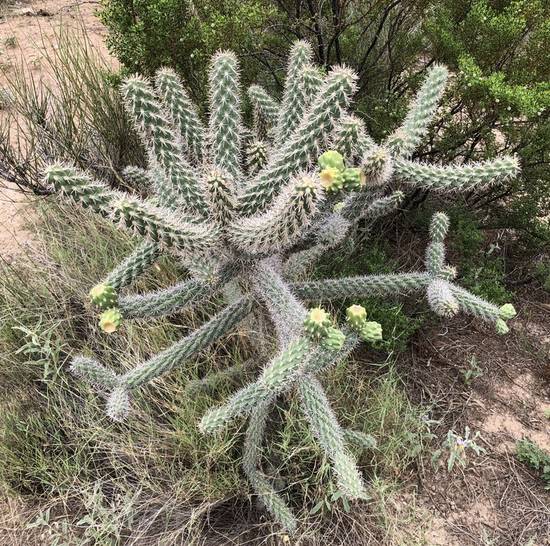
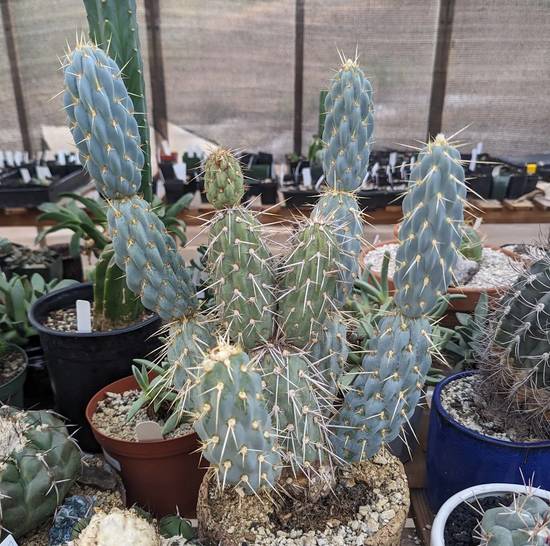
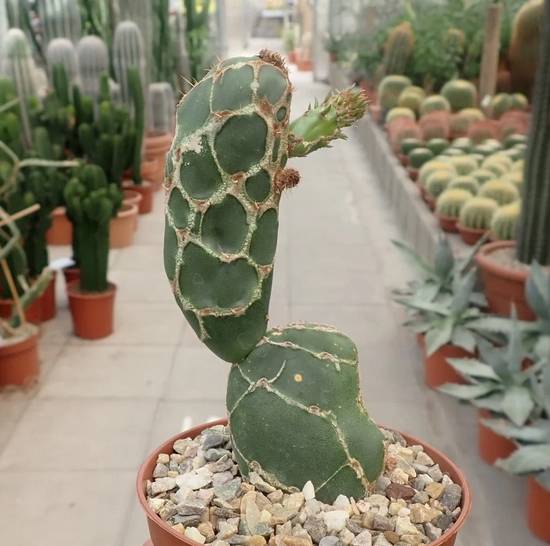
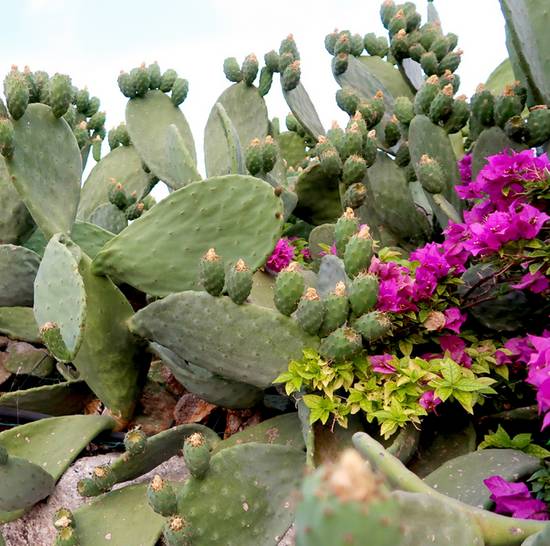
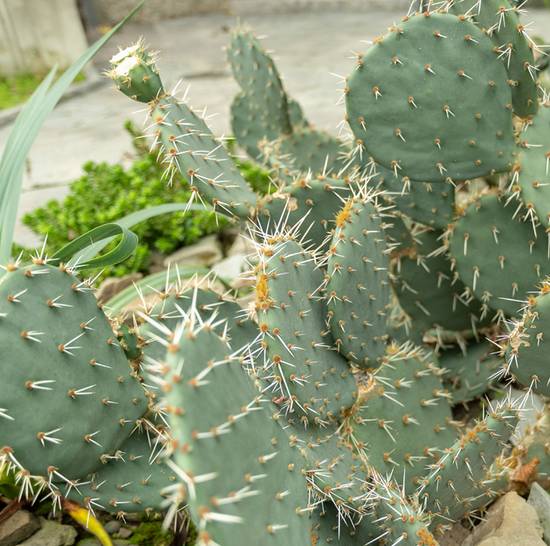
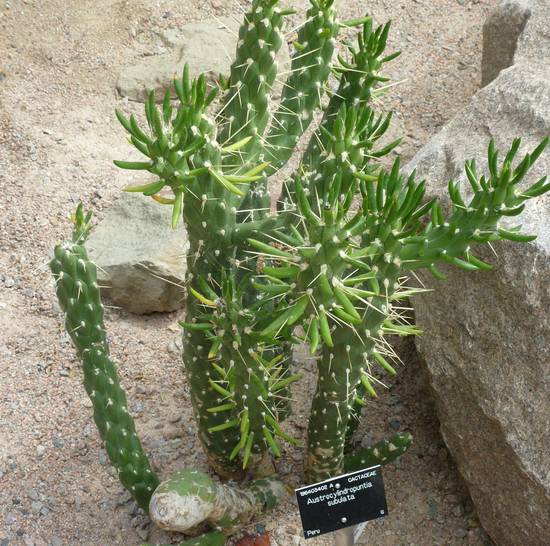
The Opuntia Subulata is recognizable by its thick, upright and branching stems, covered with small persistent needle-shaped leaves (hence the name "subulata"). It is one of the few cacti to retain such visible leaves, giving it a very distinctive, almost prehistoric appearance. The dark green stems are dotted with areoles filled with glochids and a few spines, often long and white to brownish.
The Opuntia Subulata can reach several meters in height in its natural habitat, but in cultivation it maintains a more compact shape while remaining vigorous. As it ages, it forms a woody trunk and develops several vertical columns, creating a candelabra-like habit.
The Opuntia Subulata is native to the mountainous regions of Peru and Bolivia, where it grows between 2,000 and 3,500 meters above sea level. It thrives on dry, sunny and well-drained terrain, tolerating strong temperature fluctuations and very dry air.
In these regions, it is sometimes used as a natural hedge or as a forage plant. It is a cactus particularly well adapted to drought and intense sun exposure.
In these regions, it is sometimes used as a natural hedge or as a forage plant. It is a cactus particularly well adapted to drought and intense sun exposure.
The Opuntia Subulata requires plenty of light to thrive.
☀️ Outdoors : It loves full sun, with at least 6 hours of direct light per day. Gradual acclimatization in spring is recommended to prevent burns on young plants.
🏡 Indoors : Place it behind a south-facing window. It does not tolerate lack of light well, which can quickly cause etiolation.
☀️ Outdoors : It loves full sun, with at least 6 hours of direct light per day. Gradual acclimatization in spring is recommended to prevent burns on young plants.
🏡 Indoors : Place it behind a south-facing window. It does not tolerate lack of light well, which can quickly cause etiolation.
As with most cacti, watering the Opuntia Subulata should remain moderate.
🌱 Spring / Summer : Water about every 3 weeks when the substrate is completely dry. In hot climates, up to twice per month is possible.
❄️ Autumn / Winter : No water or very little. The plant enters dormancy and moisture could cause rot.
⚠️ Watch for : Too much water causes soft or split stems. Lack of water leads to slow shriveling with visible wrinkles.
🌱 Spring / Summer : Water about every 3 weeks when the substrate is completely dry. In hot climates, up to twice per month is possible.
❄️ Autumn / Winter : No water or very little. The plant enters dormancy and moisture could cause rot.
⚠️ Watch for : Too much water causes soft or split stems. Lack of water leads to slow shriveling with visible wrinkles.
The Opuntia Subulata is fairly tolerant but sensitive in humid conditions.
🌡️ Ideal temperature : Between 20 °C and 30 °C.
❄️ Minimum tolerated : Down to 0 °C, even -2 °C if the substrate is completely dry. Below that, it may freeze.
🧊 Wintering : Bring indoors as soon as temperatures drop below 5 °C, in a bright and airy place.
🌡️ Ideal temperature : Between 20 °C and 30 °C.
❄️ Minimum tolerated : Down to 0 °C, even -2 °C if the substrate is completely dry. Below that, it may freeze.
🧊 Wintering : Bring indoors as soon as temperatures drop below 5 °C, in a bright and airy place.
A well-draining substrate is essential to avoid excess moisture.
🪨 Recommended mix : 50% cactus potting soil, 30% pozzolana and 20% perlite.
🌵 Drainage : Place a layer of gravel or clay pebbles at the bottom of the pot for optimal drainage.
🪨 Recommended mix : 50% cactus potting soil, 30% pozzolana and 20% perlite.
🌵 Drainage : Place a layer of gravel or clay pebbles at the bottom of the pot for optimal drainage.
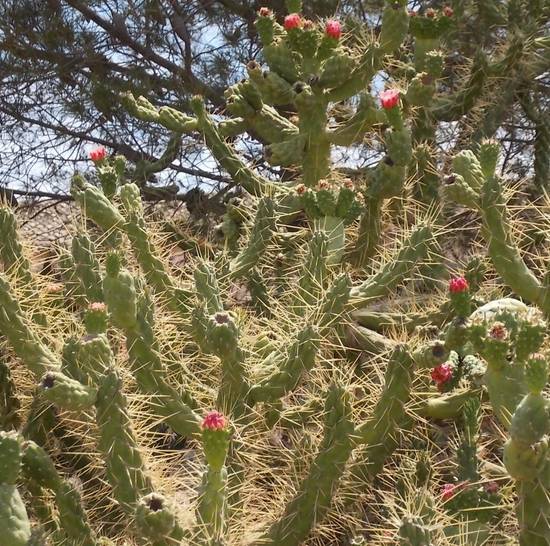
The Opuntia Subulata rarely flowers in pots but produces beautiful bright red blooms in the ground.
📅 Period : Generally in spring or early summer.
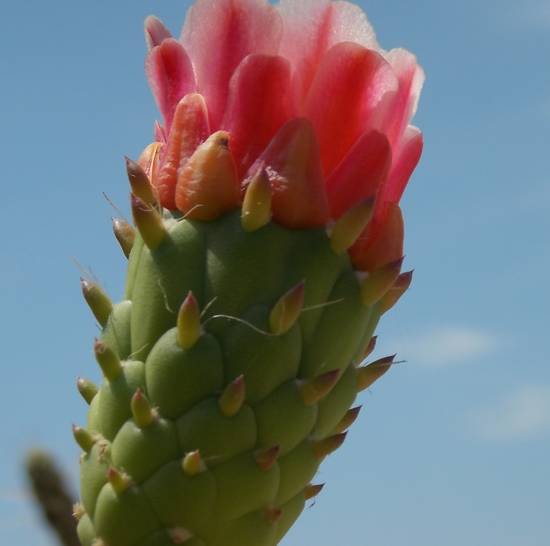
🌺 Flowers : Large, tubular, intense red to orange, growing at the ends of the stems.
💡 Tip : A dry winter rest period combined with good sunlight and suitable cactus fertilizer increases the chances of flowering.
📅 Period : Generally in spring or early summer.
🌺 Flowers : Large, tubular, intense red to orange, growing at the ends of the stems.
💡 Tip : A dry winter rest period combined with good sunlight and suitable cactus fertilizer increases the chances of flowering.
FAQ - Opuntia Subulata
What is the best exposure for Opuntia Subulata?
It loves full sun. Provide at least 6 hours of direct sunlight per day, ideally with southern exposure.
Does Opuntia Subulata need frequent watering?
No. In summer, watering every 3 weeks is sufficient. In winter, reduce watering drastically to prevent rot.
What are the signs of overwatering or underwatering in Opuntia Subulata?
Soft or blackened stems indicate overwatering. Wrinkles and dehydration indicate underwatering.
Can Opuntia Subulata be grown indoors?
Yes, as long as it receives plenty of light, ideally near a well-exposed window.
What minimum temperature can Opuntia Subulata tolerate?
It can tolerate down to 0°C if kept dry, but it is safer to bring it indoors below 5°C.
What substrate should be used for Opuntia Subulata?
A mix of cactus soil, pumice, and perlite is ideal for proper drainage.
How can flowering of Opuntia Subulata be encouraged?
Provide a dry winter rest, plenty of sunlight, and apply cactus fertilizer in spring.
Can Opuntia Subulata be easily propagated by cuttings?
Yes. Cut a stem, allow the base to dry, then plant it in dry, well-draining substrate.
Does Opuntia Subulata keep its leaves?
Yes, its small subulate leaves appear in spring but may drop during intense heat.
Is Opuntia Subulata toxic?
It is not toxic to humans, but its spines can cause skin irritation.