Opuntia Cylindrica Cristata
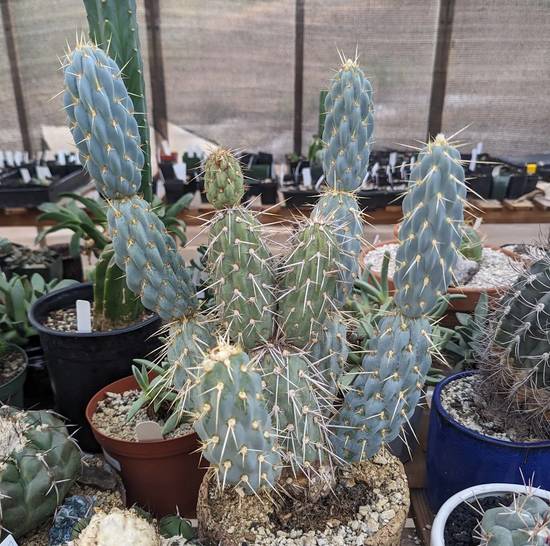
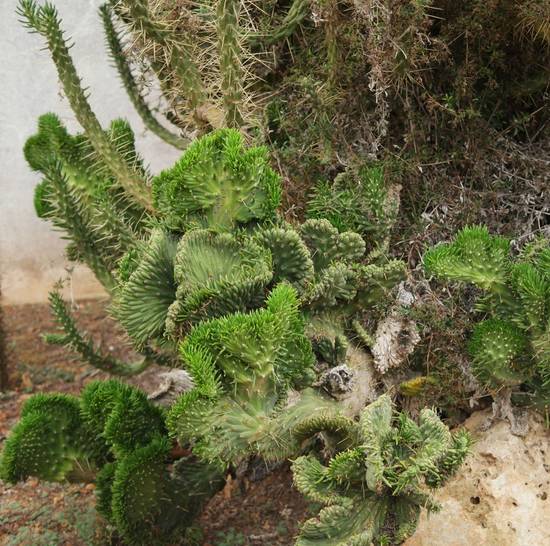
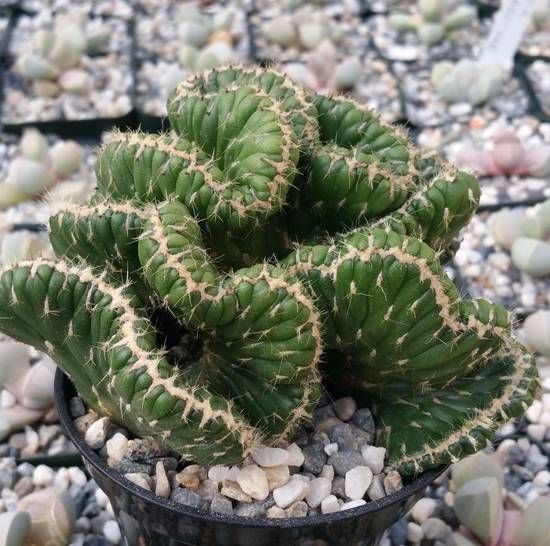
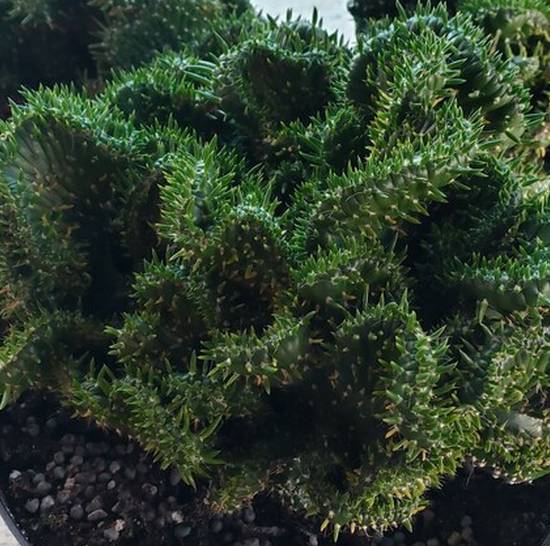
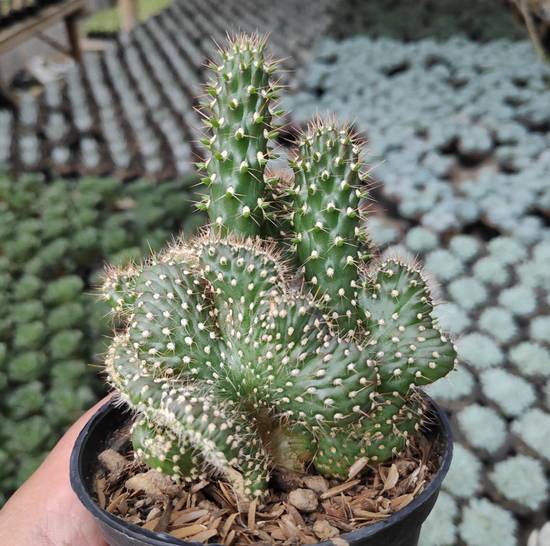
Opuntia Cylindrica Cristata is a fascinating mutant form of the classic cylindrical Opuntia. This mutation, known as “cresting,” transforms the usual vertical growth into a wavy tangle of sinuous ridges. The result: a living sculpture with organic lines, as surprising as it is elegant. Highly prized by collectors, it combines originality, robustness, and rarity.
Its green stems, sometimes tinged with blue or violet depending on exposure, develop into broad, flattened, undulating ribbons. The areoles, irregularly arranged, bear glochids and fine spines that may vary in density from one specimen to another. This atypical growth gives it an almost coral-like appearance, perfect for lovers of uniquely styled plants.
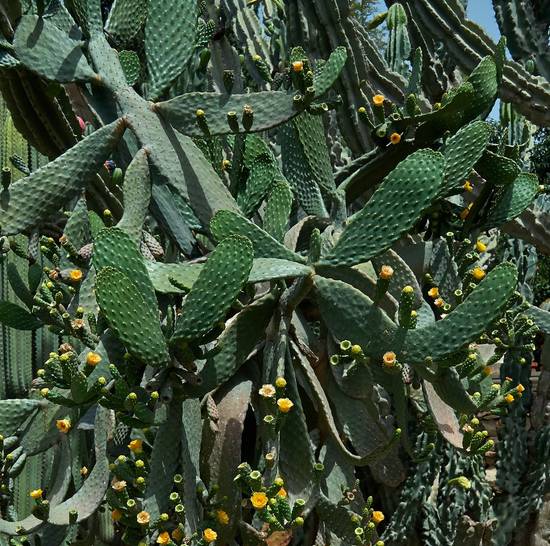
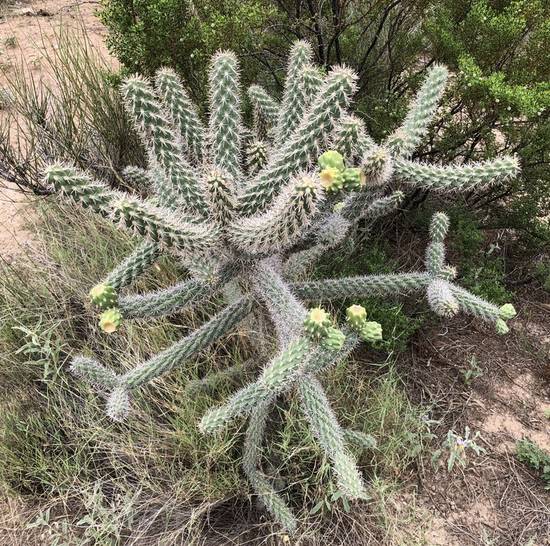
In addition to its exceptional form, Opuntia Cylindrica Cristata can offer beautiful bright yellow to orange flowers in spring and summer. They emerge directly between the crests, creating a spectacular contrast.
🌞 Ideal exposure: full direct sun, at least 6 hours per day.
🌤️ In very hot climates: light shade during the hottest hours will prevent marks on young segments.
💡 Good brightness intensifies coloration and keeps the plant compact.
💧 Spring / summer: water every 2 to 3 weeks, only when the substrate is completely dry.
🍂 Autumn / winter: drastically reduce water supply, or stop completely if the plant is kept cool.
⚠️ Absolutely avoid water-filled saucers, which are fatal to the roots.
🌡️ Ideal: 20 to 30°C during the growing period.
❄️ Minimum: down to -4°C when dry, but in pot cultivation it is advisable to protect it once temperatures drop below 5°C.
🏠 Bright and dry overwintering promotes plant health and stimulates flowering.
🪨 Recommended mix: 40% cactus soil + 30% perlite + 30% pozzolana
This substrate mimics the dry, rocky soils of its native habitat.
🌸 Period: late spring to early summer.
🎨 Color: bright yellow to orange, sometimes with red nuances.
🕑 Duration: each flower lasts a few days, but several waves of blooms are possible.
💡 A dry and bright winter rest stimulates bud production.