Opuntia Rubescens

Opuntia Rubescens
Opuntia Rubescens
Opuntia Rubescens

Opuntia Rubescens

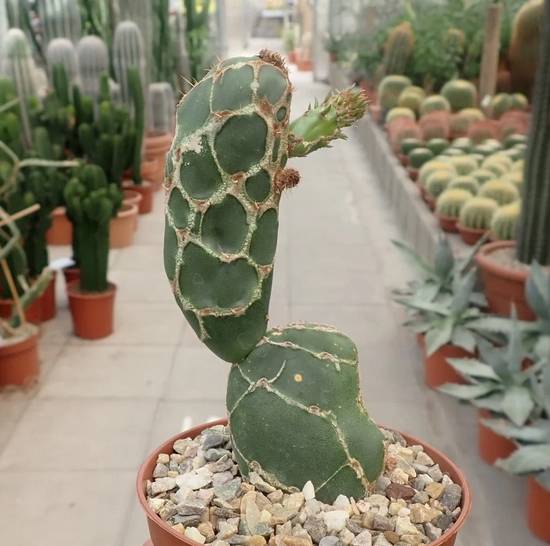
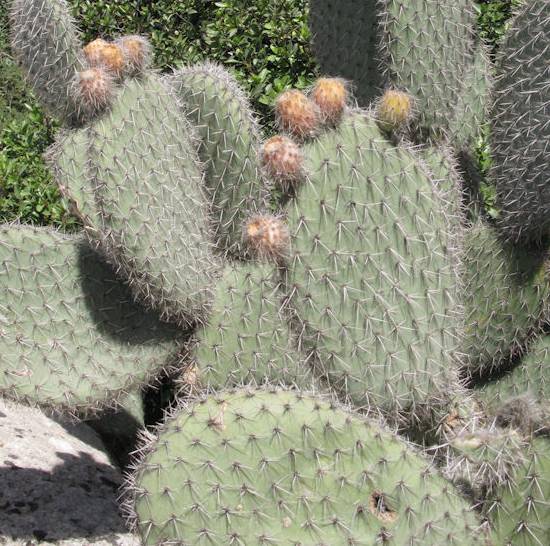
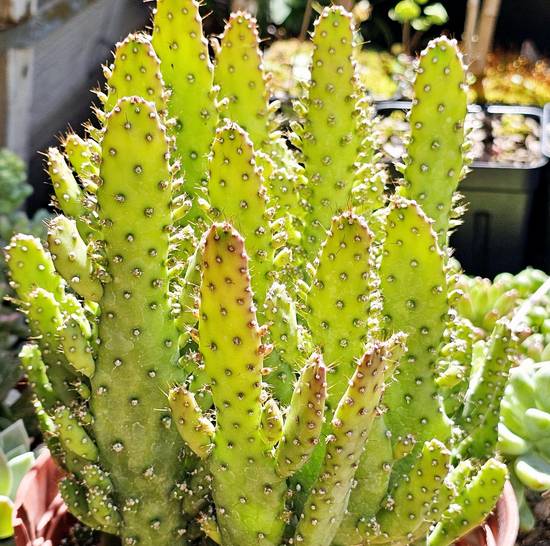
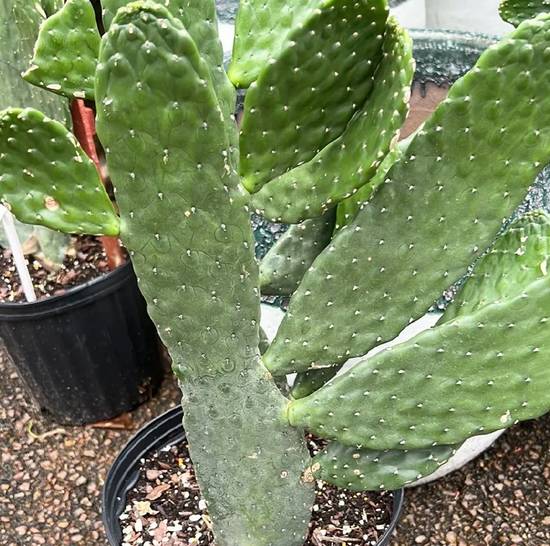
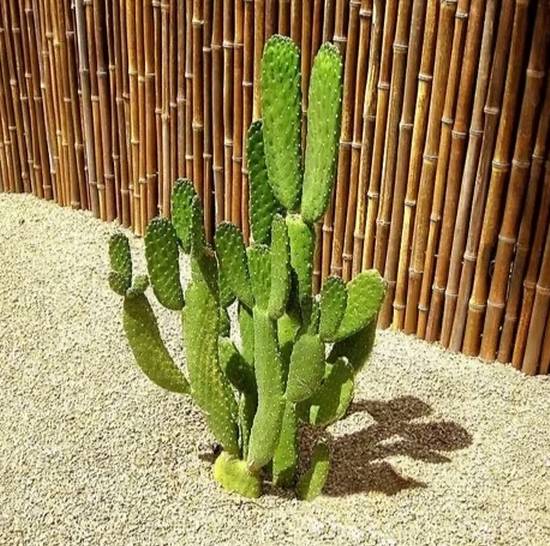
The Opuntia Rubescens is an ornamental prickly pear variety particularly appreciated for the pink to reddish coloration of its young pads, from which it takes its name “rubescens”. This vivid pigmentation, rare among opuntias, makes it a highly decorative cactus, suitable both for pots and for planting in the ground in warm regions.

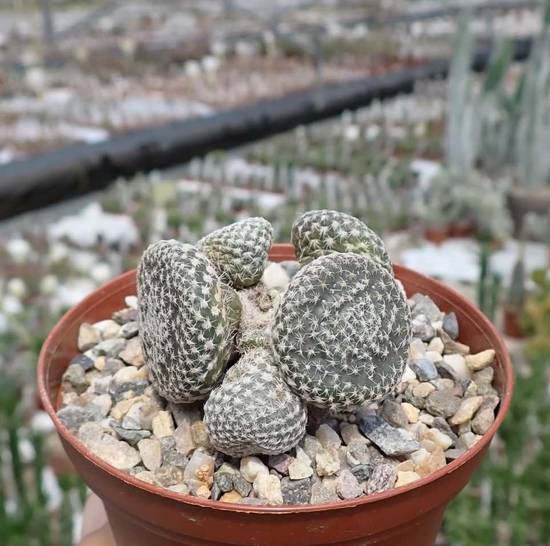
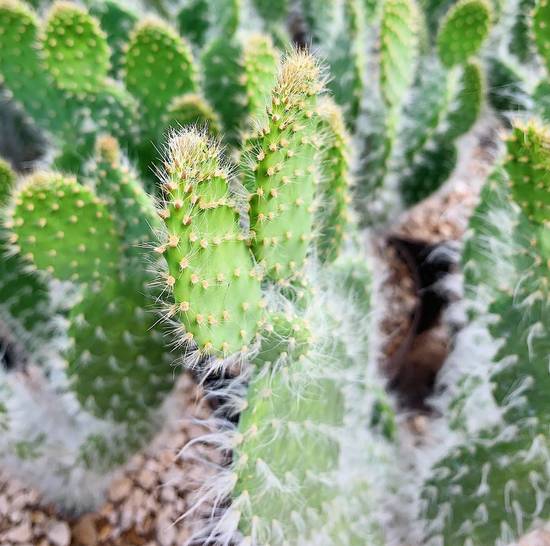
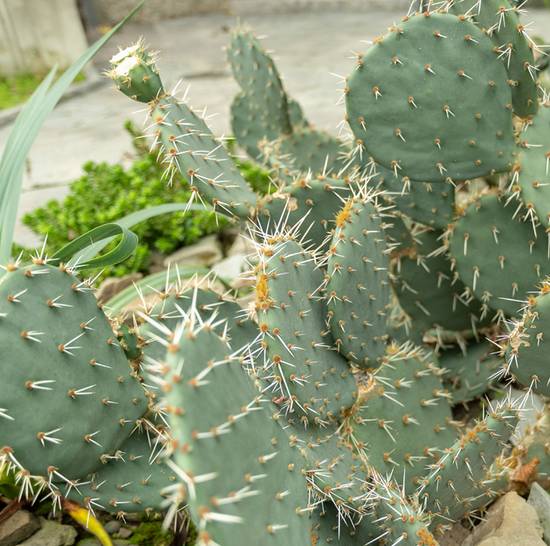
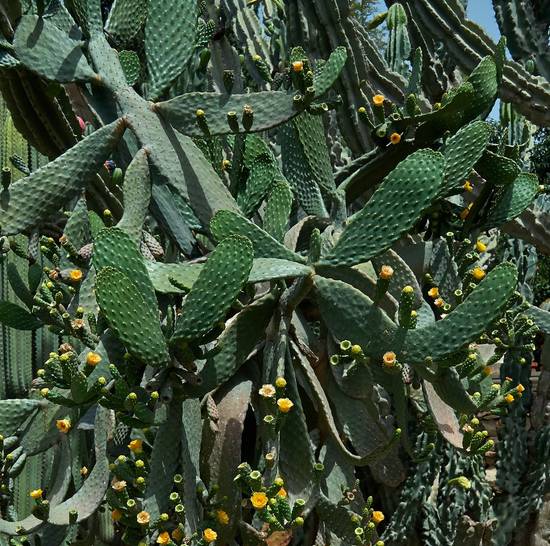
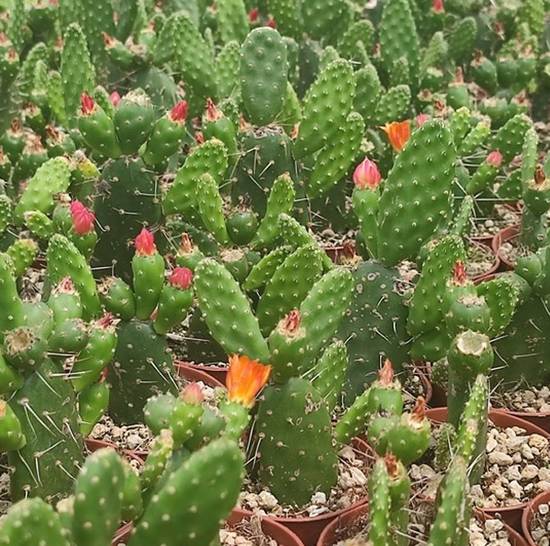
Its pads (or cladodes) are oval, flattened, light green to reddish depending on exposure and age. They are dotted with areoles bearing fine glochids and sometimes white or yellowish spines. This species can form a dense shrub ranging from several tens of centimeters to a few meters depending on growing conditions.

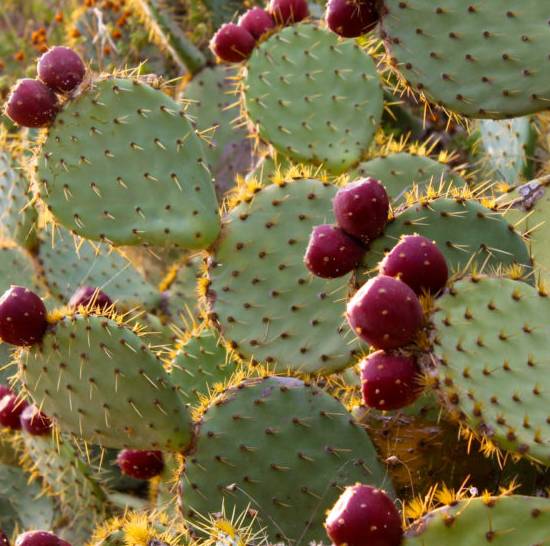
Flowering, which is spectacular, usually occurs in summer: large golden-yellow flowers appear on mature pads, followed by edible purple fruits with a sweet flavor.

Native to Central America, and more specifically Mexico, the Opuntia Rubescens has become widely naturalized in many warm regions of the world, particularly around the Mediterranean and in Australia. It grows in dry, rocky environments under intense sunlight and is perfectly adapted to drought.
Abundant light is essential to maintain the beautiful red coloration of the pads.

🌞 Outdoors: Direct sun for at least 6 to 8 hours per day.

🌤️ Protection: Young pads can be sensitive to intense sun during extreme heatwaves. Temporary light shading is recommended.

🏠 Indoors: Behind a very bright window, or ideally in a south-facing conservatory.
The Opuntia Rubescens requires little water but is sensitive to stagnant moisture.

💧 Spring / Summer: One watering every 2 to 3 weeks, when the substrate is completely dry.

🍂 Autumn / Winter: No watering or very infrequent watering, especially if the plant is protected from frost.

⚠️ Important: Water only during the active growth period. Use an appropriate substrate and always allow it to dry completely between waterings.
This cactus is relatively tolerant, but winter protection is necessary outside Mediterranean climates.

🌡️ Optimal range: Between 20 °C and 35 °C.

❄️ Cold resistance: Down to −5 °C in perfectly dry, well-drained soil. In pots, bring indoors in winter as soon as temperatures drop below 5 °C.

💡 Tip: A bright winter rest at 8–10 °C promotes rapid regrowth in spring.
Well-drained soil is essential.

🪨 Recommended mix: 50% cactus soil, 25% perlite, 25% pumice or coarse sand.

⛏️ Drainage tip: Add a layer of drainage material at the bottom of the pot.
The Opuntia Rubescens flowers generously on mature pads.

📆 Period: From May to August depending on climate.

🌼 Flower: Bright yellow, sometimes tinged with orange, large and showy.

🍓 Fruit: Edible, sweet, with purple skin, usually harvested at the end of summer.

💡 To encourage flowering: Provide full sun, apply a suitable cactus fertilizer in spring, and respect a winter rest period.
FAQ - Opuntia Rubescens

What is the geographical origin of Opuntia Rubescens?
Opuntia Rubescens originates from Mexico, but it is now found in many arid regions around the world, particularly around the Mediterranean basin where it has acclimated very easily.
How should Opuntia Rubescens be watered in a pot?
In a pot, watering should be spaced out and only done when the substrate is completely dry. During warm periods, watering every 15 to 20 days is sufficient. In winter, it is best not to water at all.
What type of soil is best suited for Opuntia Rubescens?
This cactus requires very well-draining soil. A cactus potting mix mixed with perlite or pumice is ideal.
Can Opuntia Rubescens bloom indoors?
Yes, but it requires excellent light, plenty of warmth, and a good supply of suitable nutrients. Flowering remains more frequent outdoors.
How often should Opuntia Rubescens be repotted?
Repotting every 2 to 3 years is sufficient. Choose a slightly larger pot with a well-drained base to prevent excess water.
Can the fruits of Opuntia Rubescens be eaten?
Yes, the fruits of this cactus are edible and slightly sweet. However, the glochids must be removed before consumption.
How should Opuntia Rubescens be protected in winter?
If grown in a pot, bring it into a dry and bright place as soon as temperatures drop below 5°C. In the ground, cover the base with a pumice mulch.
Why are the pads of my Opuntia Rubescens turning red?
This is a normal reaction to strong light exposure. This reddish coloration is typical of the species and can even be intensified by light stress.
What is the growth rate of Opuntia Rubescens?
It grows fairly quickly in spring and summer, forming new pads each year. Under optimal conditions, it can reach up to 1.5 meters.
What pests can attack Opuntia Rubescens?
It may be affected by mealybugs, especially indoors. Monitor the pads and use a gentle treatment if necessary, such as a cotton swab soaked in alcohol or black soap.