Opuntia Fulgida
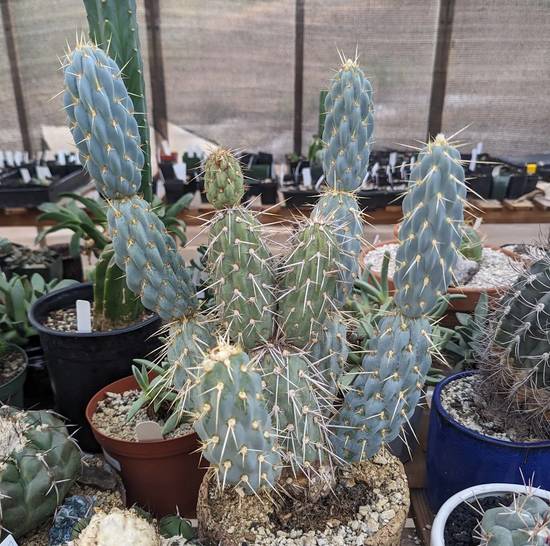
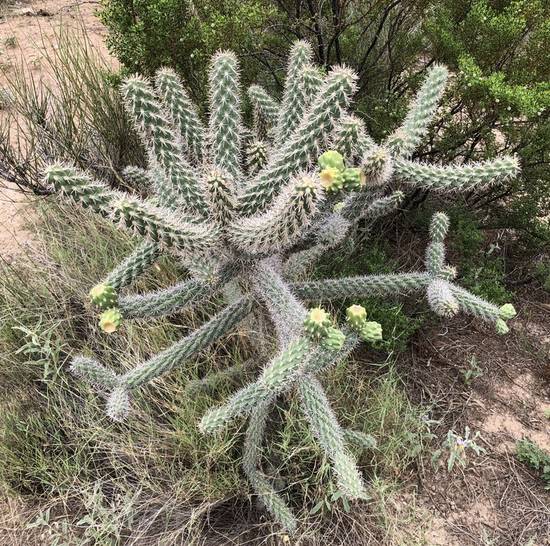
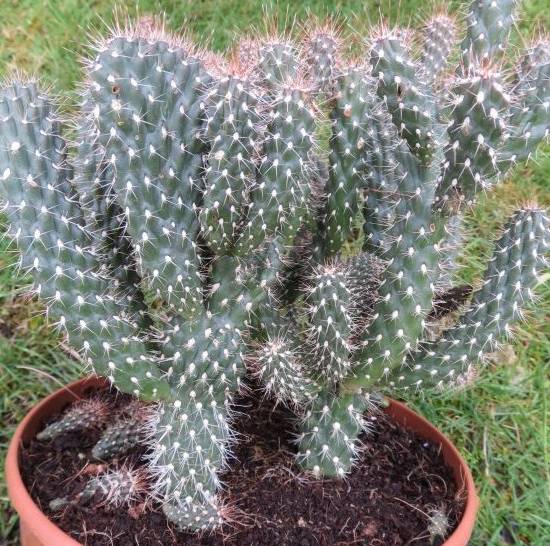
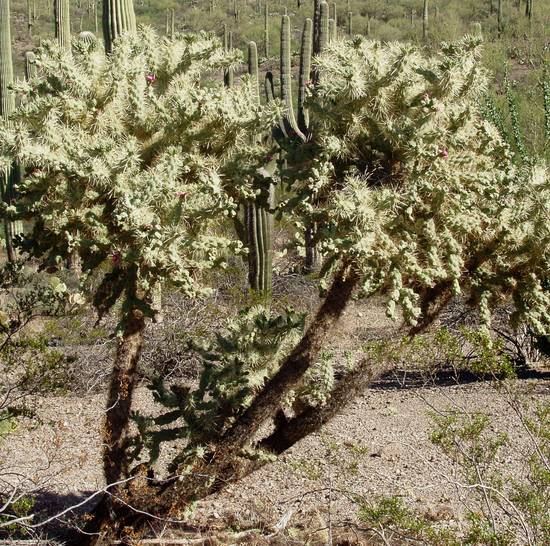
Opuntia Fulgida, also known as “Jumping Cholla,” is a species as spectacular as it is feared in the desert landscapes of the southwestern United States and Mexico. With its articulated segments, formidable spines, and almost skeletal appearance, this fascinating plant has become emblematic of the arid deserts of Arizona and Sonora.
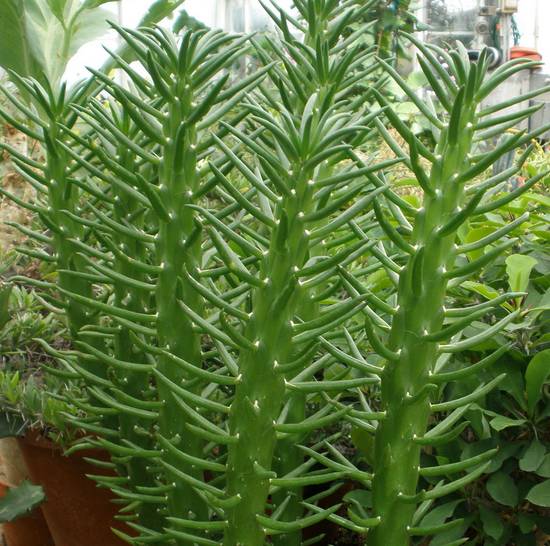
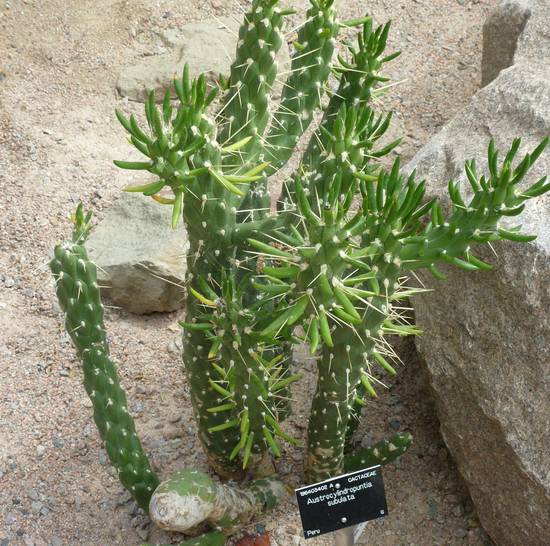
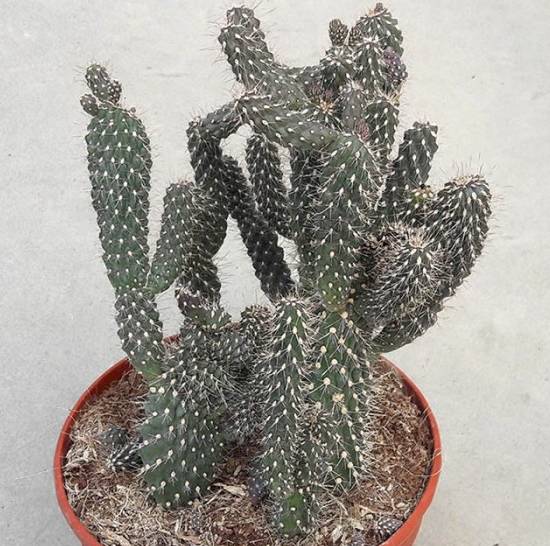
This shrubby cactus can reach up to 4 meters in height in its natural habitat. It is composed of cylindrical, jointed segments that detach very easily, which gave rise to its nickname “jumping cholla.” In reality, these segments do not “jump,” but they detach so readily that they seem to cling to anything passing nearby – an ingenious dispersal mechanism.
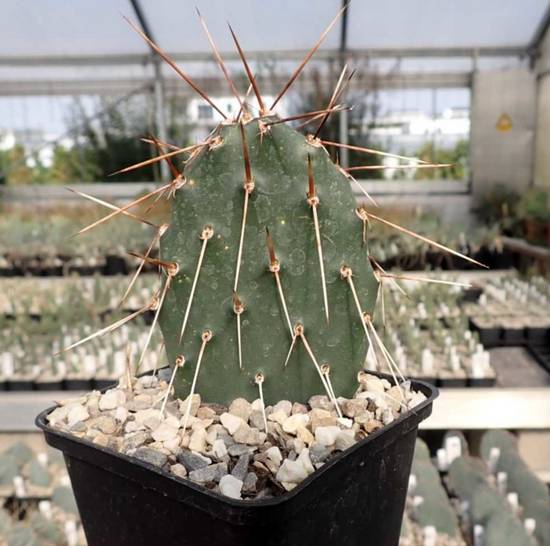
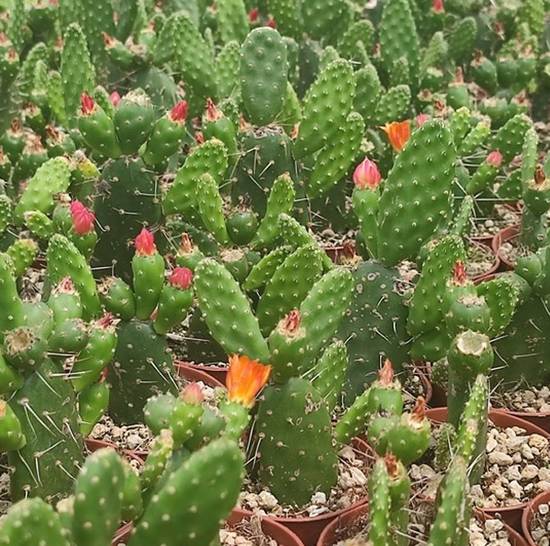
Its spiny structure, covered with shiny silvery sheaths, gives it a metallic look under desert light. During its summer flowering, Opuntia Fulgida reveals a softer side: beautiful pink to magenta flowers, followed by persistent yellow fruits, often forming multiple clusters.
🌞 Full sun exposure: 6 to 8 hours of direct sun per day are necessary for proper growth.
🌤️ Acclimation: If grown indoors or in a greenhouse, gradually expose it to direct sunlight.
💡 Lack of light causes etiolation and weakens the plant’s structure.
💧 Spring-summer: Water about every 3 weeks, only when the substrate is completely dry.
🍂 Winter: No watering if kept cool. It enters full dormancy.
⚠️ Excess humidity can rot roots or cause segments to detach.
🌡️ Comfort zone: Between 25 and 35°C
❄️ Cold resistance: Down to -5°C if the substrate is dry. Protect from prolonged winter rain.
🏠 Overwintering: In a bright indoor space or cold greenhouse, without watering.
🪨 Recommended mix: cactus soil (40%) + perlite (30%) + pozzolana (30%)
Use a stable and heavy pot, as the plant quickly becomes large.
🌸 Period: Summer (June-July)
🎨 Flowers: Pink to magenta, cup-shaped, reaching 3 to 5 cm.
🍐 Fruits: Persistent, yellow, often forming multiple clusters year after year.
💡 Flowering depends on plant age, exposure, and water stress.