Opuntia Cylindrica
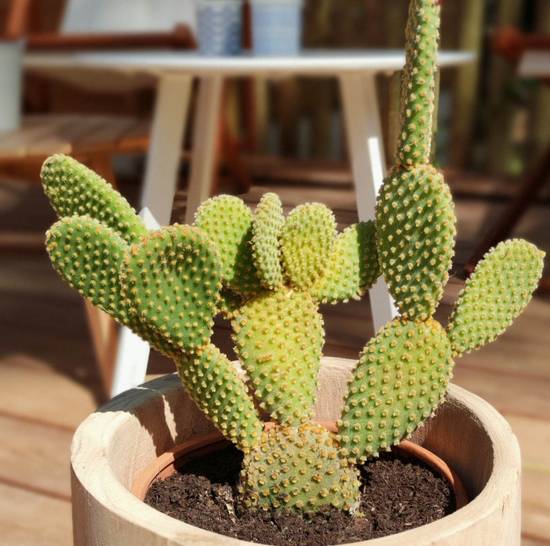
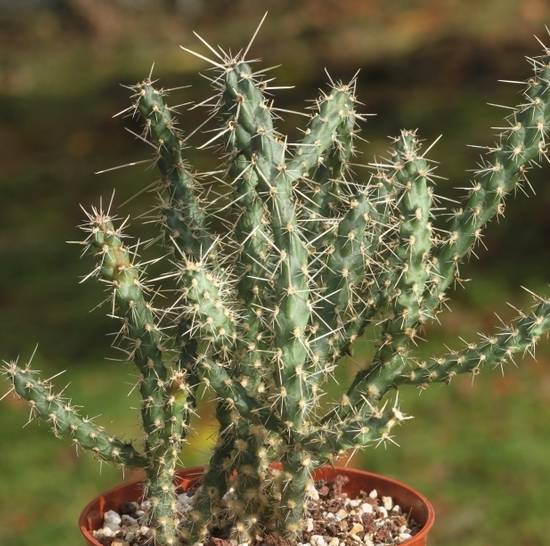
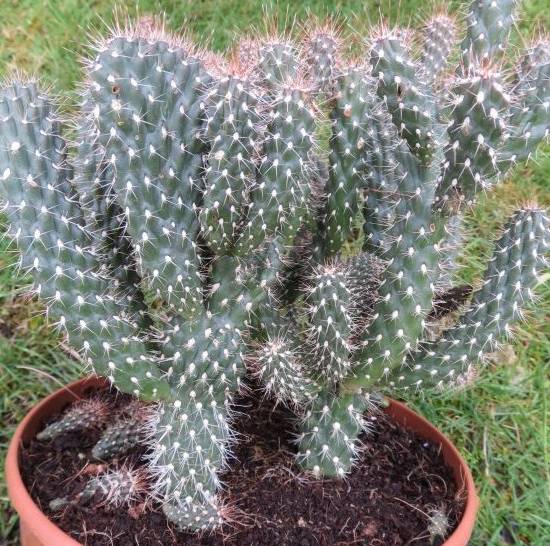
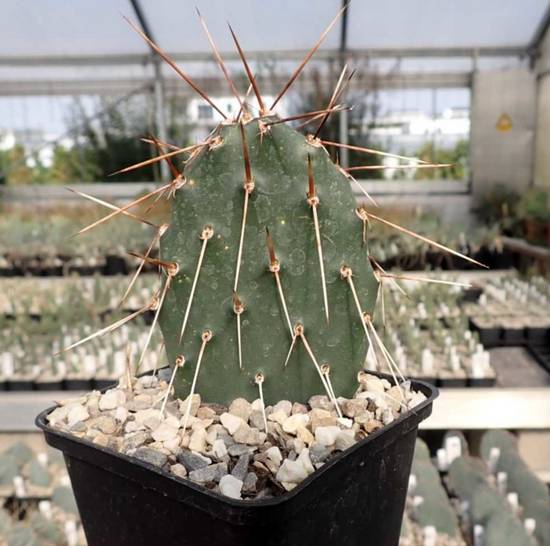
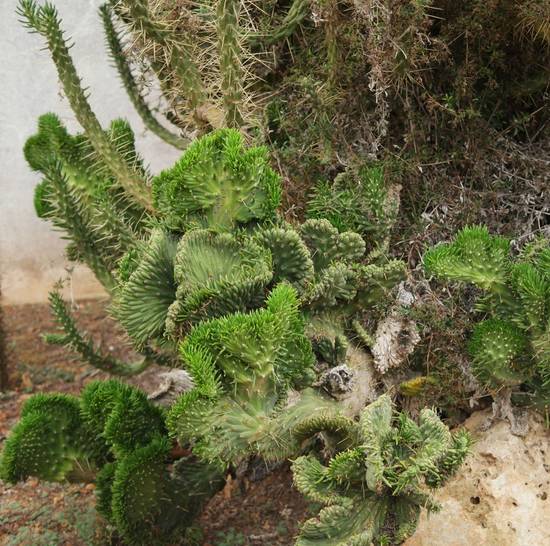
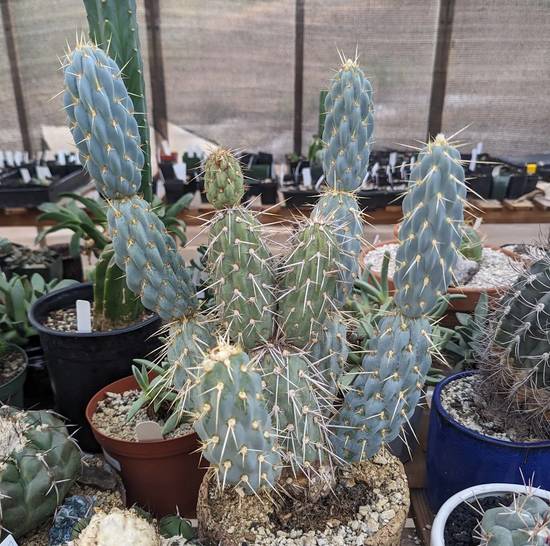
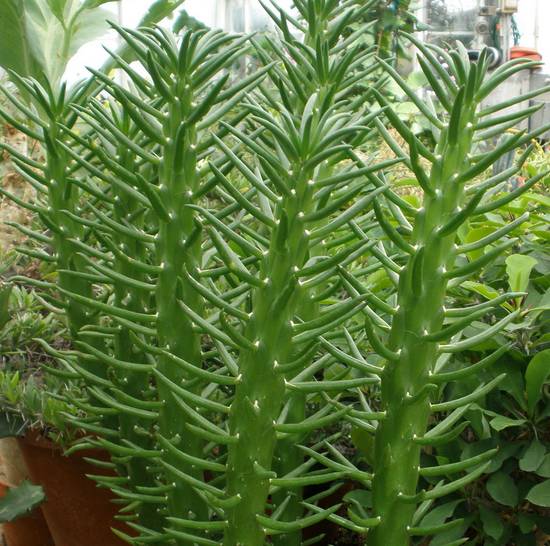
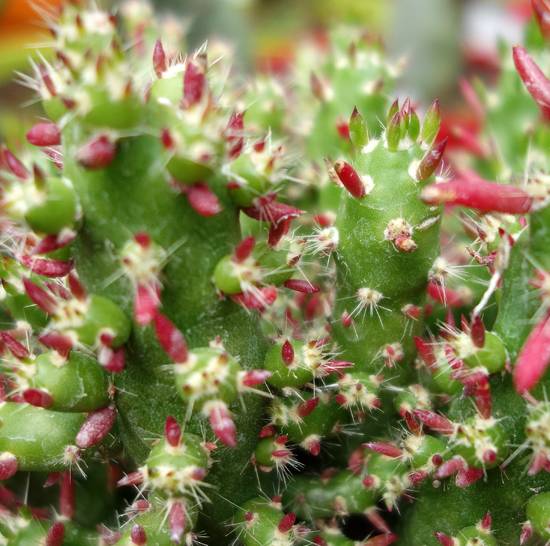
Opuntia Cylindrica is a columnar cactus species belonging to the large prickly pear family, but with a cylindrical and elongated habit that clearly distinguishes it from its flatter relatives. Native to the arid regions of South America, this plant draws attention with its upright, segmented stems covered with small spines grouped in glochids. These structures, although decorative, are extremely prickly and easily cling to the skin, requiring caution during handling.
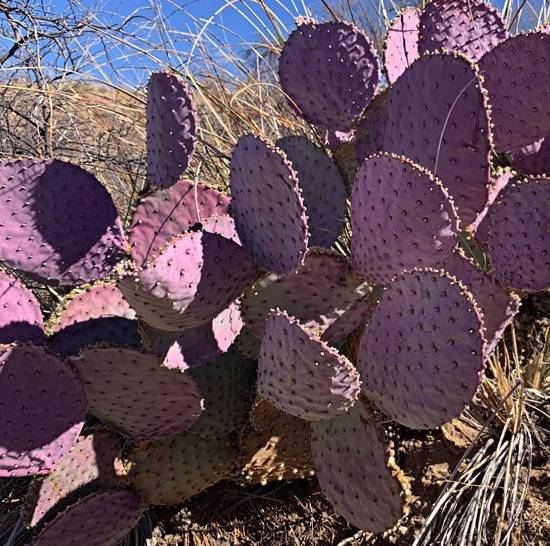
The growth of Opuntia Cylindrica is moderately fast under optimal conditions. Its cylindrical stems can exceed one meter in height in nature but remain more modest in pot cultivation. The segments are green, sometimes tinged with blue or violet depending on exposure, and covered with fine white or yellowish areoles from which glochids and spines emerge.
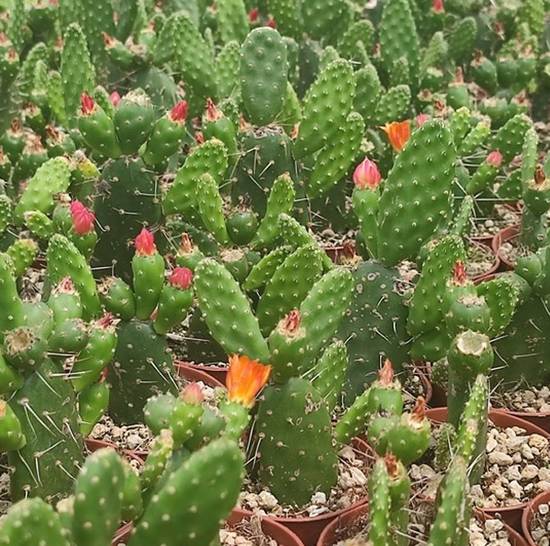
In spring and summer, Opuntia Cylindrica displays bright flowers, generally yellow to orange, beautifully contrasting with the deep green of its stems. These flowers are followed by small edible fruits in some varieties, although their consumption is not common.
🌞 Ideal exposure: full direct sun at least 6 hours per day.
🌤️ In hot climates: slight protection during the hottest hours prevents burns on young segments.
💡 The more light it receives, the more compact and colorful its segments become.
💧 Spring / summer: water every 2 to 3 weeks, only when the substrate is dry deep down.
🍂 Autumn / winter: reduce to light watering once a month, or stop completely if the plant is resting in cool conditions.
⚠️ A pot with effective drainage is essential to prevent rot.
🌡️ Ideal: between 20 and 30°C during active growth.
❄️ Minimum: tolerates down to -4°C when dry, but in pots it is advisable to bring it indoors if temperatures drop below 5°C.
🏠 Bright and dry overwintering encourages beautiful flowering the following season.
🪨 Recommended mix: 40% cactus soil + 30% perlite + 30% pozzolana
This mix mimics its natural habitat and prevents excess moisture.
🌸 Period: late spring to early summer.
🎨 Color: bright yellow to warm orange, sometimes with red hues at the base of the petals.
🕑 Duration: each flower lasts a few days, but the plant can bloom several times during the season.
💡 Good sunlight and a dry winter rest stimulate flowering.