Opuntia Spinosior

Opuntia Spinosior
Opuntia Spinosior
Opuntia Spinosior

Opuntia Spinosior

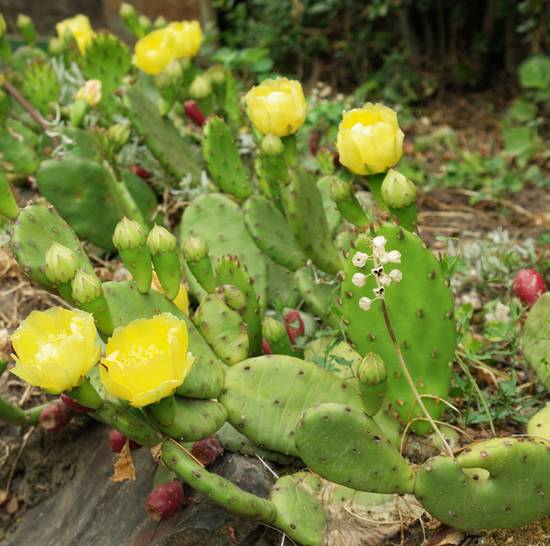
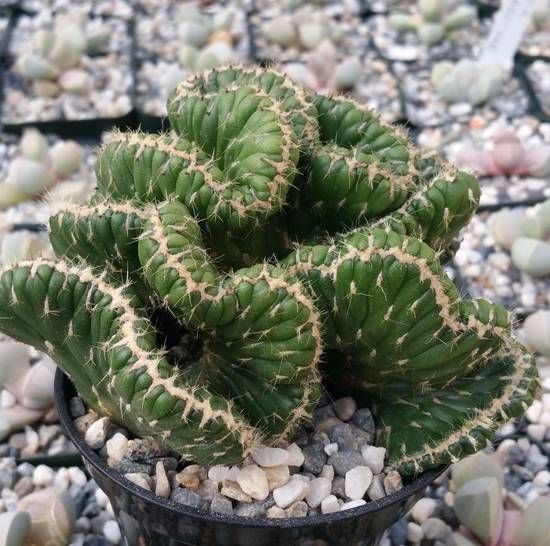
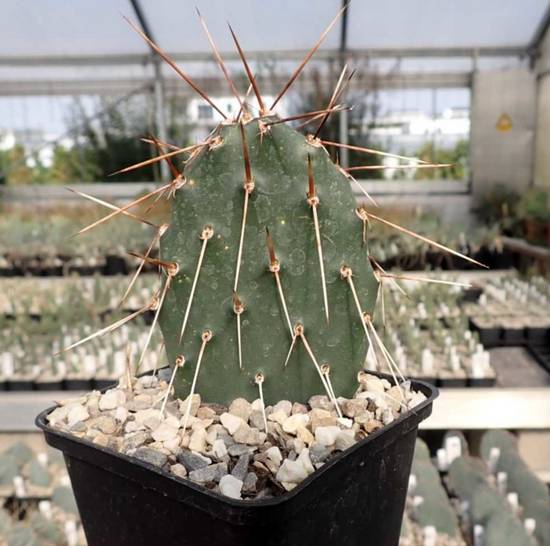
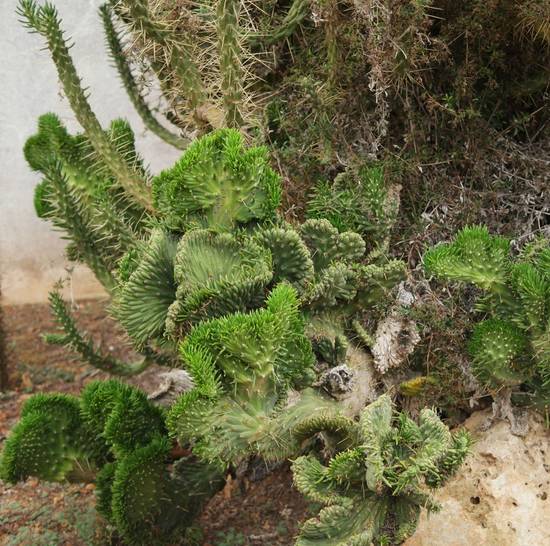
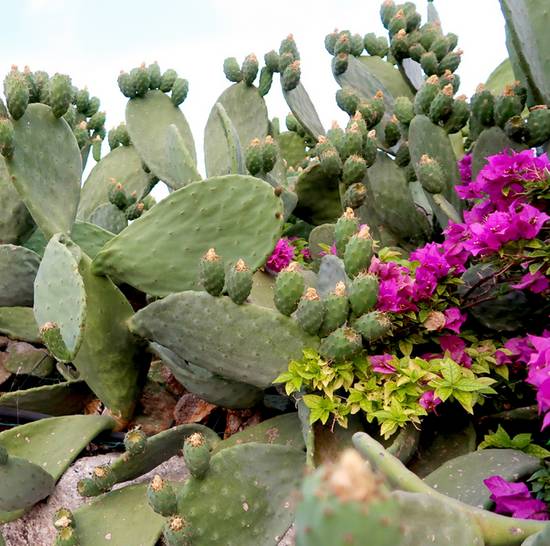
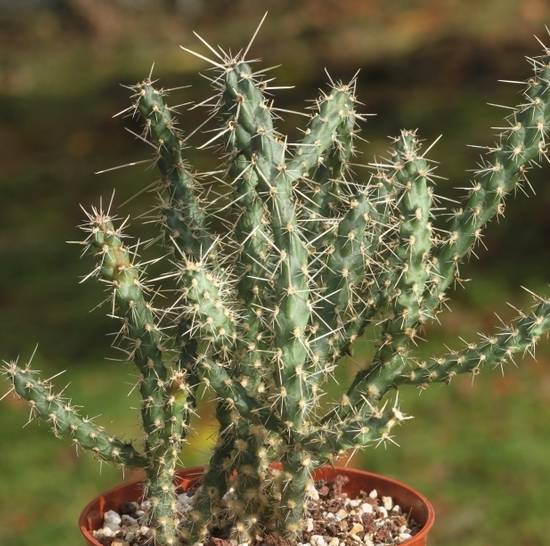
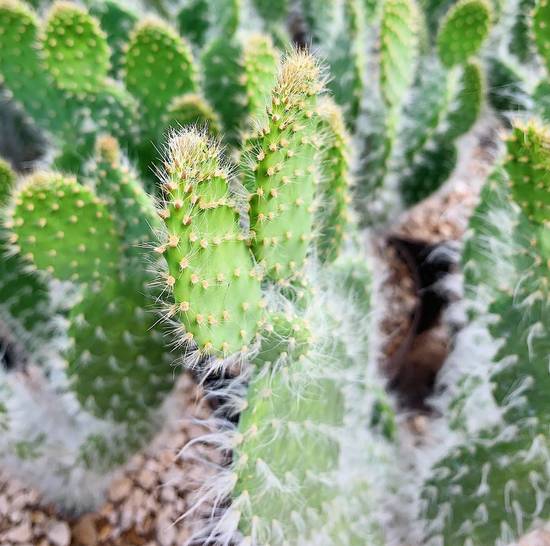
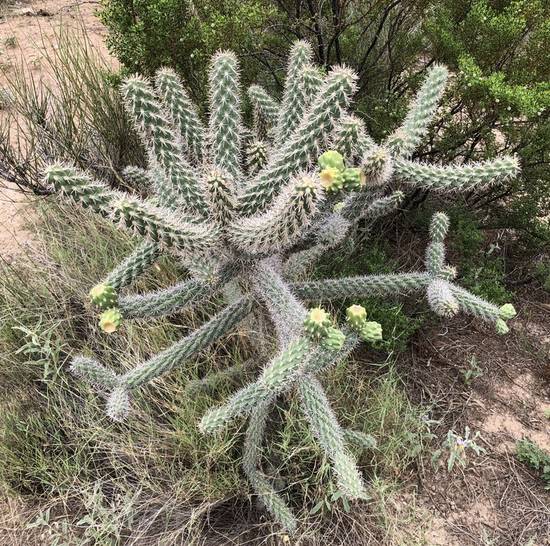
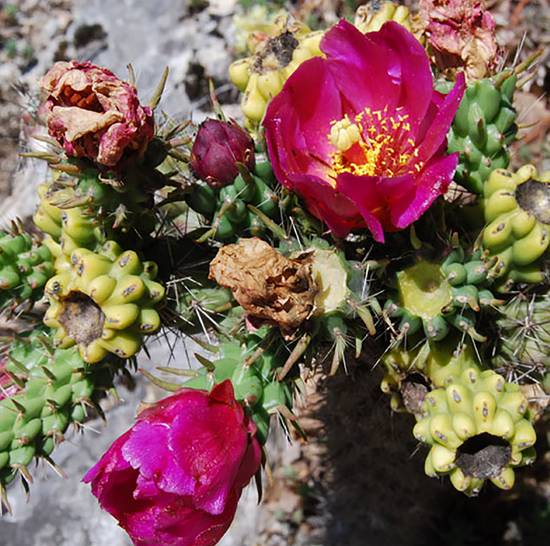
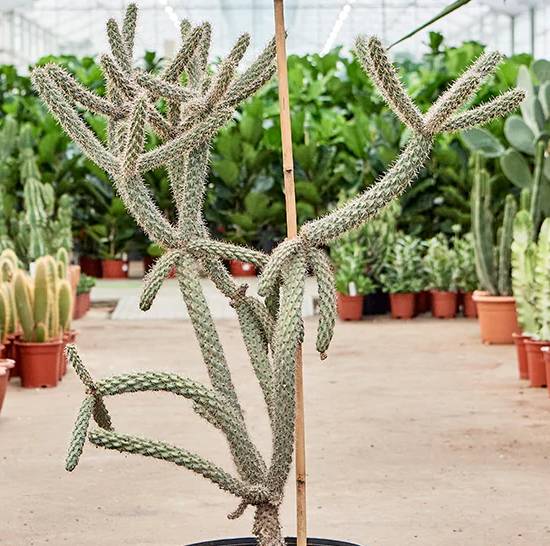
The Opuntia Spinosior is a striking cactus belonging to the large prickly pear family. This member of the Opuntia genus is admired for its shrubby habit, jointed stems with changing colors, and its long, formidable yet decorative spines. It is sometimes nicknamed the "Pink Cholla" due to its magnificent flowers in purple, pink, or violet shades. Highly resilient, it is used in arid gardens as an ornamental plant, but also in impenetrable hedges because of its fearsome spines.

This cactus branches generously, forming clusters of cylindrical stems connected to one another. The closely spaced areoles produce numerous rigid, glossy spines that can reach several centimeters in length. Its spectacular flowering enhances the entire plant, especially during the warm months.

Native to the southwestern United States and northern Mexico, the Opuntia Spinosior grows at altitudes ranging from 900 to 1,800 meters in desert to semi-arid areas. It is mainly found in Arizona, New Mexico, and Sonora, on rocky, sandy terrain, often in full sun and exposed to wind.

In its natural habitat, it withstands extreme drought thanks to its water-storing stems and extensive root system. It is also adapted to temperature variations between day and night.
Like any true desert cactus, the Opuntia Spinosior requires intense light to thrive.

☀️ Outdoors : It flourishes in full sun, with 6 to 8 hours of direct light per day. Perfect for rock gardens or dry landscapes.

🏡 Indoors : Place it near a south-facing window. Ensure good ventilation and warmth, as it enjoys heat.
Watering must be measured to avoid root rot.

💦 Spring / Summer : Water about every 3 weeks, when the substrate is thoroughly dry.

❄️ Autumn / Winter : Stop watering completely during the dormancy period.

⚠️ Excess moisture or poor drainage are the main causes of mortality for this species. When in doubt, favor dryness!
The Opuntia Spinosior is hardy in certain regions.

🌡️ Tolerates : down to -10 °C if the soil remains perfectly dry.

🔥 Optimal : between 20 and 35 °C. It enjoys hot, dry summers.

💡 Good ventilation and well-drained soil promote longevity.
This cactus requires light, mineral, and well-drained soil.

🪨 Ideal : a mix of special cactus potting soil, perlite, and pozzolana.

🔄 Repotting : every 2 to 3 years in spring, choosing a wide and stable pot.
The Opuntia Spinosior offers remarkable flowering in the heart of summer.

📅 Period : June to August.

🎨 Flowers : Bright pink, magenta or violet, cup-shaped, highly appreciated by pollinating insects.

🍃 Tip : To stimulate flowering, provide a dry and bright winter rest.
FAQ - Opuntia Spinosior

What is the natural distribution area of Opuntia Spinosior?
It is native to the southwestern United States, particularly Arizona and New Mexico, as well as northern Mexico. It grows in semi-desert rocky areas exposed to intense heat.
How should Opuntia Spinosior be properly watered?
Water only when the substrate is completely dry. In summer, watering every 3 weeks is sufficient. In winter, stop watering entirely to prevent irreversible rot.
What temperatures can Opuntia Spinosior tolerate?
It can tolerate temperatures down to -10°C if the substrate is dry. However, it prefers warm and dry conditions between 20 and 35°C.
What is the ideal substrate for Opuntia Spinosior?
A well-draining substrate is essential. Mix cactus soil with perlite and pumice to ensure proper drainage.
How can you recognize overwatering or underwatering in Opuntia Spinosior?
Overwatering causes black spots, soft stems, or falling segments. Underwatering results in slight shriveling. It is better to underwater than overwater.
When and how should Opuntia Spinosior be repotted?
Repot every 2 to 3 years in spring into a slightly larger pot with fresh, well-draining substrate. Handle carefully due to its spines.
What is the mature size of Opuntia Spinosior?
It can reach 1 to 2 meters in height and spread widely into dense clumps under favorable conditions.
Is Opuntia Spinosior toxic or dangerous?
It is not toxic, but its sharp spines can cause painful injuries. Handle with thick gloves or sturdy tools.
How can flowering of Opuntia Spinosior be stimulated?
Provide a dry, bright winter rest, then apply a cactus fertilizer in spring to boost summer flowering.
Can Opuntia Spinosior be grown in a pot?
Yes, provided you use a wide, stable pot and a well-draining substrate. It is ideal for sunny terraces or dry balconies.