Opuntia Titania
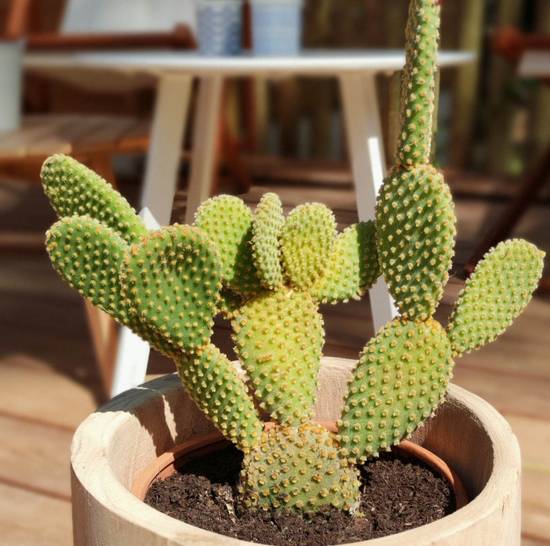
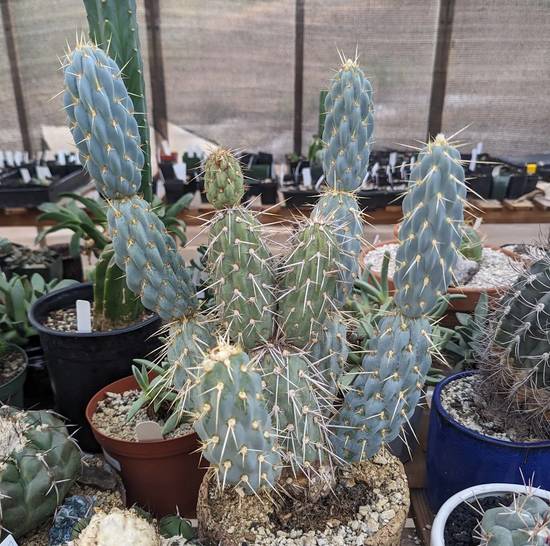
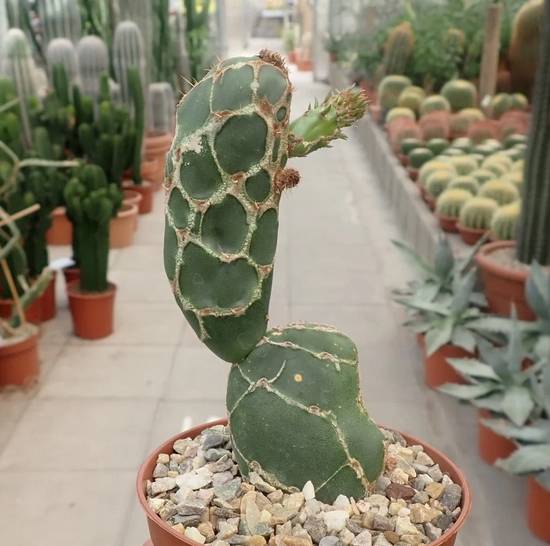
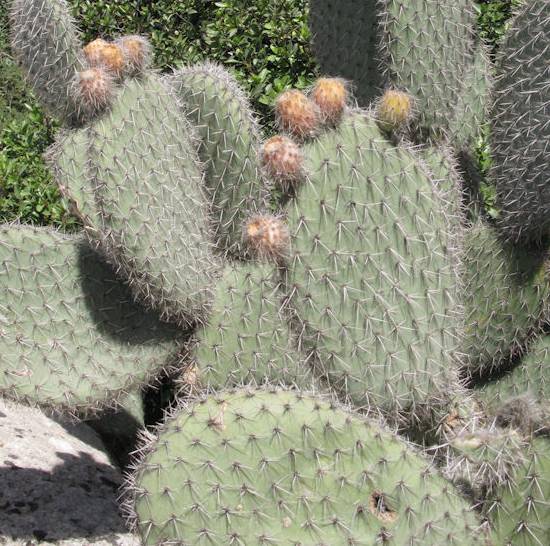
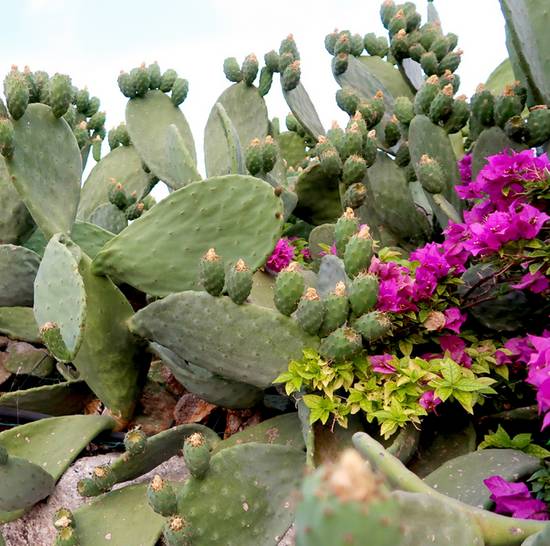
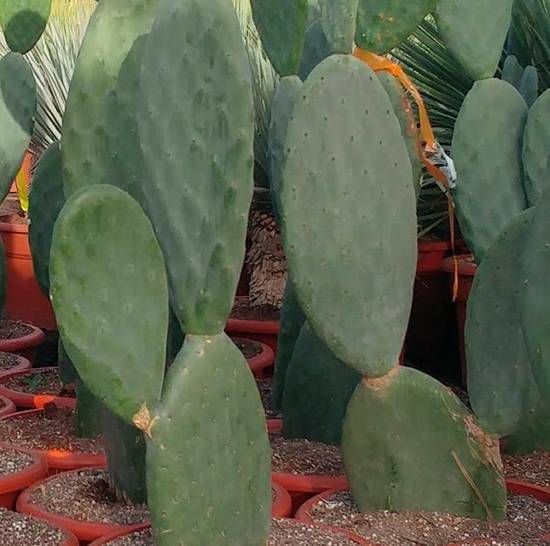
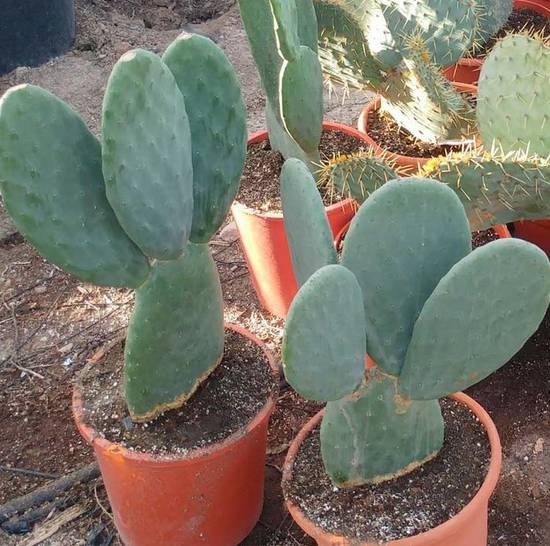
The Opuntia Titania is a remarkable variety of the Opuntia genus, appreciated for its compact habit, thick pads and grey-green tones highlighted by velvety areoles. Unlike other more invasive prickly pears, this cultivar stands out for its contained silhouette and highly decorative appearance.
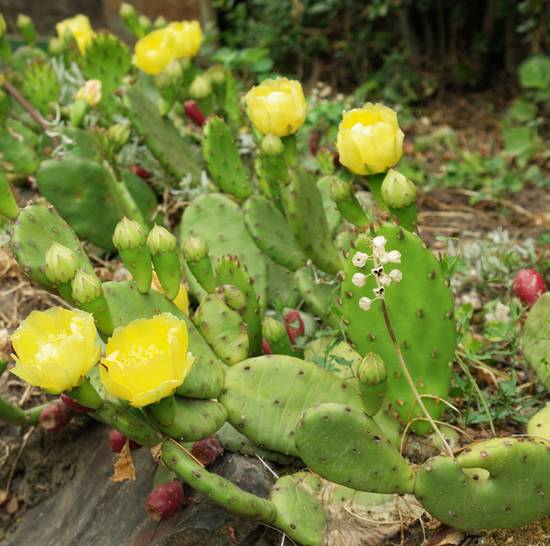
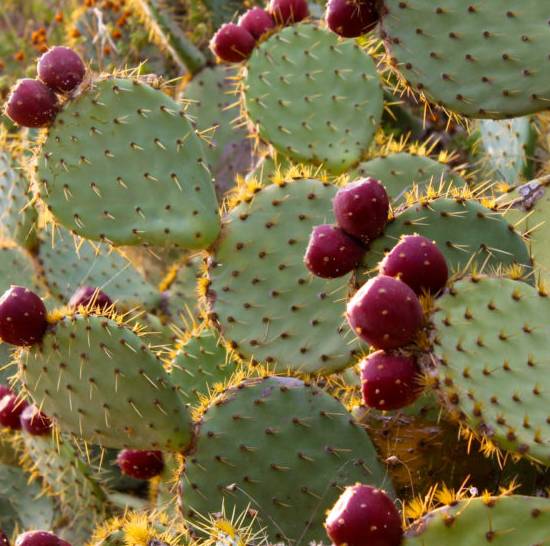
Its cladodes (or “pads”) are oval, sometimes slightly wavy, covered with glochids (small irritating hairs) and sometimes with robust spines. Young growth is often tinged with purple. This opuntia can produce, in season, beautiful yellow to orange flowers, followed by edible red fruits (beware of the glochids).
This variety is perfect for lovers of graphic cacti, whether planted in the ground in warm regions or grown in pots on a sunny terrace.
The Opuntia Titania is a horticultural cultivar selected for its ornamental qualities. It is derived from wild forms native to Central and North America, mainly Mexico and the southern United States.
It therefore inherits excellent resistance to heat, drought and wind, while remaining more compact than its wild relatives.
It therefore inherits excellent resistance to heat, drought and wind, while remaining more compact than its wild relatives.
Like any good Opuntia, it thrives in full sun.
🌞 Outdoors: Place it in direct sunlight, ideally 6 to 8 hours per day. This strengthens its form, color and flowering.
🌤️ Indoors: Position it behind a south-facing window. A grow light can supplement light if necessary.
🚫 To avoid: Prolonged shade, which leads to unattractive etiolation.
🌞 Outdoors: Place it in direct sunlight, ideally 6 to 8 hours per day. This strengthens its form, color and flowering.
🌤️ Indoors: Position it behind a south-facing window. A grow light can supplement light if necessary.
🚫 To avoid: Prolonged shade, which leads to unattractive etiolation.
The Opuntia Titania is very water-efficient.
💧 During the growing season (May to September): Water every 15 to 20 days. Always wait until the substrate is completely dry.
❄️ During winter dormancy: No watering is necessary if kept cool. Light monthly watering only if temperatures exceed 12 °C.
⚠️ Advice: Always use a well-drained substrate to avoid the risk of rot.
💧 During the growing season (May to September): Water every 15 to 20 days. Always wait until the substrate is completely dry.
❄️ During winter dormancy: No watering is necessary if kept cool. Light monthly watering only if temperatures exceed 12 °C.
⚠️ Advice: Always use a well-drained substrate to avoid the risk of rot.
Robust but sensitive to cold moisture.
🌡️ Ideal temperatures: 20 to 32 °C in summer.
❄️ Minimum tolerated: −3 °C if kept dry. Otherwise, overwinter between 5 and 10 °C.
🏠 Recommended overwintering: In a cool, bright location with watering stopped to promote future flowering.
🌡️ Ideal temperatures: 20 to 32 °C in summer.
❄️ Minimum tolerated: −3 °C if kept dry. Otherwise, overwinter between 5 and 10 °C.
🏠 Recommended overwintering: In a cool, bright location with watering stopped to promote future flowering.
A mineral soil is the key to success.
🪨 Ideal composition: 50 % cactus soil, 25 % perlite, 25 % coarse sand or pumice.
⛏️ Tip: Place drainage granules at the bottom of the pot.
🪨 Ideal composition: 50 % cactus soil, 25 % perlite, 25 % coarse sand or pumice.
⛏️ Tip: Place drainage granules at the bottom of the pot.
The Opuntia Titania is capable of producing a beautiful summer bloom.
📅 Period: Between June and August.
🌼 Flowers: Yellow to orange, cup-shaped, sometimes fragrant.
🍓 Fruits: Small edible red figs, highly appreciated by birds.
💡 Advice: A suitable fertilizer applied in spring promotes more generous flowering.
📅 Period: Between June and August.
🌼 Flowers: Yellow to orange, cup-shaped, sometimes fragrant.
🍓 Fruits: Small edible red figs, highly appreciated by birds.
💡 Advice: A suitable fertilizer applied in spring promotes more generous flowering.
FAQ - Opuntia Titania
What substrate is ideal for Opuntia Titania?
A well-draining mix is essential. Use a special cactus substrate with a good proportion of mineral materials to prevent rot.
Is Opuntia Titania frost-resistant?
It tolerates temperatures down to -3°C if the substrate is perfectly dry. If in doubt, overwinter it in a space between 5 and 10°C.
How can I stimulate the flowering of Opuntia Titania?
Provide a good dry winter rest, plenty of light, and a suitable fertilizer from spring onward.
Can Opuntia Titania be grown indoors?
Yes, if placed in a very bright room, ideally behind a south-facing window. Artificial lighting may be useful in winter.
Does Opuntia Titania produce edible fruit?
Yes, it can produce small red fruits. They are edible but should be handled carefully due to the glochids.
How often should Opuntia Titania be watered in summer?
Every 15 to 20 days is sufficient, provided the substrate has completely dried between waterings.
Can Opuntia Titania be planted in the ground?
Yes, in Mediterranean regions or with good drainage. In humid or frosty areas, prefer growing it in a pot.
Does Opuntia Titania grow quickly?
Its growth is moderate. It develops new pads each year if conditions are favorable.
Should Opuntia Titania be pruned?
No, but you can remove damaged pads or control its shape. Use gloves and clean tools.
What are the risks for Opuntia Titania?
Excess moisture is the main danger. Ensure good drainage and space out watering.