Opuntia Quitensis
It is hard to resist the spiny charm of Opuntia Quitensis, a South American cactus that is both decorative and resilient. Native to the highlands of Ecuador, Peru, and Colombia, it stands out with its flattened pads, bright flowering, and ability to grow in environments where few plants survive.
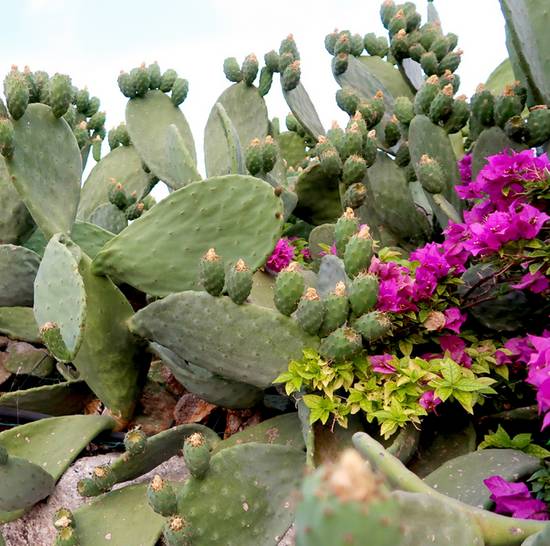
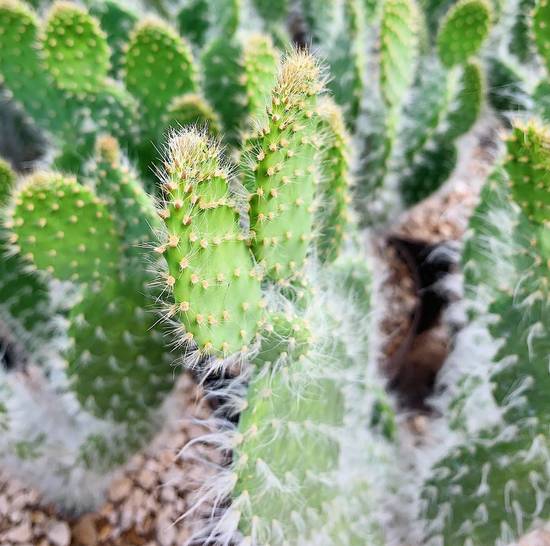
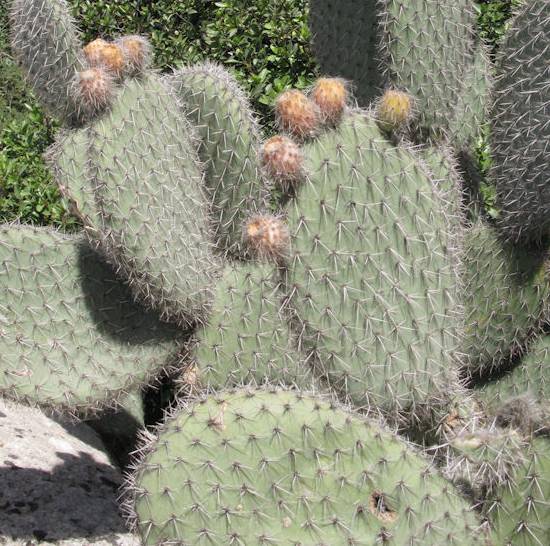
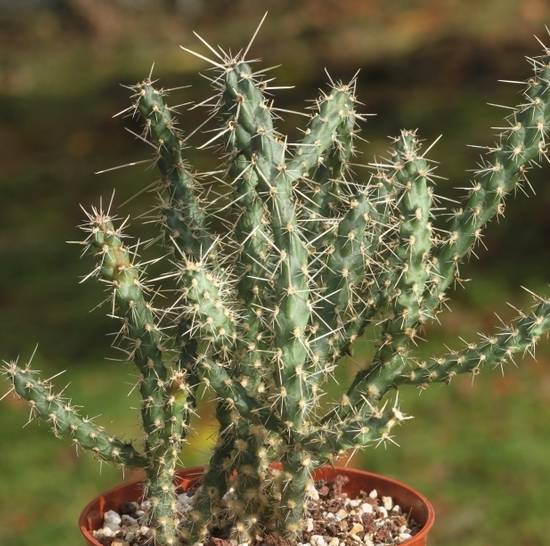
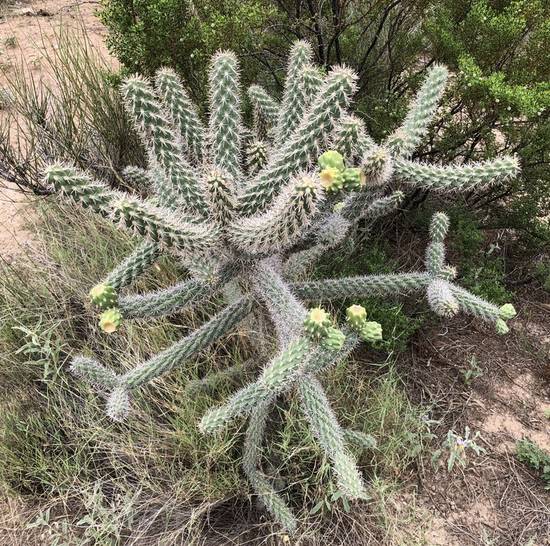
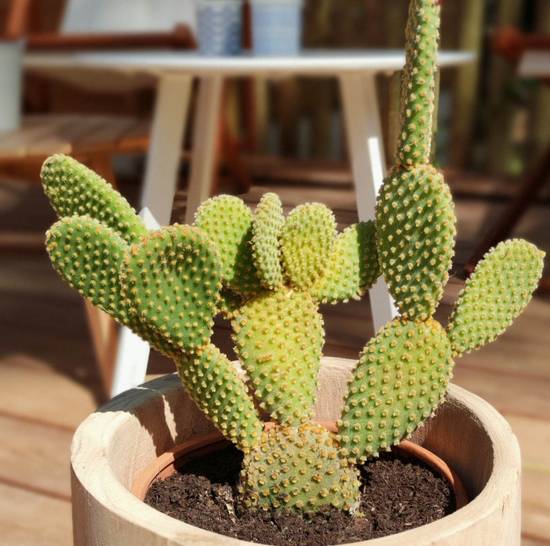
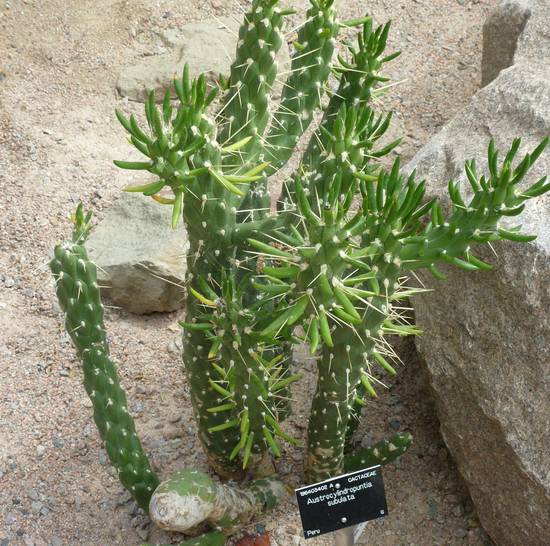
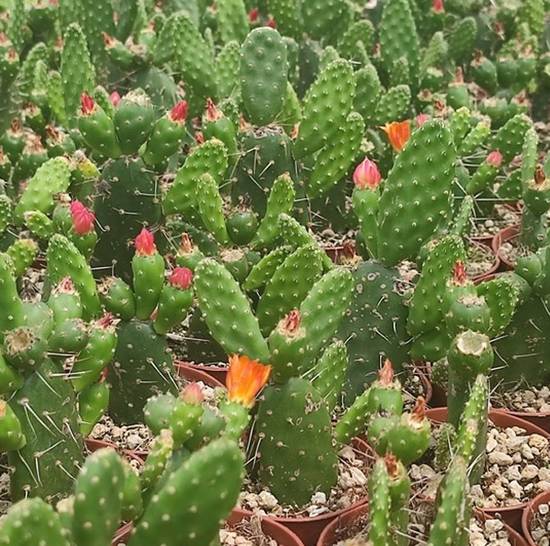
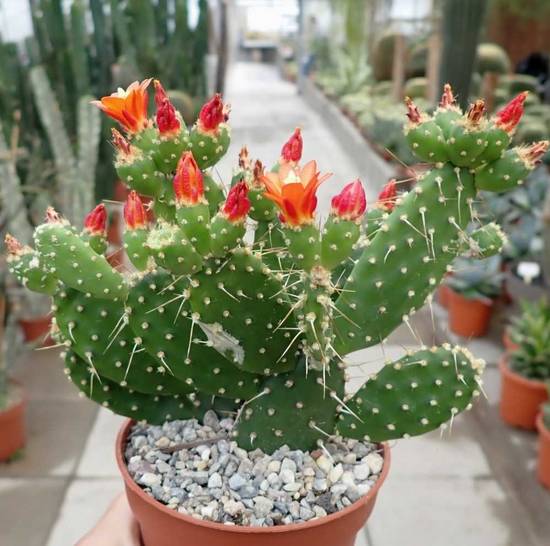
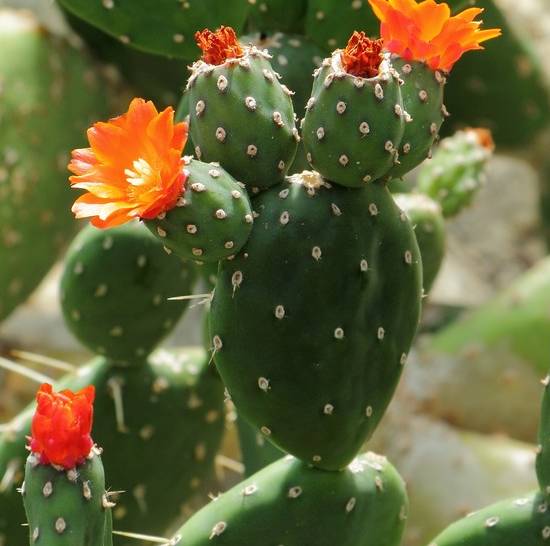
Opuntia Quitensis has a bushy to semi-tree-like habit. Its oval to rounded cladodes (pads) display a light green to bluish-green hue, often covered with small clusters of spines called glochids. These micro-spines, although tiny, are formidable to the touch and easily cling to the skin. Its bright yellow to orange-tinged flowers generally appear at the top of the pads in spring or summer and are followed by reddish edible fruits.
A hardy plant, Opuntia Quitensis tolerates heat, wind, poor soils, and even short periods of frost. Besides being ornamental, it also has culinary uses in its native regions, where young pads are consumed after cooking.
🌞 Ideal exposure: Full sun at least 6 hours per day.
🌤️ In hot climates: Light shading during the hottest hours may prevent burns on young pads.
💡 Indoors, place it behind a south-facing window for optimal sunlight.
💧 Spring / summer: Water every 2 to 3 weeks, only when the substrate is perfectly dry.
🍂 Autumn / winter: Almost completely stop watering if the plant is resting in a cool place.
⚠️ Absolutely avoid stagnant water, which quickly causes root and pad rot.
🌡️ Optimal temperature: 20 to 30°C during growth.
❄️ Minimum tolerated: -2°C when dry, but overwintering above 5°C is preferable.
🏠 In cold climates, bring it indoors in autumn, in a bright and lightly heated room.
🪨 Recommended mix: 40% cactus soil + 30% perlite + 30% pozzolana
🌸 Period: Spring to early summer.
🎨 Color: Bright yellow to orange, sometimes with pinkish shades.
🕑 Duration: Each flower opens for 1 to 2 days, but several follow one another on the same plant.
💡 Maximum sun exposure and a dry winter are the keys to stimulating flowering.