Kalanchoë Oricula

Kalanchoë Oricula
Kalanchoë Oricula

Kalanchoë Oricula

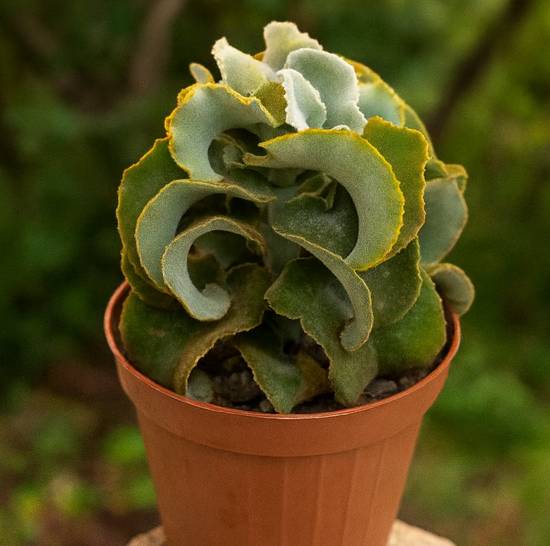
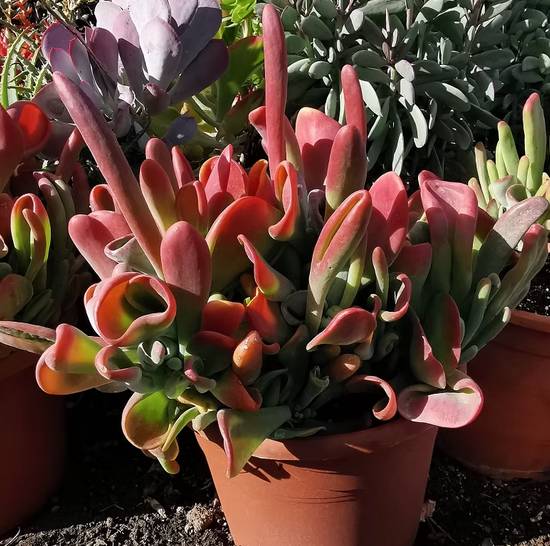
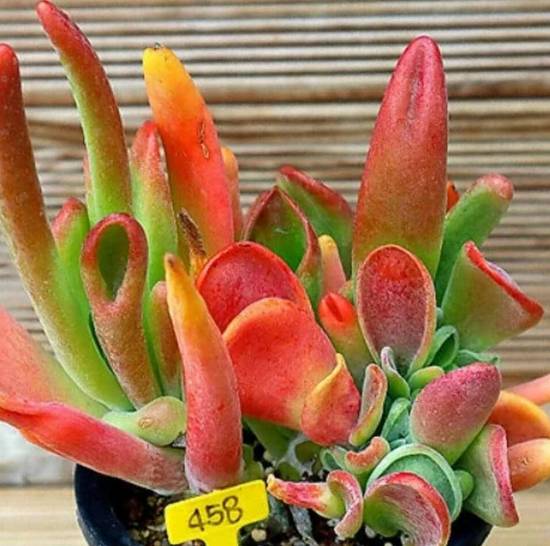
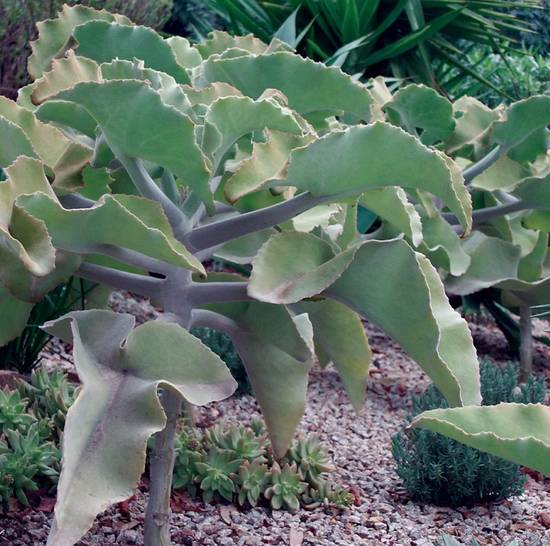
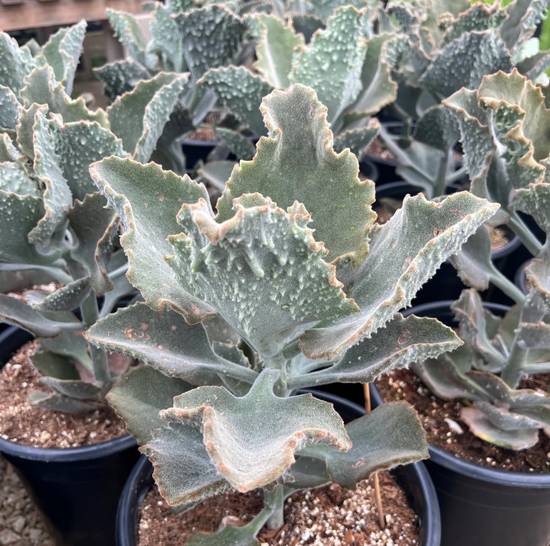
The Kalanchoë Oricula is a rare and remarkable succulent, instantly recognizable thanks to its spiraled foliage reminiscent of ears or shells. This unique swirling shape, which sometimes earns it the nickname “ear Kalanchoe”, immediately attracts collectors of unusual plants. The thick jade-green leaves with a satin finish develop in tight spirals forming a dense and perfectly geometric rosette. With its symmetrical structure and almost architectural appearance, Kalanchoë Oricula resembles a natural work of art, combining the beauty of sculpture with the resilience of a succulent plant.

In cultivation, Kalanchoë Oricula maintains a compact and rounded habit, usually reaching between 10 and 20 cm in height and width. It fits perfectly in a decorative pot placed on a windowsill, a well-lit shelf or within a contemporary succulent arrangement. Undemanding and drought-resistant, this cultivar is especially appreciated by lovers of geometric plant forms. It is also highly photogenic, making it a star on social media dedicated to houseplants.

The Kalanchoë Oricula is a recent horticultural creation, not found in the wild. It is likely derived from crosses or mutations of Kalanchoë Luciae, from which it retains the fleshy texture and drought tolerance, while adding an astonishing spiral form. This very stable mutation in cultivation is now produced in small batches by specialized nurseries. It remains rare on the European market and highly sought after for its exceptional aesthetic.
For Kalanchoë Oricula to maintain its beautiful spiral structure and intense color, generous light is essential:

🌞 Ideal exposure : bright light with gentle direct sun, 4 to 6 hours per day.

🌤️ Protection : in midsummer, avoid scorching midday rays that can mark the foliage.

💡 Insufficient light causes leaves to stretch, losing their spiral shape and becoming flatter and less compact.
Kalanchoë Oricula is a resilient succulent that stores water in its thick leaves:

🌱 Spring / summer : moderate watering every 15 to 20 days, once the substrate is completely dry.

🍂 Autumn / winter : greatly space out watering; once a month is more than enough, or even less if the plant is resting.

⚠️ Excess water is the number one danger: it can quickly cause rot at the base, often fatal for such a compact plant.
Kalanchoë Oricula prefers temperate to warm temperatures:

🌡️ Ideal temperature : between 18 and 28 °C during the day, without major thermal fluctuations.

❄️ Cold tolerance : not below 10 °C. Bring the plant indoors at the first signs of cool nights.

🏠 In winter, place it in a bright, cool and dry location without stagnant humidity.
Kalanchoë Oricula requires perfectly draining soil to avoid any risk of rot.

🪨 Use a special succulent substrate mixed equally with perlite or pozzolana to ensure optimal aeration. The pot must always have proper drainage.
The flowering of Kalanchoë Oricula is discreet and fairly rare:

🌸 Season : late winter or early spring, after a rest period.

🎨 Color : small white to cream tubular flowers carried on a flower stalk.

🕑 Duration : 1 to 2 weeks, not spectacular but charming.

💡 In practice, this flowering is often sacrificed to preserve the compact aesthetic of the spiral rosette, which some prefer not to “disturb”.
FAQ - Kalanchoë Oricula

What exposure is best for Kalanchoë Oricula?
It needs plenty of light to maintain its spiral shape. Place it in a very bright location with a few hours of direct sunlight if possible.
How should Kalanchoë Oricula be watered properly?
Water only when the substrate is completely dry. In summer, about every two weeks; in winter, once a month is enough. Avoid excess moisture to prevent rot.
Can Kalanchoë Oricula be placed outdoors?
Yes, but only from May to September in a sheltered location protected from rain. Bring it indoors once temperatures drop below 10°C.
What type of soil is suitable for Kalanchoë Oricula?
A cactus substrate enriched with perlite or pumice is ideal to ensure proper drainage.
How can I recognize overwatering in Kalanchoë Oricula?
Soft, dark, or translucent leaves, a blackening base, or a collapsing plant are typical signs of excess moisture.
Does Kalanchoë Oricula bloom easily?
It may bloom after a winter rest period, but the flowers are not very showy. Many collectors remove flower stalks to preserve the rosette.
Can Kalanchoë Oricula be propagated?
Propagation is delicate as offsets are rare. Leaf cuttings can be attempted, but success is not guaranteed.
What fertilizer should be used for Kalanchoë Oricula?
Use a low-nitrogen succulent fertilizer once a month in spring and summer to stimulate growth without altering its shape.
Is Kalanchoë Oricula suitable for beginners?
Yes, provided its light and drainage needs are respected. Its unique shape makes it slightly more sensitive to rot, so careful watering is essential.
Why is my Kalanchoë Oricula becoming deformed?
This is often caused by insufficient light, which leads to stretching or rosette distortion. Move your plant to a brighter location to restore its compact shape.