Kalanchoë Daigremontiana

Kalanchoë Daigremontiana

Kalanchoë Daigremontiana

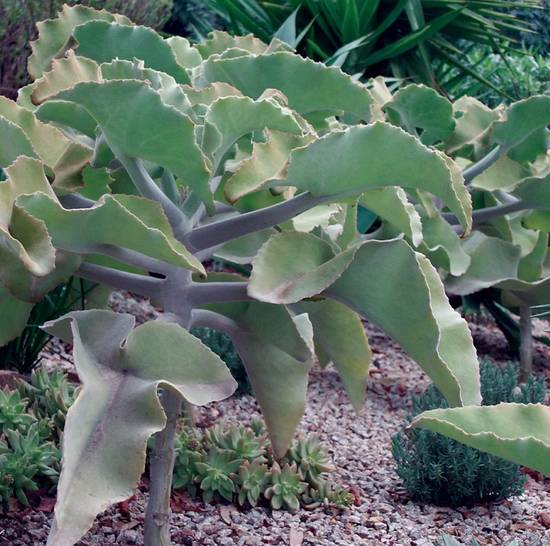
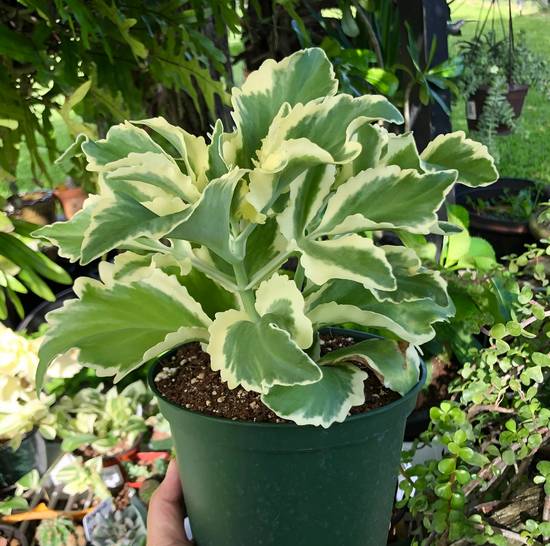
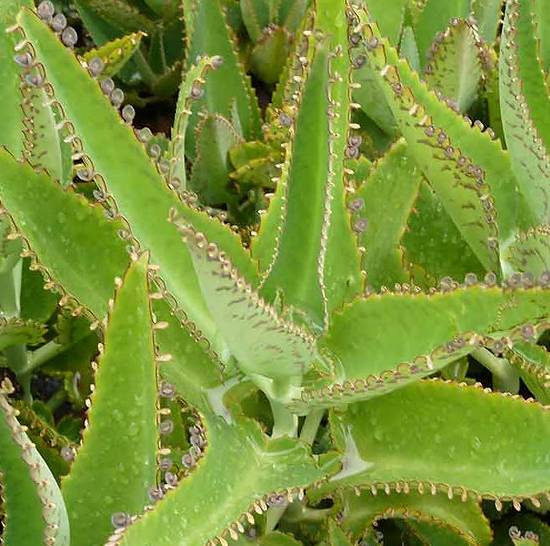
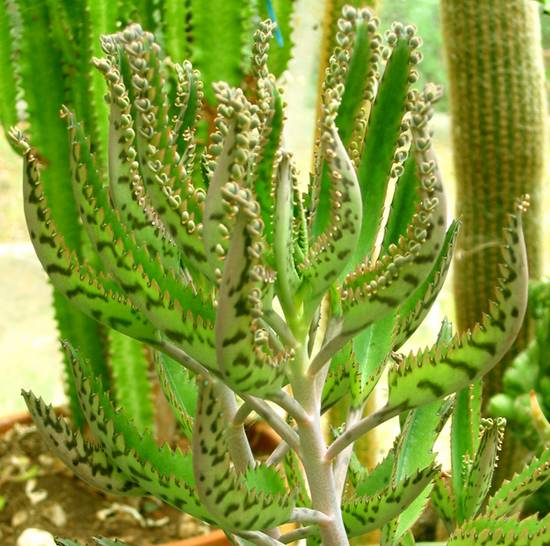
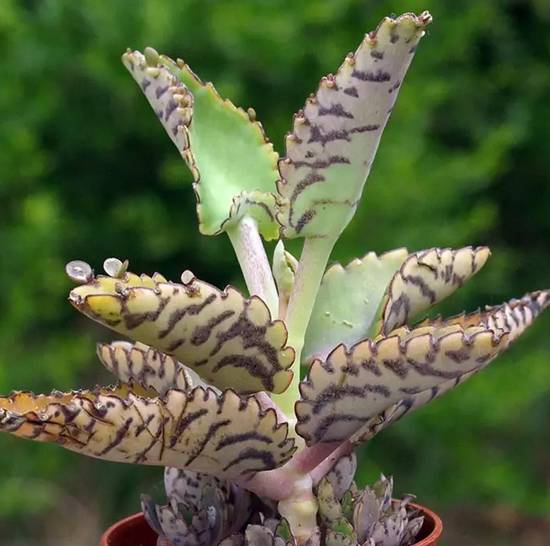
The Kalanchoë Daigremontiana, also nicknamed "mother of thousands", is one of the most fascinating representatives of the Kalanchoë genus. Native to Madagascar, it is famous for its unique vegetative reproduction: it produces plantlets along the edges of its leaves, capable of rooting spontaneously.

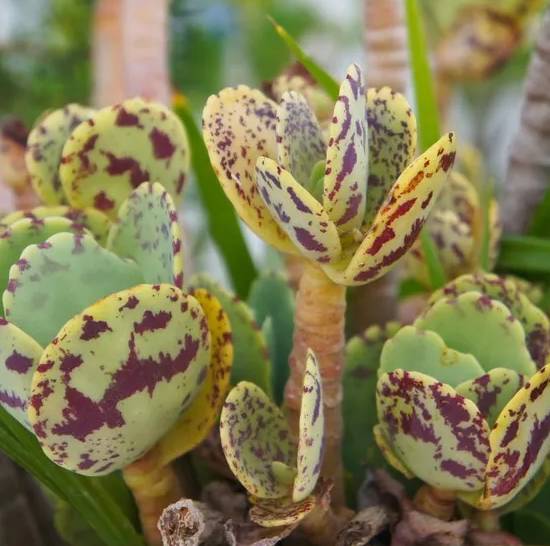
Its thick, triangular, serrated leaves are grey-green marbled with purplish tones. Along the margins, dozens of tiny plantlets constantly appear, ready to drop and colonize their surroundings. This behavior makes it both astonishing and sometimes invasive in open cultivation.

Kalanchoë Daigremontiana can reach up to 1 meter in height indoors. It develops an upright stem bearing opposite leaves. At maturity, it can bloom in winter, producing tubular pink to orange flowers hanging from a floral stalk.

In its natural environment, Kalanchoë Daigremontiana thrives in the arid and rocky regions of southwestern Madagascar. It benefits from intense sunlight, low rainfall, and poor soils. Its drought tolerance makes it ideal for dry climates or bright indoor cultivation.
Light is essential for healthy growth:

☀️ Direct exposure: Prefer a south-facing window.

🌤️ Partial shade: Tolerated, but leaves may elongate and pale.

⚠️ Protect from scorching summer sun behind glass.
Kalanchoë Daigremontiana requires spaced watering:

🌱 Spring / Summer: Every 10–15 days, allowing soil to dry.

🍂 Autumn / Winter: Once every 3–4 weeks.

⚠️ Too much water is more dangerous than too little.
Kalanchoë Daigremontiana is hardy under many conditions:

🌡️ Ideal: 18–25 °C.

❄️ Minimum: 5 °C when dry.

🏠 Overwinter indoors in cold regions.
🪨 Use cactus soil enriched with 50% perlite or pumice for excellent drainage.
📅 Period: Winter.

🌼 Flowers: Pink-orange bell-shaped blooms.

⚠️ After flowering, the mother plant declines but leaves many offspring.
FAQ - Kalanchoë Daigremontiana

How does Kalanchoe Daigremontiana reproduce?
It produces live plantlets along the edges of its leaves, which fall and root on their own.
Is Kalanchoe Daigremontiana toxic?
Yes, it is toxic to animals if ingested.
What is the best substrate for Kalanchoe Daigremontiana?
A well-draining cactus substrate with added perlite or pumice is ideal.
Can Kalanchoe Daigremontiana be grown outdoors?
Yes, in mild climates without frost. Otherwise, grow it in a pot.
How can you make Kalanchoe Daigremontiana bloom?
Reduce watering in winter and place it in bright light.
Should plantlets be removed from Kalanchoe Daigremontiana?
Only if you want to limit its spread. You can also replant them.
What fertilizer should be used for Kalanchoe Daigremontiana?
A liquid fertilizer for succulents applied in spring and summer is recommended.
Can Kalanchoe Daigremontiana grow tall?
Yes, it can reach up to 1 meter tall indoors.
When should Kalanchoe Daigremontiana be repotted?
Every 2 years, in a slightly larger pot.
Is Kalanchoe Daigremontiana easy to care for?
Yes, it is perfect for beginners. Very hardy and self-sufficient.