Kalanchoë Beharensis
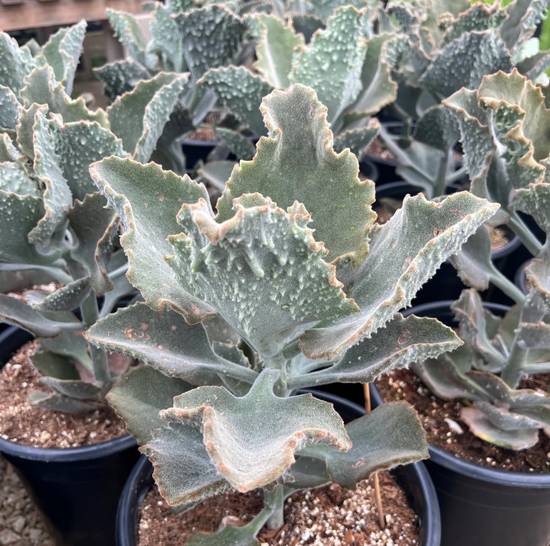
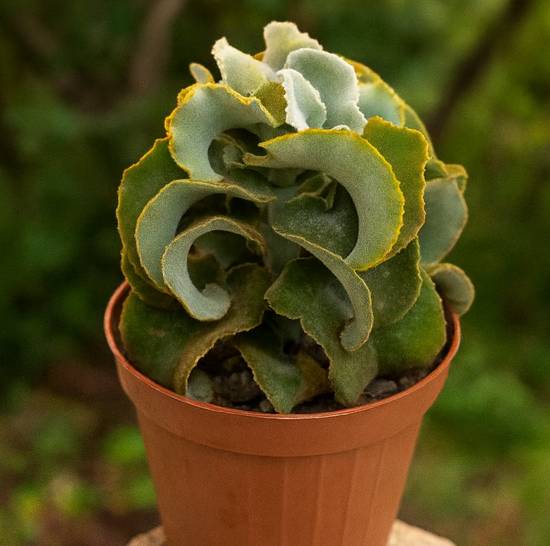
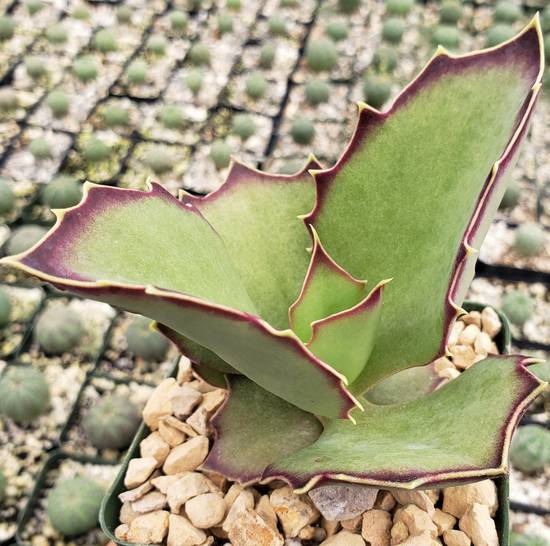
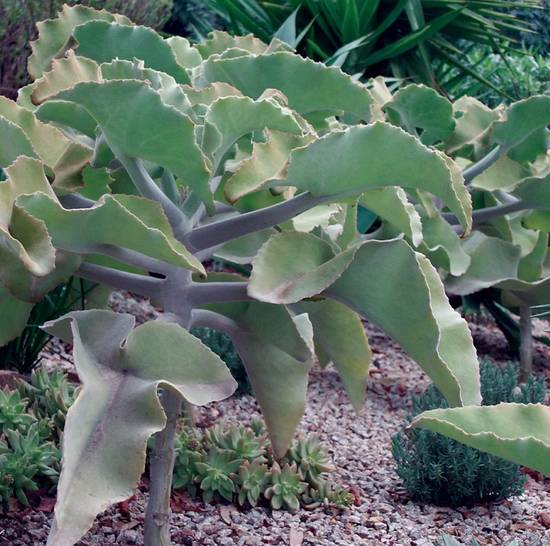
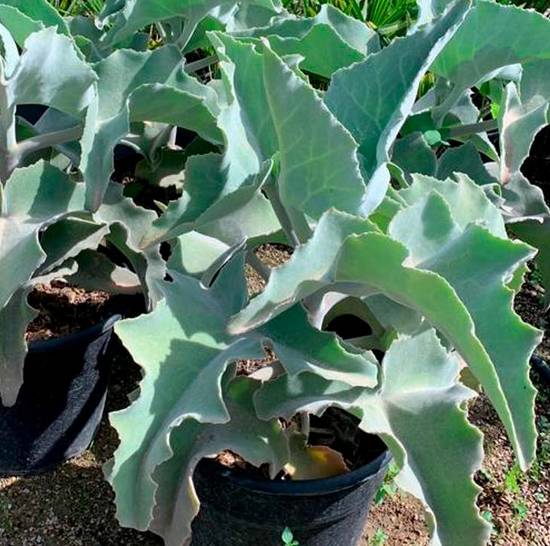
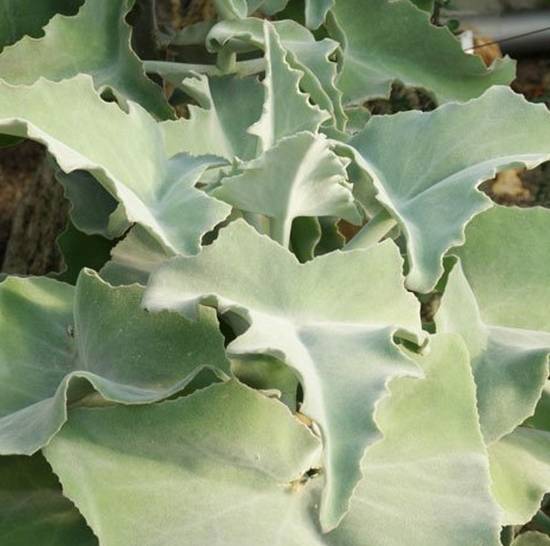
The Kalanchoë Beharensis is a spectacular succulent with a wild and velvety appearance, often nicknamed “elephant ears” or “felt bush” for its large thick triangular leaves covered with silvery fuzz. This soft, almost textile texture gives it a unique charm that instantly attracts lovers of graphic plants. The leaves, with wavy and slightly turned edges, are arranged irregularly on a woody vertical stem, forming a strange and sculptural silhouette, somewhere between a miniature tree and a plant from another world.
Kalanchoë Beharensis can reach an impressive height, sometimes exceeding 1.5 m in pots with age, making it one of the largest cultivated Kalanchoës. Yet despite its size, it remains very easy to care for and grows slowly. It is often used as a decorative indoor plant in lofts, verandas, or even modern offices. Its raw, textured, almost architectural appearance makes it a standout plant in exotic or contemporary indoor plant compositions.
🌞 Full sun : it loves direct sunlight, especially in the morning or late afternoon. This strengthens its stocky habit and improves foliage density.
🌤️ Bright light : indoors, place it near a well-exposed window. It tolerates direct rays.
💡 Lack of light causes stem elongation, loss of density and dropping of lower leaves.
🌱 Spring / summer : water only when the substrate is completely dry. Every 15 to 20 days is sufficient.
🍂 Autumn / winter : space watering to once a month at most.
⚠️ Too much water is fatal: stagnant moisture quickly causes rot at the base of the stem, often irreversible on a plant of this size.
🌡️ Ideal range : between 20°C and 30°C.
❄️ Minimum temperature : never below 10°C. It is extremely sensitive to frost.
🏠 In winter, place it in a bright and dry space, away from cold drafts or overly humid rooms.
🪨 Use a special succulent substrate lightened with 50% perlite or pozzolana. The pot must absolutely have a drainage hole.
🌸 Season : late winter or early spring, generally on older specimens.
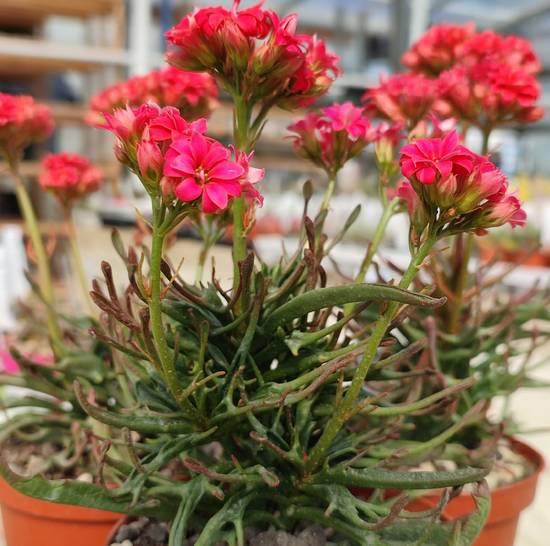
🎨 Flowers : small tubular yellow-green to orange-brown flowers in upright clusters at the top of long flower stalks.
💡 Its flowering remains secondary: it is primarily grown for its spectacular foliage.