Kalanchoë Marmorata

Kalanchoë Marmorata
Kalanchoë Marmorata

Kalanchoë Marmorata

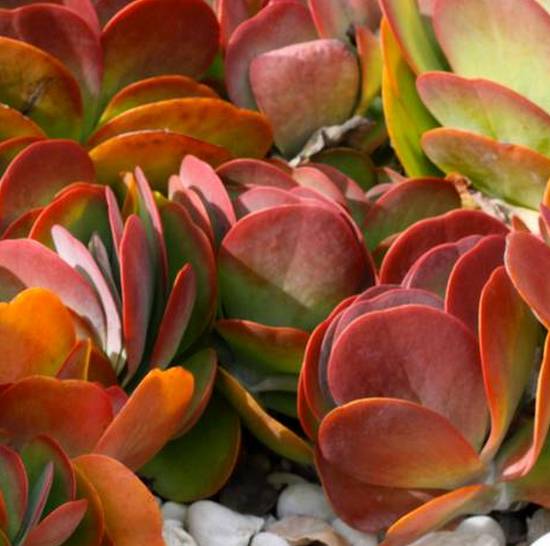
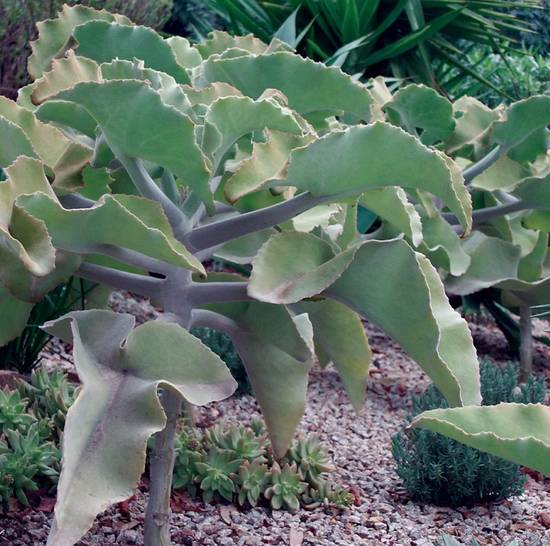
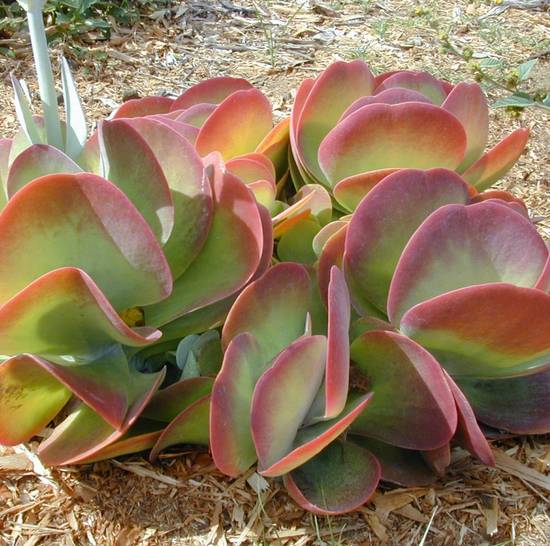
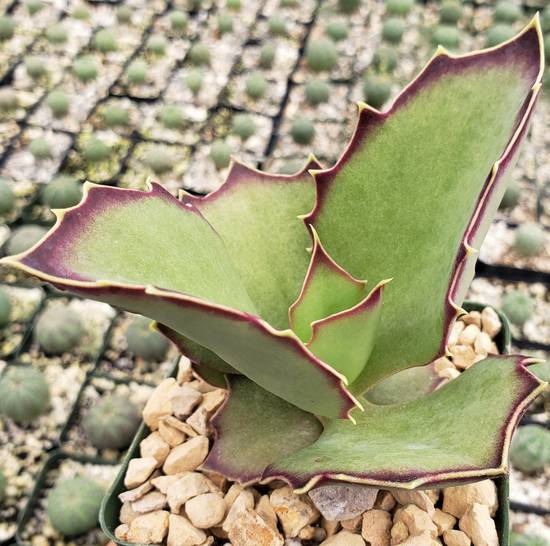
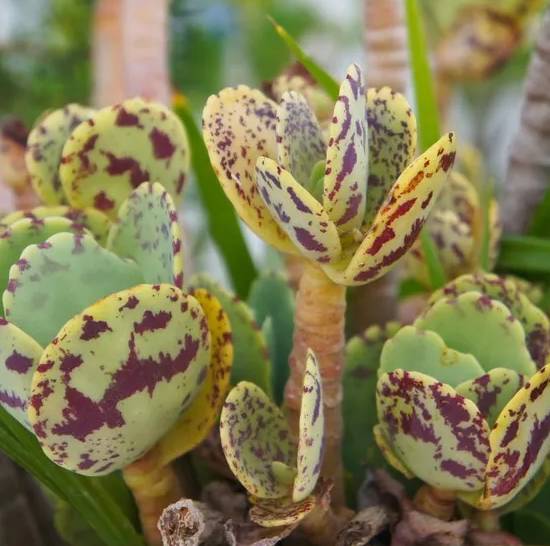
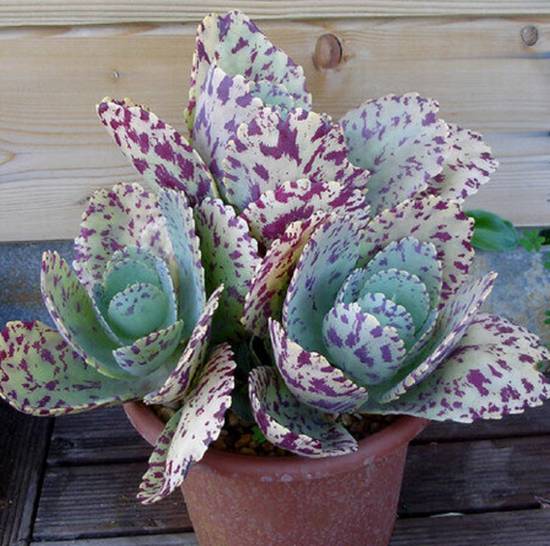
The Kalanchoë Marmorata is a succulent plant with striking foliage, known for its large flat leaves marbled with irregular purple spots. Its dominant shade, bluish green to pale gray, highlights its dark splash-like patterns, giving it a highly sought-after natural artistic appearance. With an upright habit, this plant develops thick erect stems that can reach up to 60 cm in height, bearing opposite fleshy leaves that store water. Its growth is moderate but steady, and its natural resistance to drought makes it an ideal candidate for bright interiors or warm greenhouses.

Easy to grow, Kalanchoë Marmorata attracts both rare plant enthusiasts and lovers of contemporary plant décor. Thanks to its spectacular marbling, each specimen becomes a unique piece. Whether in an individual pot or in a succulent arrangement, this species offers a sculptural and elegant presence while requiring little maintenance. It is also highly appreciated outdoors during summer, provided excessive rain is avoided.

The Kalanchoë Marmorata is native to the mountainous and semi-desert regions of East Africa, mainly Ethiopia, Eritrea and Sudan. It naturally grows on rocky outcrops where sunlight is strong and humidity scarce. Its natural environment has shaped a plant capable of withstanding drought and significant temperature fluctuations. In cultivation, it retains this robustness and thrives easily when its original habitat conditions are replicated: warmth, light and well-draining substrate.
To ensure harmonious growth for Kalanchoë Marmorata, very bright exposure is essential:

🌞 Direct sun : Ideally 4 to 6 hours per day, especially in the morning or late afternoon.

🌤️ Bright filtered light : Indoors, choose a south- or west-facing window. In summer, light shading during the hottest hours prevents leaf burn.

💡 Lack of light causes stem elongation (etiolation) and loss of the characteristic marbling.
Like many succulents, Kalanchoë Marmorata prefers sparse watering:

🌱 Spring / summer : Water every 2 to 3 weeks, allowing the substrate to dry completely between waterings.

🍂 Autumn / winter : Very limited watering, or none if the plant is kept in a cool place.

Golden rule : When in doubt, do not water! Excess water causes leaf softening and rapid rot.
Kalanchoë Marmorata enjoys warmth and fears low temperatures:

🌞 Optimal growing temperature : between 20°C and 30°C.

❄️ Minimum tolerance : Can withstand drops to 8°C temporarily but does not survive frost.

🏠 Overwintering : Below 12°C, bring the plant into a bright and dry place to protect it from cold.
Kalanchoë Marmorata requires extremely well-draining soil.

🪨Highly draining substrate : Mix a cactus substrate with 50% perlite or pozzolana. Absolutely avoid standard potting soils that are too rich and compact.
The flowering of Kalanchoë Marmorata is as elegant as it is discreet:

🌸 Season : late winter or early spring.

🎨 Color : pure white to off-white, sometimes slightly pinkish.

🕑 Duration : a few days to one week.

💡 Flowers appear on long upright stems. To achieve flowering, a winter rest period and good sunlight exposure are necessary.
FAQ - Kalanchoë Marmorata

What exposure is suitable for Kalanchoë Marmorata?
It prefers very bright to sunny conditions, with several hours of gentle direct sunlight per day to maintain its intense marbling.
How often should Kalanchoë Marmorata be watered?
In summer, water every 2 to 3 weeks if the substrate is dry. In winter, once a month is sufficient, or none if kept cool.
Is Kalanchoë Marmorata cold hardy?
No, it is sensitive to frost. Bring it indoors once temperatures fall below 10°C to prevent damage.
What is the best substrate for Kalanchoë Marmorata?
A succulent substrate with 50% perlite or pumice ensures excellent drainage.
How can I encourage Kalanchoë Marmorata to bloom?
Provide a cool, dry winter rest period followed by good sunlight in spring to encourage flowering.
How can I tell if my Kalanchoë Marmorata is overwatered or underwatered?
Soft or blackened leaves indicate overwatering. Dry, shriveled leaves mean the plant is underwatered.
Can Kalanchoë Marmorata be propagated?
Yes, very easily. Take a leaf or stem cutting, let it dry, then plant it in dry substrate.
Is Kalanchoë Marmorata toxic to pets?
Yes, like many Kalanchoes, it can be toxic if ingested by cats or dogs.
Should Kalanchoë Marmorata be pruned?
Pruning is not necessary, but you may remove damaged or spent stems to maintain a neat appearance.
What fertilizer should be used for Kalanchoë Marmorata?
Use a low-dose succulent fertilizer once a month during the growing season.