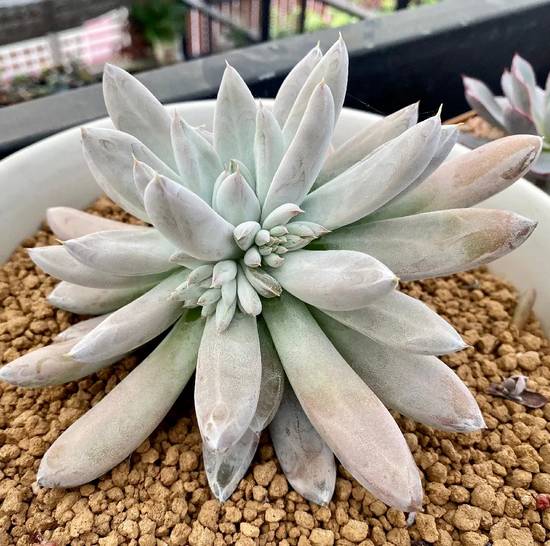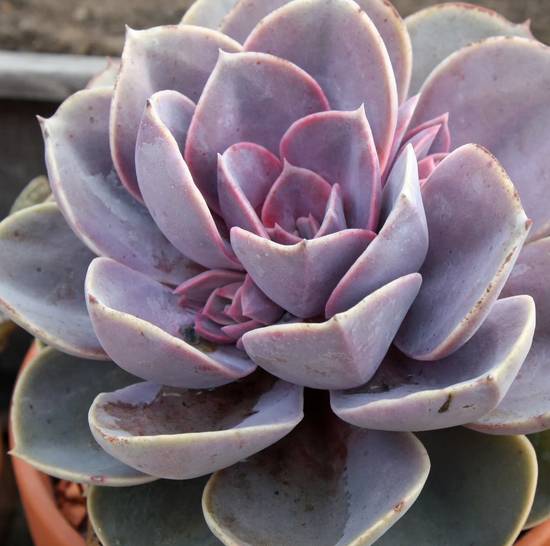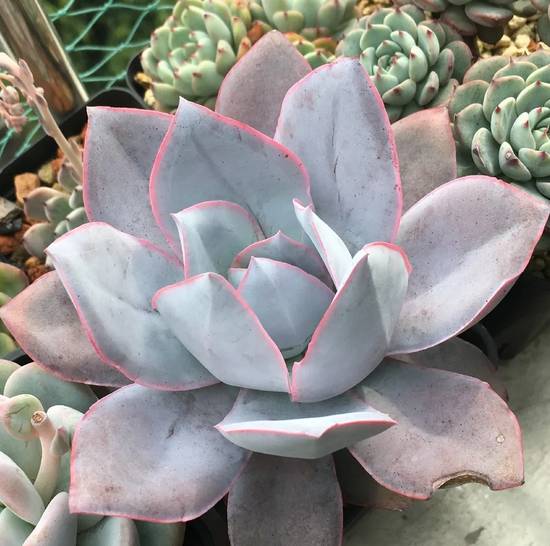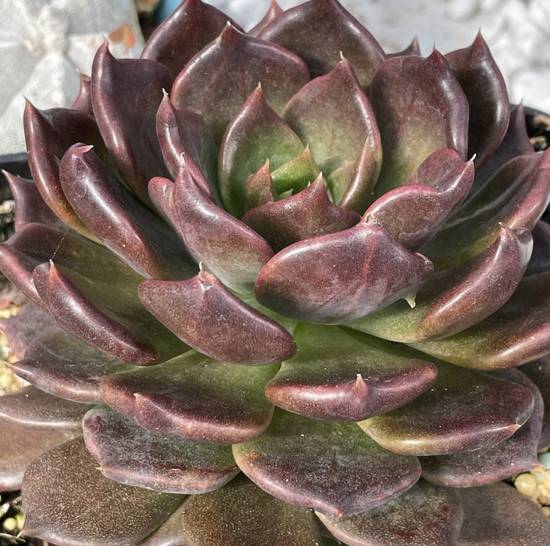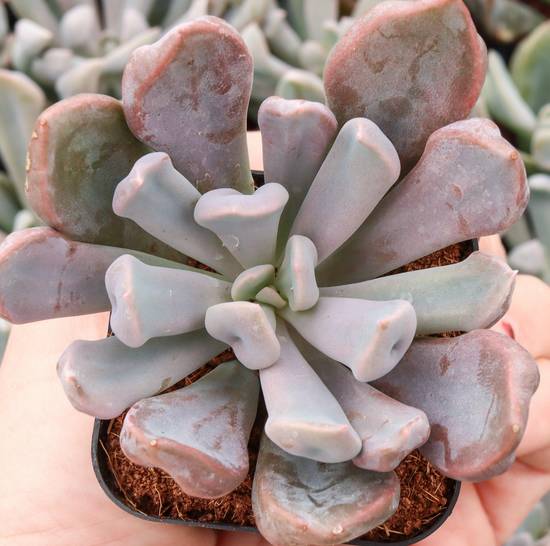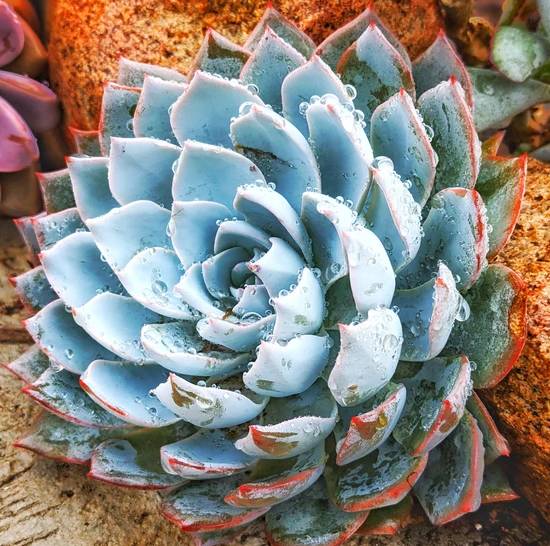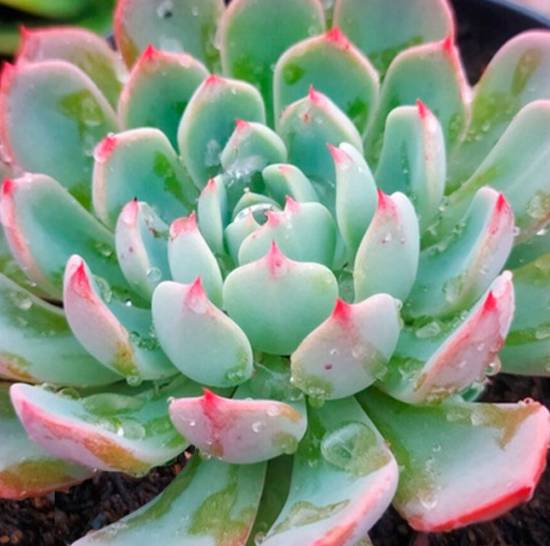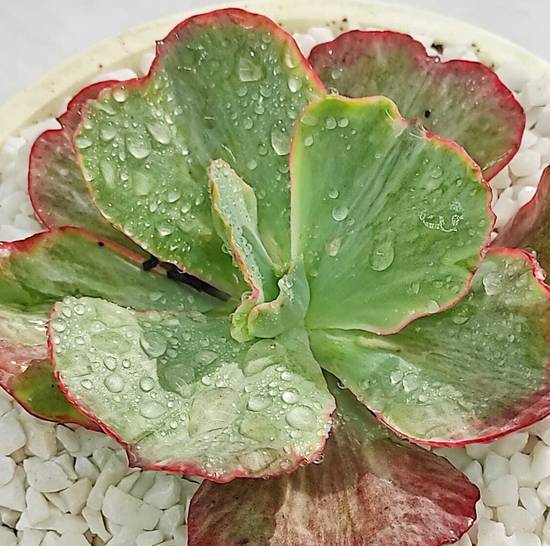
Echeveria Cleopatra
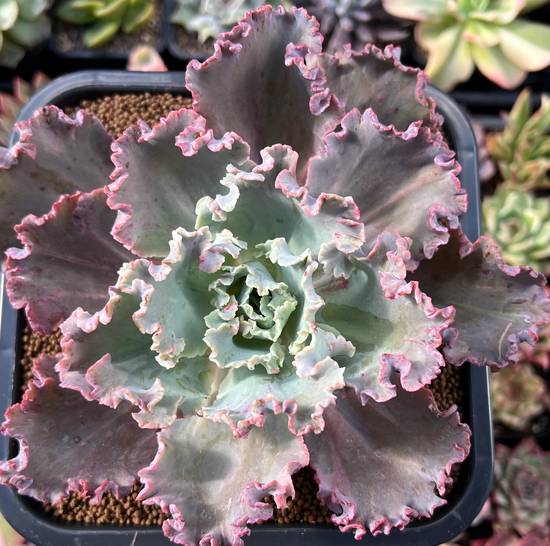
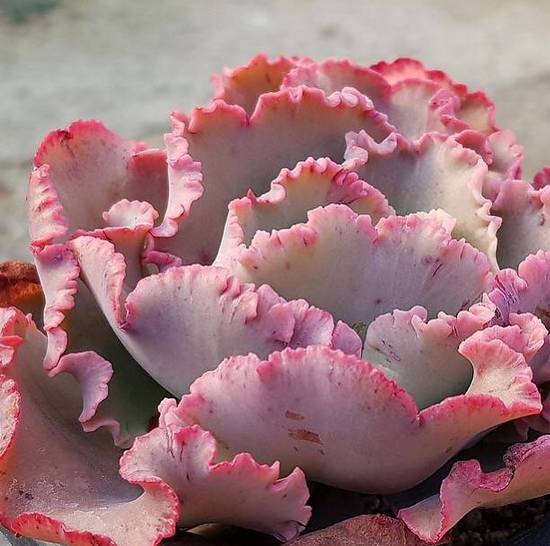
Impossible to overlook Echeveria Cleopatra: this royal succulent draws every eye. Its perfect rosette, thick pastel-toned leaves, and natural elegance make it one of the most sought-after varieties among lovers of graphic plants.
Its soft green foliage, sometimes dusted with cream and edged with a pink margin, evokes the colors of a sunrise. It flourishes into a compact rosette reaching up to 20 cm in diameter. Perfectly balanced in both shape and color, this plant fits beautifully in a single pot or a more elaborate arrangement.
It is a non-natural cultivar, created through hybridization for its exceptional aesthetic qualities. Easy to grow, resilient, and undemanding, it suits beginners and enthusiasts alike.
Resulting from a cross between several Echeveria species, probably including Echeveria Agavoides and Echeveria Shaviana, Echeveria Cleopatra was selected for its harmonious growth habit and delicate coloration.
Light is the secret to its beauty.
☀️ Outdoors: Morning sun preferred, especially in spring. Light shade in the afternoon in very hot regions.
🌤️ Indoors: Place in front of a well-exposed window, preferably south-facing.
✨ Good brightness enhances pink leaf edges.
☀️ Outdoors: Morning sun preferred, especially in spring. Light shade in the afternoon in very hot regions.
🌤️ Indoors: Place in front of a well-exposed window, preferably south-facing.
✨ Good brightness enhances pink leaf edges.
Better too dry than too wet!
🌱 Spring / Summer: Let soil dry completely between waterings. Every 10–15 days is sufficient.
🍂 Autumn / Winter: Every 3–4 weeks.
⚠️ Never water inside the rosette.
🌱 Spring / Summer: Let soil dry completely between waterings. Every 10–15 days is sufficient.
🍂 Autumn / Winter: Every 3–4 weeks.
⚠️ Never water inside the rosette.
An Echeveria that loves warmth but tolerates coolness.
🌡️ Ideal: 18–25 °C.
❄️ Minimum: Down to 5 °C if kept dry.
🏠 Bring indoors below 8 °C.
🌡️ Ideal: 18–25 °C.
❄️ Minimum: Down to 5 °C if kept dry.
🏠 Bring indoors below 8 °C.
🪨 Recommended mix: cactus soil + perlite + pumice for optimal aeration.
A delicate finishing touch.
📅 Period: Late spring to summer.
🌺 Flowers: Small pink bell-shaped blooms on long stalks.
✂️ Remove faded stalks to maintain a beautiful shape.
📅 Period: Late spring to summer.
🌺 Flowers: Small pink bell-shaped blooms on long stalks.
✂️ Remove faded stalks to maintain a beautiful shape.
FAQ - Echeveria Cleopatra
Is Echeveria Cleopatra suitable for indoor cultivation?
Yes, provided it is placed in a very bright spot near a south-facing window.
What is the ideal substrate for Echeveria Cleopatra?
A very well-draining mix of cactus soil, perlite, and pumice is ideal.
How should Echeveria Cleopatra be watered without damage?
Water only when the substrate is dry, and avoid getting water inside the rosette.
Can Echeveria Cleopatra live outdoors?
Yes, during warm seasons, provided it is protected from extreme heat and heavy rain.
What fertilizer should be used for Echeveria Cleopatra?
A liquid fertilizer for succulents every 3 weeks in spring and summer is recommended.
Can Echeveria Cleopatra be propagated easily?
Yes, by leaf cuttings or by dividing offsets.
Does Echeveria Cleopatra bloom every year?
Not always, but good light and slight stress can encourage flowering.
Is Echeveria Cleopatra toxic?
No, it is safe for pets.
Why do the leaves of Echeveria Cleopatra become soft?
Usually due to overwatering or insufficient light.
Can Echeveria Cleopatra be grown in the ground?
Only in frost-free regions, in very well-draining soil, preferably on a slope.