Echeveria Affinis

Echeveria Affinis
Echeveria Affinis

Echeveria Affinis

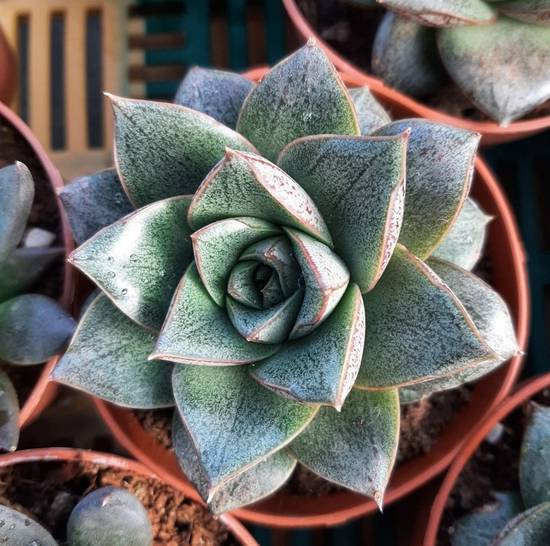
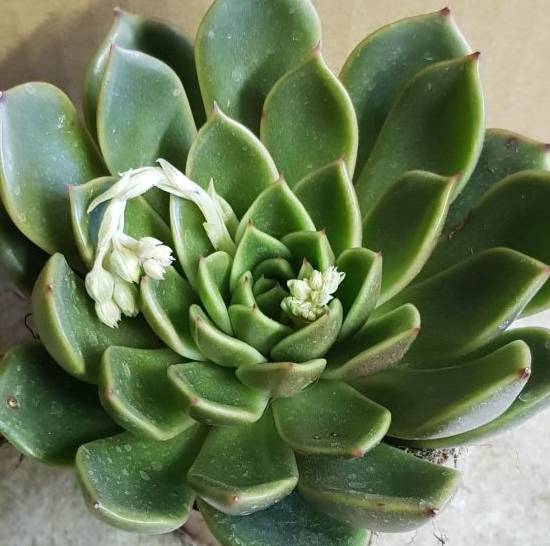
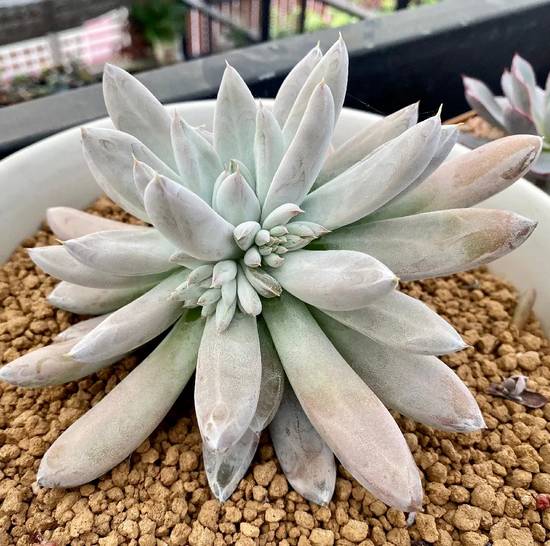
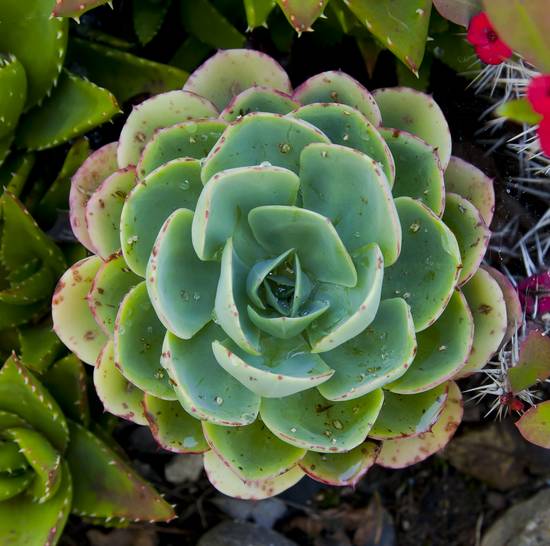
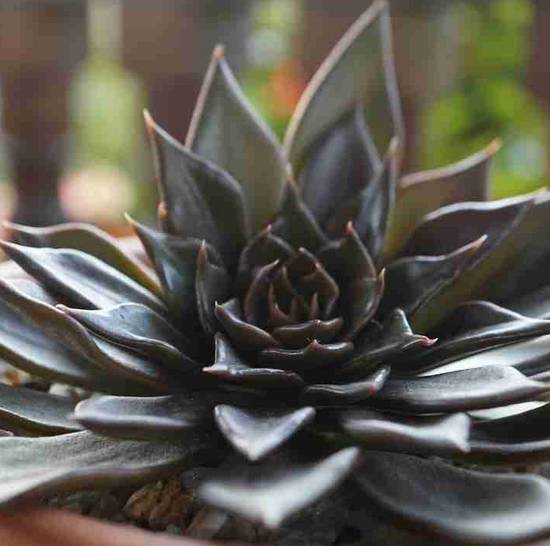
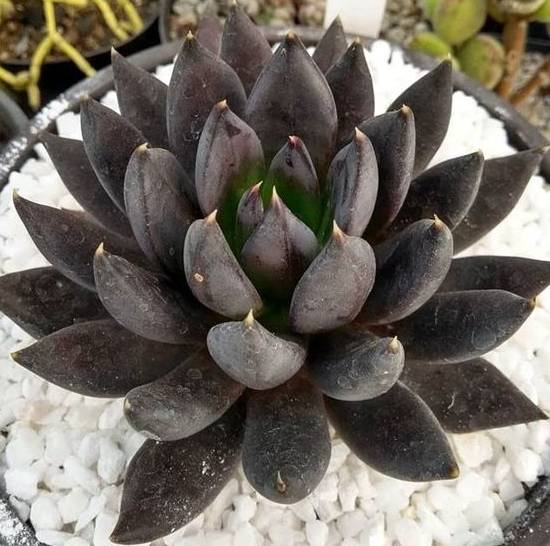
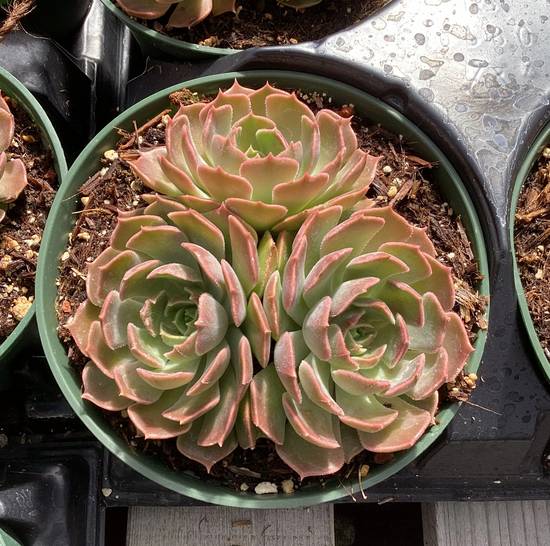
Echeveria Affinis is a dark jewel of the succulent family. With its pointed, narrow leaves in shades ranging from reddish-brown to almost black, it instantly catches the eye. Its geometric rosettes with a compact habit resemble the petals of a stylized flower. It is a graphic, robust and decorative plant, perfect for a collection, a rock garden border or container growing on a sunny balcony.

This representative of the Echeveria genus is particularly appreciated for its minimalist aesthetic and easy care. Its unique silhouette evolves depending on exposure, water stress and the seasons. Under good lighting, it becomes darker, almost black. When it blooms, its inflorescences create a vivid contrast with the foliage through their bright red tones.

Echeveria Affinis is native to Mexico, more precisely to the mountainous regions of the central part of the country. It naturally grows on rocky slopes, in arid or semi-desert areas where it benefits from strong sunlight, mild temperatures and extremely well-drained soils. This origin explains its high tolerance to drought and its preference for growing conditions close to desert climates.
For its black tones to fully develop, exposure must not be overlooked.

☀️ Recommended exposure: Echeveria Affinis loves the sun! Place it in a well-exposed location: 5 to 6 hours of direct light daily will intensify its dark coloration.

🌤️ In peak summer: Provide slight shade during the hottest hours in southern France to avoid burns on young leaves.

🪟 Indoors: A south- or west-facing window is ideal. In insufficient light, the plant may lose its dark tone and become etiolated.
If water is vital, it can also be fatal: the art of watering an Echeveria lies in moderation.

💧 Moderation and observation: Watering should be spaced out. During the growing period, water only when the substrate is completely dry.

🌱 Spring / Summer: Water once every 10 to 15 days.

❄️ Autumn / Winter: Water every 25 to 30 days, or not at all if the plant is kept at 10–15°C.

⚠️ Warning: Always avoid wetting the rosette. Stagnant water between the leaves promotes fungal issues.
The ideal climate for Echeveria Affinis? Not too hot, not too cold, but above all dry.

🌡️ Ideal temperatures: between 18°C and 25°C.

❄️ Cold tolerance: Down to 5°C if the substrate is dry. No frost is tolerated.

🏠 Wintering: Place it in a bright and cool room (10 to 15°C) to respect its natural cycle.
Echeveria Affinis fears stagnant humidity. It requires a very well-draining substrate:

🪨 Recommended mix: cactus soil or succulent substrate + perlite for aeration + pozzolana to improve drainage.
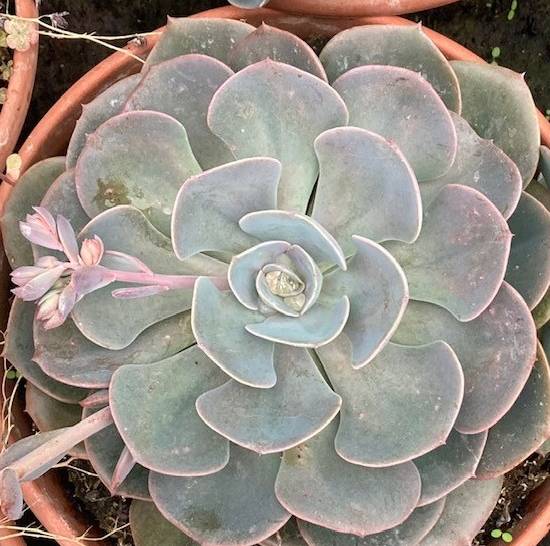
When Echeveria Affinis blooms, it reveals a striking contrast between dark foliage and bright flowers.

📅 Period: Late summer or autumn.

🌺 Appearance: Flower stalks bearing scarlet red flowers. A beautiful contrast with the dark foliage.

💡 Tip: Flowering is more frequent in well-exposed mature plants. Remove the flower stalk after blooming to encourage offset formation.
FAQ - Echeveria Affinis

Is Echeveria Affinis suitable for beginners?
Yes, it is an excellent plant for beginners. It tolerates missed waterings and remains decorative year-round.
Can Echeveria Affinis be planted in the ground?
Only in regions with a mild, dry climate and extremely well-draining soil. Otherwise, it is best grown in a pot.
How can collar rot be recognized in Echeveria Affinis?
The collar turns black and soft. Remove the healthy part and replant in dry substrate.
What should I do if Echeveria Affinis turns green?
It lacks light. Move it to a sunnier location.
Should the flower stalk of Echeveria Affinis be cut?
Yes, after flowering to prevent exhausting the plant and to stimulate offset growth.
What is the average lifespan of Echeveria Affinis?
Several years, especially if regularly propagated by offsets or cuttings.
Can it be grown in a conservatory?
Yes, provided the conservatory is well ventilated and very bright.
What fertilizer is recommended for Echeveria Affinis?
A gentle fertilizer for succulents such as Algoflash, Fertiligène, Or Brun, or Undergreen.
Does Echeveria Affinis attract pests?
It is relatively resistant but can occasionally attract mealybugs. A quick treatment with black soap is sufficient.
Can it live in a room without direct light?
No, it would lose its color and quickly become etiolated. Direct light is essential.