Echeveria Trumpet Pinky

Echeveria Trumpet Pinky

Echeveria Trumpet Pinky

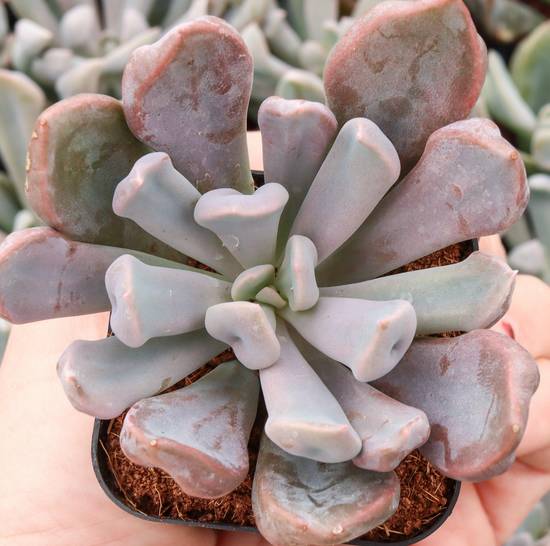
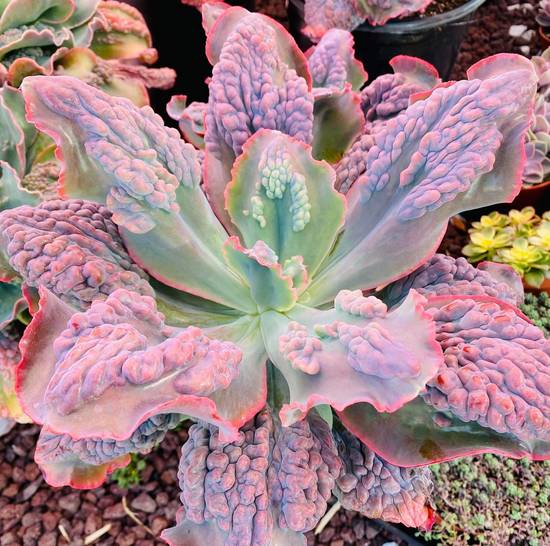
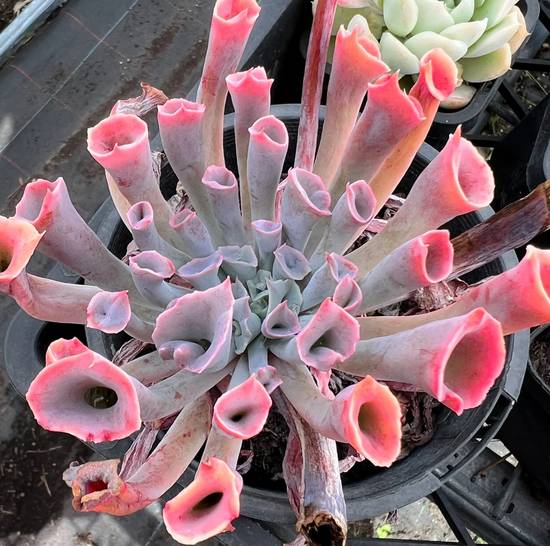
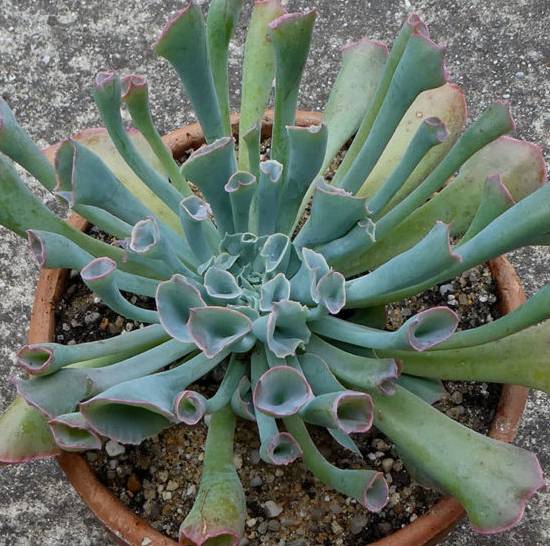
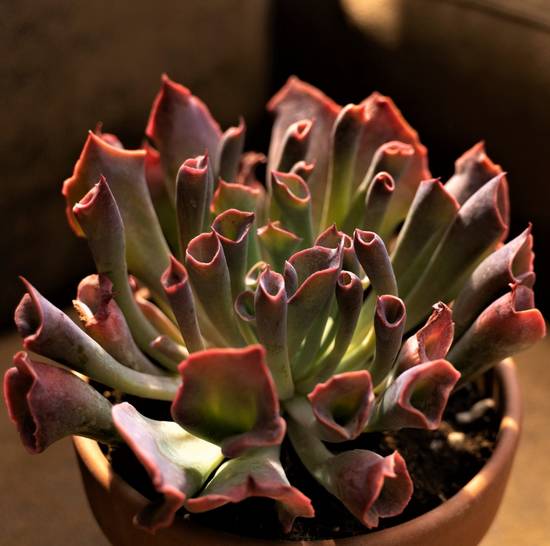
The Echeveria Trumpet Pinky is a true botanical curiosity, ideal for collectors seeking an original and unexpected form. This unique cultivar stands out with its trumpet-shaped leaves, hence its evocative name. An extraordinary structure combined with pastel shades ranging from soft green to powdery pink that instantly catches the eye.

Its singular and almost surreal silhouette makes it a jewel in any succulent collection. The thick, tubular leaves curve outward, forming small corollas reminiscent of musical instruments in bloom. This plant never goes unnoticed and often becomes the star of a well-lit windowsill or shelf.

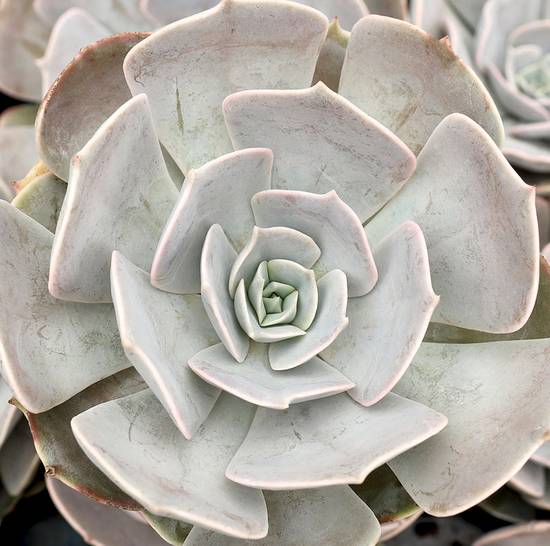
The rosette can measure up to 15 cm in diameter, but it is mainly its shape that makes all the difference. Rare in commerce, Echeveria Trumpet Pinky is highly sought after by lovers of unusual succulents.

This is a rare horticultural cross or mutation, often considered a variation of Echeveria shaviana or a fasciated form. It can be found in specialized nurseries in the United States, Japan, and South Korea.
A generous amount of light reveals its exuberance!

☀️ Ideal exposure: 4–6 hours of sun per day.

🌤️ Indoors: Bright indirect light, preferably a south-facing window.

🎨 More light enhances pink coloration.
Like all succulents, it prefers drought over excess water.

🌱 Warm season: Water every 10–15 days when soil is dry.

❄️ Cold season: Once per month or less if kept cool.

⚠️ Avoid standing water inside leaf cavities.
It loves warmth but tolerates slight coolness if dry.

🌡️ Optimal: 18–26 °C.

❄️ Minimum: 5 °C without humidity.

🏠 Bring indoors below 10 °C.
🪨 Recommended: cactus soil + perlite + pumice for mandatory drainage.
📅 Season: Spring or early summer.

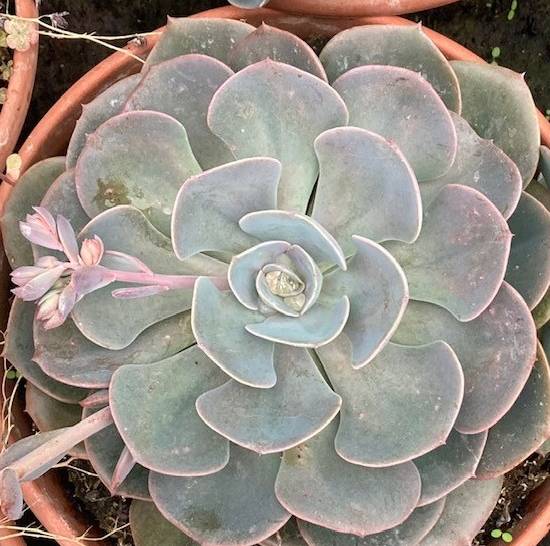
🌼 Flowers: Small pink or coral bells on a long stalk.

✂️ Remove faded stalk to encourage the rosette.
FAQ - Echeveria Trumpet Pinky

Why does Echeveria Trumpet Pinky have trumpet-shaped leaves?
It is a natural or induced genetic mutation that creates this unique tubular leaf shape.
What potting mix should be used for Echeveria Trumpet Pinky?
A cactus potting mix combined with perlite and pumice ensures proper drainage.
How can Echeveria Trumpet Pinky be propagated?
By leaf cuttings or offsets, although the trumpet shape is not always passed on identically.
Is Echeveria Trumpet Pinky a rare plant?
Yes, it is uncommon in regular garden centers and often sought after by collectors.
What fertilizer should be used for Echeveria Trumpet Pinky?
A succulent fertilizer once a month from April to September is recommended.
Does Echeveria Trumpet Pinky grow quickly?
No, it is a slow-growing plant, ideal for indoor cultivation.
Is Echeveria Trumpet Pinky toxic?
No, it is not toxic to animals, but ingestion should still be avoided.
What is the maximum size of Echeveria Trumpet Pinky?
It reaches about 15 cm in diameter at maturity.
Should Echeveria Trumpet Pinky be brought indoors in winter?
Yes, bring it indoors as soon as temperatures drop below 10 °C.
How can you intensify the colors of Echeveria Trumpet Pinky?
Provide bright and consistent light, especially in spring, to enhance its pink tones.