Echeveria Lilac Spoons
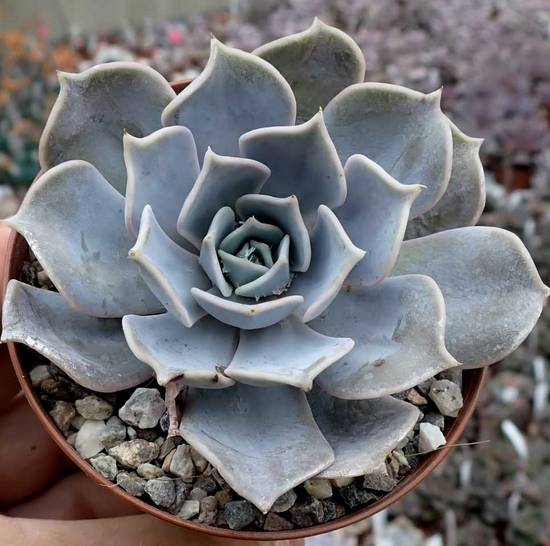
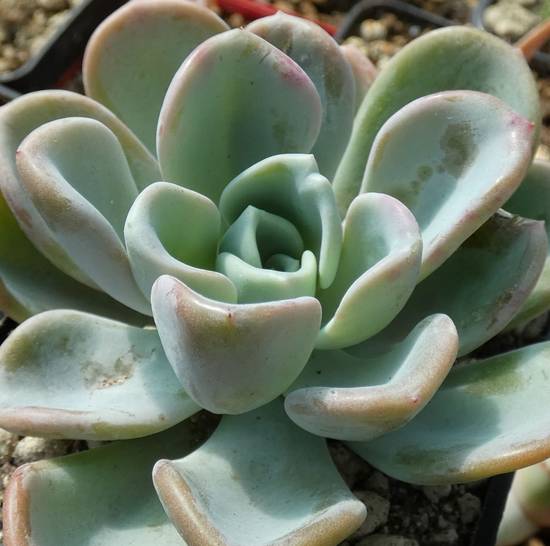
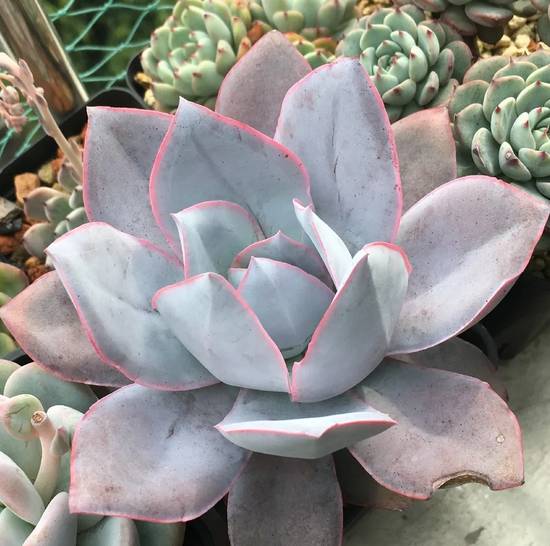
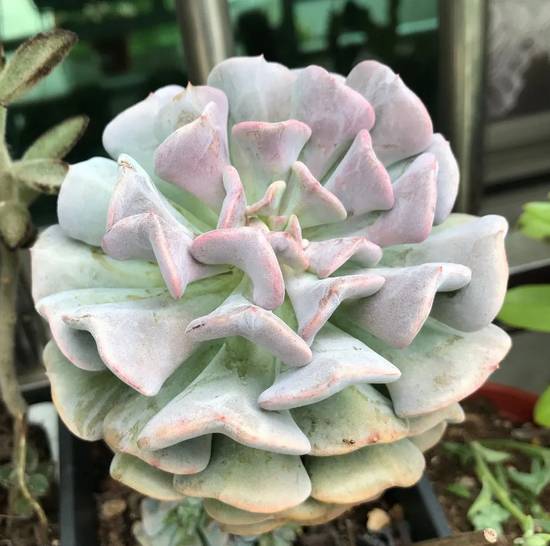
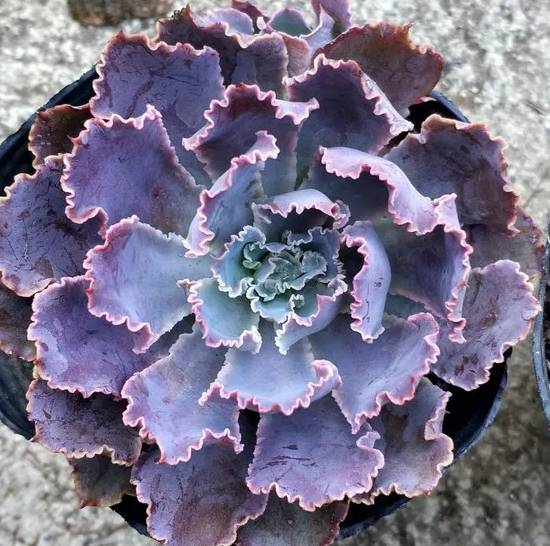
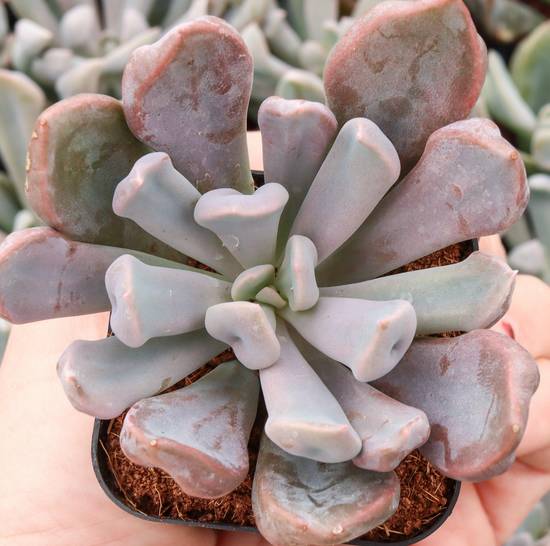
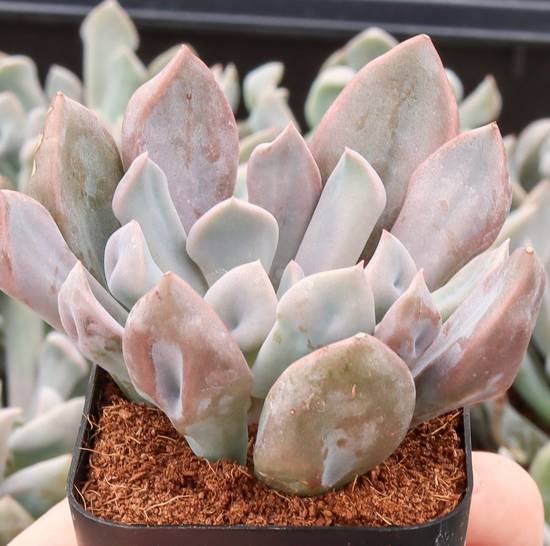
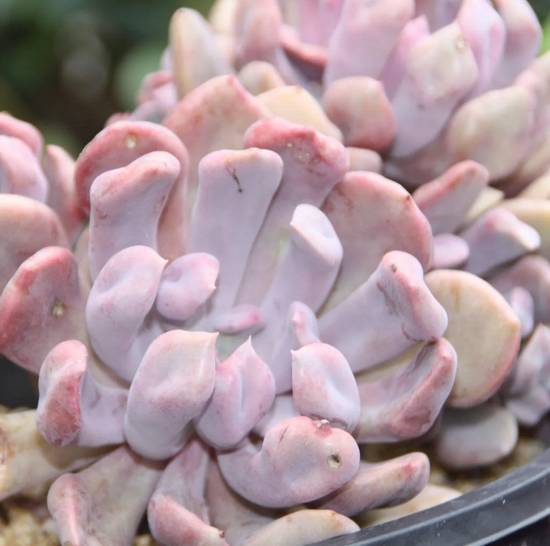
Echeveria Lilac Spoons is a true gem for lovers of refined succulents. Its spoon-shaped rosette — hence its name — displays shades of lavender, lilac and bluish gray, with nuances that change depending on light and season. A touch of pastel in a plant world often dominated by greens, instantly catching the eye.
Each thick, curved leaf ends in a rounded, almost concave tip, reminiscent of a small spoon. Lightly covered with farina (the fine white powder typical of many succulents), it enhances the plant’s softness and velvety texture. Echeveria Lilac Spoons is a decorative piece in itself, ideal for highlighting a composition or brightening a windowsill corner.
As it matures, the plant remains compact but may develop small lateral offsets forming elegant clusters. Its flowering adds a surprise touch, with slender stalks bearing small coral-toned flowers.
This type of plant would naturally grow on rocky, well-drained soils in full sun, with warm daytime temperatures and cooler nights. A perfect adaptation for pot cultivation or outdoor growing (frost-free).
🌞 Direct sun or intense light: 4 to 6 hours per day allow it to develop marked lilac tones and a tight rosette.
🌤️ Light shade in summer: If the sun is scorching, especially in early afternoon, a light veil or east/southeast exposure is preferable to prevent burns.
⚠️ In shade or poorly lit interiors, the plant loses its color and becomes etiolated.
🌱 Spring / Summer: Water every 10 to 15 days, only when the substrate is dry deep down.
🍂 Autumn / Winter: Water very sparingly, or not at all in winter if the plant is kept cool.
⚡ Absolutely avoid stagnant water in the rosette: this causes irreversible rot.
🌡️ Ideal: Between 18 and 25°C to promote growth and coloration.
❄️ Minimum tolerated: 5°C occasionally if the soil is perfectly dry.
🏠 Wintering: Bring it indoors in autumn to overwinter in a bright and cool room, protected from frost.
🪨 Ideal composition: cactus soil or special succulent substrate mixed with perlite to lighten, and pozzolana for optimal aeration.
🌸 Period: From late spring to summer.
🎨 Flowers: Coral to pale orange, bell-shaped, borne on an arched 20 to 30 cm stalk.
🕑 Duration: 2 to 3 weeks for a full flower stalk.
✂️ Remember to remove the stalk once the flowers have faded to encourage growth.