Echeveria Blue Waves
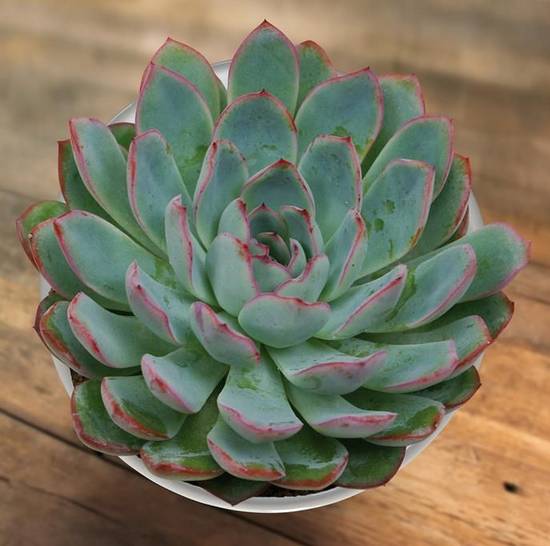
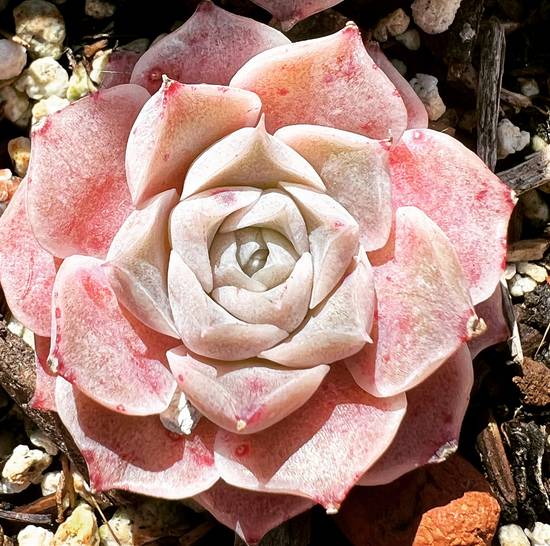
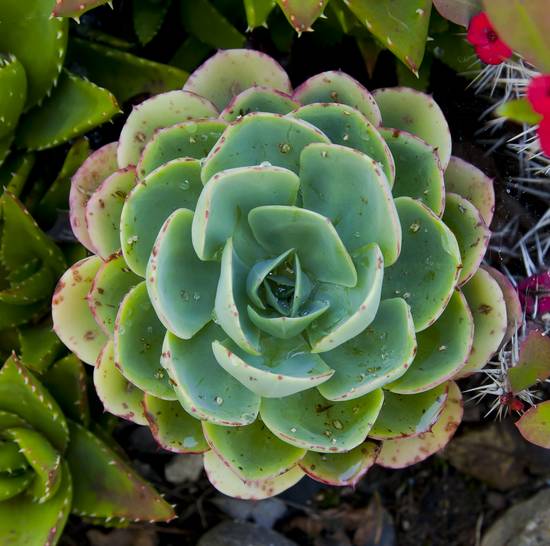
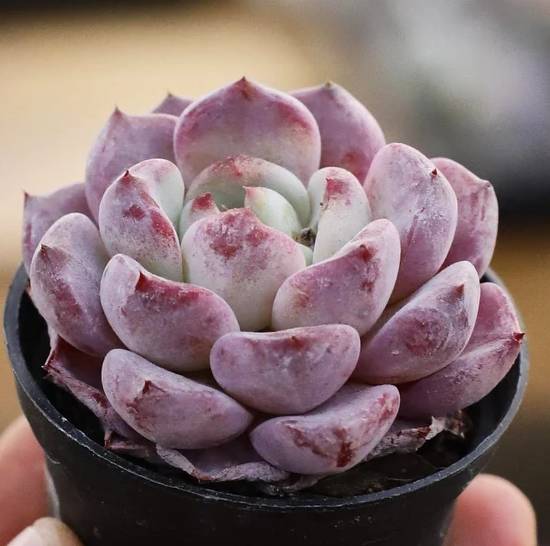
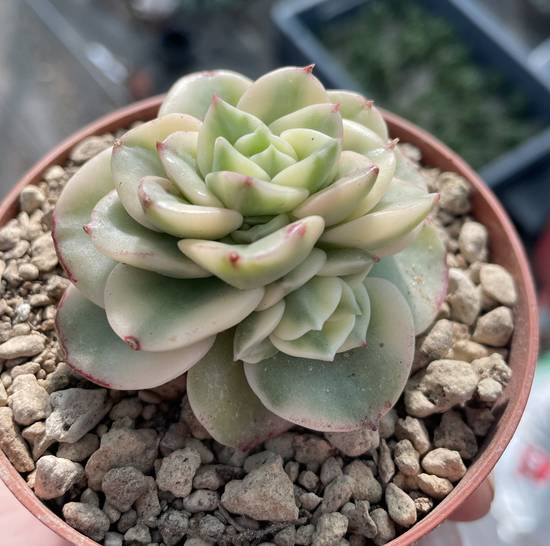
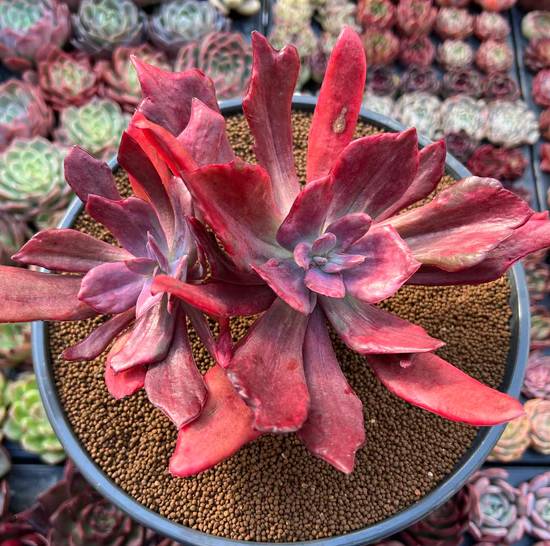
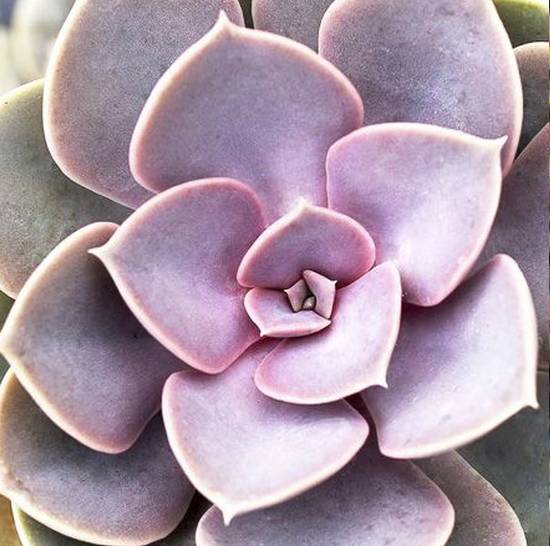
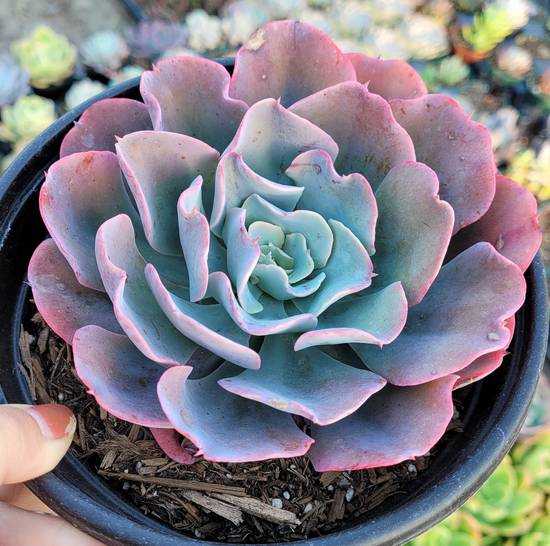
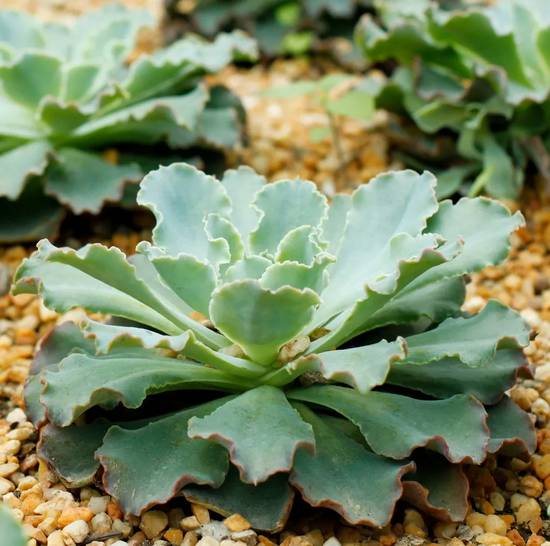
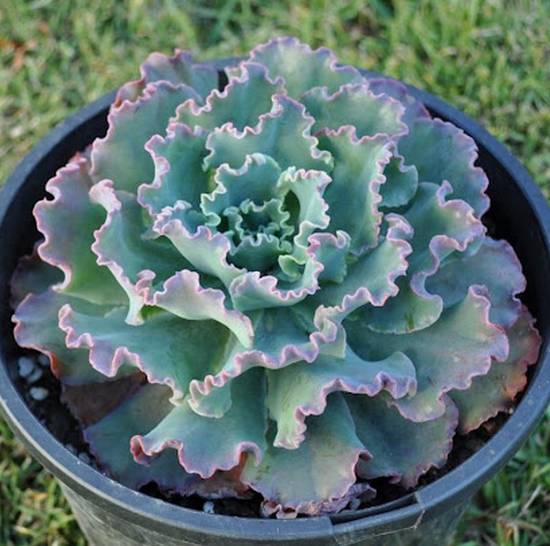
Echeveria Blue Waves is a succulent of rare elegance. It charms with its large, wavy rosettes in pastel blue-gray tones, subtly edged with pink to violet reflections. Its sculptural shape evokes the movement of water, hence its evocative name “Blue Waves.” This graphic plant stands out as a must-have choice for lovers of modern and harmonious plant compositions.
Over time, Echeveria Blue Waves can reach an impressive diameter, making it an excellent standalone potted specimen or a plant centerpiece. Its color evolves with the seasons, enhanced by sun exposure and temperature variations. It is a plant full of character, visually soft yet striking, that leaves no one indifferent.
Echeveria Blue Waves is a horticultural cultivar, probably resulting from crosses between different species of the Echeveria genus, such as Echeveria Gibbiflora. Although it does not exist in the wild, it inherits the robust characteristics of its Mexican ancestors, accustomed to poor soils, intense sun and periods of drought.
Light is the essential ally in revealing the full beauty of the blue waves.
☀️ Direct light: Place Echeveria Blue Waves in full sun for at least 5 hours per day. The more light it receives, the more its edges turn pink or violet.
🌤️ In summer: Provide slight protection during heatwaves or intense sunlight to avoid burns.
🪟 Indoors: Place it against a very bright window (south or west). Insufficient light will cause etiolation and color loss.
☀️ Direct light: Place Echeveria Blue Waves in full sun for at least 5 hours per day. The more light it receives, the more its edges turn pink or violet.
🌤️ In summer: Provide slight protection during heatwaves or intense sunlight to avoid burns.
🪟 Indoors: Place it against a very bright window (south or west). Insufficient light will cause etiolation and color loss.
Good watering is a matter of rhythm… and patience.
🌱 Growing period (spring/summer): Water moderately when the substrate is dry deep down (every 10 to 15 days).
❄️ Winter rest: Space out watering significantly (every 3 to 4 weeks), or stop if the plant is kept cool.
⚠️ Absolutely avoid: Wetting the center of the rosette or letting water stagnate. Echeveria Blue Waves is sensitive to rot.
🌱 Growing period (spring/summer): Water moderately when the substrate is dry deep down (every 10 to 15 days).
❄️ Winter rest: Space out watering significantly (every 3 to 4 weeks), or stop if the plant is kept cool.
⚠️ Absolutely avoid: Wetting the center of the rosette or letting water stagnate. Echeveria Blue Waves is sensitive to rot.
A cold-sensitive succulent that loves dry warmth.
🌡️ Ideal range: Between 15°C and 25°C.
🥶 Minimum tolerance: Down to 5°C occasionally, but without humidity. Frost is fatal.
🏠 Advice: Bring your Echeveria Blue Waves indoors as soon as autumn arrives, into a bright and cool room if possible.
🌡️ Ideal range: Between 15°C and 25°C.
🥶 Minimum tolerance: Down to 5°C occasionally, but without humidity. Frost is fatal.
🏠 Advice: Bring your Echeveria Blue Waves indoors as soon as autumn arrives, into a bright and cool room if possible.
A well-chosen soil is the best guarantee for a healthy plant.
🪨 Ideal mix: cactus soil or succulent substrate, mixed with perlite for aeration and pozzolana for drainage.
🪨 Ideal mix: cactus soil or succulent substrate, mixed with perlite for aeration and pozzolana for drainage.
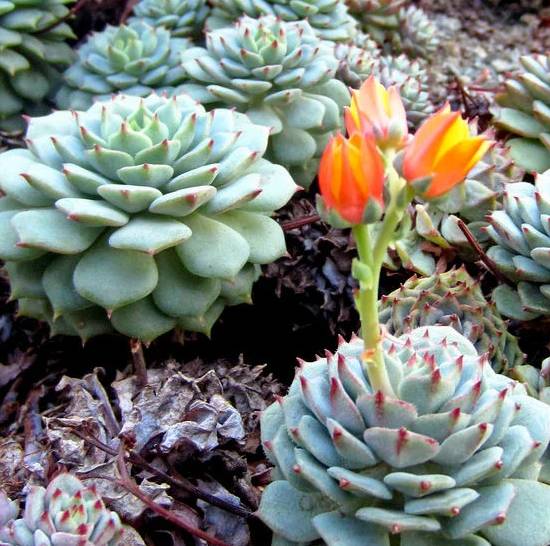
When summer arrives, Echeveria Blue Waves offers an unexpected show.
📅 Season: Summer to early autumn.
🌺 Flowers: Orange-red bell-shaped blooms borne on slender stems emerging from the heart of the rosette.
✂️ Care: Once flowering is finished, cut the flower stalk to prevent the plant from becoming exhausted.
📅 Season: Summer to early autumn.
🌺 Flowers: Orange-red bell-shaped blooms borne on slender stems emerging from the heart of the rosette.
✂️ Care: Once flowering is finished, cut the flower stalk to prevent the plant from becoming exhausted.
FAQ - Echeveria Blue Waves
Can Echeveria Blue Waves be grown in a planter with other succulents?
Yes, provided you choose plants with similar light and watering needs.
Can Echeveria Blue Waves be planted in the ground?
Only in a dry Mediterranean climate with very well-draining soil.
How can sunburn be prevented on Echeveria Blue Waves in summer?
Filter the sun with a shade cloth or move it slightly during heat peaks.
Can Echeveria Blue Waves be grown on a north-facing balcony?
No, the sunlight will be insufficient. It may turn green and stretch.
What should I do if Echeveria Blue Waves loses its lower leaves?
This is often normal, but it may also indicate excess moisture or lack of light.
What is the lifespan of Echeveria Blue Waves?
Several years, especially if regularly propagated by offsets.
Should Echeveria Blue Waves be fertilized?
Yes, in spring and summer with a cactus or succulent fertilizer.
Does Echeveria Blue Waves tolerate heavy rain?
No, it must be protected from prolonged humidity.
Can it be grown in hanging pots?
It is not recommended, as its shape is best appreciated from above.
How can I keep Echeveria Blue Waves compact?
Provide maximum light and avoid overwatering. Rotating the pot regularly also helps.