Echeveria Black Prince
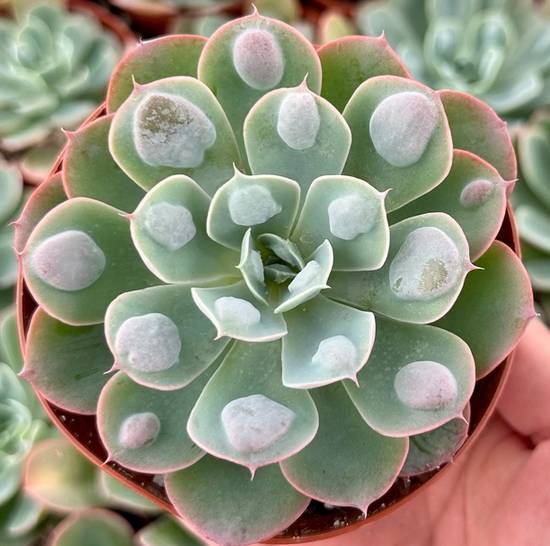
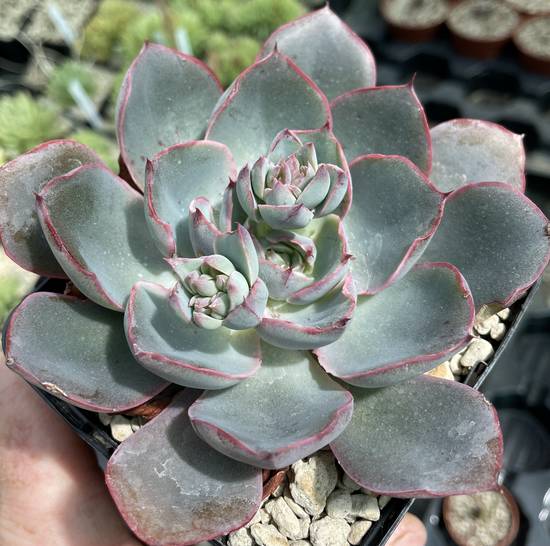
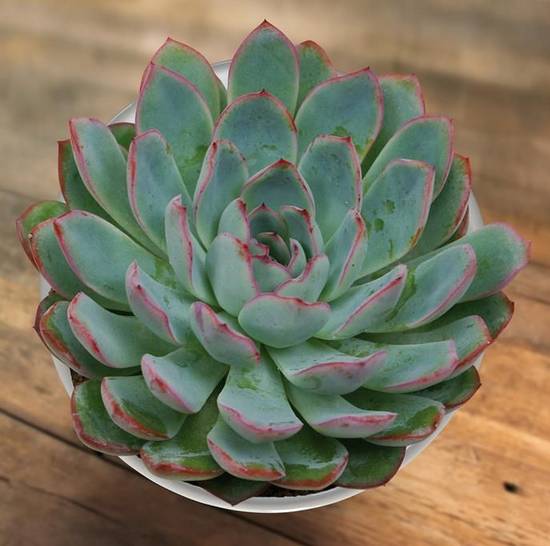
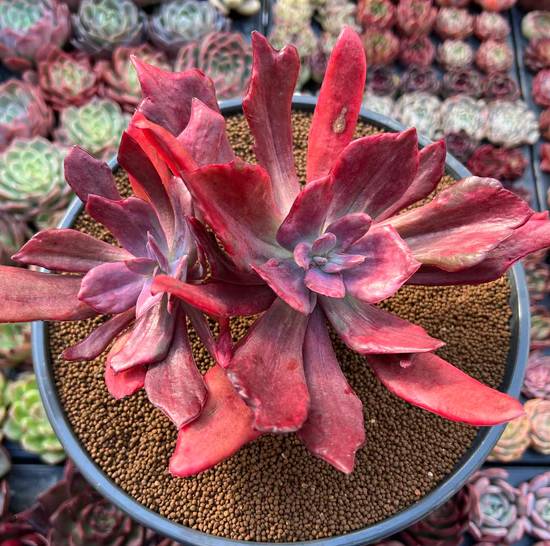
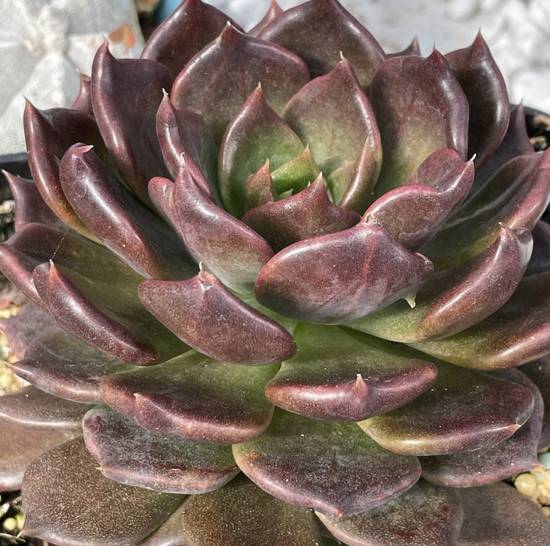
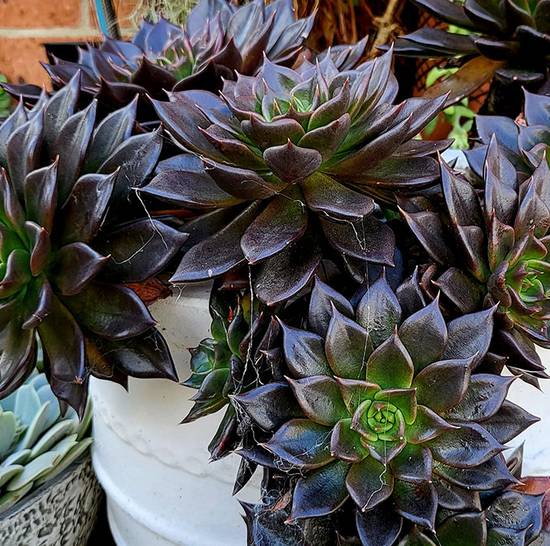
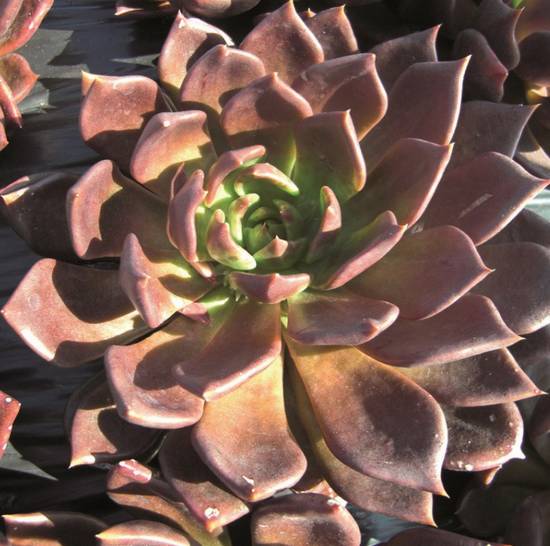
Echeveria Black Prince is one of the most intriguing cultivars in the world of succulents. It fascinates with the almost black color of its thick, triangular leaves, forming a compact rosette with a perfect geometric design. Its dark yet elegant silhouette has earned it a special place in modern arrangements, arid gardens and minimalist interiors.
This variety is the result of a cross between Echeveria Affinis and Echeveria Shaviana, a pairing that gives it robustness, beauty and the ability to produce offsets. Over time, Echeveria Black Prince can develop a small dense bush of dark, almost gothic rosettes, beautifully contrasting with lighter succulents.
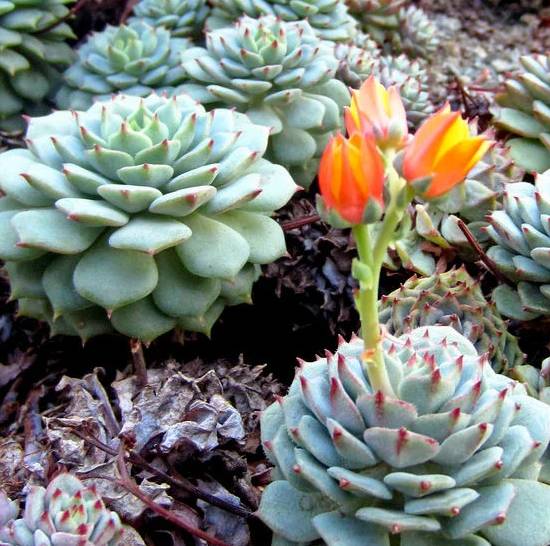
Each specimen evolves uniquely depending on exposure, water stress and temperature, making it a living plant to observe. When in full health, its shades range from dark green to deep purple, up to total black under optimal sunlight. It also produces magnificent red flowers in striking contrast with its black leaves.
☀️ Direct sun: At least 5 to 6 hours per day, especially in the morning or late afternoon.
🌤️ Protection in peak summer: During very hot days (>35°C), provide light shade or filtered exposure to avoid burns.
🪟 Indoors: Place near a well-exposed window (ideally south-facing) with the possibility of rotation to prevent etiolation.
🌱 Growing period (spring/summer): Water moderately every 10 to 15 days, when the substrate is completely dry.
❄️ Winter rest: Water once a month or even less, especially if the plant is kept in a cool place.
🚫 Never wet the rosette: This promotes crown rot, the main cause of death in Echeverias.
🌡️ Ideal growing range: between 15°C and 25°C.
🥶 Cold tolerance: Withstands down to 5°C if the soil is perfectly dry but fears frost.
🏠 Winter care: Bring it indoors as soon as the temperature drops below 10°C. Place it in a bright and cool location to respect its dormant period.
🪨 Ideal substrate: Use a very well-draining mix composed of: cactus soil + perlite for aeration + pozzolana for optimal drainage.
🚫 Avoid: Regular potting soils, too rich in peat, retain moisture and promote rot.
📅 Period: Autumn or winter depending on conditions.
🎨 Color: Bright red to orange-red, bell-shaped flowers on a long floral stem.
💡 Tip: To stimulate flowering, respect a winter rest with little water and plenty of light.