Echeveria Atlas
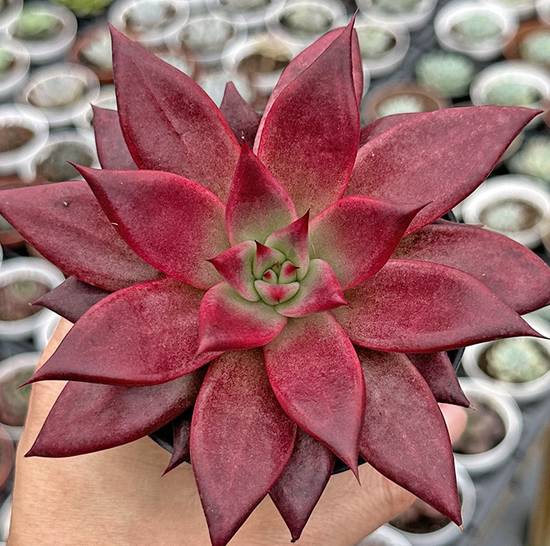
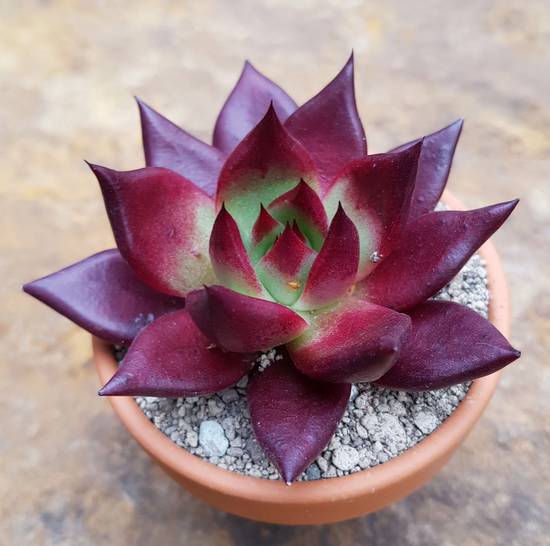
Elegant, robust and striking, Echeveria Atlas stands out with its perfectly symmetrical silhouette and subtle shades that captivate at first glance. This hybrid cultivar is a rare gem in succulent collections, appreciated both for its ease of cultivation and its impressive aesthetic presence.
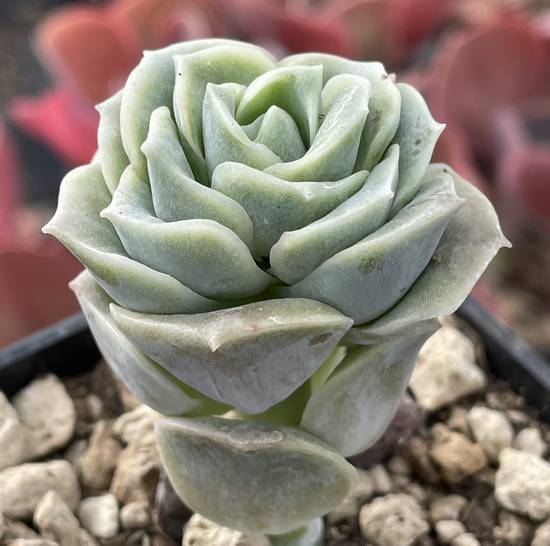
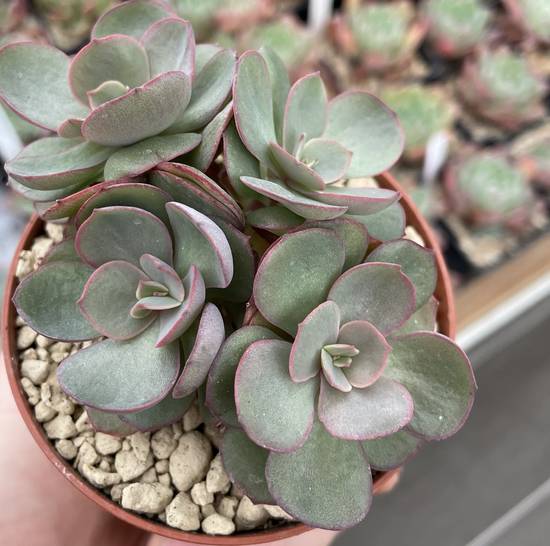
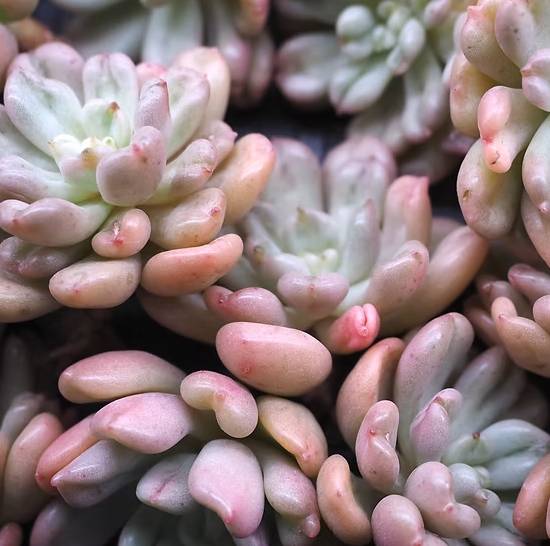
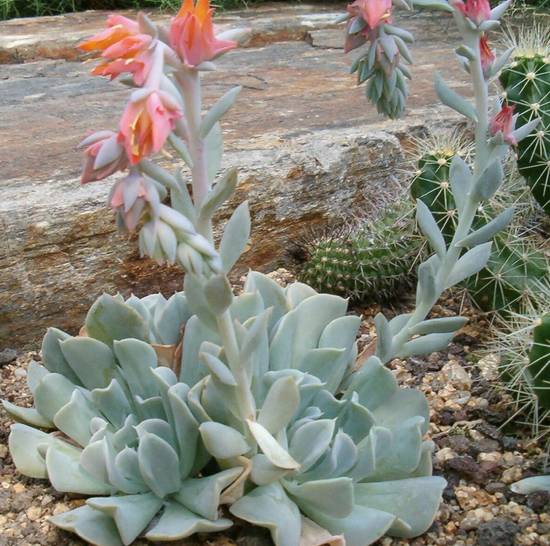
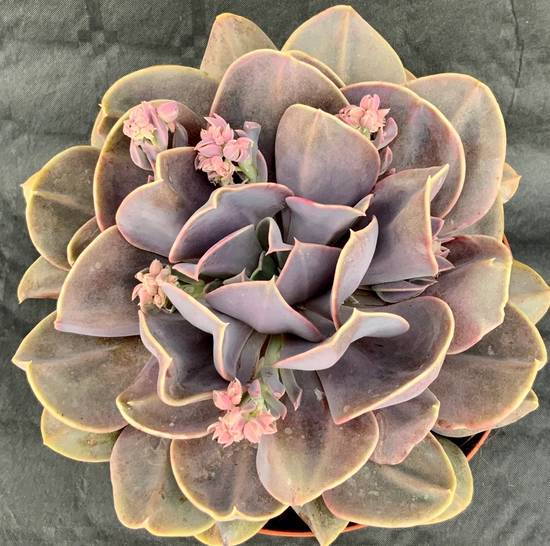
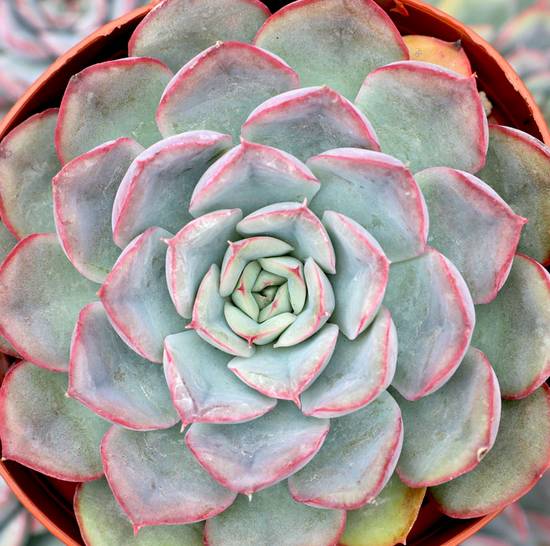
Its dense, well-formed rosette can reach 15 to 20 cm in diameter. The thick leaves, slightly curved upward, display tones ranging from bluish green to silvery gray, sometimes highlighted with pink or violet reflections along the edges, especially when exposed to good sunlight. It owes its name Atlas to its solid, almost architectural habit, evoking imposing stability.
Echeveria Atlas is a horticultural hybrid developed for its aesthetic qualities and resilience. It does not exist in the wild but descends from Mexican varieties of the genus Echeveria. Like its botanical cousins, it was designed to thrive in warm, dry and well-drained environments.
To enhance its colors and reinforce its compact shape, Echeveria Atlas needs as much natural light as possible.
☀️ Outdoors: Direct sun for at least 4 to 6 hours per day.
🏠 Indoors: A south-facing window or an LED grow light.
🎨 Tip: Light stress intensifies the pink tones on the leaves.
☀️ Outdoors: Direct sun for at least 4 to 6 hours per day.
🏠 Indoors: A south-facing window or an LED grow light.
🎨 Tip: Light stress intensifies the pink tones on the leaves.
As with all Echeverias, watering must be precise and thoughtful.
🌱 Spring / Summer: Water only when the substrate is dry deep down, every 2 to 3 weeks.
❄️ Autumn / Winter: Drastically reduce watering, or completely stop if the plant is kept cool.
💡 Avoid: Stagnant humidity, especially in the central rosette.
🌱 Spring / Summer: Water only when the substrate is dry deep down, every 2 to 3 weeks.
❄️ Autumn / Winter: Drastically reduce watering, or completely stop if the plant is kept cool.
💡 Avoid: Stagnant humidity, especially in the central rosette.
Echeveria Atlas prefers temperate to warm temperatures.
🌡️ Ideal: Between 18°C and 25°C
❄️ Minimum threshold: Tolerates 5°C when dry but does not tolerate frost
🏠 Wintering: Required as soon as temperatures drop below 10°C
🌡️ Ideal: Between 18°C and 25°C
❄️ Minimum threshold: Tolerates 5°C when dry but does not tolerate frost
🏠 Wintering: Required as soon as temperatures drop below 10°C
Good drainage is essential to avoid any rot.
🪨 Recommended mix: 50% special cactus soil + 25% perlite + 25% pozzolana
🪨 Recommended mix: 50% special cactus soil + 25% perlite + 25% pozzolana
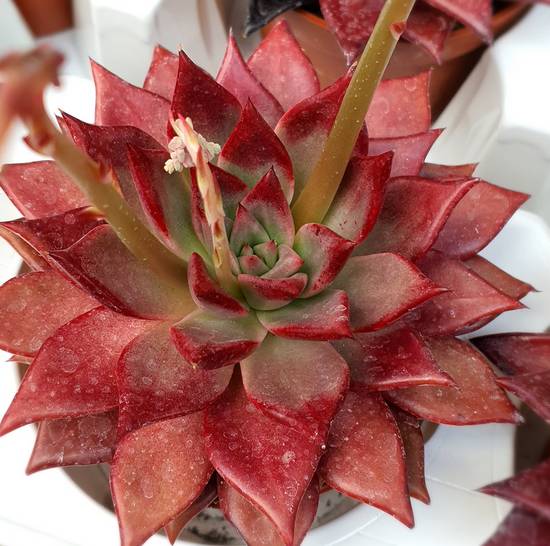
Although its flowering is secondary compared to its shape, it remains a charming asset.
📅 Period: Summer
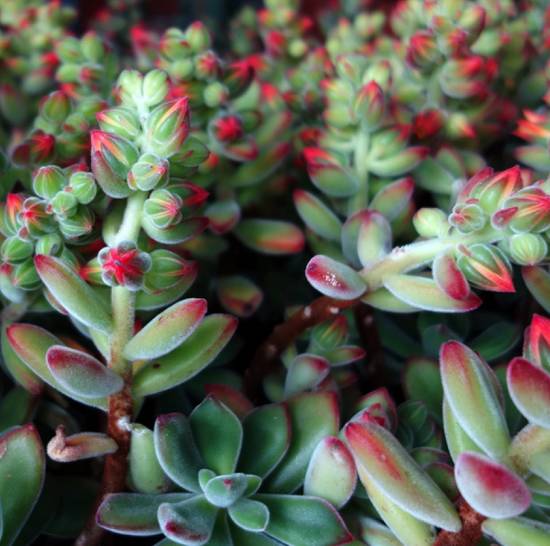
🌺 Flowers: Small red or orange bell-shaped flowers borne on long flower stalks
✂️ Advice: Remove faded stalks to strengthen the plant
📅 Period: Summer
🌺 Flowers: Small red or orange bell-shaped flowers borne on long flower stalks
✂️ Advice: Remove faded stalks to strengthen the plant
FAQ - Echeveria Atlas
What type of light suits Echeveria Atlas best?
Bright to direct light, indoors or outdoors, to enhance its colors.
How often should Echeveria Atlas be watered?
Every 2 to 3 weeks in summer, almost none in winter.
What substrate should be used for Echeveria Atlas?
A mix of cactus soil, perlite, and pumice.
Should Echeveria Atlas be fertilized?
Yes, once per month during the growing season with a gentle cactus fertilizer.
How can Echeveria Atlas be propagated?
By leaf cuttings or by dividing offsets if the plant produces any.
Can Echeveria Atlas be grown indoors?
Yes, provided it receives good natural or artificial lighting.
What type of pot should be chosen for Echeveria Atlas?
A wide, shallow pot with essential drainage holes.
When should Echeveria Atlas be repotted?
Every 1 to 2 years in spring to refresh the substrate.
What are the main risks for Echeveria Atlas?
Excess moisture, frost, and mealybug infestations.
Can Echeveria Atlas be placed in the garden?
Yes, in summer, but beware of night humidity and winter frost.