Echeveria Cante
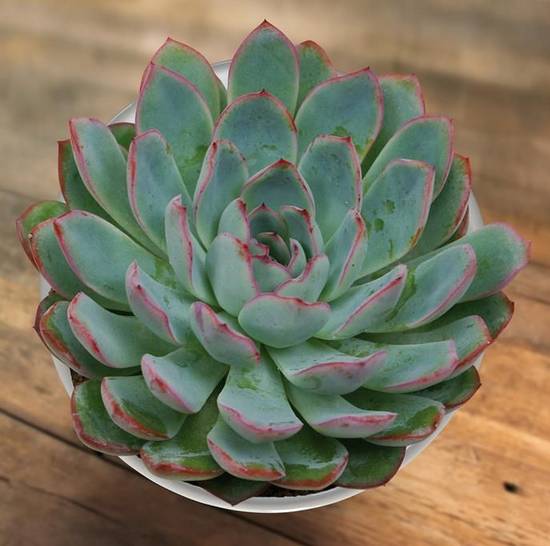
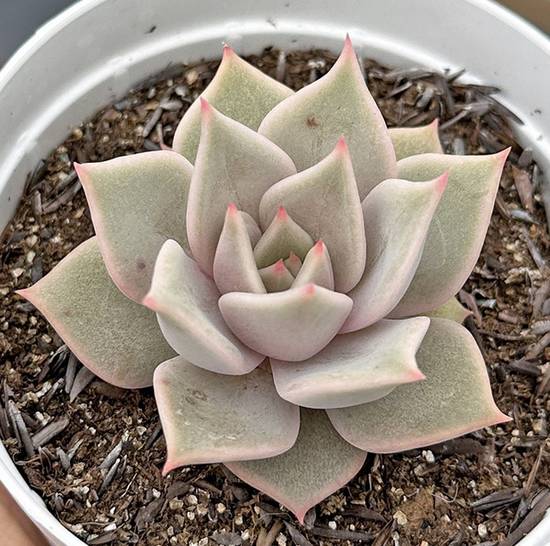
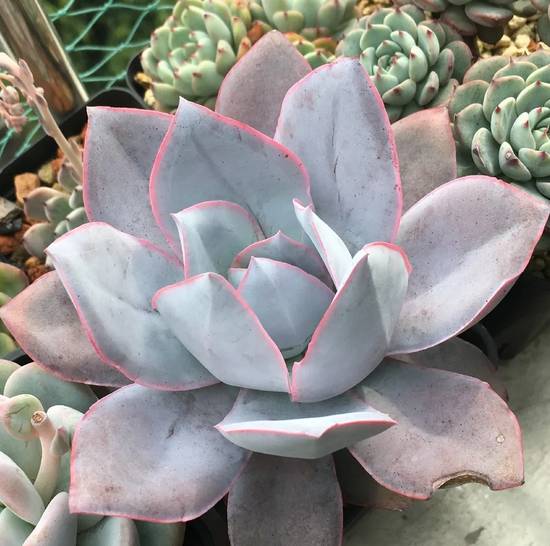
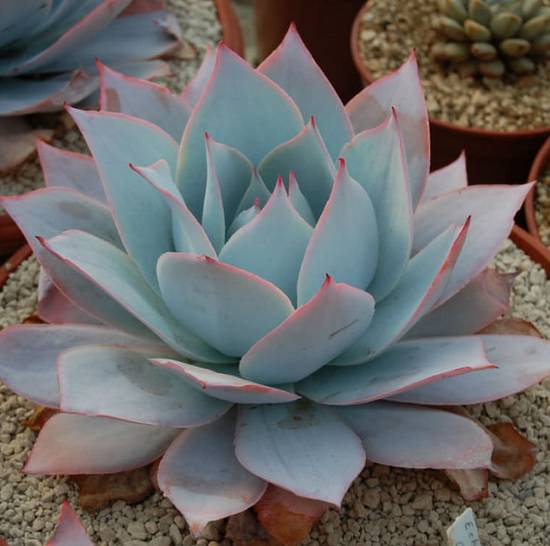
Of rare elegance and almost unreal delicacy, Echeveria Cante is an exceptional succulent. Appreciated for its large silvery rosette with bluish reflections, it has become a must-have for collectors and lovers of graphic plants. On its own, it embodies the harmony between the robustness of succulents and the aesthetics of a plant sculpted by light.
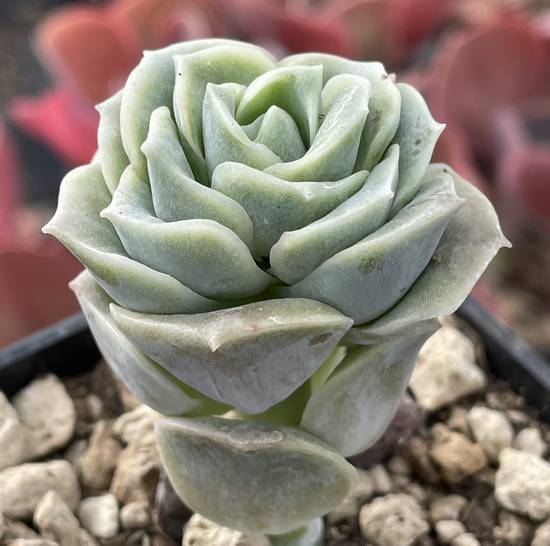
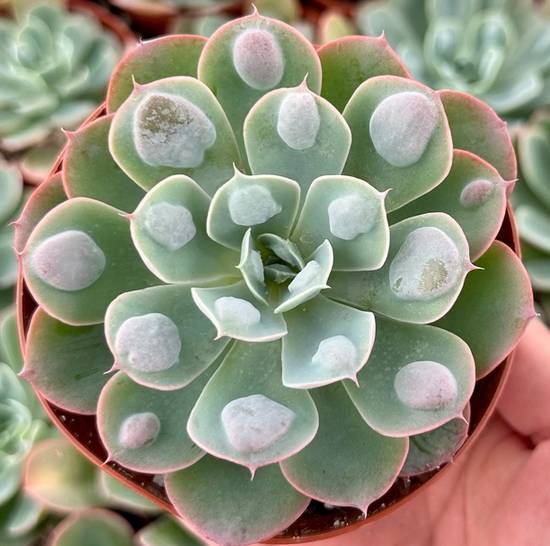
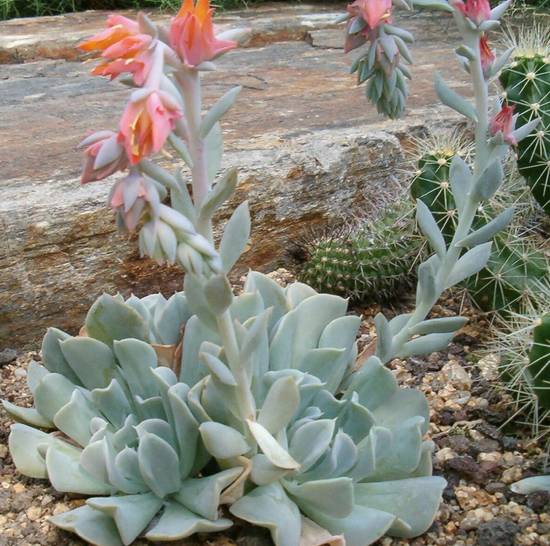
Its thick, spatula-shaped leaves are covered with a white to bluish farina that gives them a velvety effect. Over time, it can reach up to 30 cm in diameter, or even more under optimal conditions. Its symmetrical silhouette and majestic habit make it a centerpiece in any collection.
Echeveria Cante is native to Mexico, particularly the state of Zacatecas. It grows on mountain slopes, often at high altitudes, in semi-arid areas exposed to the sun and well drained.
It was discovered relatively recently and is named after the Mexican botanist Guillermo Cante.
It was discovered relatively recently and is named after the Mexican botanist Guillermo Cante.
For Echeveria Cante to fully express its silvery and bluish tones, bright light is essential.
☀️ Outdoor: Direct sun or very bright partial shade.
🏠 Indoor: In front of a south-facing bay window or under a grow light.
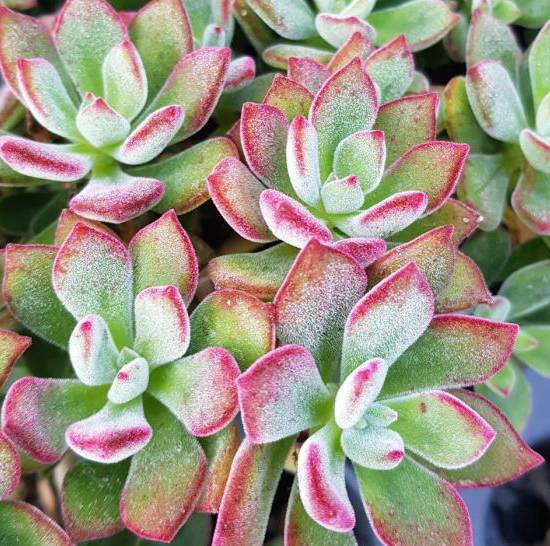
🎨 Advice: Moderate light stress enhances blue reflections and pink edges.
☀️ Outdoor: Direct sun or very bright partial shade.
🏠 Indoor: In front of a south-facing bay window or under a grow light.
🎨 Advice: Moderate light stress enhances blue reflections and pink edges.
As with most Echeverias, watering must remain moderate.
🌱 Growing period (spring/summer): Every 2 to 3 weeks, only when the substrate is dry deep down.
🍂 Rest period (autumn/winter): Space out watering further or stop completely if the environment is cool.
⚠️ Avoid: Standing water in the rosette, which causes rot.
🌱 Growing period (spring/summer): Every 2 to 3 weeks, only when the substrate is dry deep down.
🍂 Rest period (autumn/winter): Space out watering further or stop completely if the environment is cool.
⚠️ Avoid: Standing water in the rosette, which causes rot.
Echeveria Cante enjoys dry and temperate climates.
🌡️ Ideal temperature: Between 18 and 28°C
❄️ Minimum tolerated: 5°C, provided it is kept dry
🏠 Wintering: In a cold greenhouse or indoors, away from humid drafts.
🌡️ Ideal temperature: Between 18 and 28°C
❄️ Minimum tolerated: 5°C, provided it is kept dry
🏠 Wintering: In a cold greenhouse or indoors, away from humid drafts.
Good drainage is the key to keeping Echeveria Cante in perfect health.
🪨 Recommended mix: 50% cactus soil + 25% perlite + 25% pozzolana
🪨 Recommended mix: 50% cactus soil + 25% perlite + 25% pozzolana
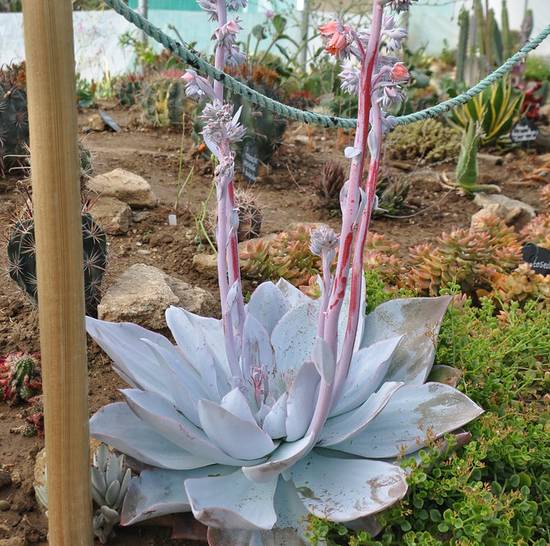
The flowering of Echeveria Cante adds an extra touch of charm.
📅 Period: Summer
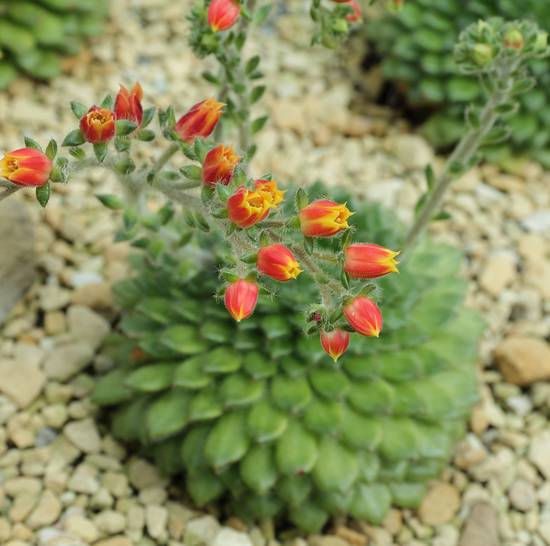
🌺 Flowers: Small orange to pink bell-shaped flowers on a long flower stalk
✂️ Tip: Remove the stalk after flowering to preserve the plant’s energy.
📅 Period: Summer
🌺 Flowers: Small orange to pink bell-shaped flowers on a long flower stalk
✂️ Tip: Remove the stalk after flowering to preserve the plant’s energy.
FAQ - Echeveria Cante
What is the natural color of Echeveria Cante?
A powdery blue-grey with pinkish edges when exposed to sunlight.
What is the best location for Echeveria Cante?
In direct sun or bright light with good air circulation.
How should Echeveria Cante be watered properly?
Wait until the substrate is completely dry, then water moderately.
What substrate should be used for Echeveria Cante?
A very well-draining substrate composed of cactus soil, perlite, and pumice.
Can Echeveria Cante be propagated?
Yes, by leaf cuttings or offsets when available.
What is the hardiness of Echeveria Cante?
It tolerates down to 5 °C if kept dry but is sensitive to moisture and frost.
What fertilizer should be used for Echeveria Cante?
A gentle fertilizer such as Or Brun Cactus once per month during the growing season.
Why is my Echeveria Cante losing its farina?
Friction or water on the leaves removes the farina. Handle it carefully.
Is Echeveria Cante suitable for pot cultivation?
Yes, provided it has a wide, shallow, and well-draining container.
How often should Echeveria Cante be repotted?
About every 2 years in spring to refresh the substrate.