Echeveria Runyonii
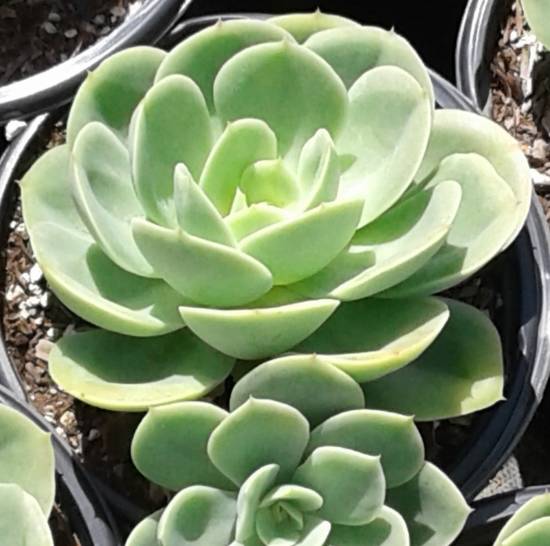
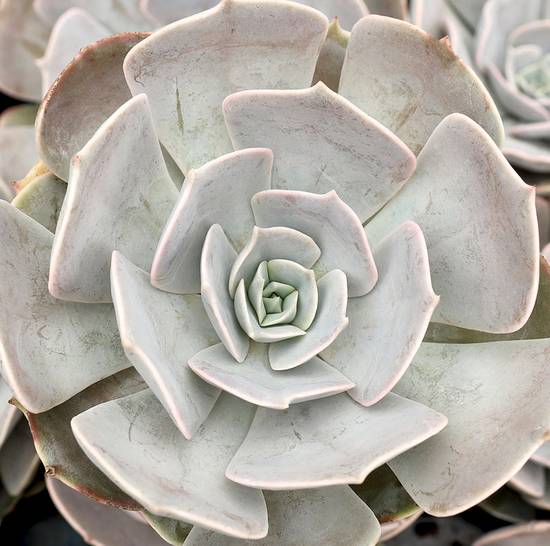
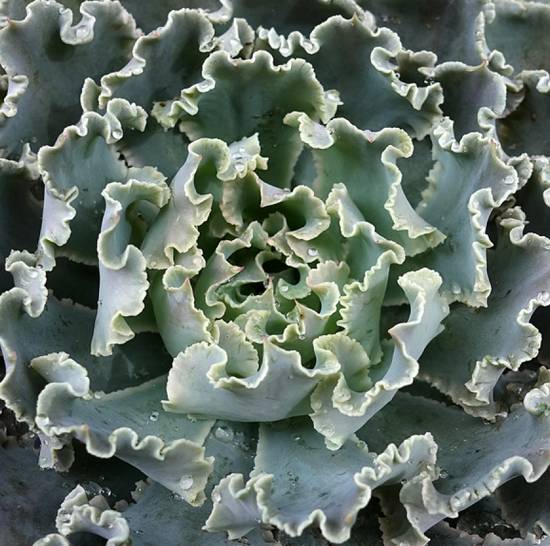
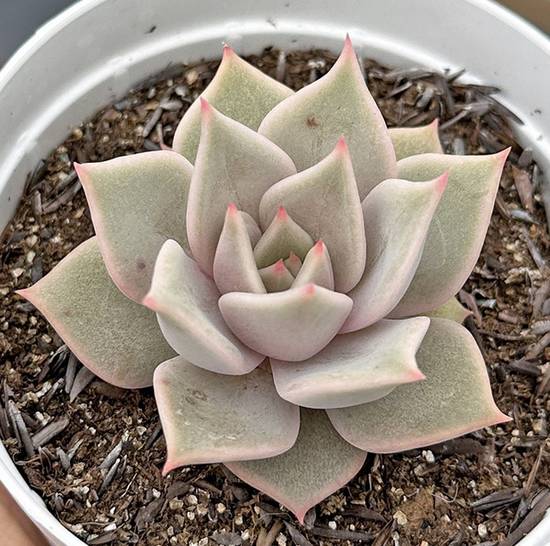
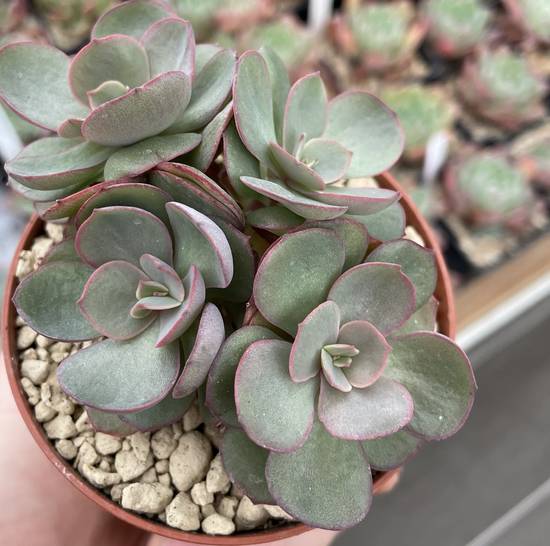
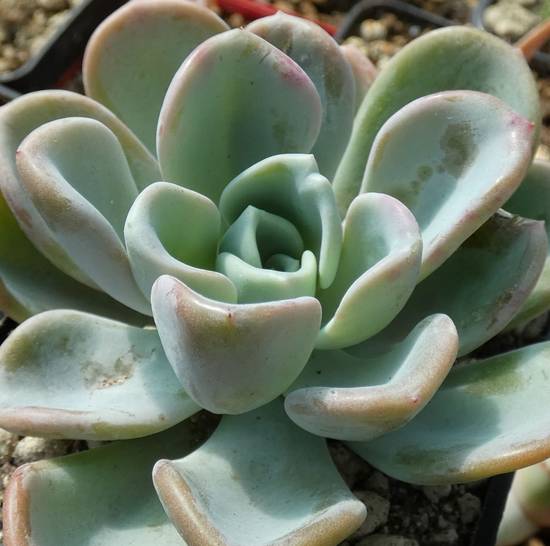
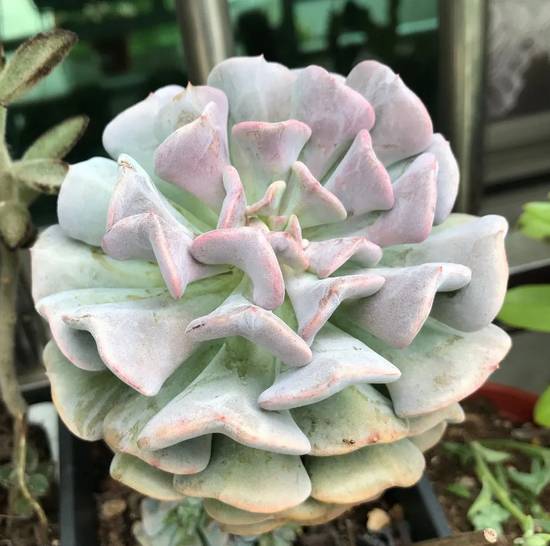
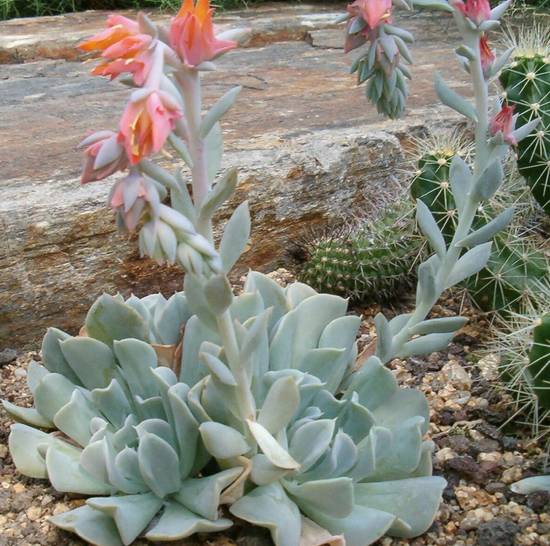
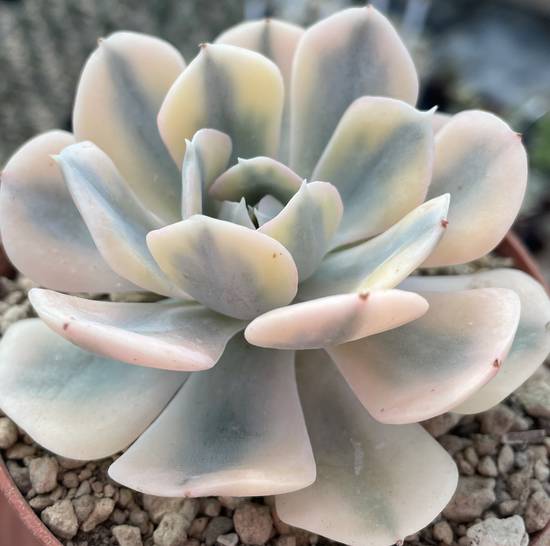
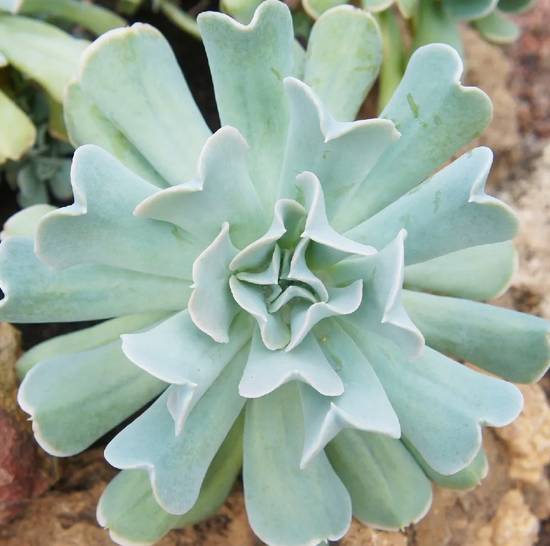
With its fleshy, silvery, and elegantly curved leaves, Echeveria Runyonii is a true botanical jewel. This timeless cultivar charms with its perfectly symmetrical rosette and compact habit, reminiscent of a mineral lotus.
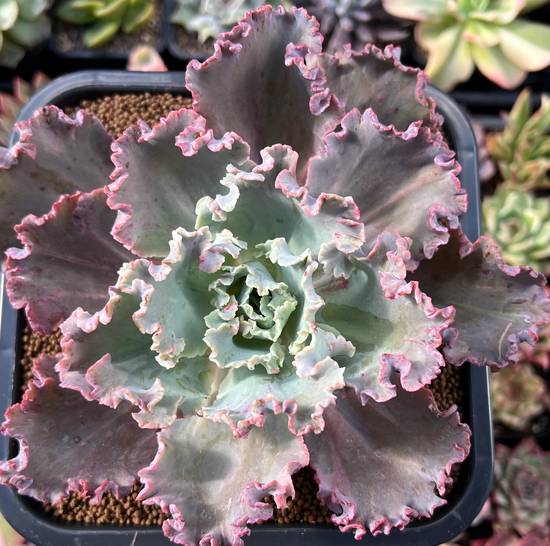
Its beauty lies not only in its form: its shades range from pale gray to silvery blue with slightly pink undertones, especially when exposed to generous light. It is highly valued by collectors and beginners alike, combining aesthetics with ease of care.
Echeveria Runyonii is a classic for dry gardens, terrariums, and sunny balconies, yet it also thrives indoors as long as light is sufficient.
Echeveria Runyonii is native to northeastern Mexico, in the state of Tamaulipas. It naturally grows on rocky, arid slopes, which gives it excellent adaptation to dry and sunny conditions.
For Echeveria Runyonii to express its full potential, light is essential.
☀️ Outdoors: Full sun or light partial shade. Avoid harsh afternoon rays in summer.
🌤️ Indoors: Ideally near a south- or west-facing window.
🔄 Tip: Rotate regularly for balanced growth.
☀️ Outdoors: Full sun or light partial shade. Avoid harsh afternoon rays in summer.
🌤️ Indoors: Ideally near a south- or west-facing window.
🔄 Tip: Rotate regularly for balanced growth.
Like most succulents, Echeveria Runyonii prefers dryness over excess moisture.
🌱 Spring / Summer: Water every two weeks, allowing soil to dry completely.
❄️ Autumn / Winter: Drastically reduce watering, sometimes none if temperatures are low.
⚠️ Warning: Water in the rosette promotes rot. Water at the base.
🌱 Spring / Summer: Water every two weeks, allowing soil to dry completely.
❄️ Autumn / Winter: Drastically reduce watering, sometimes none if temperatures are low.
⚠️ Warning: Water in the rosette promotes rot. Water at the base.
This cultivar is robust but sensitive to frost.
🌡️ Ideal: 18–26 °C
❄️ Minimum: 4 °C (brief tolerance if dry)
🏠 Advice: Overwinter in a bright, cool room.
🌡️ Ideal: 18–26 °C
❄️ Minimum: 4 °C (brief tolerance if dry)
🏠 Advice: Overwinter in a bright, cool room.
🪨 Recommended mix: 50% cactus soil + 25% perlite + 25% pumice for excellent drainage.
The flowering of Echeveria Runyonii is as subtle as it is lovely.
📅 Period: Spring to summer
🌺 Flowers: Pink to bright orange bells on long, arching stalks
🐝 Pollination: Attractive to bees and pollinators outdoors.
📅 Period: Spring to summer
🌺 Flowers: Pink to bright orange bells on long, arching stalks
🐝 Pollination: Attractive to bees and pollinators outdoors.
FAQ - Echeveria Runyonii
Can Echeveria Runyonii be grown indoors?
Yes, provided it receives sufficient direct light each day.
What type of substrate should be used for Echeveria Runyonii?
A very well-draining mix with cactus soil, perlite, and pumice.
How should Echeveria Runyonii be watered?
Once every two weeks in summer, and very little or none in winter.
When does Echeveria Runyonii bloom?
In spring and summer, with pink to orange bell-shaped flowers.
Is Echeveria Runyonii easy to propagate?
Yes, by leaf cuttings or offsets at the base.
Why is my Echeveria Runyonii becoming elongated?
It lacks light. Provide more exposure and cut it back for propagation if needed.
Is Echeveria Runyonii toxic?
No, it is considered non-toxic to animals.
Can Echeveria Runyonii be fertilized?
Yes, with a cactus fertilizer once per month in spring and summer.
Can Echeveria Runyonii be grown outdoors?
Yes, from spring to autumn, as long as it is protected from frost and excess moisture.
How long does Echeveria Runyonii live?
Several years with proper care, and it can easily multiply.