Opuntia Santa Rita

Opuntia Santa Rita
Opuntia Santa Rita
Opuntia Santa Rita
Opuntia Santa Rita

Opuntia Santa Rita

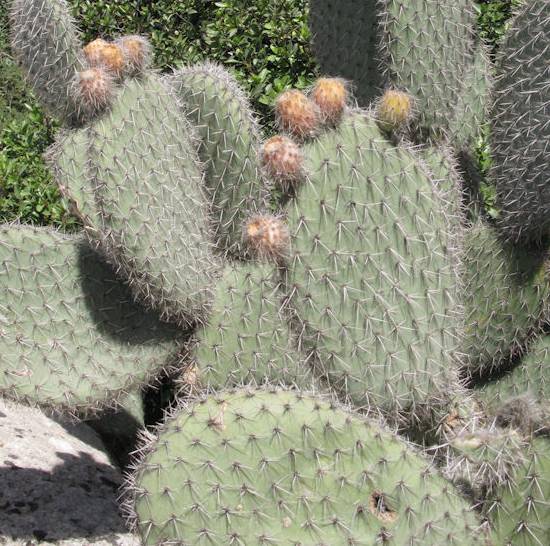
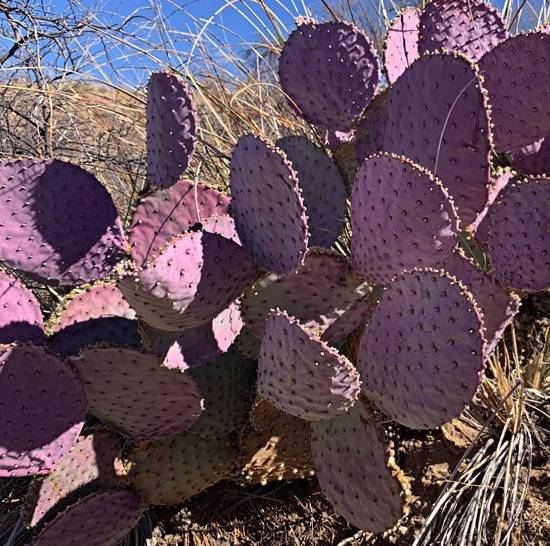
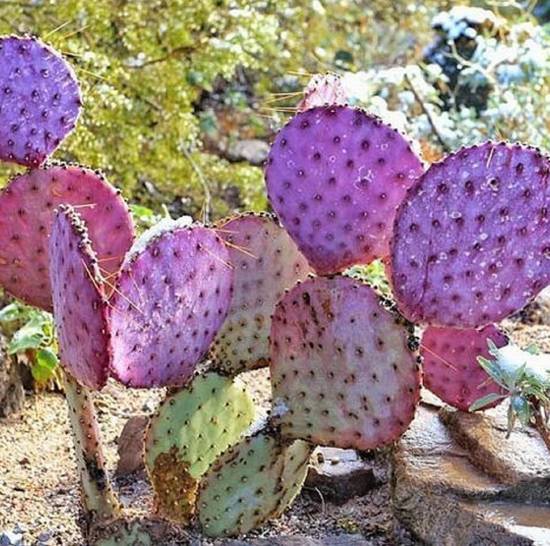
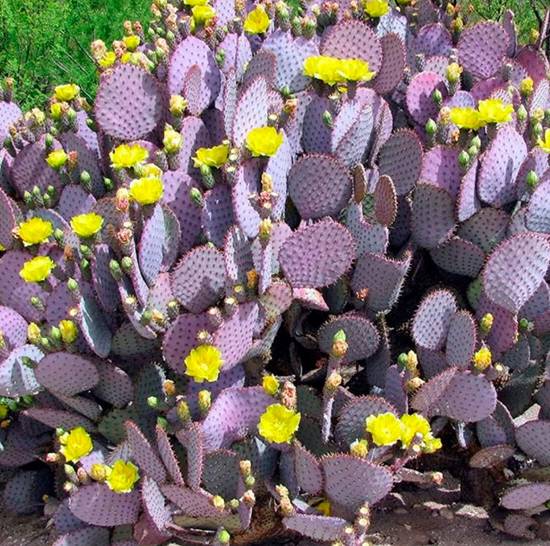
The Opuntia Santa Rita, also known as the “purple prickly pear” or “Santa Rita Prickly Pear”, is a striking cactus immediately recognizable by the purple-violet coloration of its cladodes. This coloration intensifies with cold or water stress, making it a top-choice ornamental cactus often used in rock gardens or dry landscapes.

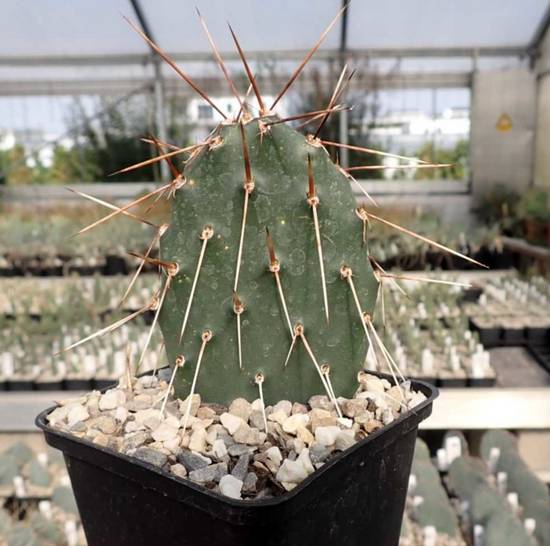
Its flat, broad, slightly oval pads can reach up to 20 cm in diameter. They are covered with small areoles from which emerge yellow glochids (very fine, irritating spines), sometimes accompanied by true spines, especially on older specimens. The aesthetic appeal of this cactus goes hand in hand with excellent drought resistance and great ease of cultivation.

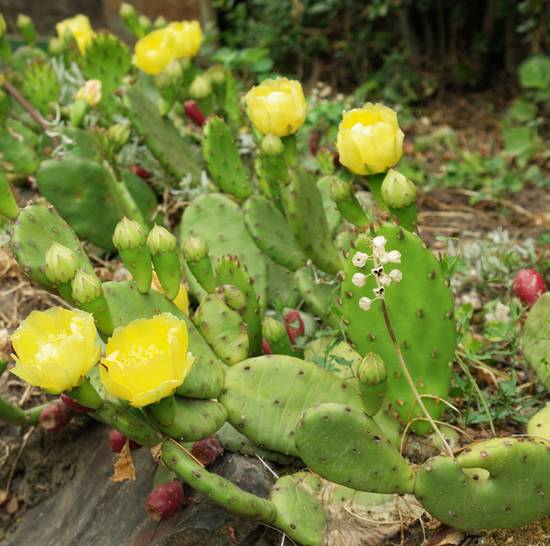
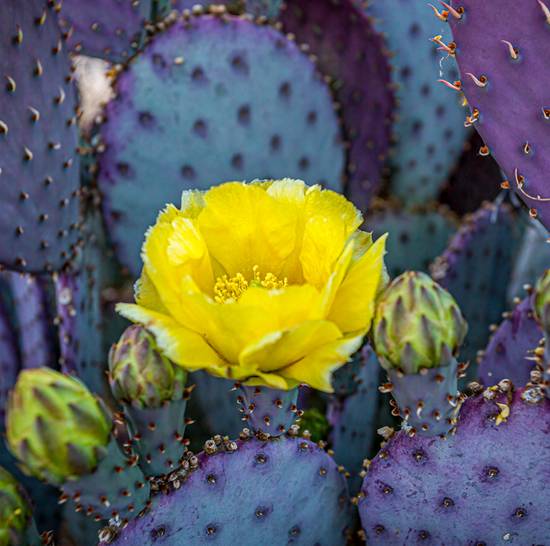
In spring, it produces large bright yellow flowers that contrast beautifully with the purple tones of its pads. The flowers are followed by edible, round fruits that turn deep red when ripe.

The Opuntia Santa Rita originates from the southwestern United States and northern Mexico, notably in the deserts of Arizona, New Mexico and Sonora.

It naturally grows in arid areas, on rocky or sandy soils, exposed to intense sunlight and significant temperature variations.
The Opuntia Santa Rita is a cactus that loves light and develops its characteristic purple coloration when well exposed.

🔆 Outdoors: Full sun, ideally 6 to 8 hours per day.

🌤️ Protection: During heatwaves, light shading can be beneficial to prevent extreme dehydration.

🏠 Indoors: Place behind a very bright window or under a horticultural grow light.
Like all Opuntias, it requires little water, but occasional watering supports growth.

💧 Spring / Summer: Every 15 to 25 days depending on heat. Let the substrate dry completely between waterings.

❄️ Autumn / Winter: No watering if kept cool and dry.

⚠️ Tip: Excess moisture combined with cold is the greatest danger for this cactus. Use a very well-draining substrate.
This cactus tolerates extreme temperatures provided the soil remains dry.

🌡️ Comfort range: 18 to 30 °C

❄️ Cold resistance: Down to −6 °C in dry soil!

💡 Overwintering: Best kept indoors in a bright location or in a frost-free cold greenhouse.
The Opuntia Santa Rita prefers mineral, dry soils.

🪴 Ideal mix: 60% cactus soil + 20% coarse sand + 20% perlite or pumice.

⛏️ Tip: A layer of mineral drainage at the bottom of the pot is essential.
Its flowering is as spectacular as it is colorful!

📆 Period: Spring to early summer.

🌼 Flowers: Yellow, broad, cup-shaped, vividly contrasting with the purple pads.

🍒 Fruits: Small edible figs, deep red when ripe.
FAQ - Opuntia Santa Rita

How can I intensify the purple color of my Opuntia Santa Rita?
The purple hue of Opuntia Santa Rita intensifies under stress: prolonged sun exposure, cool nighttime temperatures, and reduced watering. Make sure it receives enough direct light and use a well-draining mineral substrate.
What is the minimum temperature tolerated by Opuntia Santa Rita?
This cactus can tolerate temperatures down to -6°C, provided the soil remains perfectly dry. To avoid any risk of root rot, bring it indoors or cover it during severe frosts.
Can the fruits of Opuntia Santa Rita be eaten?
Yes, the red fruits of Opuntia Santa Rita are edible. They are sweet, slightly tangy, and rich in antioxidants. Harvest them when ripe and handle carefully to avoid glochids.
How can I stimulate the flowering of Opuntia Santa Rita?
For abundant flowering, respect a cool, dry winter rest period, then resume watering in spring. Applying a special cactus fertilizer is also recommended.
Is Opuntia Santa Rita suitable for city balconies?
Yes, as long as it is placed in full sun and protected from excessive rain. A southeast- or southwest-facing balcony is perfect. Beware of the spines: keep it out of reach of children.
My Opuntia Santa Rita is losing its purple color, what should I do?
Loss of purple color may be due to insufficient light or overly frequent watering. Reduce watering and expose it to more sunlight to reactivate its pigmentation.
How often should Opuntia Santa Rita be watered in summer?
Watering every 2 to 3 weeks is more than enough in summer. Make sure the substrate is completely dry before each new watering.
Is it possible to grow Opuntia Santa Rita in the ground?
Yes, in regions with a mild and dry climate. It should be planted in well-drained soil, preferably raised, to avoid any winter water stagnation.
What are the common pests of Opuntia Santa Rita?
Mealybugs can sometimes settle on the areoles. In case of infestation, spray a diluted black soap solution and isolate the cactus.
What maximum size can Opuntia Santa Rita reach?
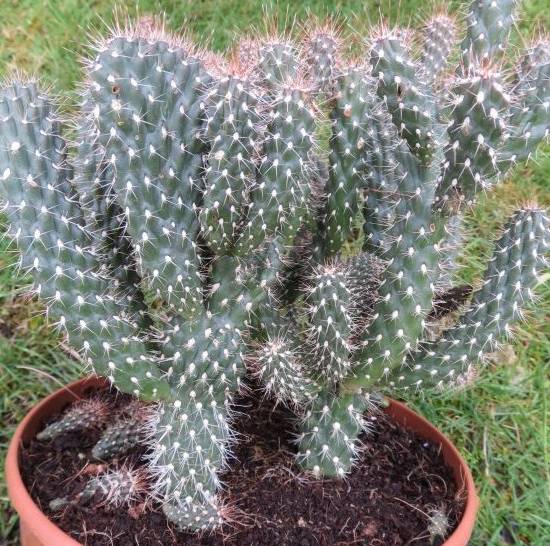
In cultivation, it can reach 60 to 80 cm in height with age. In the ground, under good conditions, some specimens exceed 1 meter in height and spread widely.