Mammillaria Polythèle

Mammillaria Polythèle

Mammillaria Polythèle

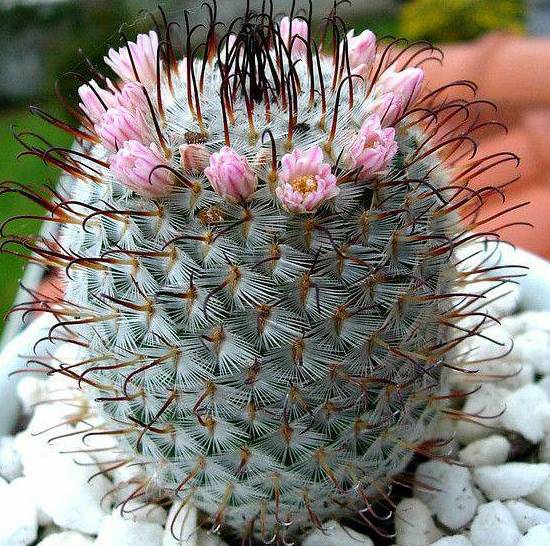
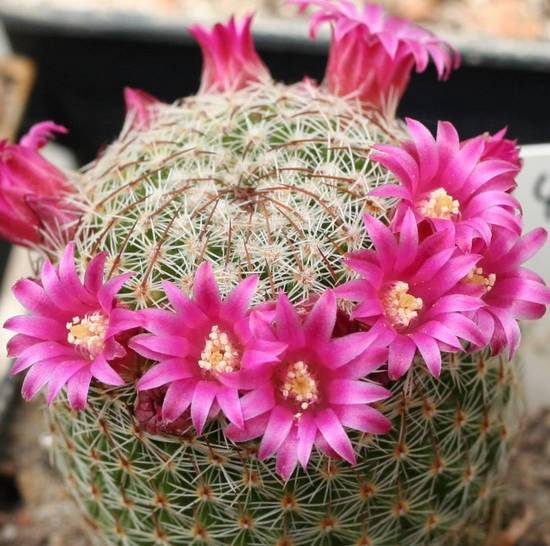
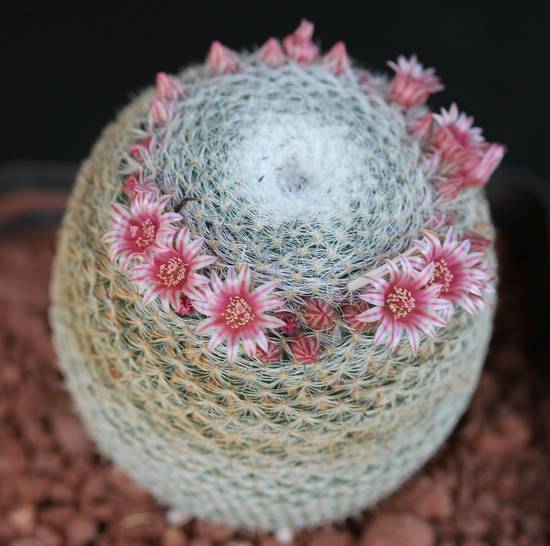
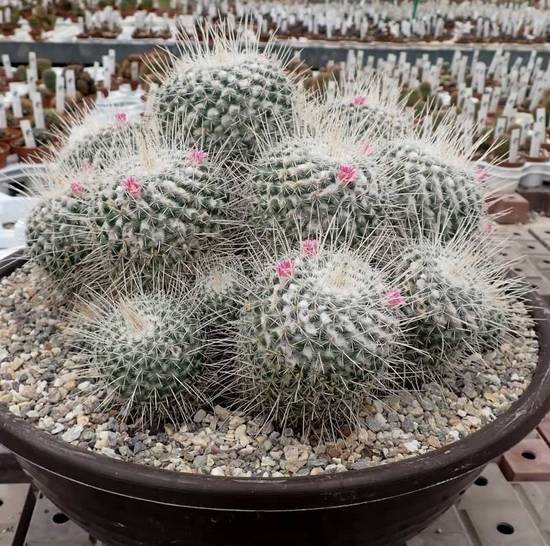
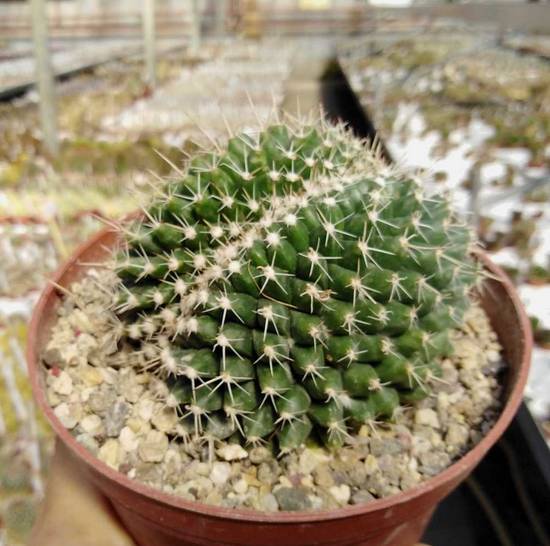
The Mammillaria Polythele is a cactus native to central Mexico, highly appreciated for its compact shape, regular crown of spines and generous crown-shaped flowering. It belongs to the Mammillaria genus, one of the richest in cactus species, characterized by distinct tubercles and small flowers arranged in a ring around the apex.

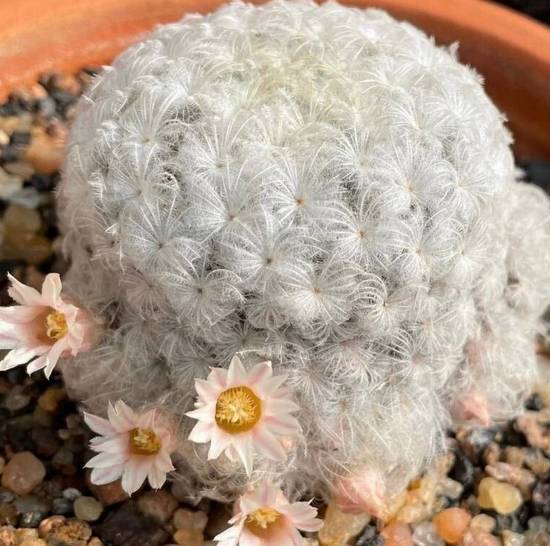
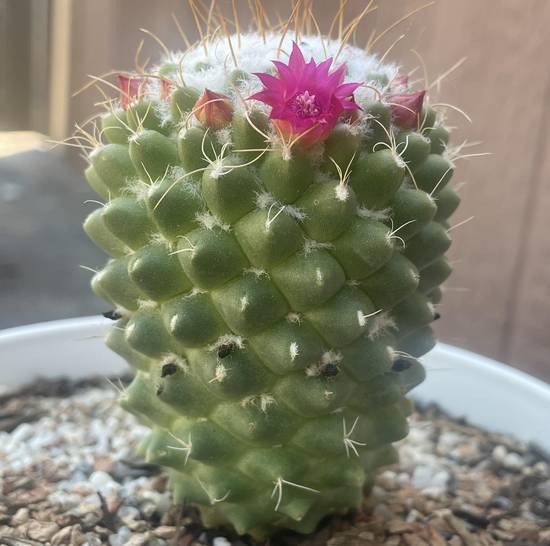
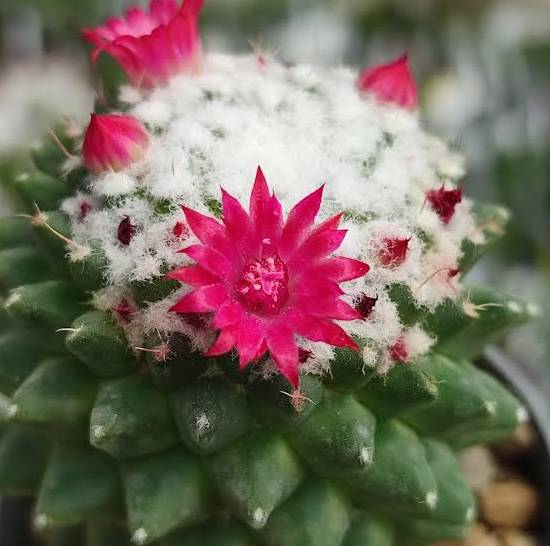
With its cylindrical or globular habit, the Mammillaria Polythele can reach 15 to 20 cm in height at maturity. It is covered with fine white radial spines forming a dense mesh, sometimes accompanied by darker central spines. In summer, it produces fuchsia pink to light violet flowers forming a spectacular crown around the apex, reminiscent of Aztec royal diadems.

This cactus is perfect for lovers of flowering, resilient and compact species. It adapts well to pot cultivation, both indoors and outdoors during warm seasons.

The Mammillaria Polythele naturally grows in the Mexican states of San Luis Potosí and Hidalgo, where it develops on sunny rocky slopes, generally between 1,000 and 2,000 m in altitude. This dry and well-drained habitat is essential to understanding its cultivation needs.
To grow properly, the Mammillaria Polythele needs light:

🌞 Direct sunlight: Ideally 4 to 6 hours of sun per day.

🌤️ Light partial shade in summer: During heatwaves, light shading can prevent sunburn.

A lack of light leads to etiolated growth and absence of flowering.
The Mammillaria Polythele follows a classic cactus watering rhythm:

🌱 Spring/summer: Water once every 2 to 3 weeks. Wait until the substrate is completely dry.

🍃 Autumn/winter: No watering, or very rarely if the indoor environment is heated.

Important tip: Always use a pot with drainage holes and a very well-draining substrate to avoid rot.
The Mammillaria Polythele enjoys warmth but remains relatively hardy:

🌞 Ideal temperature: Between 18 and 28°C.

❄️ Minimum tolerance: Down to 0°C if the substrate is completely dry.

🏠 In winter: Bring it into a bright, preferably unheated room.
The Mammillaria Polythele requires a dry, airy and well-drained substrate:

🪨 Ideal mix: cactus potting soil + pumice + pozzolana (1/3 of each).
The Mammillaria Polythele is known for its crown-shaped flowering around the apex:

🌸 Season: From April to July.

🌺 Shape: Small tubular flowers arranged in a ring.

🌈 Color: Pink to fuchsia.

Flowering tip: Respect the winter dormancy period without watering and provide maximum light from February.
FAQ - Mammillaria Polythèle

How to recognize excess moisture in Mammillaria Polythèle?
Soft spots, falling spines, or a blackened base are clear signs. Always use a draining substrate with pumice and pozzolana to prevent this issue.
How to know if Mammillaria Polythèle needs water?
It retracts slightly and its epidermis becomes wrinkled. A good watering with diluted fertilizer restarts growth.
What substrate is ideal for Mammillaria Polythèle?
A mix of cactus potting soil, pumice, and pozzolana is recommended.
Can Mammillaria Polythèle be grown indoors?
Yes, near a south-facing window or under a grow light. Avoid dark areas.
What is the growth rate of Mammillaria Polythèle?
Rather slow but steady. It produces offsets with age.
Which fertilizer should be used for Mammillaria Polythèle?
A cactus fertilizer, low in nitrogen. Once a month between April and August.
Can Mammillaria Polythèle be repotted every year?
Every 2 or 3 years is enough. Use a slightly larger pot with cactus potting soil.
Is Mammillaria Polythèle hardy?
It tolerates 0°C in dry conditions, but avoid prolonged frost.
How to encourage flowering of Mammillaria Polythèle?
Winter rest without watering, maximum light in February, and fertilizer in spring.
Can Mammillaria Polythèle be propagated?
Yes, by sowing or removing offsets. Let the wound dry before planting.