Mammillaria Bocasana

Mammillaria Bocasana

Mammillaria Bocasana

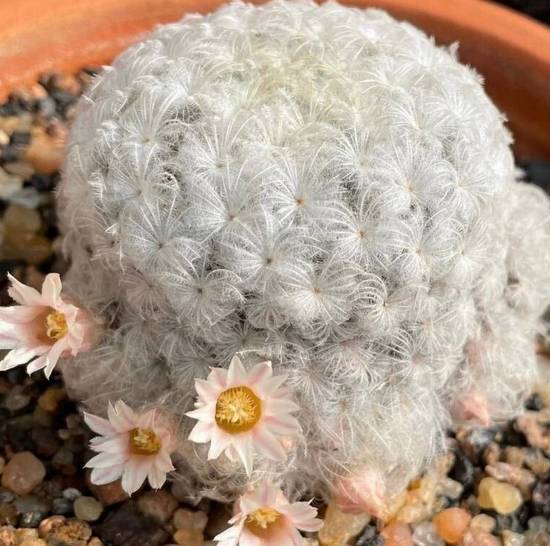
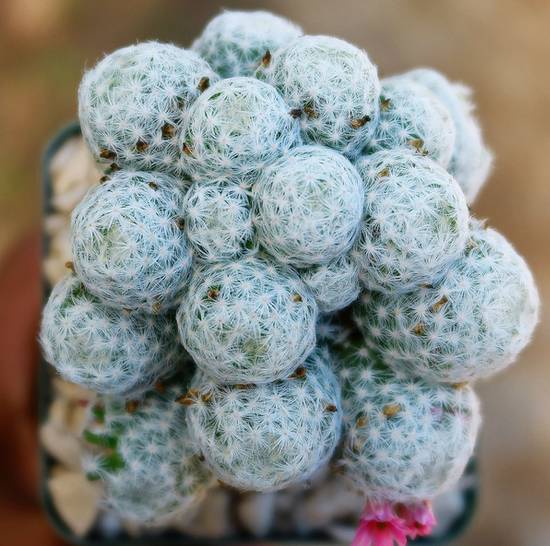
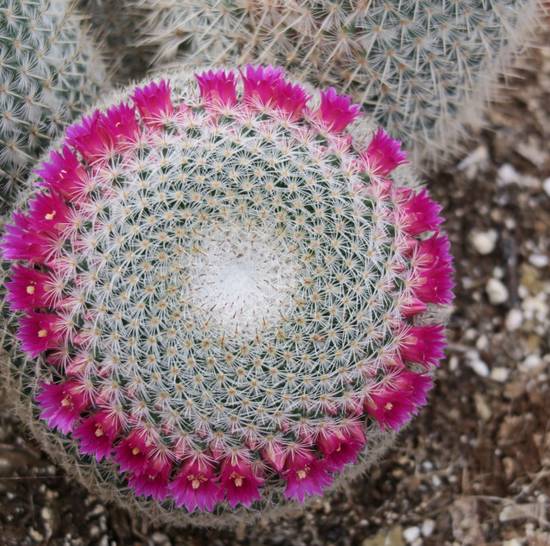
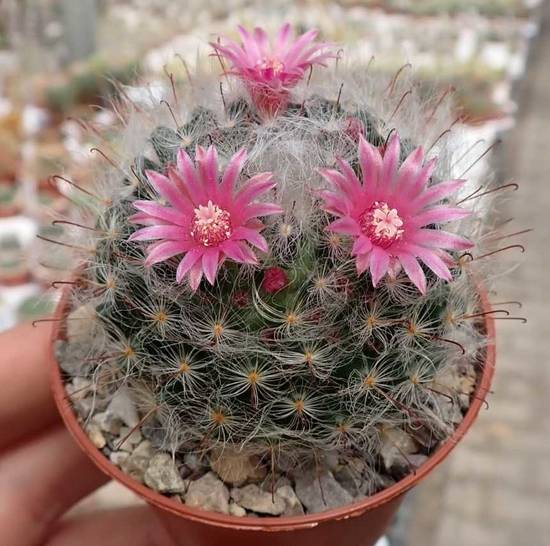
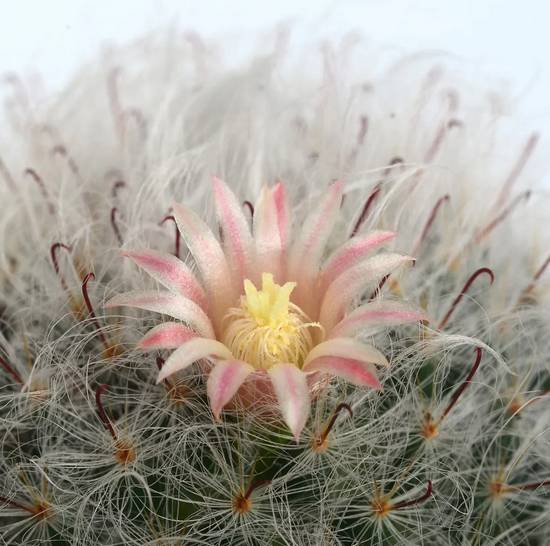
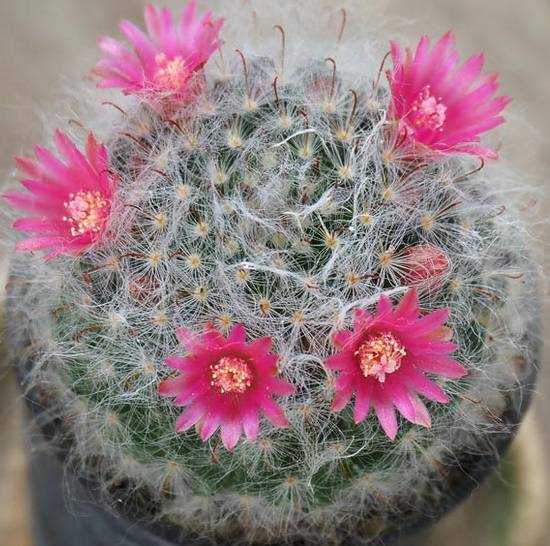
The Mammillaria Bocasana, also nicknamed the "powder puff cactus" or "fuzzy cactus", is an emblematic species of the Cactaceae family. Highly appreciated by collectors, it stands out for its soft, silky appearance: a multitude of fine, intertwined white hairs, almost cotton-like, conceal its stiffer spines. Its fluffy look makes it a particularly attractive ornamental plant, easy to grow and well suited for beginners.

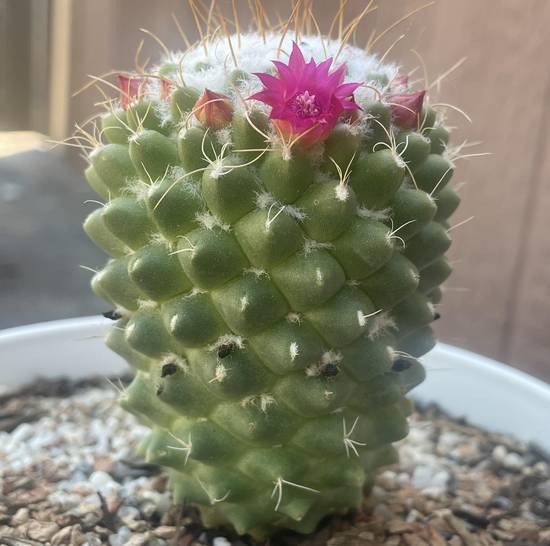
Native to north-central Mexico, this cactus grows in small globular clusters that can, over time, form more extensive colonies. Its cylindrical tubercles, typical of the genus and without ribs, are covered with fine protective white hairs. In summer, lovely small pink flowers, sometimes white or salmon-colored, open in a crown at the top of the cactus, offering a striking contrast with its downy coat.

The Mammillaria Bocasana originates from the arid and semi-desert regions of northern Mexico, particularly in the states of San Luis Potosí and Zacatecas. It naturally grows in limestone rock crevices, where water drains quickly and light is abundant. This adaptation gives it great robustness in cultivation, provided its needs for light and drainage are respected.
A well-chosen exposure is essential to maintain the dense, woolly appearance of this cactus.

🌞 Bright light: Place it in a very bright location year-round, with a few hours of direct sun, especially in the morning or late afternoon.

☀️ Protection: During very hot summers, light shade helps prevent the hairs from drying out or young plants from sunburn.

🏡 Indoors: Place it behind a well-exposed window. In winter, ensure it receives at least 5 to 6 hours of light per day.
As with most Mammillaria, the water needs of Mammillaria Bocasana are low but regular during its growth period.

💧 Spring – summer: Water every 15 to 20 days. Always let the substrate dry completely before watering again.

❄️ Winter: No watering during the rest period. A dry winter rest ensures better flowering the following spring.

⚠️ Tip: Too much water can cause collar rot. Use a suitable substrate to avoid this issue.
This species is surprisingly resistant, both to heat and moderate cold.

🌡️ Ideal temperature: Between 18 °C and 28 °C.

❄️ Minimum tolerated: Down to -3 °C if the substrate remains perfectly dry.

💡 Wintering tip: Place the cactus in a cool, bright location (between 5 and 10 °C) to promote flowering.
A well-drained mineral soil is crucial to avoid excess moisture.

🪨 Recommended mix: 50% special cactus potting soil, 30% perlite, and 20% pozzolana.

⛏️ Drainage: A layer of gravel or clay pebbles at the bottom of the pot further improves water drainage.
When well grown, Mammillaria Bocasana flowers regularly and generously.

🌸 Period: From May to July, sometimes with a second bloom at the end of summer.

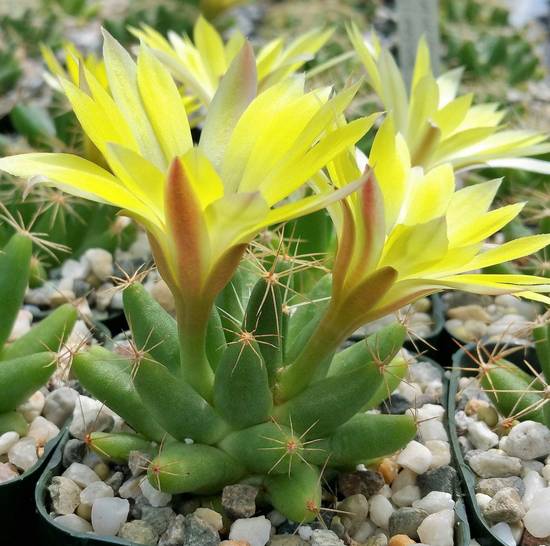
🌼 Flowers: Small, star-shaped, pale to bright pink, sometimes white. They form a crown at the top of the cactus.

🔋 Flowering tip: Provide a cool winter rest and apply cactus nutrients in spring.

FAQ - Mammillaria Bocasana

How should Mammillaria Bocasana be watered?
Water sparingly. During the growing season, water every 2 to 3 weeks, allowing the substrate to dry thoroughly between waterings. In winter, stop watering completely.
What is the minimum temperature tolerated by Mammillaria Bocasana?
Mammillaria Bocasana can tolerate light frost down to -3°C only if the soil is completely dry. When in doubt, move it to a bright, cool indoor space.
Why is my Mammillaria Bocasana not flowering?
Lack of light, overly warm wintering, or improper watering may prevent blooming. Provide a cool winter rest (5–10°C), good light, and balanced fertilization in spring.
Can Mammillaria Bocasana live indoors?
Yes, it grows well indoors if given excellent light. A south-facing window is ideal. Avoid cold drafts and excessive humidity.
What are the signs of overwatering or underwatering in Mammillaria Bocasana?
If it becomes soft, yellow, or develops dark spots at the base, it likely has too much water. Slight shriveling may indicate thirst, especially in summer. Always water only when the substrate is dry.
What type of substrate is suitable for Mammillaria Bocasana?
It prefers a light, well-draining soil. An ideal mix contains 50% cactus potting soil, 30% perlite, and 20% pumice.
Should Mammillaria Bocasana be repotted regularly?
Repot every 2 to 3 years in spring. This refreshes the substrate and provides more space, especially when offsets begin to form.
Is Mammillaria Bocasana easy to propagate?
Yes, it propagates easily by separating offsets. Let them dry for a few days before planting in dry substrate. Water only after 10 to 15 days.
Does Mammillaria Bocasana have spines?
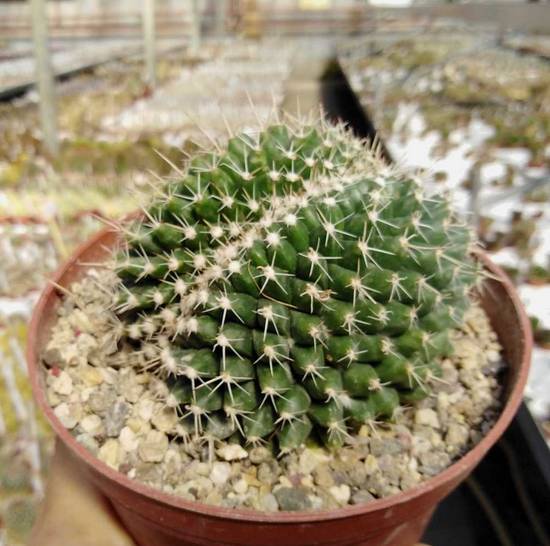
Despite its soft appearance, it has rigid spines hidden beneath its fine hairs. Handle carefully or use gloves.
Can Mammillaria Bocasana be placed outdoors in summer?
Yes, it enjoys outdoor stays in summer. Choose a sunny location protected from heavy rain. Bring it indoors when temperatures fall below 8°C.
What are the differences between Mammillaria Bocasana and Mammillaria Bombycina?
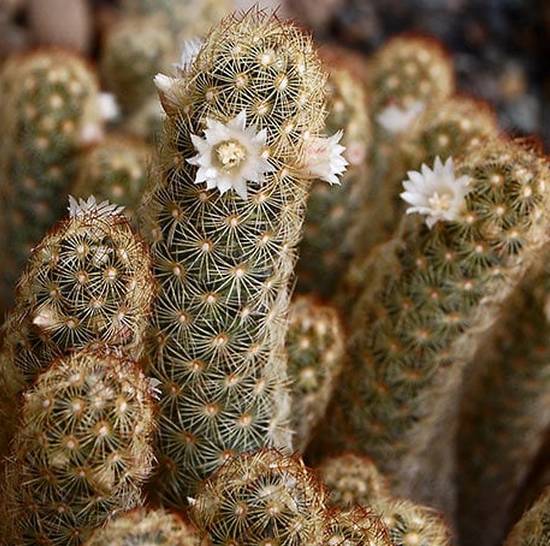
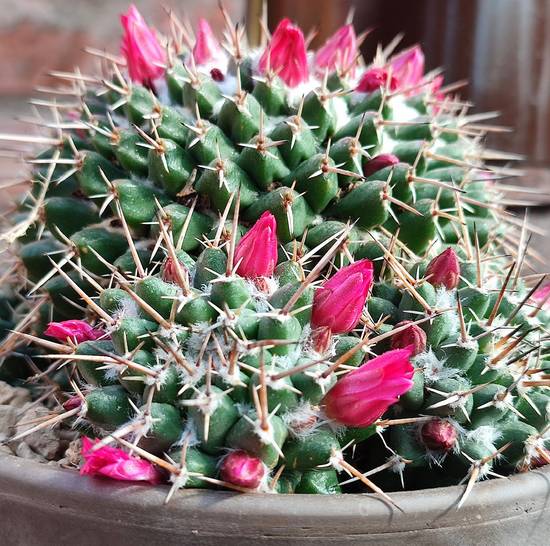
Mammillaria Bocasana is known for its dense, silky white hairs and compact shape, while Mammillaria Bombycina has more elongated stems, visible hooked spines, and larger, brighter pink flowers. Both are beautiful but differ in texture, form, and flowering display.
Criteria Mammillaria Bocasana Mammillaria Bombycina
Shape Globular to short cylindrical, forming compact clusters More elongated cylindrical stems, sometimes slightly pendulous
Hair Covering Very dense and silky, covering most of the plant Less dense, revealing areoles and spines
Spines Small and often hidden under white hairs, not hooked Visible central spines, often hooked, golden to brown
Flowering Small pale pink flowers Larger crown-forming flowers, bright pink to magenta
Origin Northern Mexico (arid desert areas) Central Mexico (rocky limestone regions)