Mammillaria Bocasana Fred Cristata
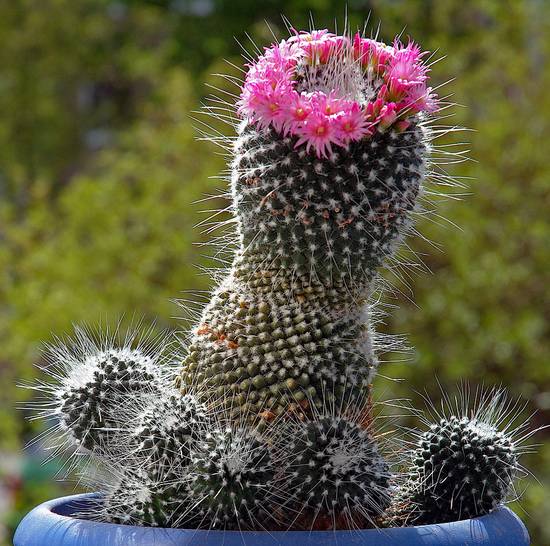
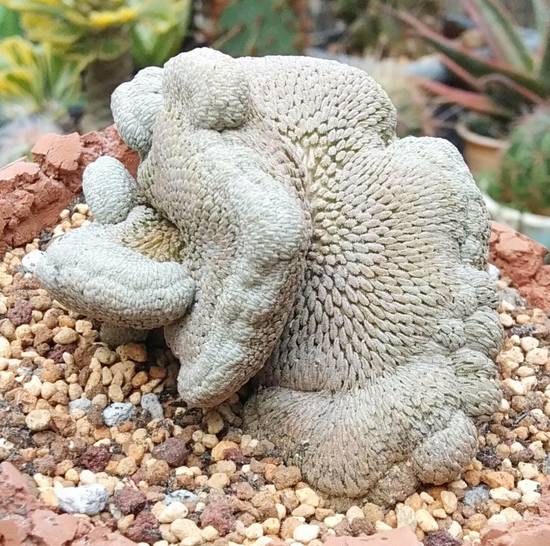
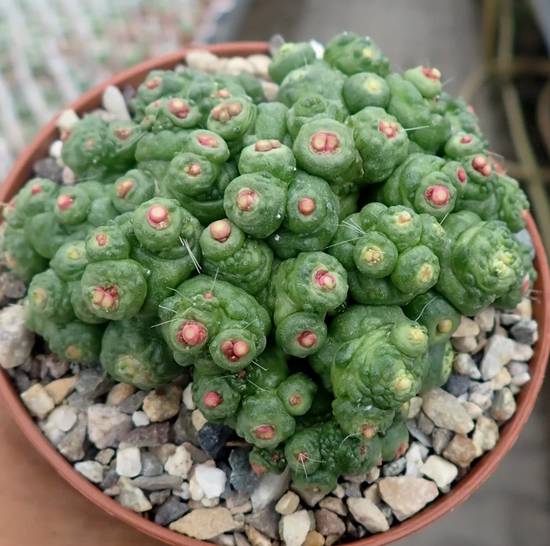
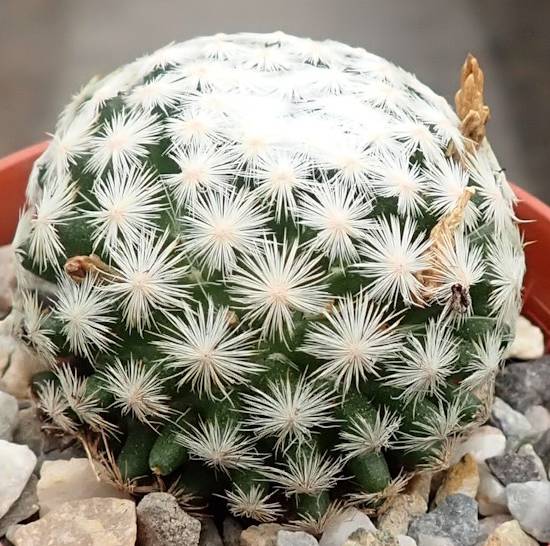
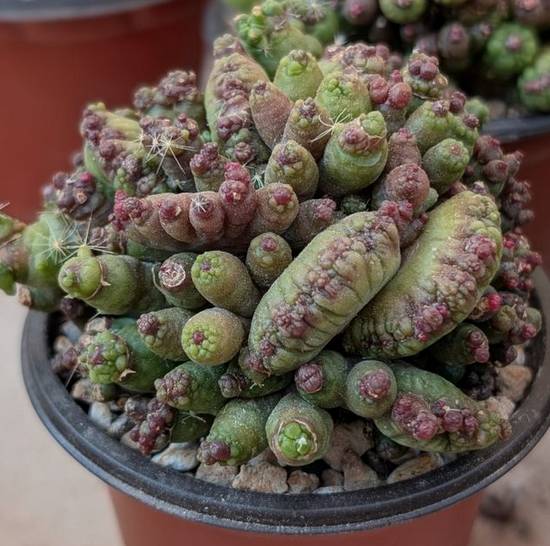
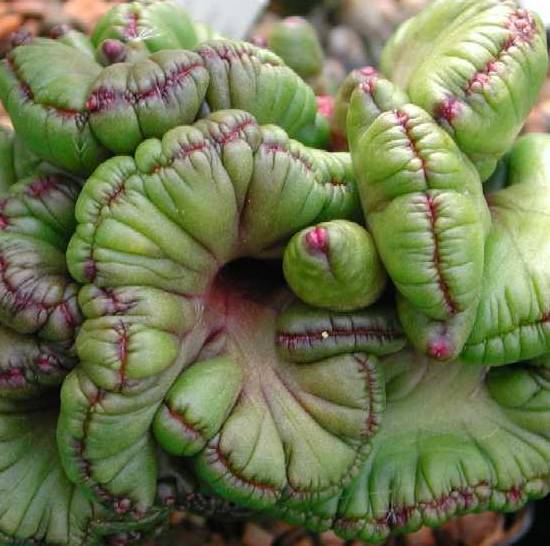
The Mammillaria Bocasana Fred Cristata is a fascinating mutation of the well-known Mammillaria Bocasana, famous for its woolly appearance and charming small flowers. In this crested form, the classic clustered growth gives way to sinuous ridges, often flat, twisted, or deformed, making each specimen unique. The "Fred" cultivar additionally stands out with its greenish to pale yellow tones, tiny and sometimes completely distorted areoles, and an almost total absence of visible spines. An exceptional plant for collectors!
This variety does not exist in the wild: it results from mutations observed and then stabilized through nursery cultivation. The classic Mammillaria Bocasana originates from north-central Mexico, particularly the semi-arid regions of San Luis Potosí and Zacatecas. The crested cultivar is propagated only by cuttings due to its unstable form.
To thrive, Mammillaria Bocasana Fred Cristata needs plenty of light but must be protected from overly direct sun.
🌤️ Indoors: Place it behind a well-exposed window (south or west).
☀️ Outdoors: Gentle morning sun or light shade in midsummer to avoid burns on its delicate tissues.
💡 Tip: Insufficient light will cause excessive deformation or unattractive elongation.
🌤️ Indoors: Place it behind a well-exposed window (south or west).
☀️ Outdoors: Gentle morning sun or light shade in midsummer to avoid burns on its delicate tissues.
💡 Tip: Insufficient light will cause excessive deformation or unattractive elongation.
Like all cacti, this variety prefers spaced and moderate watering.
💧 Growth period (spring–summer): Water every 15 to 20 days, once the substrate is completely dry.
❄️ Rest period (autumn–winter): Stop watering if temperatures fall below 10 °C.
⚠️ Tip: Avoid any stagnant moisture. Use a well-draining substrate to prevent rot.
💧 Growth period (spring–summer): Water every 15 to 20 days, once the substrate is completely dry.
❄️ Rest period (autumn–winter): Stop watering if temperatures fall below 10 °C.
⚠️ Tip: Avoid any stagnant moisture. Use a well-draining substrate to prevent rot.
The Mammillaria Bocasana Fred Cristata tolerates heat but fears cold humidity.
🌡️ Ideal temperature: 18 to 28 °C during the day.
❄️ Minimum temperature: 5 °C if dry, but avoid any frost.
🏠 Wintering: Place it in a bright, cool room (8–12 °C) to encourage spring flowering.
🌡️ Ideal temperature: 18 to 28 °C during the day.
❄️ Minimum temperature: 5 °C if dry, but avoid any frost.
🏠 Wintering: Place it in a bright, cool room (8–12 °C) to encourage spring flowering.
This cactus requires a particularly well-draining soil, as it is very sensitive to moisture.
🪨 Ideal mix: 50% special cactus potting soil + 30% perlite + 20% pozzolana.
⛏️ Drainage: Never forget a layer of gravel or clay pebbles at the bottom of the pot.
🪨 Ideal mix: 50% special cactus potting soil + 30% perlite + 20% pozzolana.
⛏️ Drainage: Never forget a layer of gravel or clay pebbles at the bottom of the pot.
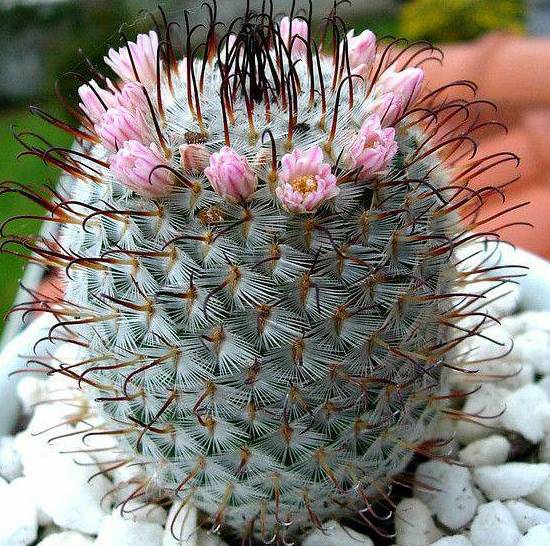
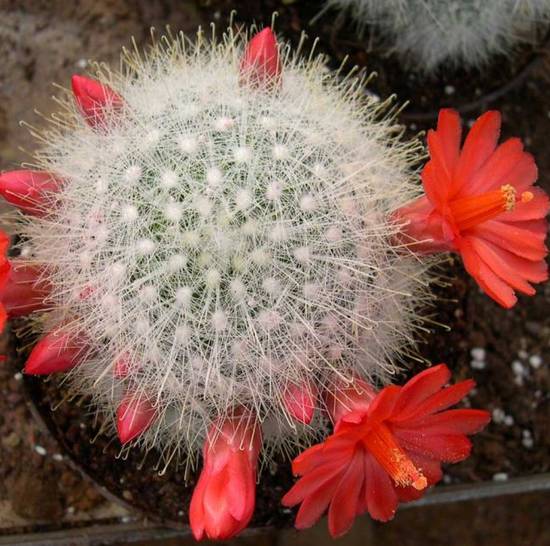
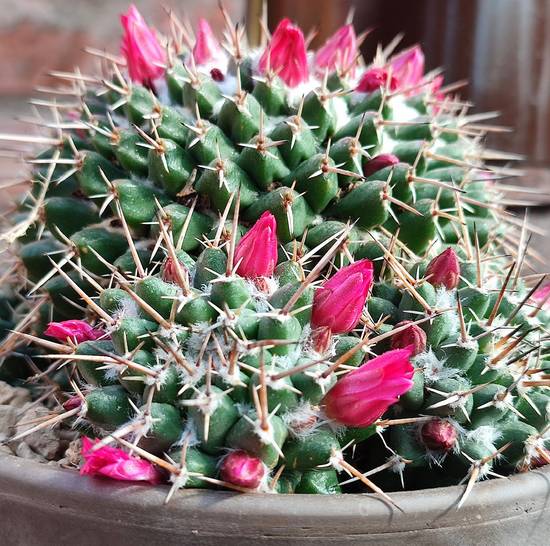
Flowering of Mammillaria Bocasana Fred Cristata is possible, although more unpredictable due to its mutated form.
🌸 Season: Spring to summer.
🌼 Flowers: Small, crown-shaped, pink to pale pink, sometimes white.
💡 To encourage flowering: Ensure a proper dry winter rest and apply a cactus fertilizer in spring.
🌸 Season: Spring to summer.
🌼 Flowers: Small, crown-shaped, pink to pale pink, sometimes white.
💡 To encourage flowering: Ensure a proper dry winter rest and apply a cactus fertilizer in spring.
FAQ - Mammillaria Bocasana Fred Cristata
How should Mammillaria Bocasana Fred Cristata be watered safely?
Water only when the substrate is completely dry. During the warm season, watering every 2 to 3 weeks is sufficient. In winter, stop watering entirely to prevent root rot.
Can Mammillaria Bocasana Fred Cristata tolerate cold temperatures?
It can tolerate temperatures around 5°C if kept dry. However, it is best wintered between 8 and 12°C in a bright location.
Why is my Mammillaria Bocasana Fred Cristata not growing?
Lack of light, overly rich soil, or improper watering can slow growth. Use a light, well-draining substrate and provide bright light.
Should Mammillaria Bocasana Fred Cristata be fertilized?
Yes, applying a cactus fertilizer once a month between April and August can improve growth and encourage flowering.
How can I recognize overwatering or underwatering in Mammillaria Bocasana Fred Cristata?
If the cactus becomes soft or turns dark, it is usually overwatered. If it shrinks and appears dry, it may need water. Always wait until the substrate is dry before watering.
Can this cactus live outdoors?
Yes, during summer, provided it is protected from heavy rain and intense midday sun. Bring it indoors when temperatures drop below 10°C.
What type of pot should be used for Mammillaria Bocasana Fred Cristata?
Choose a terracotta pot with drainage holes and add a mineral drainage layer at the bottom.
Can Mammillaria Bocasana Fred Cristata be propagated by cuttings?
Yes, but with care. Crested parts are fragile. Use a sterile blade, let the cut surface dry for several days, then replant in a suitable dry substrate.
Can Mammillaria Bocasana Fred Cristata bloom?
Yes, although it blooms rarely. A proper winter rest and bright exposure are key factors.
What is the difference between classic Mammillaria Bocasana and the Fred Cristata form?
The Fred Cristata form grows in a crested, fan-like shape with irregular development. It is often less spiny and has a very different appearance compared to the regular globular form.