Euphorbia Stenoclada

Euphorbia Stenoclada

Euphorbia Stenoclada

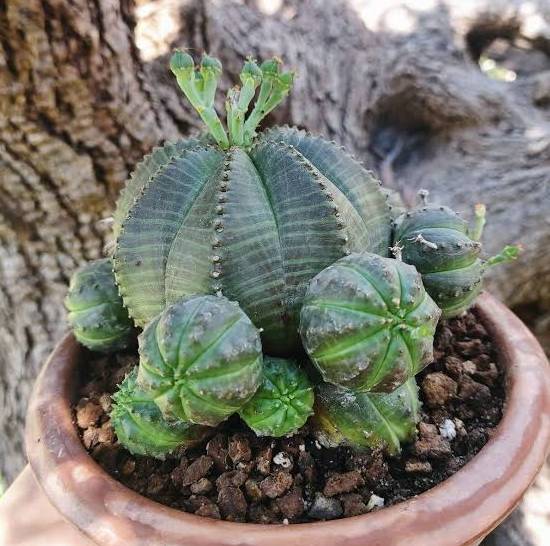
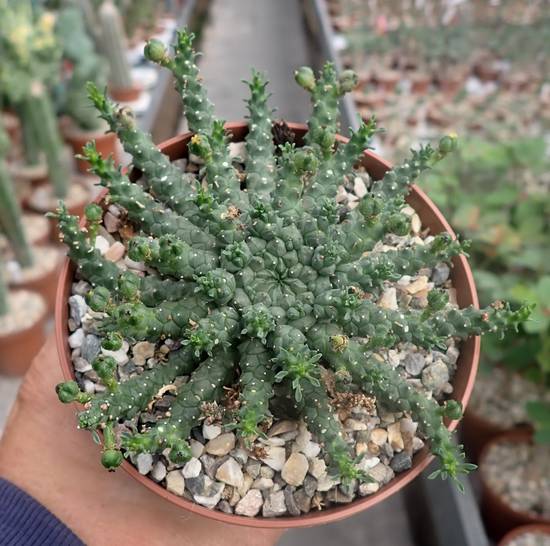
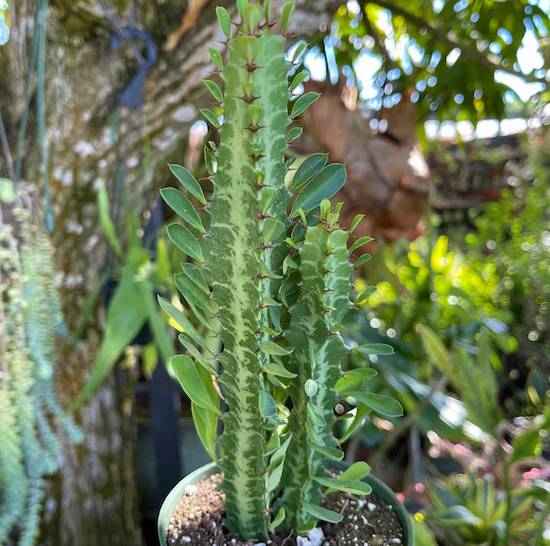
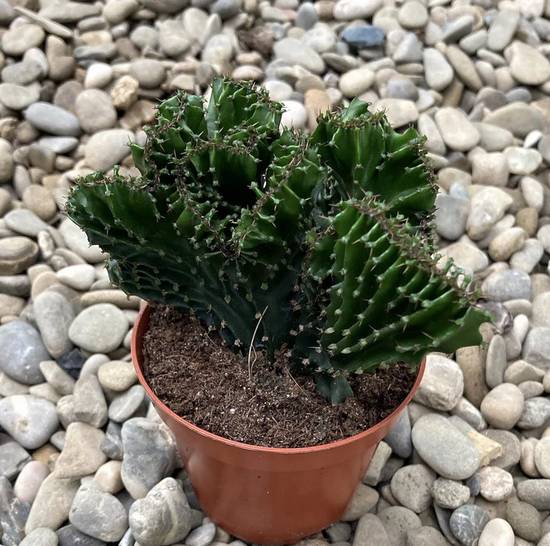
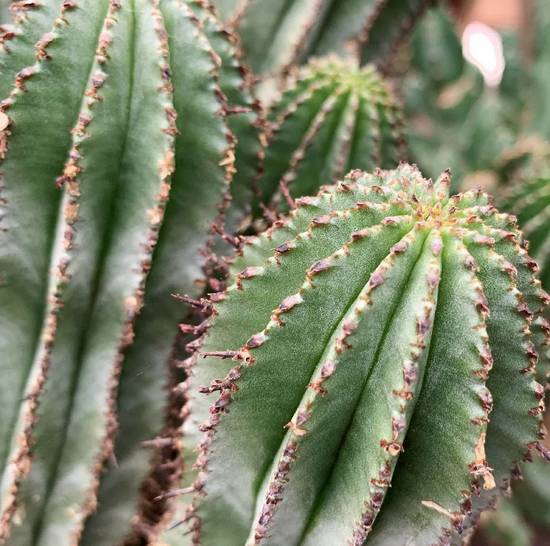
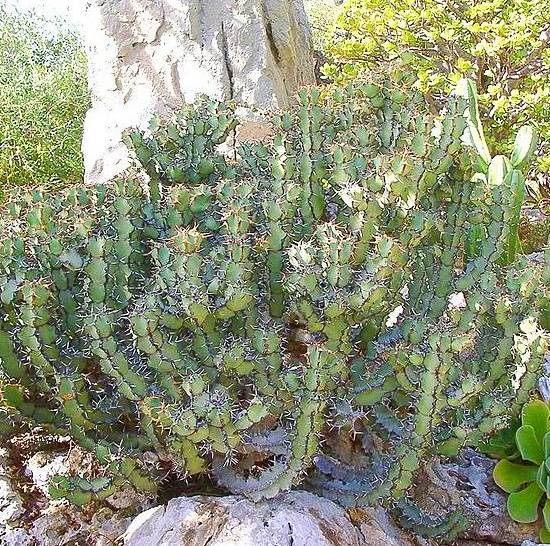
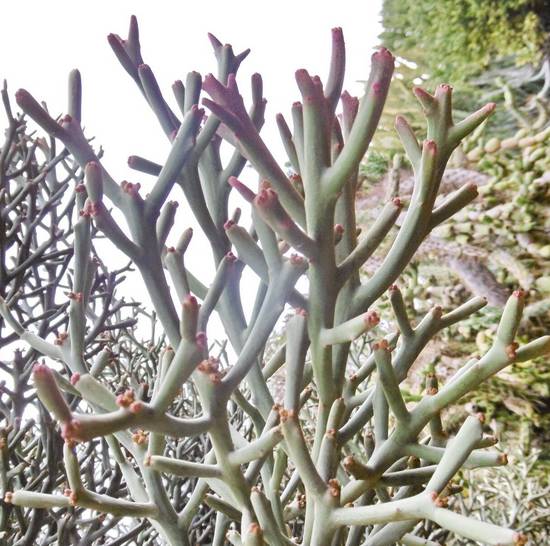
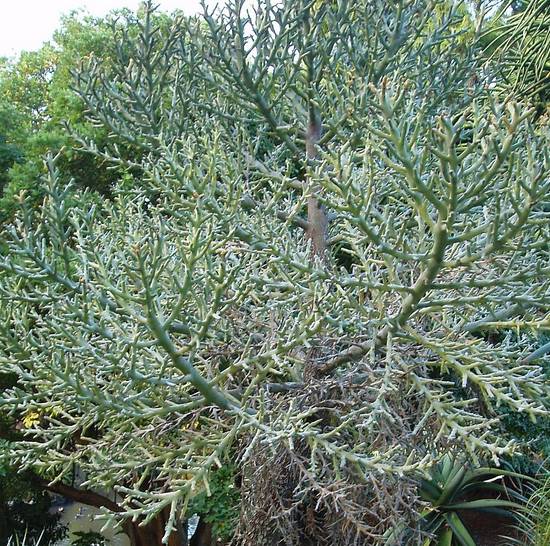
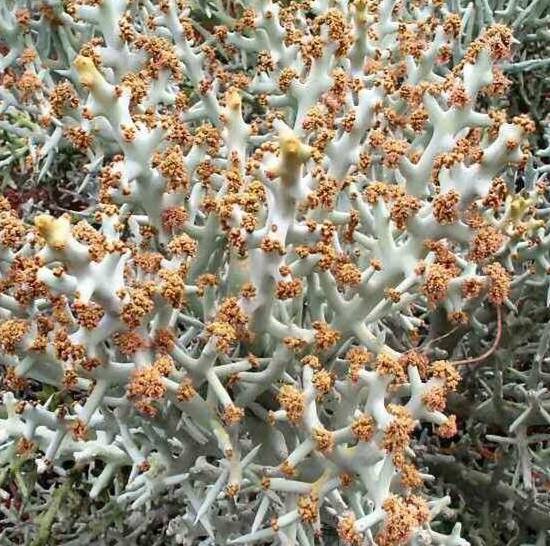
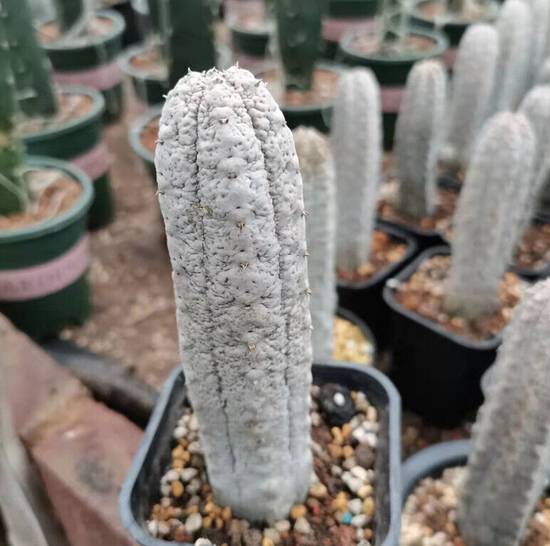
Majestic, sculptural and resolutely exotic, the Euphorbia Stenoclada immediately draws attention with its unique architecture. This tree-like euphorbia native to Madagascar stands out with its thick stems, bluish-grey to pale green, forming a complex tangle of rigid branches with sharp tips. It evokes at once a fossilized coral, an African thorn bush, and a contemporary sculpture. It is a spectacular plant that can reach several meters in its natural habitat, but remains more modest in pots, forming a highly decorative branched trunk.

Highly appreciated in dry gardens and exotic rockeries, the Euphorbia Stenoclada is also an ideal candidate for pot cultivation in temperate regions. It has a great capacity for adaptation, slow but steady growth, and excellent drought resistance. It is a perfect plant for lovers of graphic forms, and a must-have in specialized botanical collections.

In its native environment, the Euphorbia Stenoclada grows on the dry and rocky coasts of southern Madagascar. There it forms real forests of euphorbias, sometimes alongside other endemic succulent plants. Its slender and spiny habit allows it to resist herbivores and capture maximum light in very sunny environments.
For the Euphorbia Stenoclada to express its full architectural potential, it is essential to provide abundant light:

🌞 Full sun: It appreciates direct exposure, whether outdoors or behind a large window.

🌤️ Indoor cultivation: A very bright location, sheltered from humidity, is essential for its health.
Watering the Euphorbia Stenoclada must be minimal, in accordance with its xerophytic nature:

💧 Spring / Summer: Water every 3 to 4 weeks, allowing the substrate to dry thoroughly between waterings.

❄️ Winter: Stop watering completely if the plant is resting and kept cool.

⚠️ Warning: Excess moisture is fatal. Overwatering causes internal rot that is difficult to stop.
Adapted to warm climates, the Euphorbia Stenoclada requires some precautions in winter:

🌡️ Ideal: Between 20 and 30 °C during the growing period.

❄️ Minimum: Never drop below 10 °C. Bring it indoors as soon as temperatures become cool.
🪨 A very well-draining soil is essential for the success of this euphorbia:

Base of special cactus substrate then add 50% perlite for aeration and cover the surface with pumice stone to prevent stagnant moisture
Although it is not its main asset, the Euphorbia Stenoclada can flower:

🌸 Period: In spring or summer, depending on conditions

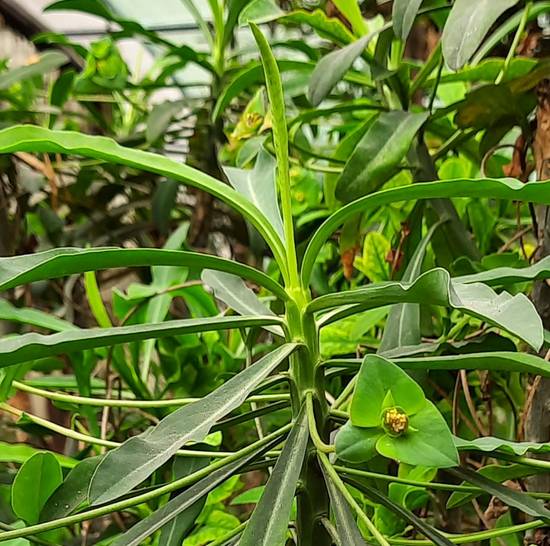
🌼 Flowers: Small yellow-green cyathia, discreet, often observable on new growth
FAQ - Euphorbia Stenoclada

What is the best exposure for Euphorbia Stenoclada?
Euphorbia Stenoclada thrives in full sun. Place it in a very bright location, ideally with southern exposure.
How should Euphorbia Stenoclada be properly watered?
Wait until the substrate is completely dry before watering. Watering every 3 to 4 weeks is sufficient in summer, none in winter.
What substrate is suitable for Euphorbia Stenoclada?
Use a cactus substrate mixed with perlite and pumice to ensure excellent drainage.
Can Euphorbia Stenoclada grow indoors?
Yes, it can be grown indoors provided it receives several hours of direct sunlight each day.
Should Euphorbia Stenoclada be pruned?
Pruning is not necessary, except to remove a damaged branch. Wear gloves because of the toxic sap.
What fertilizer should be used for Euphorbia Stenoclada?
You can use a diluted liquid cactus fertilizer once a month in spring and summer.
Is Euphorbia Stenoclada toxic?
Yes, it produces an irritating white latex. Handle with care and keep it out of reach of children and pets.
Can it be easily propagated by cuttings?
Yes, stem cuttings are possible but must dry for several days before planting.
Why are the stems becoming soft?
This may indicate overwatering or the beginning of root rot. Reduce watering immediately.
What is the maximum size of Euphorbia Stenoclada?
In a pot, it generally reaches 1 to 1.5 m. In the ground, it can grow up to 3 meters in a tropical climate.