Euphorbia Flanaganii

Euphorbia Flanaganii

Euphorbia Flanaganii

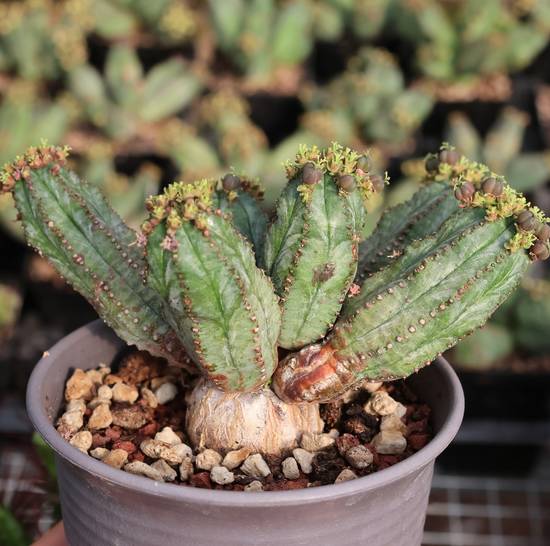
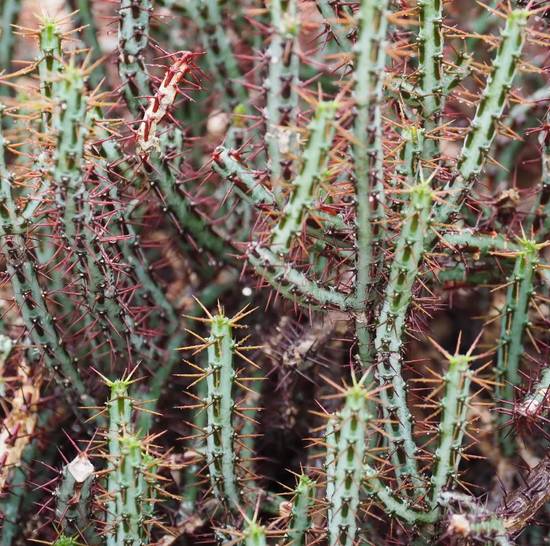
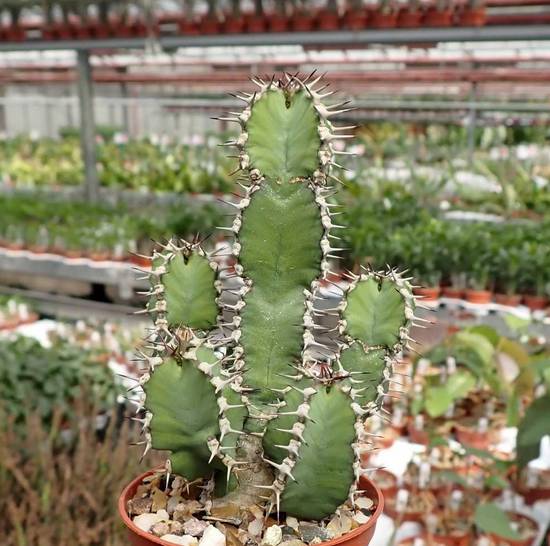
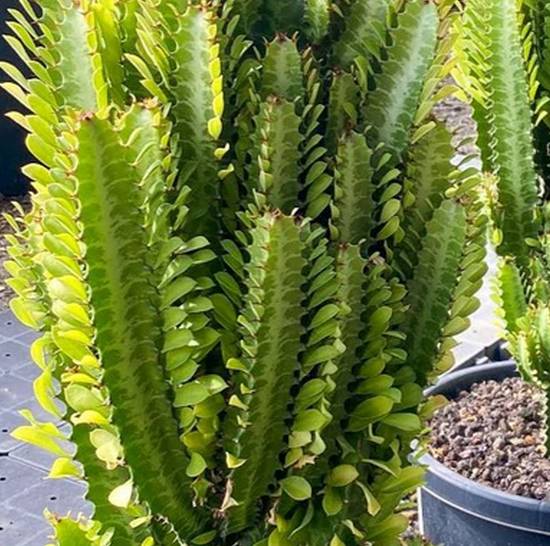
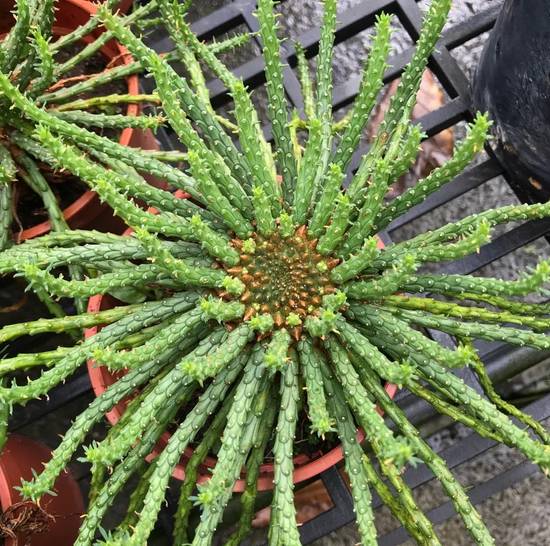
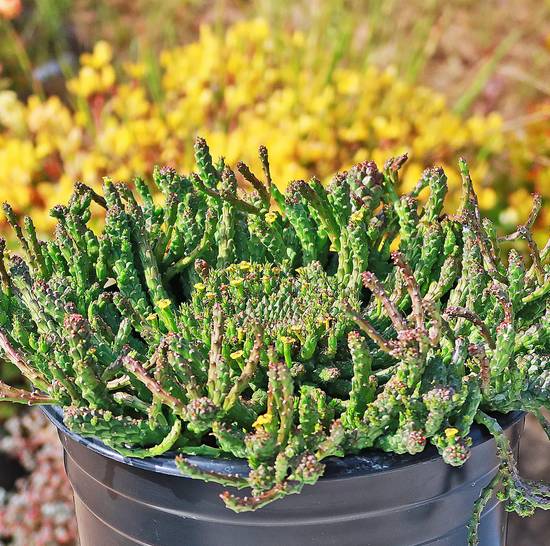
The Euphorbia Flanaganii, nicknamed “medusa’s head” due to its circular shape with tentacle-like branches, is one of the most fascinating and decorative euphorbias to grow in pots. It stands out with a central caudex often barely visible, from which long green, slender and fleshy serpentine stems radiate in a spiral. This graphic and singular habit is the entire charm of this surprising succulent, which immediately draws attention in a collection.

Very popular among lovers of graphic plants, the Euphorbia Flanaganii is relatively easy to grow. It grows slowly but steadily and can, over time, form a true living sculpture. It is sometimes confused with Euphorbia Gorgonis, although it has a more flexible structure and thinner stems. It is an ideal plant for open terrariums or decorative pots, offering a truly original visual effect.

Native to the semi-arid regions of South Africa, the Euphorbia Flanaganii grows in sandy and rocky soils, where it adapts to periods of drought thanks to its storage caudex. It develops close to the ground, benefiting from morning humidity and protecting itself from extreme temperatures under the cover of other vegetation.
Good light is essential to maintain the compact form and vibrant color of the Euphorbia Flanaganii:

🌞 Bright indirect light: Place it in a bright location, with a few hours of gentle sun per day.

🌤️ Avoid full direct sun in summer: This could burn the thin stems. Gradual exposure is recommended.
Like any Euphorbia, the Euphorbia Flanaganii requires thoughtful watering:

💧 Spring / summer: Water once the substrate is dry, generally every 2 to 3 weeks.

❄️ Winter: Drastically reduce watering, or even stop if the plant enters dormancy.

⚠️ Caudex monitoring: If the center begins to soften or darken, stop watering immediately.
Adapted to warm climates, the Euphorbia Flanaganii thrives indoors all year round:

🌡️ Optimal temperature: 20 to 28 °C.

❄️ Minimum: 10 °C. It must be brought indoors in winter, as it does not tolerate frost.
🪨 A good substrate prevents excess water, the main danger for this plant:

Base of special cactus substrate well draining + addition of perlite for soil aeration and pumice stone on the surface to prevent compaction
Flowering, although discreet, is typical of euphorbias:

🌸 Period: generally in summer

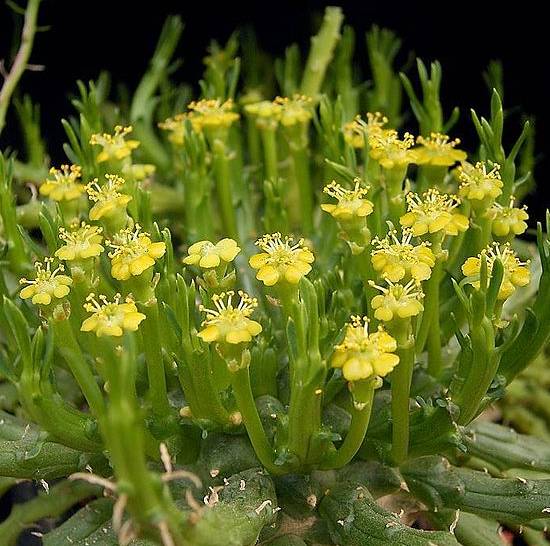
🌼 Appearance: small pale yellow cyathia appearing at the tips of the stems. They are decorative without being spectacular.
FAQ - Euphorbia Flanaganii

What is the best location for Euphorbia Flanaganii?
Place your Euphorbia Flanaganii in a bright location, with a few hours of gentle sun per day. Avoid direct midday sun.
What substrate should be used for Euphorbia Flanaganii?
Use a cactus substrate with 50% perlite and a layer of pumice for perfect drainage.
How should Euphorbia Flanaganii be watered in winter?
In winter, greatly space out watering, or even stop completely if the plant is not growing. Excess water is dangerous.
Can Euphorbia Flanaganii be grown outdoors?
Yes, in summer in a warm and dry climate. Bring it indoors as soon as temperatures drop below 10 °C.
What is the mature size of Euphorbia Flanaganii?
It remains compact: the total diameter can reach 20 to 25 cm. The stems form a beautiful tentacle-like crown.
Why is the center of my Euphorbia Flanaganii becoming soft?
A collapsing or soft caudex is often a sign of overwatering or overly compact substrate. Check drainage.
Can Euphorbia Flanaganii be propagated by cuttings?
Yes, it is possible to propagate a stem with care. Let the wound dry before replanting in dry substrate.
What fertilizer should be used for Euphorbia Flanaganii?
Use a lightly dosed special cactus fertilizer once a month in spring and summer.
Is Euphorbia Flanaganii toxic?
Yes, its latex is irritating to the skin and mucous membranes. Handle with gloves when pruning.
How can you stimulate flowering in Euphorbia Flanaganii?
Expose it to bright light, slightly reduce watering in spring, and fertilize moderately. Flowering is not systematic.