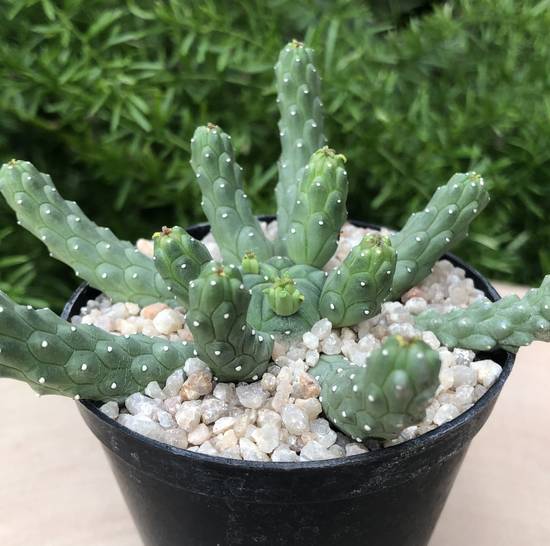
Euphorbia Gorgonis

Euphorbia Gorgonis
Euphorbia Gorgonis
Euphorbia Gorgonis

Euphorbia Gorgonis

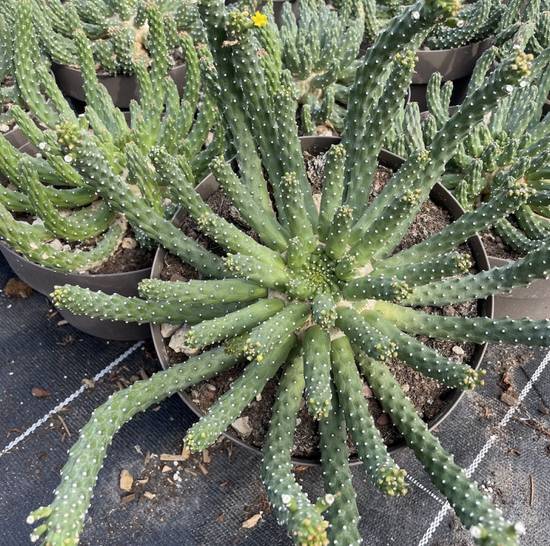
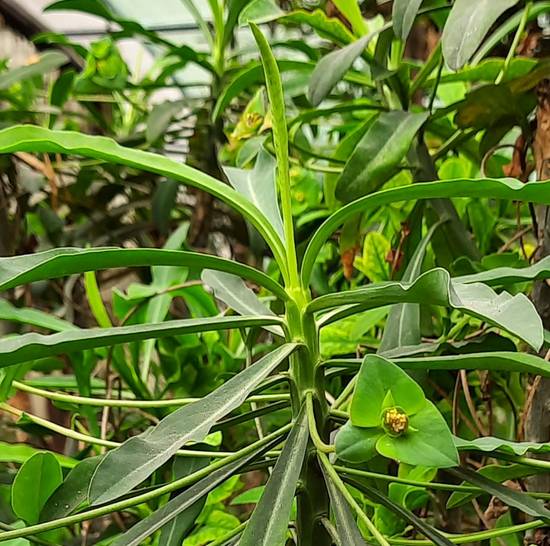
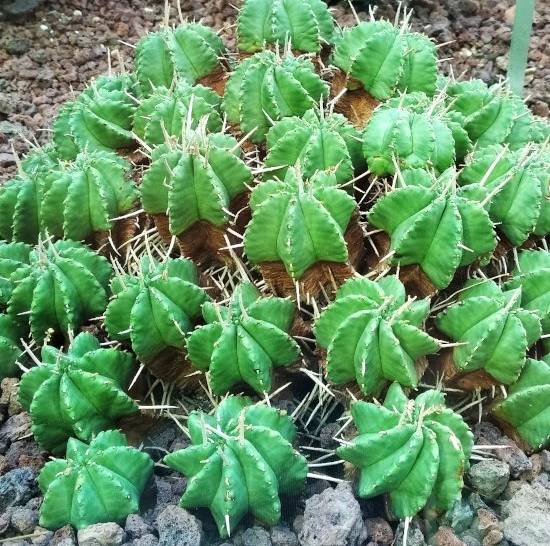
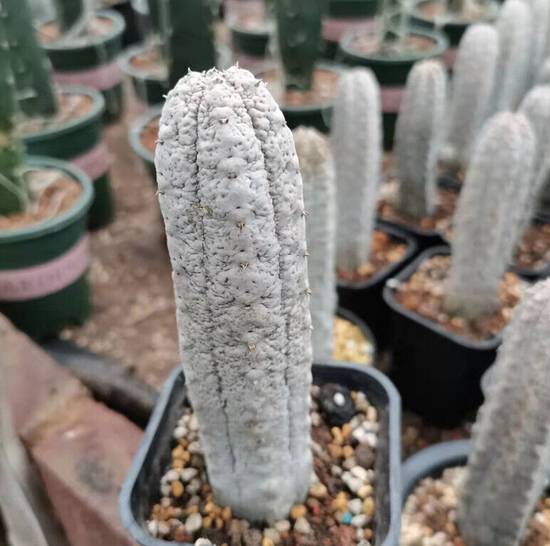
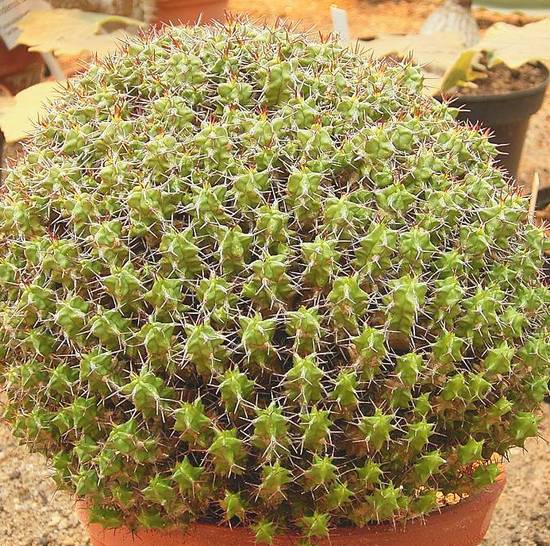
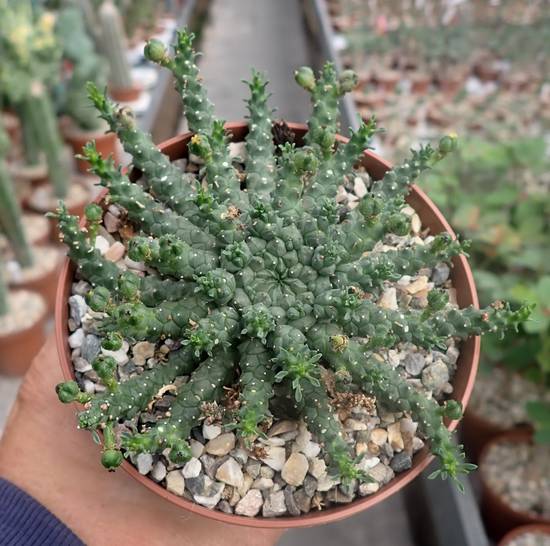
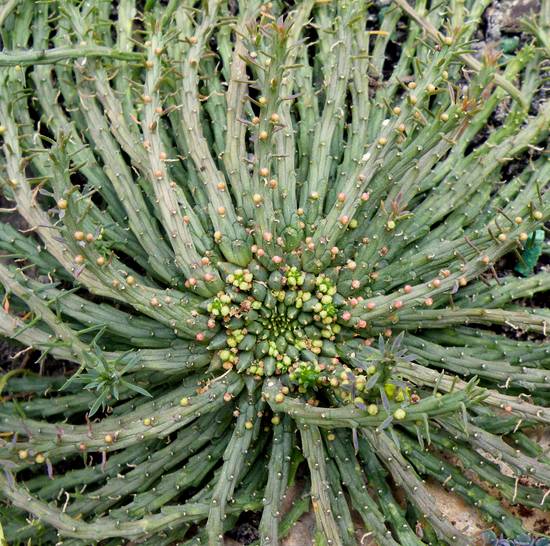
The Euphorbia Gorgonis is a surprising succulent plant with a primitive and fascinating appearance, appealing to caudex collectors for its singular look. This species forms a swollen caudex shaped like a flattened or slightly domed disc, from which numerous rigid, branched and angular stems emerge, reminiscent of the serpents of Greek mythology Medusa — hence its name inspired by the gorgon. It evokes a small petrified plant monster, perfect for pot cultivation where it plays a strong decorative role.

Its color ranges from grey-green to olive green, sometimes with purplish shades on young growth. The caudex is partly buried, and its growth is slow but steady. This euphorbia is often confused with Euphorbia Flanaganii, but it differs with more robust stems, a more compact habit, and discreet yet characteristic flowering.

In its natural habitat, the Euphorbia Gorgonis grows in semi-desert areas of the Eastern Cape in South Africa, often in sandy to rocky soils. Exposed to extreme temperatures and arid conditions, it has developed an efficient caudex for water storage and stems reduced to the essentials.
Good brightness is essential for the proper development of the Euphorbia Gorgonis:

🌞 Bright light: It appreciates direct sunlight for a few hours, ideally in the morning or late afternoon.

🌤️ Protection: In summer, light shade is preferable during the hottest hours to prevent the stems from burning.
Water management is crucial to preserve the health of the caudex of the Euphorbia Gorgonis:

💧 Spring / summer: Water moderately once the substrate is completely dry. A frequency of 1 to 2 times per month is often sufficient.

❄️ Winter: Almost completely stop watering, especially if the plant enters dormancy.

🚨 Warning: Excess moisture is fatal. A soft caudex is a warning sign not to ignore.
The Euphorbia Gorgonis is a plant of warm and dry climates:

🌡️ Ideal temperatures: between 20 and 30 °C during the growing season.

❄️ Minimum threshold: It does not tolerate frost. Keep it above 10 °C.
🪨 An ultra well-draining substrate is essential for this caudiciform euphorbia:

Mixture of a good cactus substrate, add 50% perlite to aerate the soil then complete with pumice stone on the surface for final drainage
Discreet but true to the euphorbia family:

🌸 Period: It generally flowers in spring.

🌼 Flowers: Very small yellow cyathia located at the tips of the stems. They are not ornamental but indicate the plant’s good condition.
FAQ - Euphorbia Gorgonis

How should Euphorbia Gorgonis be properly watered?
Watering should remain moderate, especially in summer: allow the substrate to dry completely between waterings. In winter, greatly reduce or stop.
What type of substrate should be used for Euphorbia Gorgonis?
Use a cactus substrate with 50% perlite and a layer of pumice.
Where should Euphorbia Gorgonis be placed in the house?
Place it in a very bright location, ideally near a south- or east-facing window. It needs light to remain compact.
Can Euphorbia Gorgonis be grown outdoors?
Yes, but only in summer and in a warm climate. In winter, it must be brought indoors away from the cold.
When should Euphorbia Gorgonis be repotted?
Repot every 2 to 3 years in spring, in a slightly larger pot with well-draining substrate.
How can you recognize overwatering in Euphorbia Gorgonis?
A softening caudex, decomposing stems, or dark spots indicate excess moisture. Act quickly.
What is the mature size of Euphorbia Gorgonis?
It remains compact: the caudex can reach 10 cm in diameter, with stems rarely exceeding 15 cm.
Can Euphorbia Gorgonis be fertilized?
Yes, with a diluted succulent fertilizer once a month in spring and summer.
Is Euphorbia Gorgonis toxic?
Yes, like all euphorbias, it produces an irritating latex. Handle with care, especially when pruning a stem.
How can Euphorbia Gorgonis be made to flower?
It requires good light, moderate water stress, and a mature caudex. Flowering is discreet but naturally occurs in spring.