Euphorbia Mitriformis

Euphorbia Mitriformis

Euphorbia Mitriformis

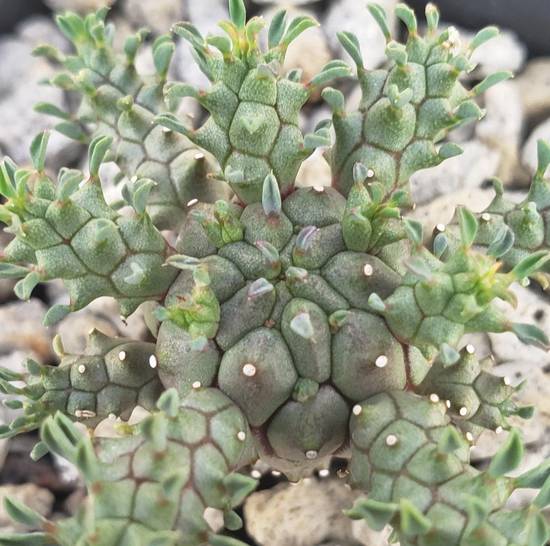
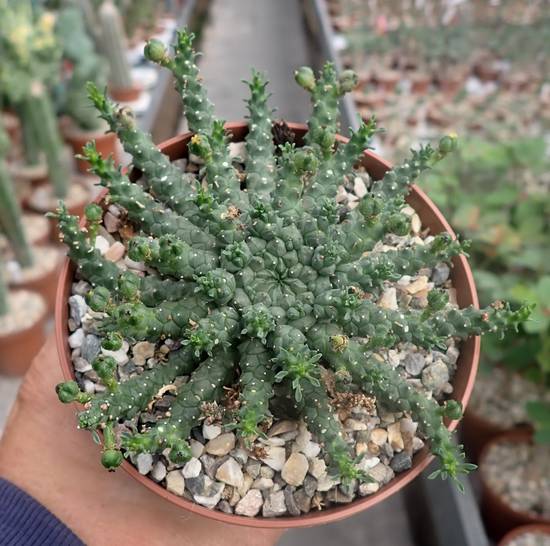
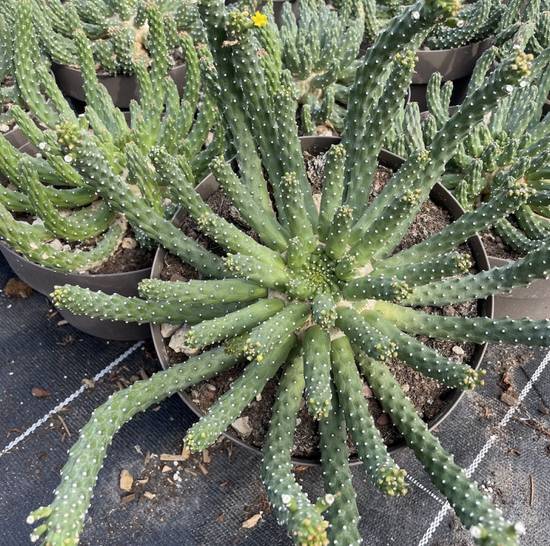
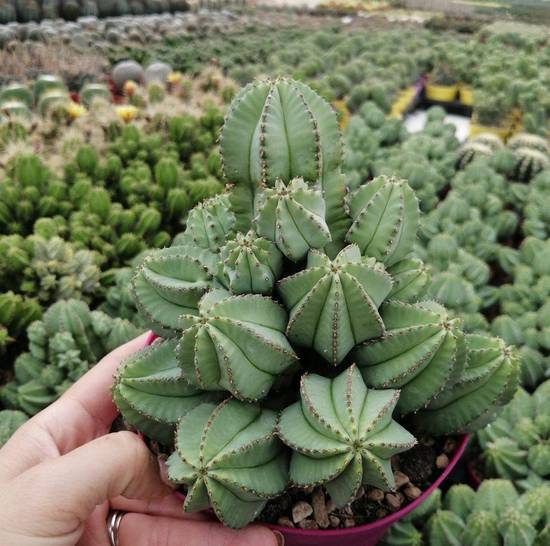
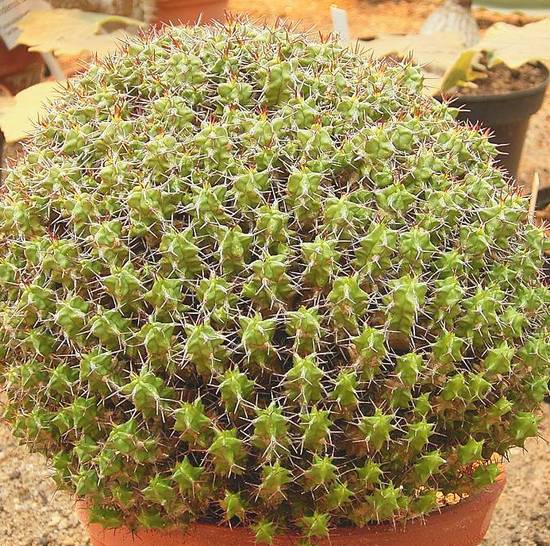
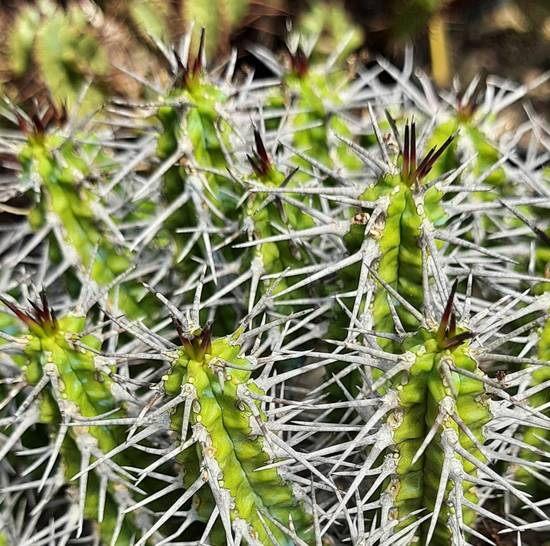
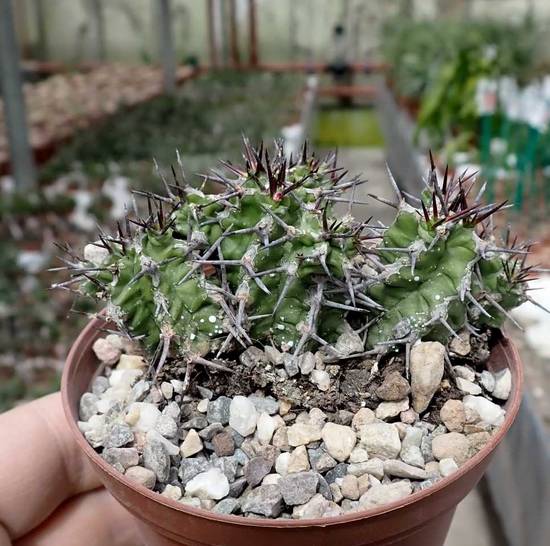
The Euphorbia Mitriformis is a fascinating succulent species that attracts attention with its unusual flattened rosette shape, resembling a disc or a bumpy cushion. Its sculptural and compact appearance evokes a living stone, making this plant highly appreciated in rare succulent collections. Its fleshy stems are densely packed, grey-green to bluish-green, with irregular ridges often marked by small scars and sometimes fine protuberances. This euphorbia develops a spreading habit reminiscent of a small crater, making it ideal for shallow pots or decorative planters.

Relatively slow growing, it is nevertheless robust and well suited to home cultivation. It is highly sought after for its mineral, almost extraterrestrial appearance, and its drought tolerance. Like many euphorbias, it produces a toxic and irritating white sap that should be handled with care. Undemanding but requiring excellent drainage, the Euphorbia Mitriformis is perfect for lovers of unusual low-maintenance plants.

In its natural habitat, the Euphorbia Mitriformis grows on rocky soils exposed to full sun, particularly in semi-desert regions of southern Africa. It spreads close to the ground to capture maximum light while minimizing water loss through evaporation. This adaptation strategy, typical of xerophytic plants, allows it to survive extreme conditions.
For the Euphorbia Mitriformis to thrive fully, it must benefit from good sunlight:

🌞 Bright light: place it in a bright spot with at least 4 to 6 hours of direct sun per day.

🏜️ Acclimation: if previously grown in shade, gradually introduce it to sun exposure to avoid sunburn on tender tissues.
The Euphorbia Mitriformis prefers moderate and spaced watering:

💧 Spring / summer: watering every 3 to 4 weeks is sufficient, provided the substrate dries well between waterings.

❄️ Autumn / winter: drastically reduce or completely stop watering. Too much water during dormancy encourages rot.

💀 Important: never let water stagnate in the saucer or cachepot.
This euphorbia enjoys warm and dry climates:

🌡️ Ideal range: between 20 and 30 °C during growth.

❄️ Cold resistance: it does not tolerate temperatures below 8 °C. Bring indoors as soon as temperatures drop.
🪨 A well-draining substrate is vital for the survival of the Euphorbia Mitriformis:

Base of cactus substrate lightened with 50% perlite + a layer of pumice stone on the surface ensures good drainage and reduces mold risk.
Although rare, flowering is possible:

🌸 Period: generally in spring.

🌼 Appearance: small yellow-green cyathia, not spectacular but interesting to observe up close.
FAQ - Euphorbia Mitriformis

What is the natural origin of Euphorbia Mitriformis?
Euphorbia Mitriformis originates from the semi-arid regions of southern Africa, where it grows close to the ground to better withstand intense heat and drought. Its flattened appearance is a direct adaptation to this extreme environment.
What light exposure is ideal for Euphorbia Mitriformis?
It needs intense light, even full sun. A south or west exposure suits it perfectly, provided it has been gradually acclimated to avoid burns.
How often should Euphorbia Mitriformis be watered?
This plant should be watered every 3 to 4 weeks in summer, only when the substrate is completely dry. In winter, watering can be stopped entirely if it is dormant.
What is the minimum temperature tolerated by Euphorbia Mitriformis?
It struggles with temperatures below 8 °C. To avoid any risk, it is best to bring it indoors as soon as nights become cool in autumn.
What is the best substrate for Euphorbia Mitriformis?
An ultra well-draining mix is essential. Use a special cactus substrate enriched with perlite and topped with pumice.
Is Euphorbia Mitriformis toxic?
Yes, like all euphorbias, it produces an irritating white sap. Wearing gloves when pruning or repotting is recommended.
How can you stimulate flowering in Euphorbia Mitriformis?
Provide maximum light, a suitable pot, and slightly reduce watering in spring. Even though flowering remains rare, these conditions increase your chances.
What is the growth rate of Euphorbia Mitriformis?
Its growth is slow but steady. It spreads over time, forming a dense rosette. Ideal in a wide, shallow pot.
Can Euphorbia Mitriformis be grown outdoors?
Yes, but only in regions with a very mild and dry climate, without frost. Otherwise, grow it in a pot so it can be brought indoors in winter.
What should you do if Euphorbia Mitriformis receives too much or too little water?
Overwatering will cause softening of the tissues and rot, especially at the base. Underwatering, on the other hand, slows its growth but is not dangerous. It is therefore better to underwater than to overwater this plant.