Euphorbia Canariensis

Euphorbia Canariensis

Euphorbia Canariensis

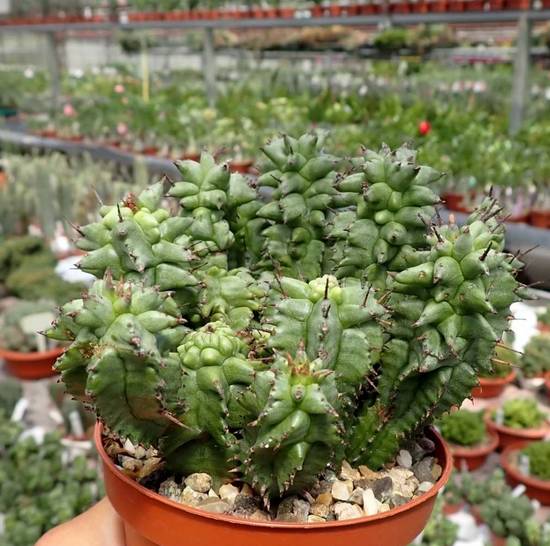
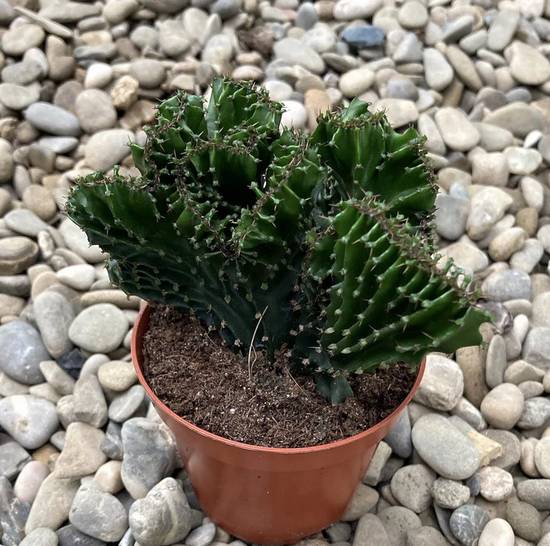
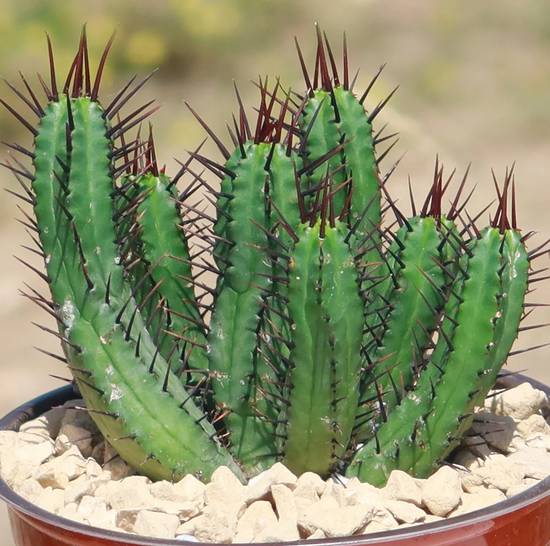
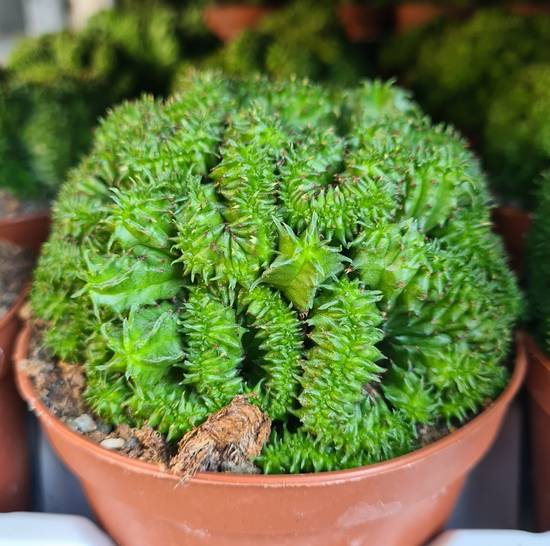
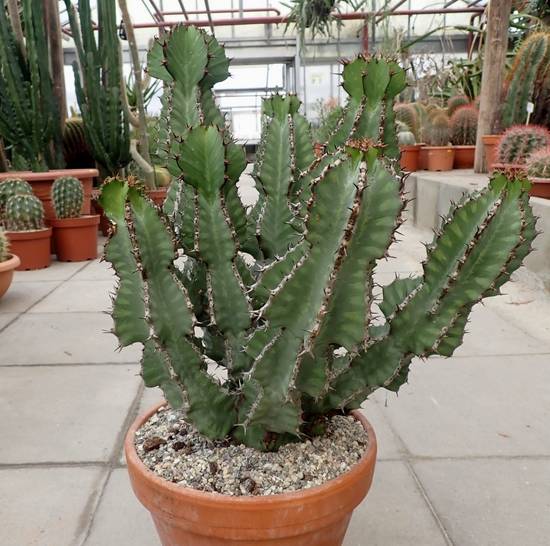
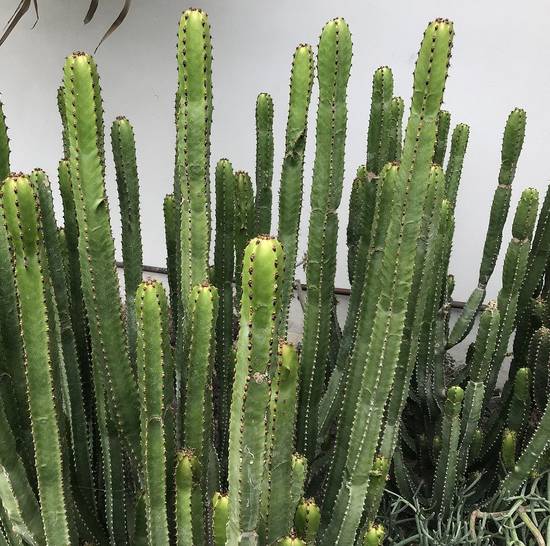
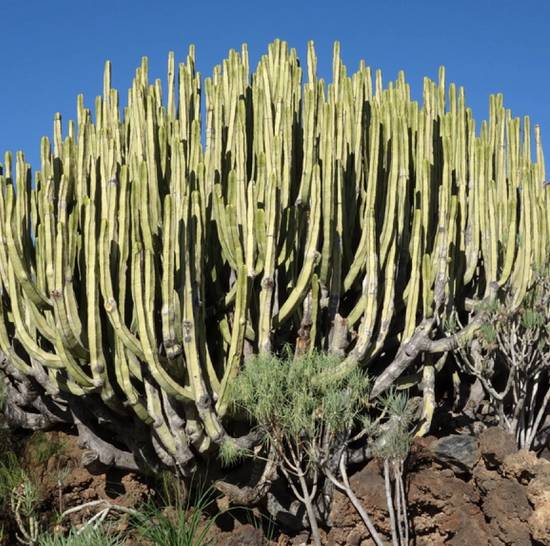
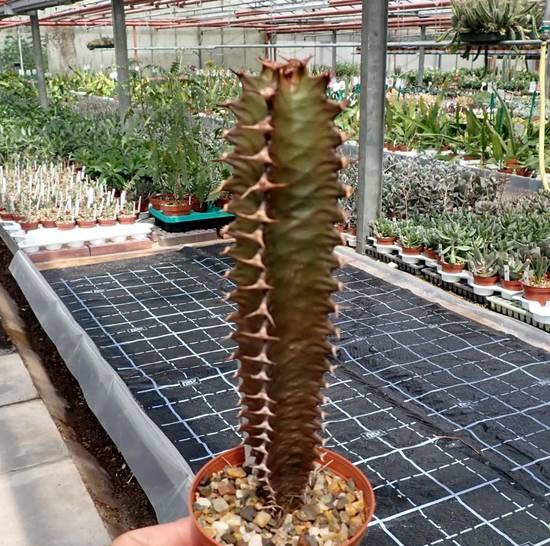
The Euphorbia Canariensis is an emblematic plant of the Canary Islands, to the point of being recognized as one of the official botanical symbols of the archipelago. It stands out with its upright quadrangular stems, forming dense and slender columns covered with small spines aligned along their ribs. Resembling a cactus at first glance, this euphorbia is not one: it belongs to a distinct genus, possessing a characteristic milky latex and very different flowers.

This succulent plant can reach up to 4 meters high in its natural habitat, forming spectacular candelabra-like clusters. In cultivation, it remains more compact but just as fascinating. Its light green color slightly tinted with red in full sun, its graphic silhouette and its ability to withstand drought make it a particularly prized ornamental plant among exotic plant enthusiasts.

It is ideal for rock gardens, sunny terraces, or large containers in bright interiors. It has impressive longevity and can accompany a collector for decades if properly cultivated.

Euphorbia Canariensis is endemic to the volcanic and semi-desert areas of the Canary Islands. It naturally grows on rocky slopes, sometimes in wind-swept areas, where it forms a major element of the local landscape. It is well adapted to poor soils and long periods without water, thanks to its ability to store moisture in its fleshy stems.
For Euphorbia Canariensis to thrive fully, very bright exposure is essential :

🌞 Full sun : this euphorbia loves direct light, and the more it receives, the more intense its coloration becomes.

🌤️ Partial shade : tolerated, but leads to stem elongation and less compact growth.

💡 Tip: indoors, place it behind a south-facing bay window to simulate its natural habitat.
Like all Euphorbias, watering must remain moderate and spaced :

💧 Spring / Summer : water every 2 to 3 weeks, when the substrate is dry in depth.

🍂 Autumn / Winter : drastically reduce watering or suspend it entirely.

⚠️ Risk : excess water causes stem softening, followed by irreversible rot.
Euphorbia Canariensis prefers warm, dry and well-ventilated climates :

🌡️ Optimal temperature : between 20 and 30°C. It appreciates high heat.

❄️ Tolerance limit : do not expose to temperatures below 5°C. It is not hardy.

🏠 Wintering : in pots, bring it indoors into a bright and cool room as soon as temperatures drop.
🪨 A well-drained substrate is essential to avoid water stagnation around the roots: use a cactus substrate as a light base, then add about 30 to 50% perlite for aeration and cover the surface with pozzolana to maintain good drainage
The flowering of Euphorbia Canariensis is discreet but charming :

🌼 Type : small red to pale yellow flowers grouped in cyathia at the end of the stems.

📅 Season : in spring or early summer, on well-established adult plants.

🧪 Notable fact : like all euphorbias, it produces a toxic and irritating white latex.
FAQ - Euphorbia Canariensis

What is the best substrate for Euphorbia Canariensis?
Use a cactus substrate enriched with perlite to aerate the soil, and top with pumice to prevent stagnant moisture.
What is the watering frequency for Euphorbia Canariensis?
In summer, watering every 2–3 weeks is sufficient. In winter, almost completely stop watering to prevent rot.
Can Euphorbia Canariensis live indoors?
Yes, provided it is placed in an extremely bright location, such as a veranda or a south-facing window.
At what temperature should Euphorbia Canariensis be brought indoors?
As soon as temperatures drop below 8–10 °C, bring it indoors to protect it from the cold. It does not tolerate frost.
How can you recognize overwatering in Euphorbia Canariensis?
The stems soften, turn brown, or become translucent: stop watering and change the substrate if necessary.
Is Euphorbia Canariensis toxic?
Yes, its white latex is irritating to the skin and eyes. Wear gloves when handling it.
Can Euphorbia Canariensis be easily propagated?
Yes, by stem cuttings. Let the cut dry for several days before planting in dry substrate.
How can you encourage Euphorbia Canariensis to flower?
Provide maximum light, controlled water stress, and proper dry wintering.
What fertilizer should be used for Euphorbia Canariensis?
A special cactus fertilizer once a month during the growing period stimulates its vitality.
Does Euphorbia Canariensis grow quickly?
It has slow to moderate growth, but can become imposing over the years if well exposed.