Euphorbia Abdelkuri
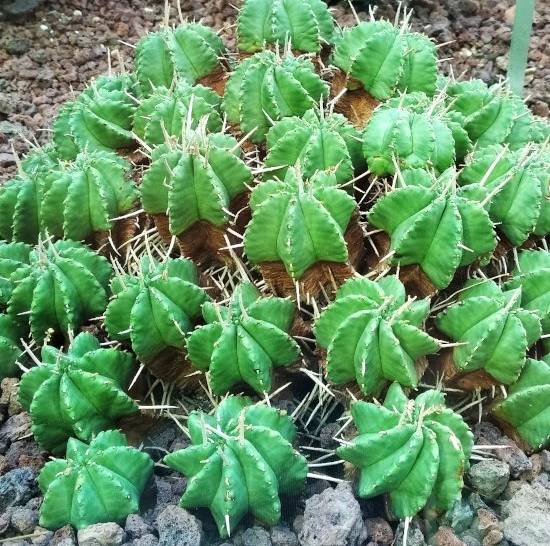
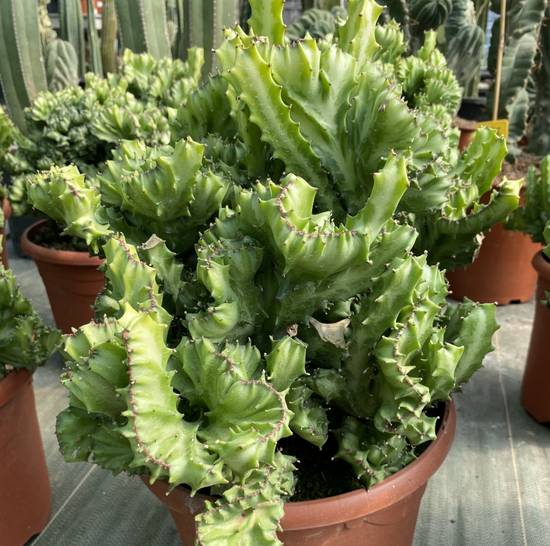
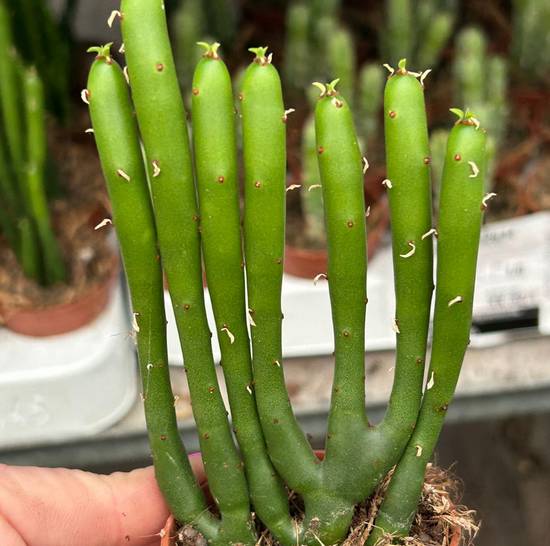
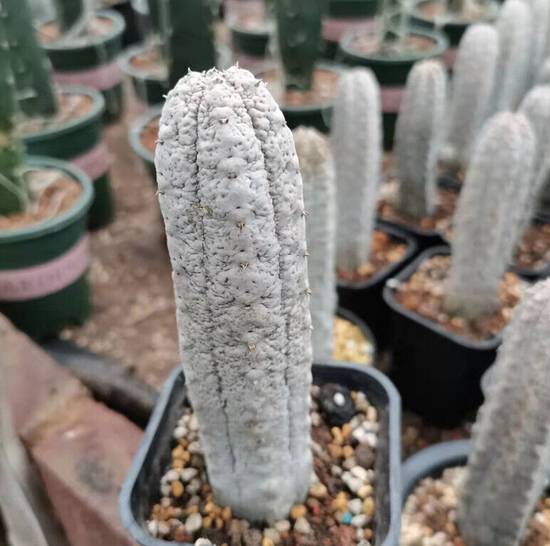
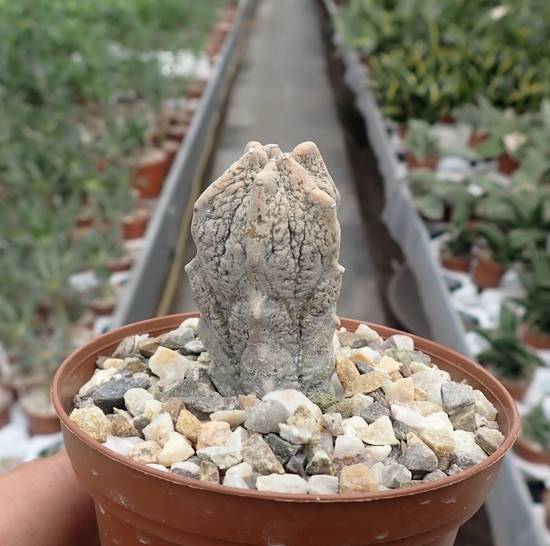
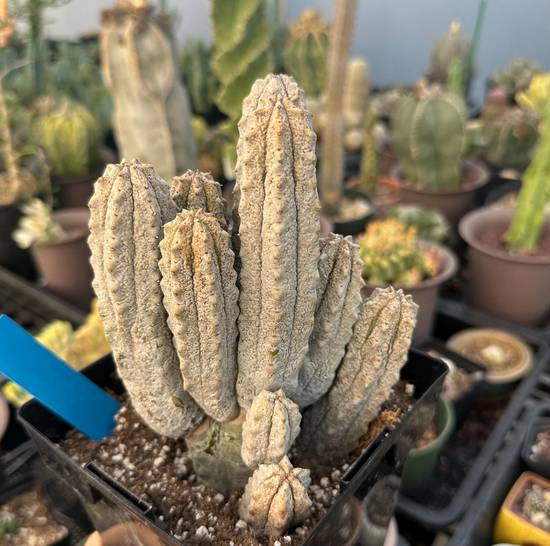
The Euphorbia Abdelkuri is an enigmatic and fascinating succulent plant, native to Abd al-Kuri Island, located off the coast of Yemen in the Socotra archipelago. This unique species immediately catches the eye with its unusual appearance: a clumping form of elongated cylindrical stems, bluish green to ash gray, sometimes covered with a fine bloom. Unlike many euphorbias, it has neither leaves nor spines, and its sinuous silhouette evokes a petrified marine creature.
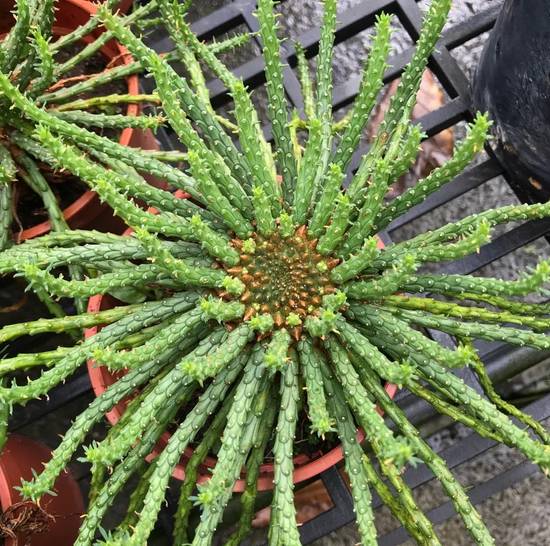
The growth of Euphorbia Abdelkuri is slow but steady. Over time, it forms clusters of fleshy stems, reaching 40 to 60 cm in width and about 20 to 30 cm in height. Its spreading, almost tentacular habit makes it an ideal decorative plant for pot or wide bowl cultivation. It is often confused with cacti because of its appearance, but it truly belongs to the Euphorbiaceae family and contains a characteristic irritating white latex.
☀️ Bright light : a south or southeast exposure is ideal, making sure to acclimate it gradually if coming out of winter indoors.
🌤️ Summer filtering : in case of intense heat (above 35°C), a shade cloth or indirect light location is recommended.
💡 Indoors : absolutely place near a very bright window, otherwise the plant may etiolate.
💧 Warm period : light watering every 3 to 4 weeks is sufficient, once the substrate is completely dry.
❄️ Cold period : suspend all watering between October and March if the plant is kept cool.
⚠️ Key advice : it is always better to forget a watering than to overwater. Excess moisture can cause stem and root rot within days.
🌡️ Ideal temperature : between 22 and 30°C during growth.
❄️ Winter : it does not tolerate frost. Protect as soon as temperatures drop below 8°C.
🏠 Wintering : a bright, dry place between 10 and 15°C is perfect for a healthy dormant period.
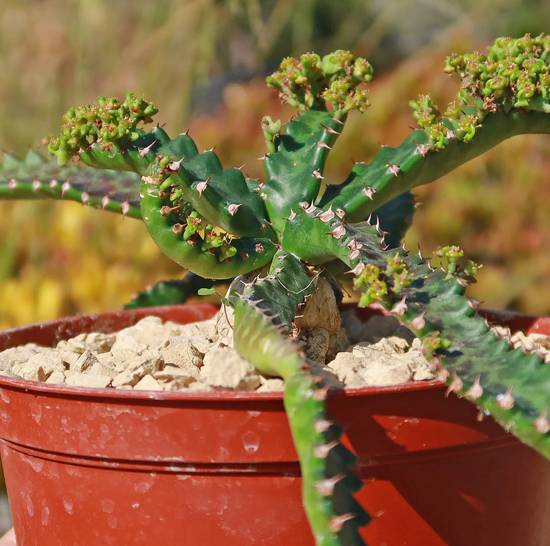
🌸 Flowers : very small, pale pink to cream, in cyathia at the ends of the stems.
⏳ Conditions : it flowers only if well established, with a respected annual cycle and abundant light.