Euphorbia Cooperi

Euphorbia Cooperi
Euphorbia Cooperi
Euphorbia Cooperi

Euphorbia Cooperi

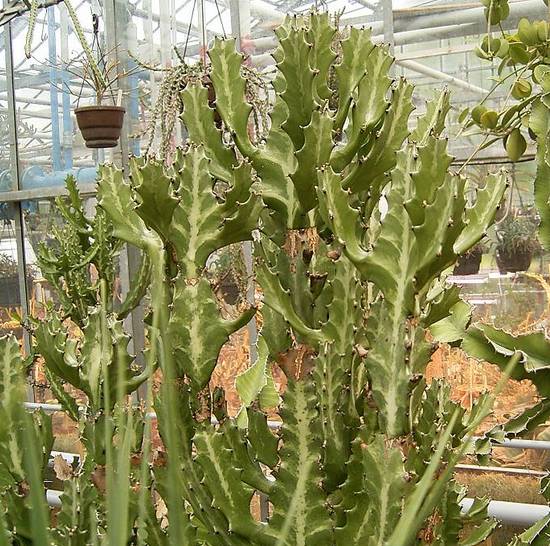
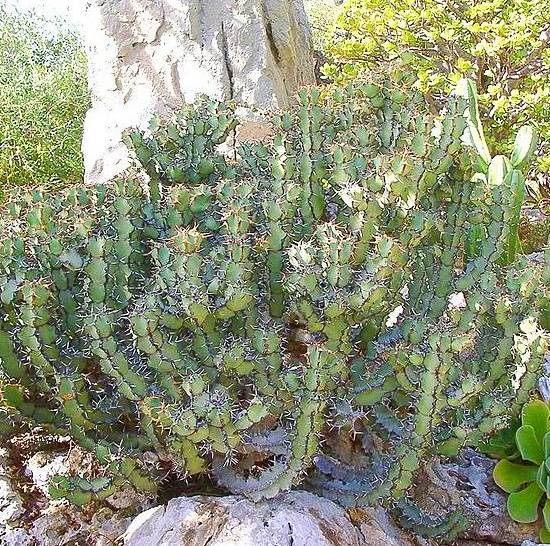
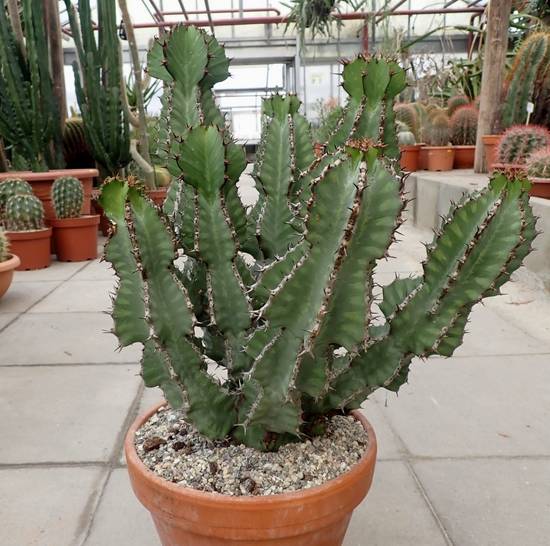
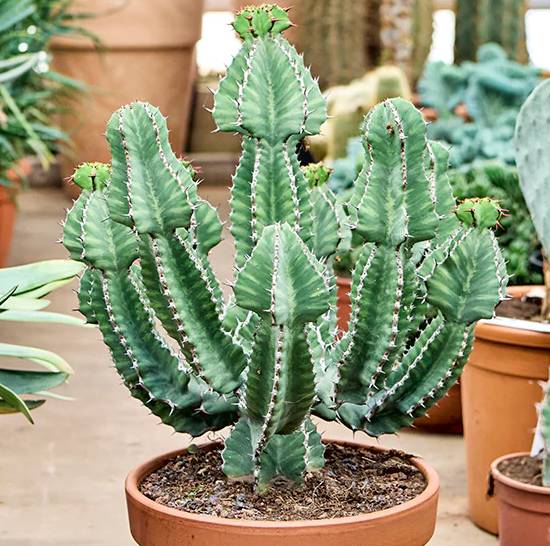
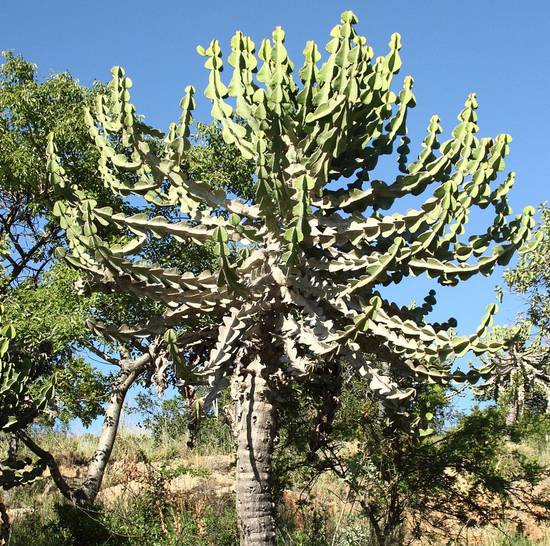
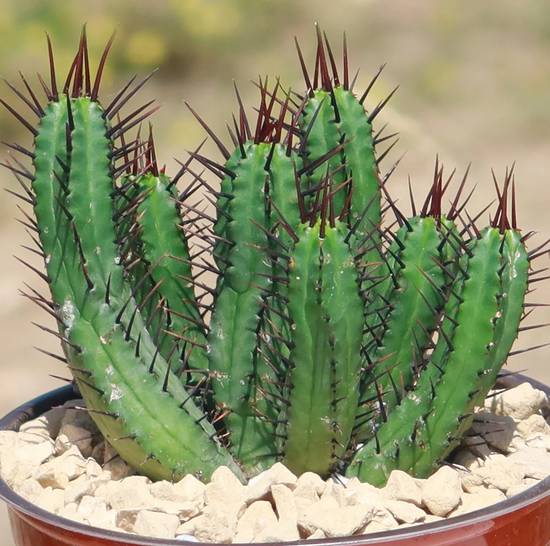
The Euphorbia Cooperi, sometimes nicknamed the “South African candelabra tree”, is a majestic and architectural succulent that immediately evokes the arid landscapes of the African continent. This tree-like euphorbia stands out with its upright, ribbed and angular branches that rise elegantly toward the sky. Each stem has marked and undulating crests, sometimes spiny, giving the plant a very graphic and imposing silhouette.

With age, it develops a main trunk and can form a true small tree reaching several meters high in its natural environment. In pot cultivation, its growth is more contained, but it still impresses with its sculptural habit. Its pale green to glaucous green color, sometimes enhanced with red in full sun, and its milky sap (toxic as in all euphorbias) make it as fascinating as it is demanding.

It is ideal for lovers of exotic plants wishing to add an African touch to their collection. Indoors in bright light or outdoors in a dry and warm climate, Euphorbia Cooperi inevitably attracts attention.

Euphorbia Cooperi naturally grows in savannas, semi-desert areas and rocky hills of southern Africa. It benefits from intense sunlight, low rainfall and extremely well-drained rocky soil. It can form entire colonies, providing shelter and food to a varied local fauna. This full-sun and arid lifestyle explains its resilience and specific cultivation needs.
For Euphorbia Cooperi to develop its full potential, sun exposure is essential :

🌞 Full sun : it loves long hours of direct light, which promote growth and coloration.

🌤️ Partial shade tolerated : but to be avoided long term, as it may slow growth and cause unattractive stem elongation.

💡 Indoors, choose a bright south- or west-facing room with maximum clarity.
Like all succulent euphorbias, Euphorbia Cooperi fears excess water more than drought :

💧 Spring / Summer : watering every 2 to 3 weeks is sufficient. Wait until the substrate is completely dry before watering again.

🍂 Autumn / Winter : greatly reduce watering. Once a month at most, or not at all if the plant is dormant.

⚠️ Too much moisture can cause root or collar rot.
Euphorbia Cooperi is adapted to warm and dry climates :

🌡️ Ideal : between 20 and 30°C during the growing season.

❄️ Minimum : it can tolerate occasional drops to 5°C, but never frost.

🏠 Pot cultivation : bring it indoors as soon as nights become cool, into a bright and well-ventilated room.
🪨 The choice of substrate is essential to ensure the longevity of Euphorbia Cooperi: mix a good cactus substrate with 40% perlite for maximum aeration, then you can add a layer of pozzolana at the bottom of the pot and on the surface for optimal drainage.
The flowering of Euphorbia Cooperi is rare in cultivation, but it can occur if grown under good conditions for several years :

🌸 Flowers : small, greenish-yellow to reddish, grouped in inconspicuous cyathia.

📆 Period : generally in spring or late summer.

🌼 Tip : flowering is encouraged by maximum exposure and controlled water stress.
FAQ - Euphorbia Cooperi

What is the ideal substrate for Euphorbia Cooperi?
A succulent substrate mixed with 40% perlite and topped with pumice is ideal to ensure perfect drainage.
How should Euphorbia Cooperi be properly watered?
Water moderately every 2–3 weeks in summer, and reduce significantly in winter. Always allow the substrate to dry between waterings.
What exposure is best for Euphorbia Cooperi?
Place it in full sun, or in a very bright indoor location. The more light it receives, the more compact its shape remains and the more intense its color becomes.
Can Euphorbia Cooperi be grown in a pot?
Yes, it grows very well in a pot as long as its light and drainage needs are respected. A deep and stable pot is recommended.
What should you do if Euphorbia Cooperi becomes soft?
Softening may indicate overwatering. Stop watering immediately and check drainage. Repot if necessary.
How should Euphorbia Cooperi be overwintered?
Place it in a bright, dry, and cool location (10 to 15°C). Minimal watering during winter.
Is Euphorbia Cooperi toxic?
Yes, like all euphorbias, it produces a white irritating latex. Avoid any contact with skin or eyes.
Can Euphorbia Cooperi be easily propagated?
Yes, by stem cuttings, provided the wound is allowed to dry thoroughly before planting. Wear gloves!
What fertilizer should be used for Euphorbia Cooperi?
Use a cactus fertilizer once a month during the growing period.
How can you recognize overwatering or underwatering in Euphorbia Cooperi?
Overwatering causes blackening and softening of the stems. Underwatering leads to slight drooping or wilting of the tips.