Euphorbia Sipolisii

Euphorbia Sipolisii
Euphorbia Sipolisii

Euphorbia Sipolisii

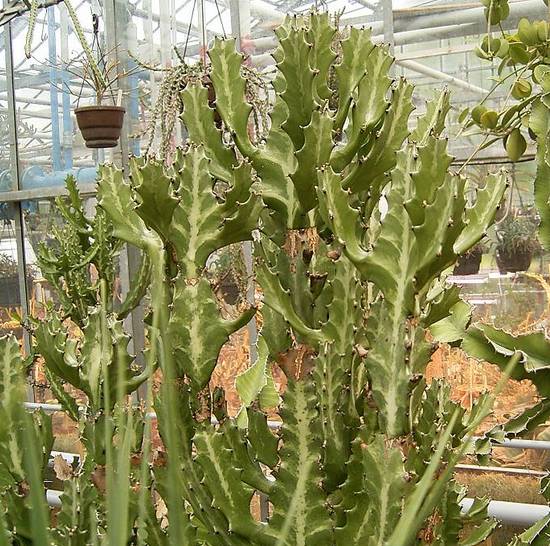
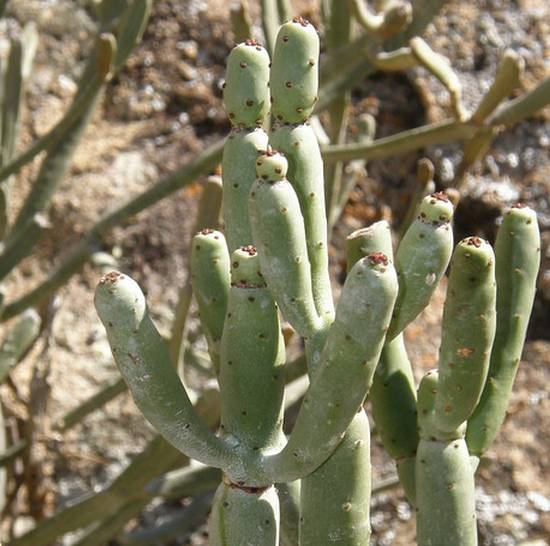
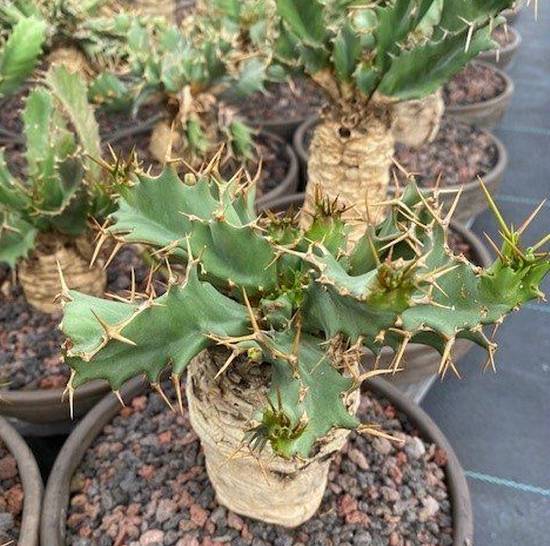
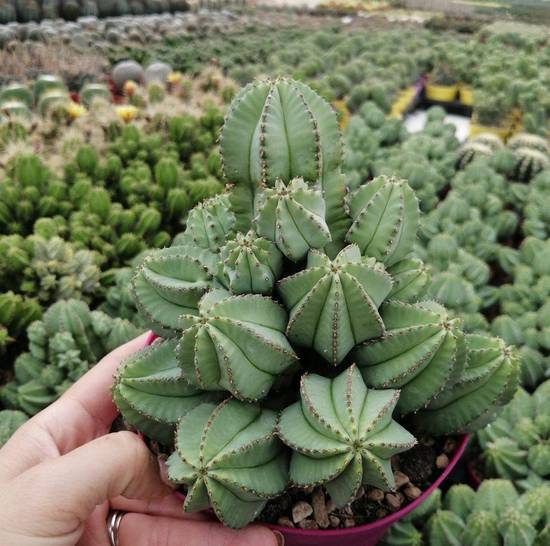
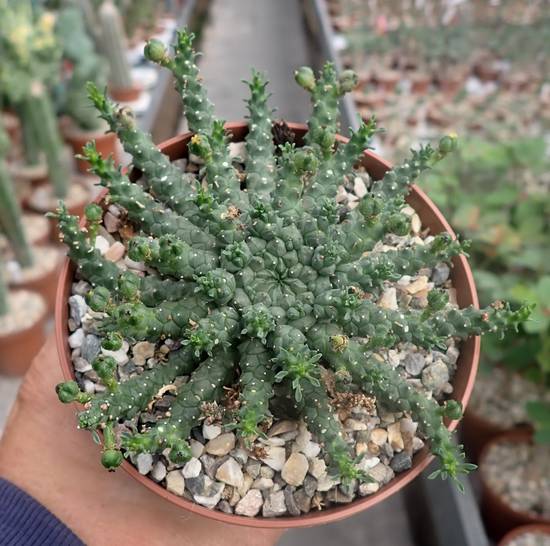
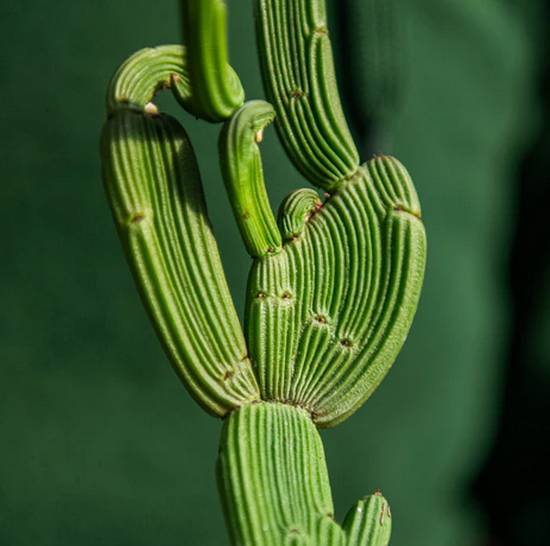
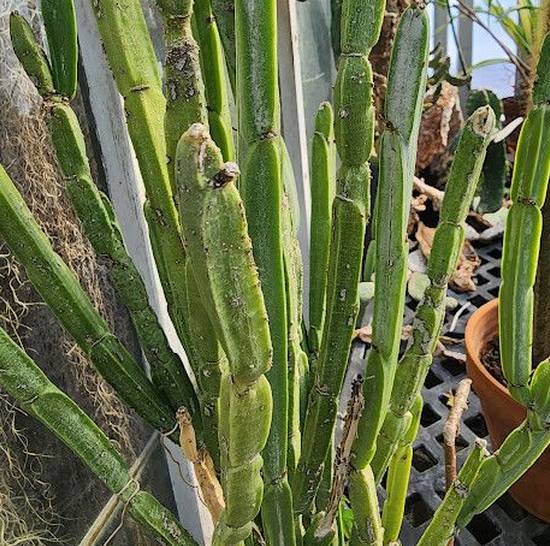
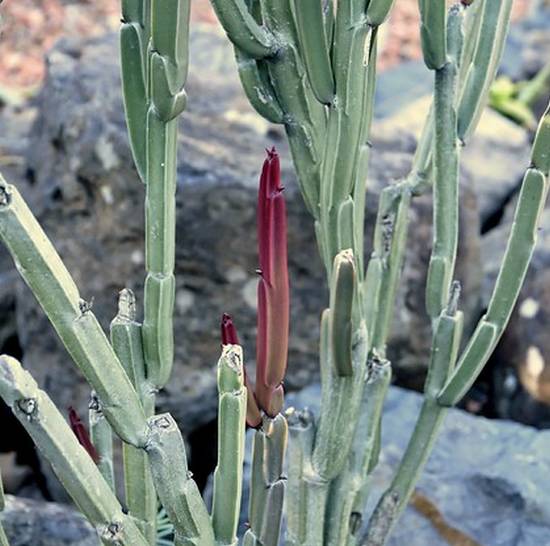
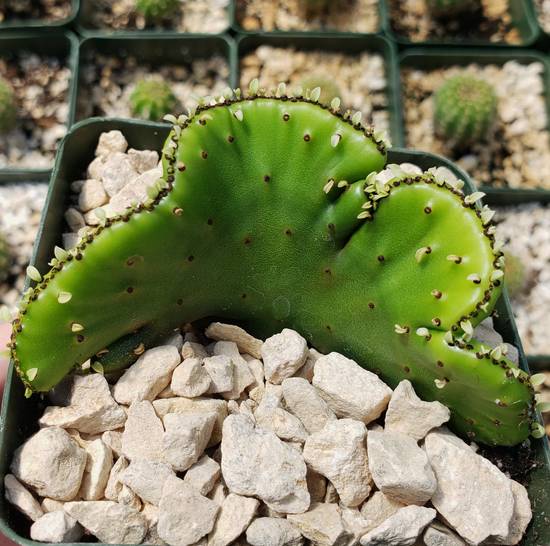
The Euphorbia Sipolisii is a rare and fascinating succulent that attracts lovers of graphic plants with its branched columnar habit and green stems striped with white or greyish lines. Its silhouette, both slender and structured, resembles that of certain candelabra cacti, although it belongs to the large Euphorbiaceae family. Capable of forming large shrubby clumps, it grows upright with segmented stems marked by soft ridges, sometimes dotted with small spines.

This species, still uncommon in cultivation, is appreciated for its robustness and relatively fast growth under favorable conditions. In pots, it makes a perfect sculptural piece for bright interiors or warm greenhouses. Its clean and contemporary look pairs very well with mineral or modern décor.

The Euphorbia Sipolisii originates from semi-arid areas of East Africa, where it grows in rocky, sometimes sandy soils exposed to scorching sun. Its upright habit and ability to store water in its stems allow it to withstand long periods without rain. It is highly drought-resistant but sensitive to cold.
This euphorbia requires good sunlight to develop properly:

🌞 Indoors: place it near a south- or west-facing window for maximum brightness.

🌤️ Outdoors: it appreciates full sun, but gradual acclimation is recommended to avoid burns.
The Euphorbia Sipolisii fears excess moisture more than lack of water:

💧 Spring / summer: water every 3 to 4 weeks, allowing the substrate to dry completely.

❄️ Autumn / winter: greatly space out watering, or even stop if the plant is resting.

🚫 Too much water can cause internal rot, often fatal.
It prefers warmth and does not tolerate low temperatures:

🌡️ Ideal temperature: between 20 and 28 °C during the growing period.

❄️ Minimum: it hardly tolerates temperatures below 10 °C. Bring it indoors from autumn if you live in a temperate climate.
🪨 A very well-draining substrate is essential for its survival:

Mixture of cactus substrate + 50% perlite then add a layer of pumice stone for optimal surface drainage
It remains very discreet, especially in pots:

🌸 Type: small yellowish cyathia, solitary or grouped on the stems

🕑 Period: spring or summer, but infrequent

🔍 Interest: its slender shapes and graphic foliage create all its charm, flowering being secondary.
FAQ - Euphorbia Sipolisii

What exposure suits Euphorbia Sipolisii?
Euphorbia Sipolisii appreciates bright light, whether indoors near a well-exposed window or outdoors in full sun. Avoid sudden exposure to harsh light without acclimation.
How often should Euphorbia Sipolisii be watered?
In summer, watering every 3 to 4 weeks is sufficient, allowing the substrate to dry completely between waterings. In winter, greatly reduce watering to prevent rot.
What type of substrate should be used for Euphorbia Sipolisii?
Use a mix composed of cactus substrate enriched with 50% perlite, and a layer of pumice on the surface.
Is Euphorbia Sipolisii cold-hardy?
No, this species is very sensitive to cold. It must be brought indoors as soon as temperatures drop below 10 °C.
Can Euphorbia Sipolisii be fertilized?
Yes, you can apply a little succulent fertilizer once a month during the growing period (spring–summer).
How can you recognize overwatering in Euphorbia Sipolisii?
Signs include soft stems, blackening at the base, and sometimes wet lesions. If this happens, reduce watering and check drainage.
Does Euphorbia Sipolisii flower indoors?
Flowering is rare in indoor cultivation, but small cyathia may appear in summer if the plant is well established.
Is Euphorbia Sipolisii toxic?
Yes, like all euphorbias, it secretes an irritating latex. Wear gloves when handling or repotting.
What is the growth rate of Euphorbia Sipolisii?
It has moderate to fast growth depending on conditions: plenty of light, warmth, and suitable substrate are key.
Can Euphorbia Sipolisii be grown with other succulents?
Yes, it coexists very well with other succulents if they share the same light and watering needs.