Euphorbia Trigona

Euphorbia Trigona
Euphorbia Trigona
Euphorbia Trigona
Euphorbia Trigona

Euphorbia Trigona

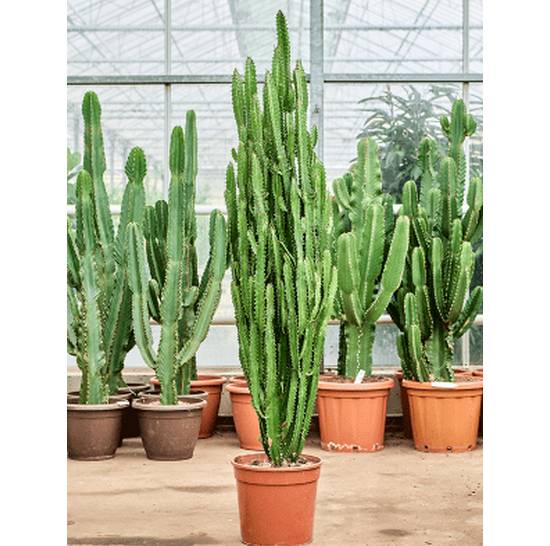
The Euphorbia Trigona, often nicknamed the "African cactus" or "lucky tree", is not a cactus in the strict sense, but a succulent plant from the Euphorbiaceae family. Native to Central Africa, this remarkable plant seduces with its fast vertical growth, fascinating geometric shapes, and intense green foliage sometimes tinged with purple. Its ease of care and graphic elegance make it one of the most popular indoor plants.

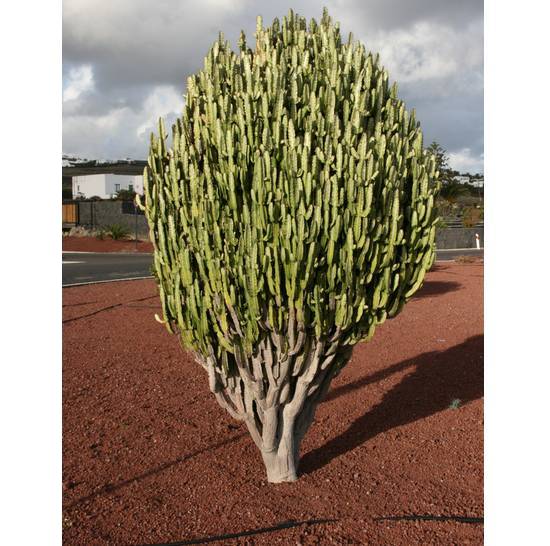
Unlike cacti, euphorbias secrete a toxic white latex when injured. They must therefore be handled with care (gloves recommended). However, the Euphorbia Trigona is a docile plant that can easily reach 1.50 to 2 meters in height in a pot with proper care.

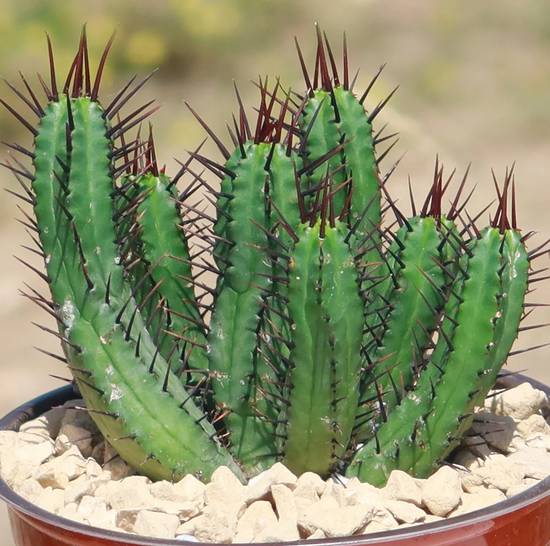
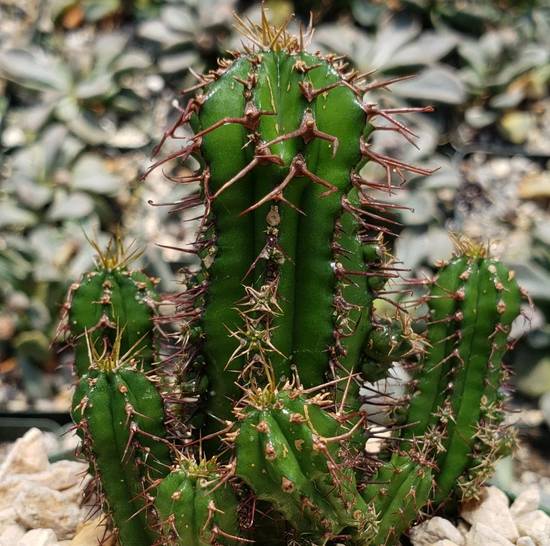
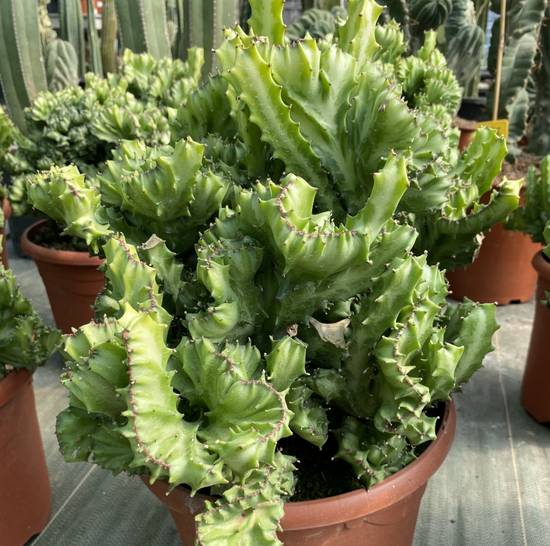
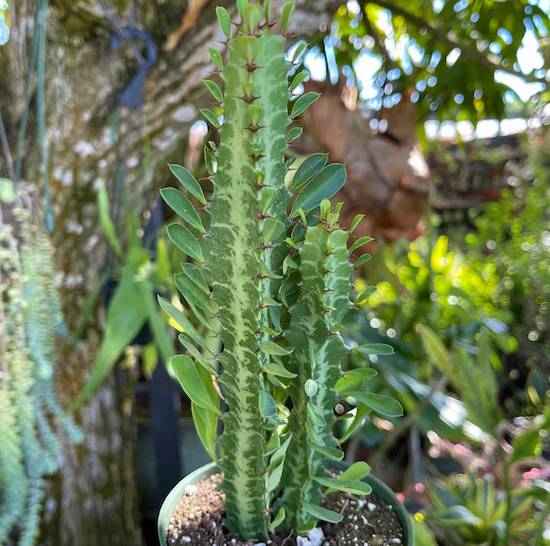
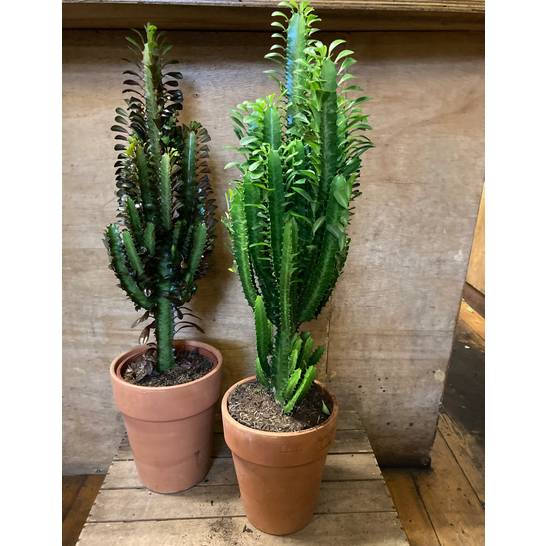
Its upright habit, angular triangular stems, small green leaves, and paired red spines give it a unique exotic appearance. The most common variety is the green form (Trigona green), but there is also a variegated form (rubra) with magnificent purplish hues.

The Euphorbia Trigona is native to the tropical regions of Central Africa, notably Cameroon and Sahelian zones, where it naturally grows in semi-arid areas on sandy, well-drained soils.
🌞 Bright light: place your Euphorbia Trigona in a bright location near a well-exposed window. It loves direct sunlight but can also adapt to bright indirect light.

🌤️ Summer adaptation: outdoors in summer, it can be placed outside provided full scorching sun is avoided. A bright, lightly shaded location is ideal.

🚫 To avoid: dark corners! Lack of light causes etiolation, meaning elongated and fragile growth.
🌱 Spring / Summer: water moderately about every 15 days, always letting the substrate dry completely between waterings.

🍂 Autumn / Winter: very sparse watering, or stop completely if the plant is kept cool. Too much water can cause root rot.

⚠️ Warning: excess moisture is the main cause of mortality in potted euphorbias.
🌞 Ideal temperature: between 20°C and 30°C during the growth period. It loves heat!

❄️ Minimum temperature: do not drop below 10°C. Frost is fatal to Euphorbia trigona.

🏠 Overwintering: keep it indoors in a bright location during winter, away from cold drafts.
🪨 Maximum drainage: use cactus potting soil mixed with 30–40% mineral material such as pumice or pozzolana to ensure good root aeration.
The flowering of the Euphorbia Trigona is extremely rare in cultivation. Even under optimal conditions, it rarely flowers. When it does, the flowers are small, insignificant, and cream white to yellow in color.

💡 Tip: a healthy adult plant with a good winter rest cycle has a better chance of flowering… but do not rely on it for floral interest. Its beauty lies in its architecture.
FAQ - Euphorbia Trigona

How to recognize excess moisture in Euphorbia Trigona?
Excess moisture appears as softening of the stems, black or brown spots at their base, and sometimes a smell of rot. It is essential to reduce watering and check that the pot provides good drainage.
How do I know if my Euphorbia Trigona needs water?
If the stems shrink, become wilted, or lose firmness, this indicates underwatering. Moderate watering should be enough to revive it.
Is Euphorbia Trigona a true cactus?
No, despite its appearance, Euphorbia Trigona is not a cactus but a succulent. It belongs to the Euphorbiaceae family, different from that of cacti.
Should Euphorbia Trigona be fertilized?
Yes, during the growing period (spring-summer), a fertilizer suitable for succulents will strengthen its vigor and vertical growth.
What is the best location for an indoor Euphorbia Trigona?
A very bright location, such as near a south- or west-facing window, is ideal. It even tolerates a few hours of direct sunlight.
What is the maximum size of a potted Euphorbia Trigona?
Indoors, Euphorbia Trigona can reach between 1.5 and 2 meters in height if it benefits from good light conditions and controlled watering.
Can Euphorbia Trigona be grown outdoors?
Yes, but only in regions where temperatures do not drop below 5°C. It fears frost and must be brought indoors from autumn in temperate climates.
Can Euphorbia Trigona be propagated by cuttings?
Yes, propagation by cuttings is easy. Simply cut a stem, let the wound dry for a few days, then plant it in well-draining cactus potting soil.
Is the sap of Euphorbia Trigona toxic?
Yes, its sap is irritating to the skin and eyes. It is recommended to wear gloves when handling or pruning.
What is the watering frequency for Euphorbia Trigona?
In summer, watering every 15 to 20 days is sufficient, allowing the substrate to dry completely. In winter, reduce to once a month or even stop completely.