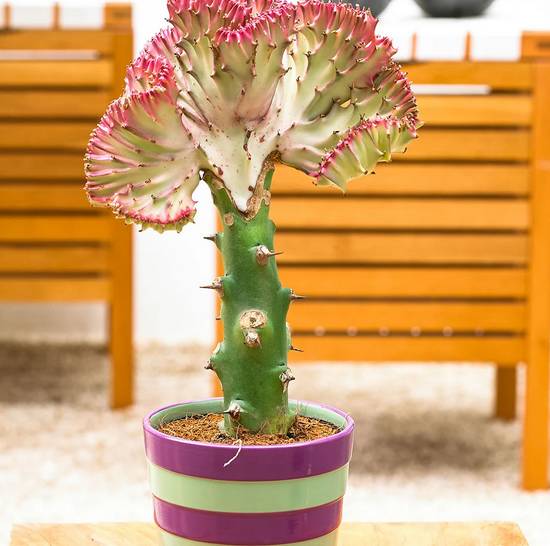
Euphorbia Lactea Cristata

Euphorbia Lactea Cristata

Euphorbia Lactea Cristata

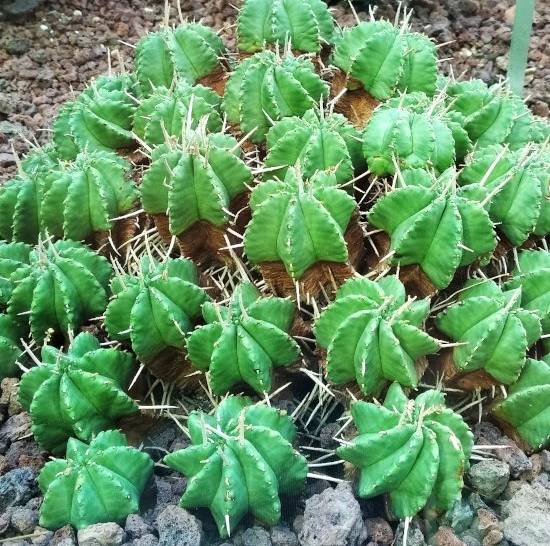
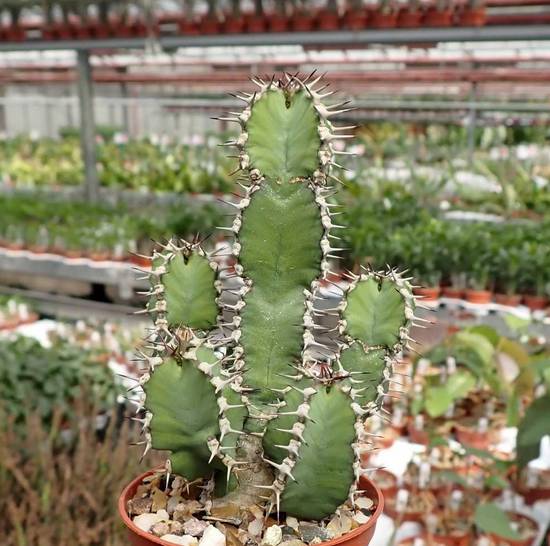
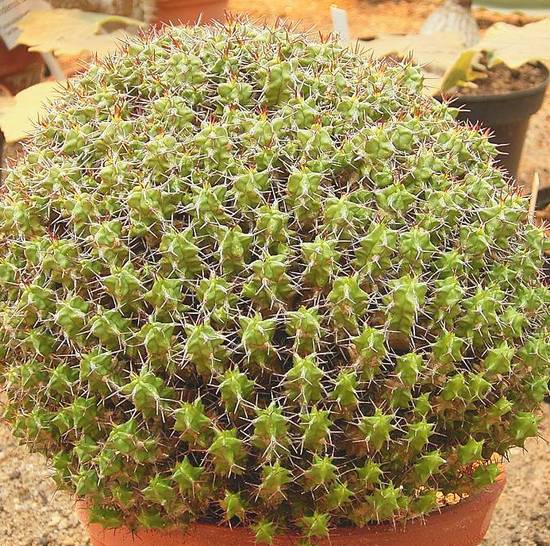
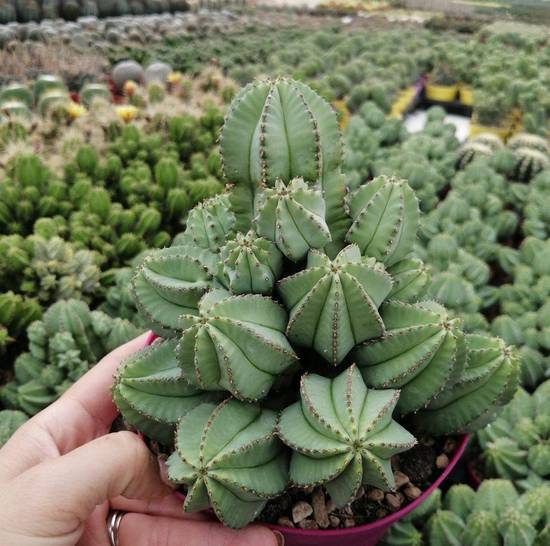
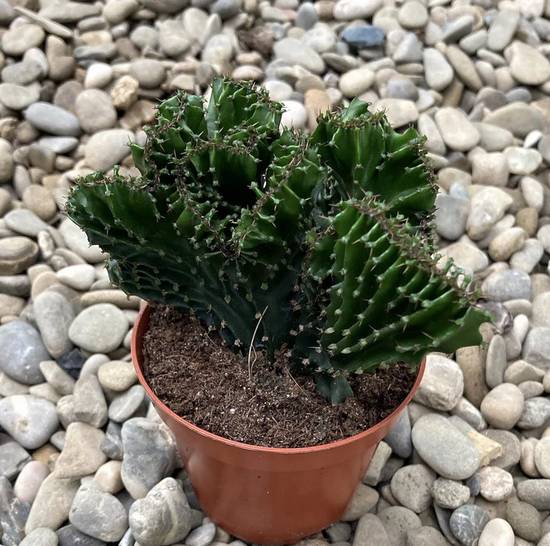
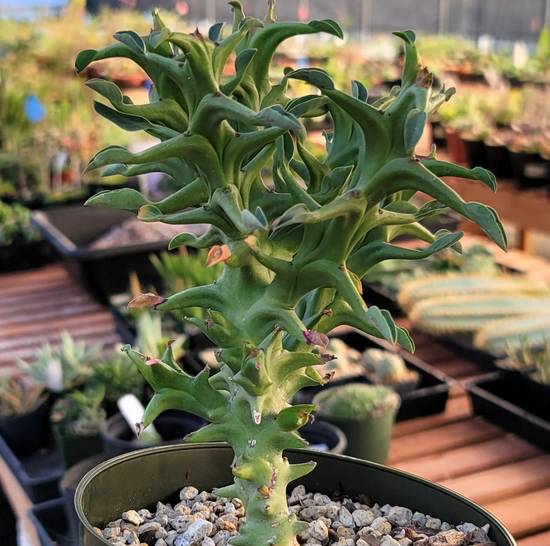
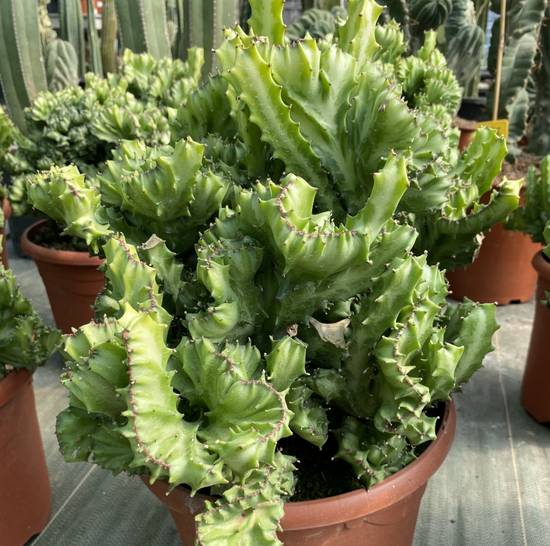
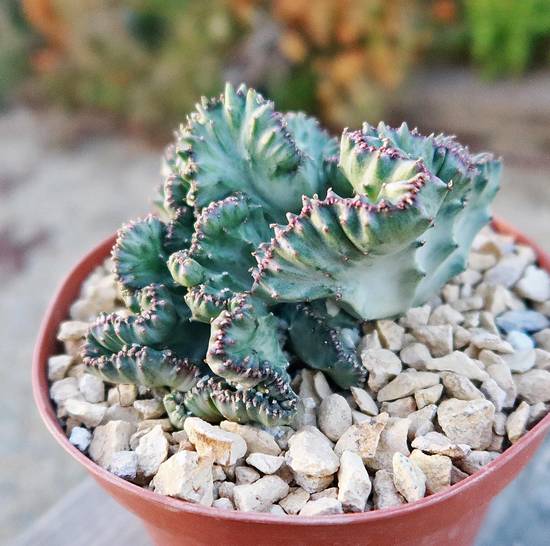
The Euphorbia Lactea Cristata, also known as the crested euphorbia, is a fascinating plant admired for both its shape and colours. Unlike traditional cacti, this Euphorbia is not a cactus, although it shares many similar care requirements.

Its crested form results from a growth mutation that gives the main stem a spectacular wavy appearance, resembling a coral crest. It may display shades ranging from bright green to deep purple, sometimes tinged with pink due to light or water stress. It is usually grafted onto another euphorbia (often Euphorbia neriifolia), making it even more unusual.

The Euphorbia Lactea Cristata is ideal for those seeking a graphic and original plant. It grows very well in pots, provided its specific needs are respected.

L'Euphorbia Lactea Cristata est originaire d'Inde et du Sri Lanka, où elle pousse dans des zones chaudes et sèches. Sa forme cristée, cependant, est une mutation horticole apparue en culture. Elle n’existe pas à l’état sauvage.
La Euphorbia Lactea Cristata a besoin d’une bonne luminosité, mais pas de soleil brûlant :

🌞 Exposition lumineuse indirecte : lumière vive sans soleil direct prolongé.

🌤️ Protection impérative : en été, évitez les fenêtres plein sud non filtrées.

⚠️ Une lumière insuffisante peut ralentir sa croissance et ternir ses couleurs.
Comme toutes les euphorbes succulentes, l'Euphorbia Lactea Cristata demande un arrosage prudent :

🌱 Printemps / été : 1 arrosage toutes les 2 à 3 semaines, uniquement lorsque le substrat est complètement sec.

🍂 Automne / hiver : espacez fortement, voire supprimez les arrosages si la plante est en repos.

💧 Attention : un excès d’eau est souvent fatal à cette plante. Optez pour un pot percé et un substrat drainant.
L'Euphorbia Lactea Cristata est frileuse et craint les températures basses :

🌡️ Température idéale : entre 20 et 28 °C

❄️ Minimum toléré : 12 °C. En dessous, la plante peut souffrir.

🏠 Hiver : Conservez-la à l’intérieur dans un endroit lumineux et tempéré.
Le substrat doit être très bien drainé pour éviter les risques de pourriture.

🪨 Substrat conseillé : terreau à cactus + pierre ponce + pouzzolane (1/3 chacun)
L'Euphorbia Lactea Cristata ne fleurit pratiquement jamais en culture :

🌸 Saison : rarement observable

🎨 Couleur : jaune pâle, très discrète

🕑 Durée : quelques jours seulement, si floraison il y a

💡 La forme cristée concentre son énergie sur la croissance de la crête et non sur la reproduction florale. Ne vous inquiétez pas si vous ne voyez jamais de fleur !
FAQ - Euphorbia Lactea Cristata

How to recognize excess moisture in Euphorbia Lactea Cristata?
The stems become soft and the base turns black. Use a well-draining substrate with pumice and pozzolana.
How to know if Euphorbia Lactea Cristata lacks water?
It may slightly wilt or pale. A good watering with a little fertilizer can revive it.
What substrate is suitable for Euphorbia Lactea Cristata?
A mix of cactus potting soil, pumice, and pozzolana is perfect.
Is Euphorbia Lactea Cristata toxic?
Yes, its sap is irritating to the skin and toxic if ingested. Handle with gloves.
Can Euphorbia Lactea Cristata be grown outdoors?
Only in summer, in a bright place sheltered from rain.
Which fertilizer should be used for Euphorbia Lactea Cristata?
A fertilizer specifically for cacti, once a month during the growing period.
Can Euphorbia Lactea Cristata be repotted often?
Every 2 to 3 years is sufficient. Use a slightly larger pot with cactus potting soil.
Why is it grafted?
The crested form is weak on its own. It is grafted onto Euphorbia neriifolia to strengthen its growth.
What is the growth rate of Euphorbia Lactea Cristata?
Slow, especially indoors. It can double in size within a few years if conditions are ideal.
How to enhance beautiful coloration in Euphorbia Lactea Cristata?
Strong light (without scorching direct sun) enhances pink and purple tones. A little water stress can also intensify the colors.