Echeveria Hercules
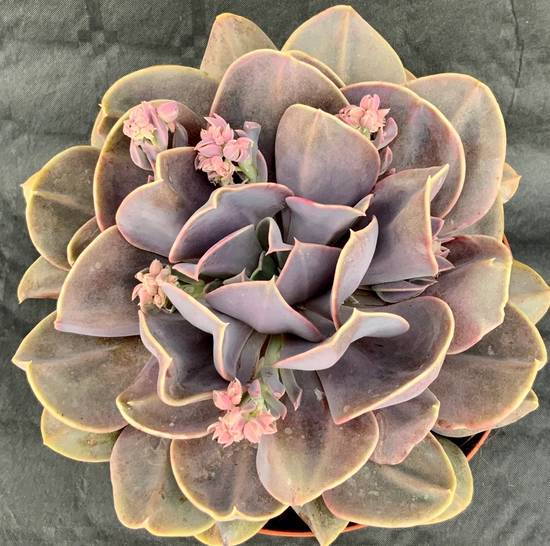
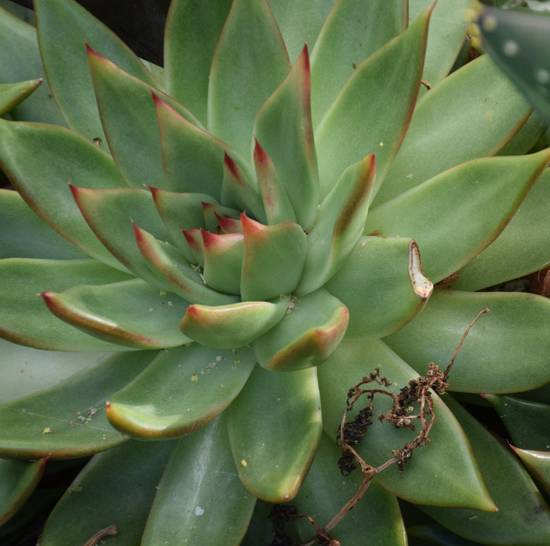
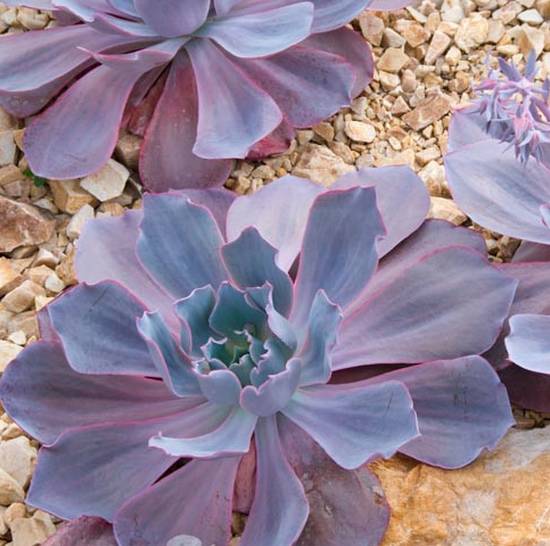
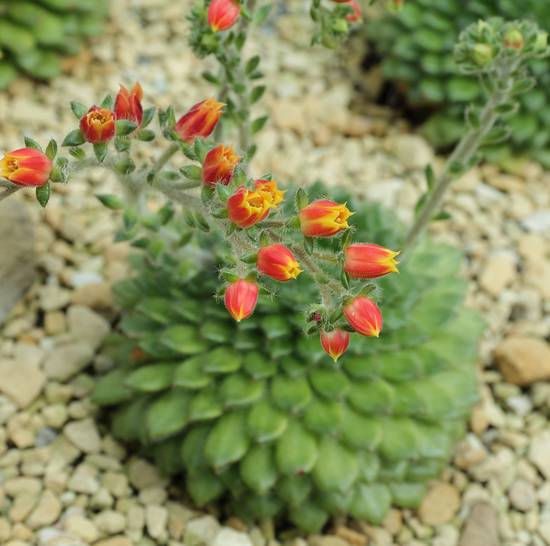
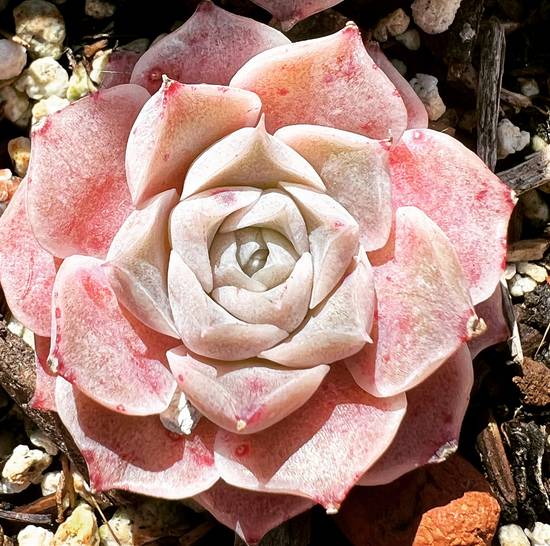
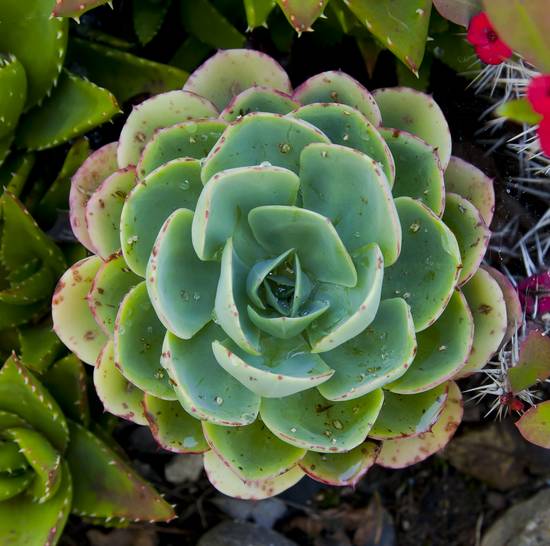
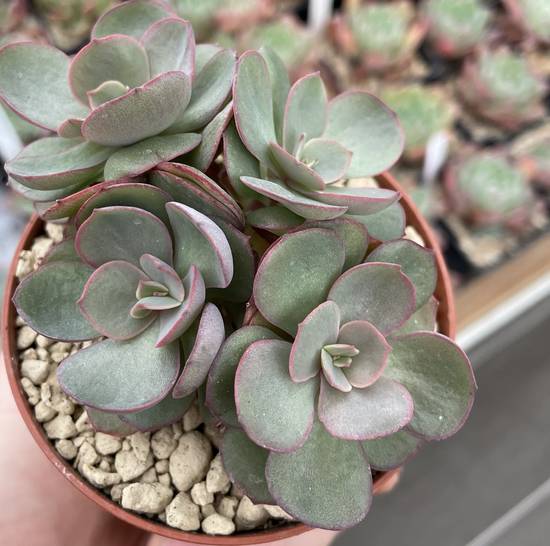
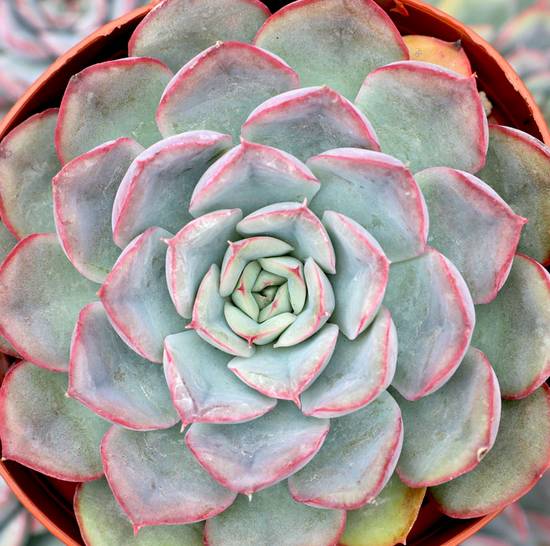
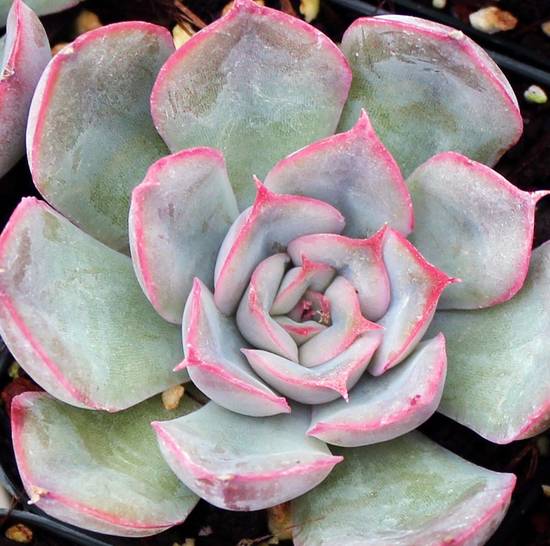
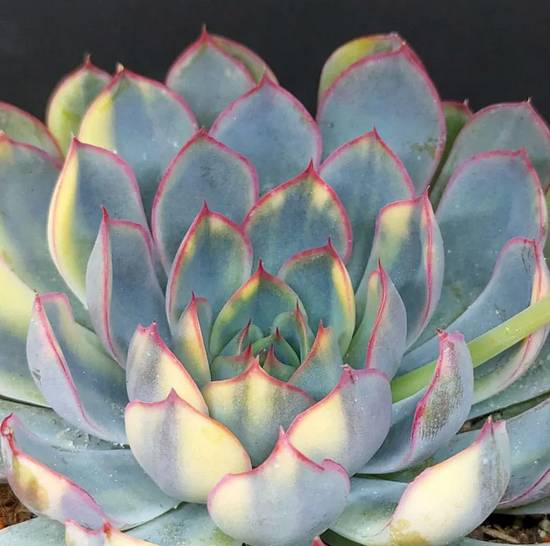
Echeveria Hercules lives up to its name: robust, structured and with a powerful aesthetic, it evokes the quiet strength of desert landscapes. This succulent forms an imposing rosette of thick leaves, in shades from light green to pale blue, often enhanced with a delicate pink edging along the margins. Its slightly powdery texture and natural symmetry make it both a graphic and decorative plant.
Its majestic appearance immediately draws the eye, even without flowering. Easy to care for, it is an excellent choice for those seeking an ornamental and resilient succulent, both indoors and outdoors. With good lighting and moderate watering, Echeveria Hercules can live for many years while maintaining its compact shape.
Echeveria Hercules is a cultivar resulting from crosses between different Echeveria species native to Mexico. It inherits their adaptability to arid environments while developing a more massive morphology and a broader habit.
In its natural inspiration environment, it would grow on rocky, sunny terrain, with cool nights enhancing the coloration of its foliage. This hardiness makes it an undemanding plant, ideal for both beginner and experienced gardeners.
In its natural inspiration environment, it would grow on rocky, sunny terrain, with cool nights enhancing the coloration of its foliage. This hardiness makes it an undemanding plant, ideal for both beginner and experienced gardeners.
This light champion needs its daily dose to stay compact and colorful.
🌞 Direct sun: Minimum 5 to 6 hours per day. Echeveria Hercules thrives best in full sun, especially outdoors.
🌤️ Summer protection: During heatwaves, slight shade can prevent sunburn, particularly on young plants.
💡 Lack of light results in a loose rosette and duller colors.
🌞 Direct sun: Minimum 5 to 6 hours per day. Echeveria Hercules thrives best in full sun, especially outdoors.
🌤️ Summer protection: During heatwaves, slight shade can prevent sunburn, particularly on young plants.
💡 Lack of light results in a loose rosette and duller colors.
It is better to forget watering than to overdo it: it hates stagnant moisture.
🌱 Growing period: Water every 10 to 15 days in summer, as soon as the substrate is completely dry.
🍂 Rest period: Greatly space out watering in winter, or stop completely if the plant is kept in a cool place.
⚠️ Always water around the base, never into the center of the rosette.
🌱 Growing period: Water every 10 to 15 days in summer, as soon as the substrate is completely dry.
🍂 Rest period: Greatly space out watering in winter, or stop completely if the plant is kept in a cool place.
⚠️ Always water around the base, never into the center of the rosette.
Strong, but not invincible: it tolerates fluctuations as long as it stays dry.
🌡️ Ideal range: Between 18°C and 26°C.
❄️ Critical threshold: Down to 5°C occasionally, but avoid wet soil in cold weather.
🏠 Indoors: Overwinter it in a bright room as soon as night temperatures drop below 10°C.
🌡️ Ideal range: Between 18°C and 26°C.
❄️ Critical threshold: Down to 5°C occasionally, but avoid wet soil in cold weather.
🏠 Indoors: Overwinter it in a bright room as soon as night temperatures drop below 10°C.
Like any good Echeveria, it needs a solid… yet well-drained base.
🪨 Ideal composition: cactus soil or succulent substrate, enriched with perlite, and pozzolana to improve drainage.
🪨 Ideal composition: cactus soil or succulent substrate, enriched with perlite, and pozzolana to improve drainage.
It is a charming bonus, but not its main asset.
🌸 Season: Generally in spring or summer.
🎨 Flowers: Small orange or coral bell-shaped blooms borne on a slender flower stalk.
🕑 Duration: From a few days to several weeks, depending on conditions.
✂️ Cut the flower stalk after blooming to encourage vegetative growth.
🌸 Season: Generally in spring or summer.
🎨 Flowers: Small orange or coral bell-shaped blooms borne on a slender flower stalk.
🕑 Duration: From a few days to several weeks, depending on conditions.
✂️ Cut the flower stalk after blooming to encourage vegetative growth.
FAQ - Echeveria Hercules
What is the growth rate of Echeveria Hercules?
Moderate: it forms a beautiful rosette in a few months while remaining compact even when mature.
Can it be planted directly in the ground?
Yes, in frost-free regions, with very well-draining soil and good exposure.
Should it be fertilized regularly?
In spring, a monthly application of cactus or succulent fertilizer stimulates growth.
How can spots on Echeveria Hercules leaves be prevented?
Avoid water on the foliage, especially in full sun. Water at the base and keep it dry.
Can it be used in a rock garden bed?
Yes, it is an excellent rock garden plant if the soil is well-drained.
Does Echeveria Hercules produce offsets?
Yes, as it ages it often forms secondary rosettes around the mother plant.
What is its drought tolerance?
Excellent: it can remain without watering for 3 to 4 weeks.
Can Echeveria Hercules be grown on an indoor windowsill?
Yes, provided it receives several hours of direct light each day.
Is Echeveria Hercules sensitive to pests?
Rarely, but watch for mealybugs and aphids in spring. A gentle rinse may be sufficient.
Can a leaf of Echeveria Hercules be propagated?
Yes, like most Echeverias, leaves can be propagated after a few days of drying.