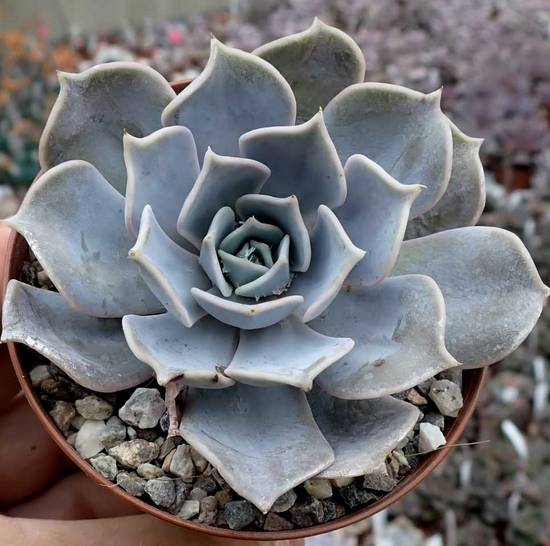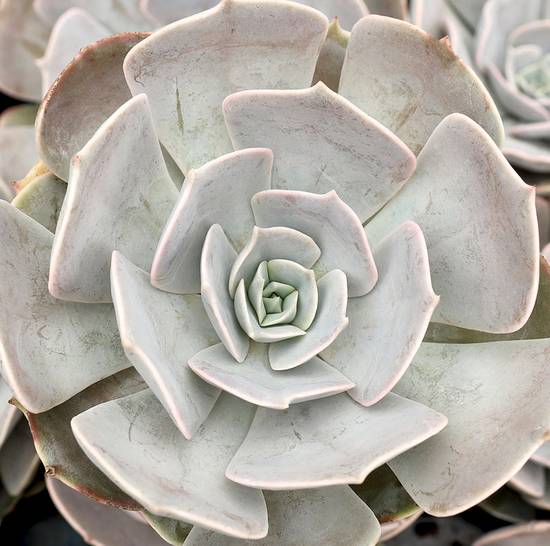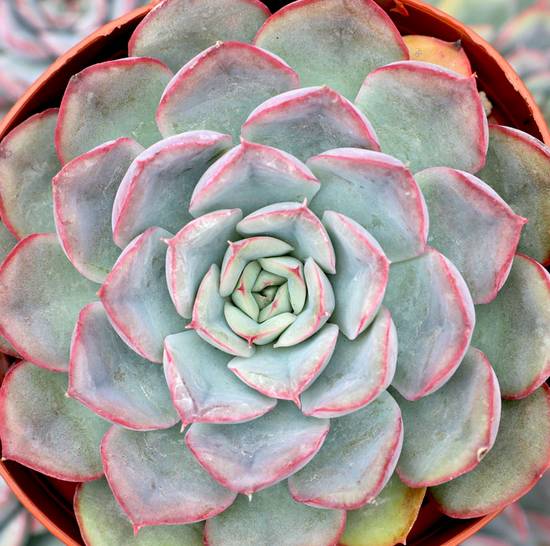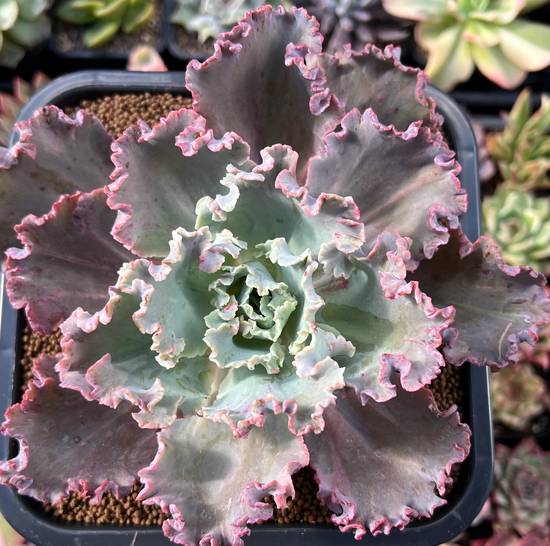
Echeveria Katella
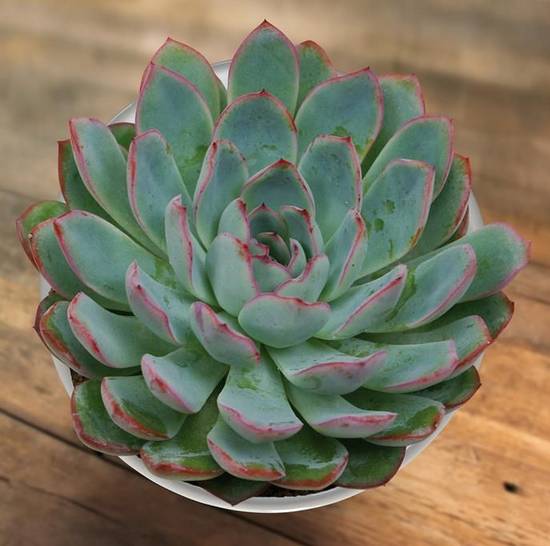
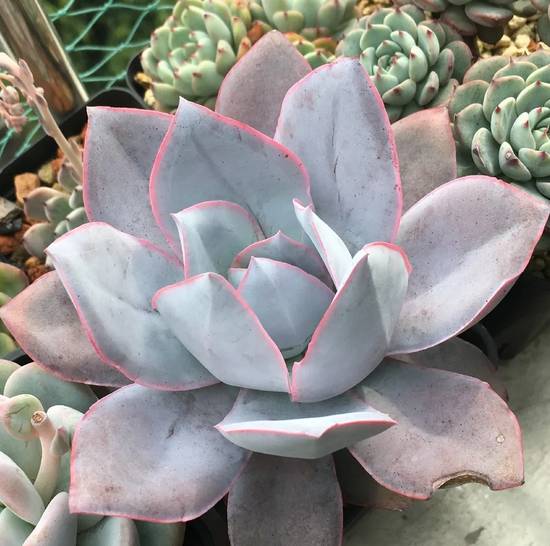
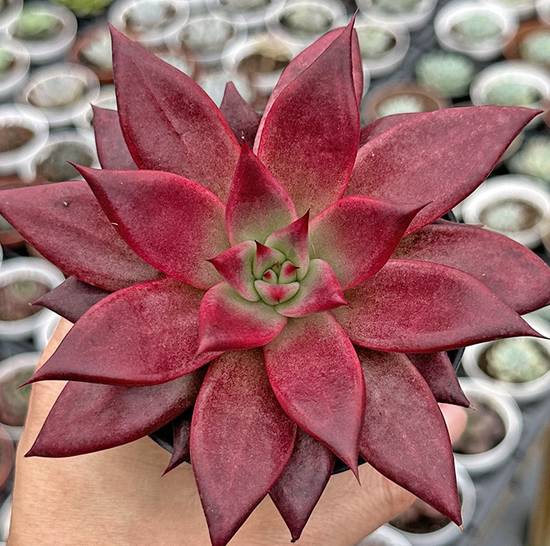
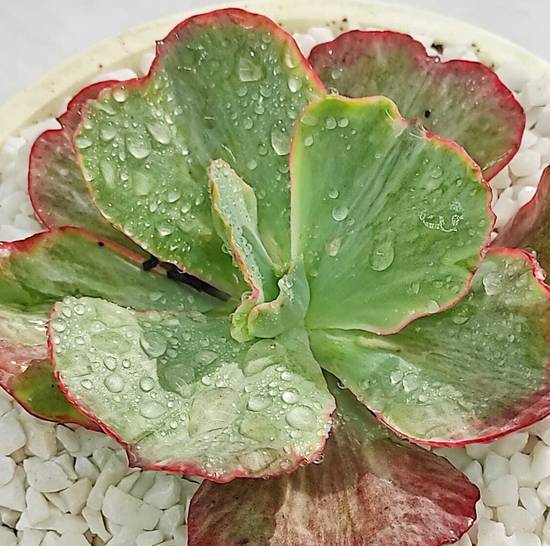
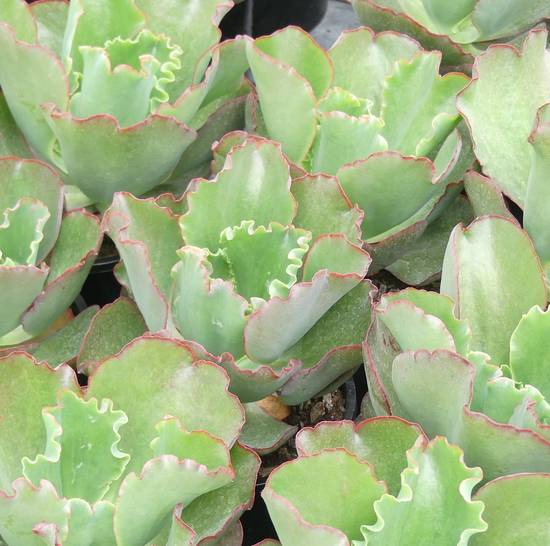
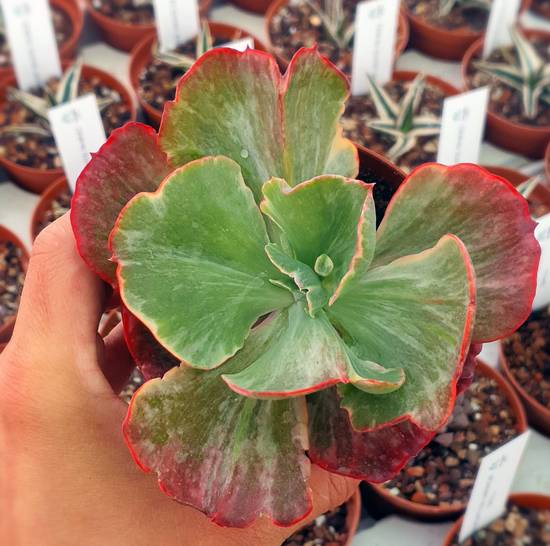
Unique and captivating, Echeveria Katella is a true gem for succulent enthusiasts. This fascinating cultivar stands out with its compact growth habit and shifting colors, ranging from blue-gray to pastel pink with violet reflections that evolve depending on light and seasons.
Its dense, perfectly shaped rosette can reach up to 20 cm in diameter. The thick, spatula-shaped leaves are coated with a fine protective bloom that gives them an elegant powdery appearance. When exposed to sunlight, Echeveria Katella reveals subtle lilac tones, making it a favorite for graphic compositions and modern arrangements.
Easy to cultivate and highly ornamental, this cultivar combines resilience and grace, thriving both outdoors and in bright indoor settings.
Echeveria Katella is a horticultural cultivar resulting from crosses between different species of the Echeveria genus, likely including Echeveria Lilacina and Echeveria Derenbergii. It does not exist in the wild and was selected for its delicate beauty and resilience.
Good light is key to maintaining its compact shape and enhancing its finest colors.
☀️ Outdoors: Gentle full sun or bright partial shade, especially in hot climates.
🌤️ Indoors: Place near a well-exposed south- or west-facing window.
🔁 Tip: Rotate the pot regularly for a symmetrical rosette.
☀️ Outdoors: Gentle full sun or bright partial shade, especially in hot climates.
🌤️ Indoors: Place near a well-exposed south- or west-facing window.
🔁 Tip: Rotate the pot regularly for a symmetrical rosette.
Like any good succulent, Echeveria Katella prefers dry conditions over moisture.
🌱 Growing season: Water every 10–15 days when soil is thoroughly dry.
🍂 Dormant season: Reduce significantly (once per month or less).
⚠️ Warning: Avoid water stagnation in the rosette.
🌱 Growing season: Water every 10–15 days when soil is thoroughly dry.
🍂 Dormant season: Reduce significantly (once per month or less).
⚠️ Warning: Avoid water stagnation in the rosette.
Echeveria Katella thrives in mild climates but tolerates brief cool periods.
🌡️ Ideal: 18–26 °C
❄️ Minimum: 4 °C (dry conditions)
🏠 Winter tip: Bring indoors below 8 °C into a bright, unheated room.
🌡️ Ideal: 18–26 °C
❄️ Minimum: 4 °C (dry conditions)
🏠 Winter tip: Bring indoors below 8 °C into a bright, unheated room.
🪨 Recommended mix: 50% cactus soil + 25% perlite + 25% pumice for optimal drainage.
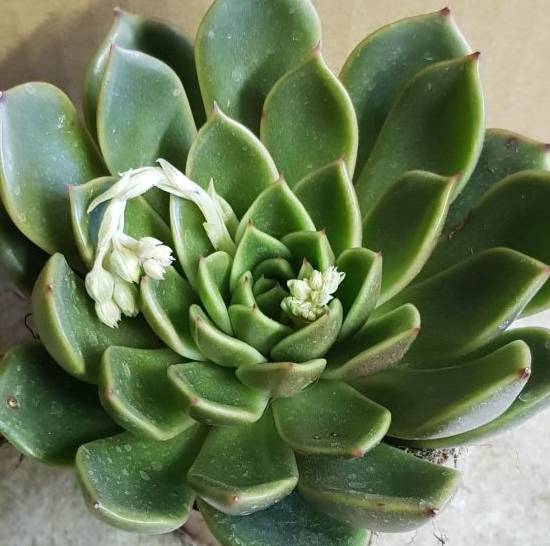
Discreet yet poetic, its bloom adds delicate charm to the foliage.
📅 Period: Spring to early summer
🌺 Flowers: Small orange or coral bells on fine, arching stalks
🐝 Pollination: Occasionally attracts bees and pollinators.
📅 Period: Spring to early summer
🌺 Flowers: Small orange or coral bells on fine, arching stalks
🐝 Pollination: Occasionally attracts bees and pollinators.
FAQ - Echeveria Katella
Is Echeveria Katella suitable for indoor growing?
Yes, provided it is placed in a very bright room near a well-exposed window.
What substrate should be used for Echeveria Katella?
A mix of cactus soil, perlite, and pumice works very well.
Is Echeveria Katella sensitive to cold?
Yes, it does not tolerate frost. Below 5 °C, bring it indoors away from cold and moisture.
When should Echeveria Katella be watered?
Only when the substrate is completely dry. On average: every 10 to 15 days in summer, once per month in winter.
How can flowering be encouraged?
Provide good sunlight, a dry winter rest period, and a light succulent fertilizer in spring.
How can Echeveria Katella be propagated?
By offsets (when available) or by cuttings from healthy, fleshy leaves.
Can it be grown in a pot on a balcony?
Yes, perfectly. It appreciates sheltered and bright locations.
What should I do if the leaves become soft?
This is often due to excess moisture: stop watering until the substrate is completely dry.
Is it a toxic plant?
No, Echeveria Katella is not toxic to pets.
Can it be planted in the ground?
Yes, but only in frost-free areas and with very well-draining soil.