Echeveria Raindrops

Echeveria Raindrops
Echeveria Raindrops
Echeveria Raindrops

Echeveria Raindrops

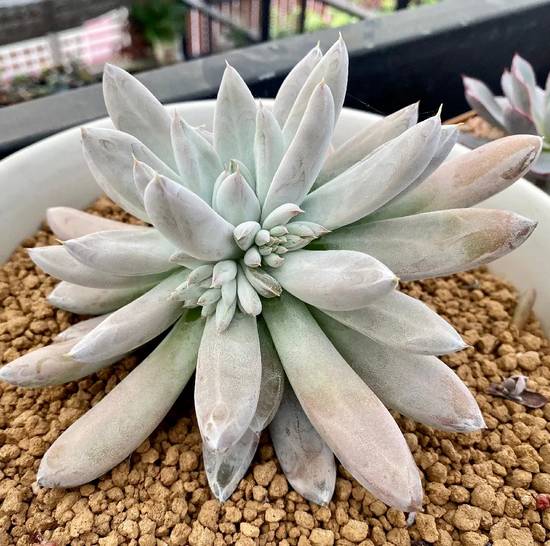
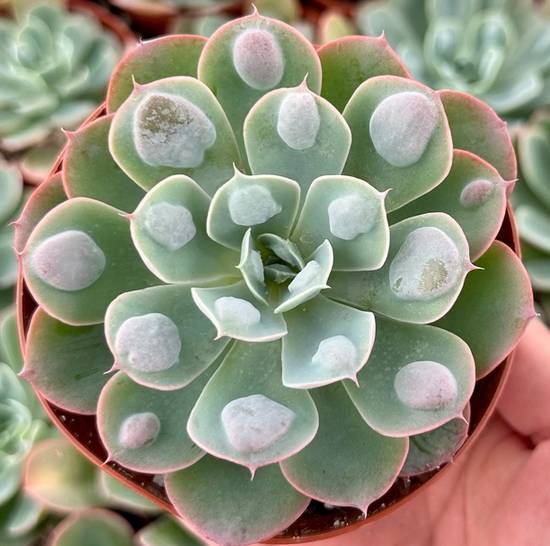
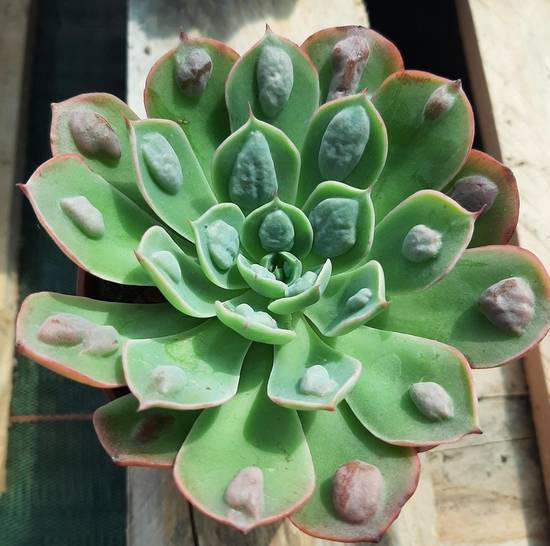
It is hard to overlook Echeveria Raindrops when searching for a succulent as unique as it is intriguing. This cultivar stands out thanks to an extraordinary feature: globular bumps called "raindrops" at the center of its leaves, which give it its evocative name.

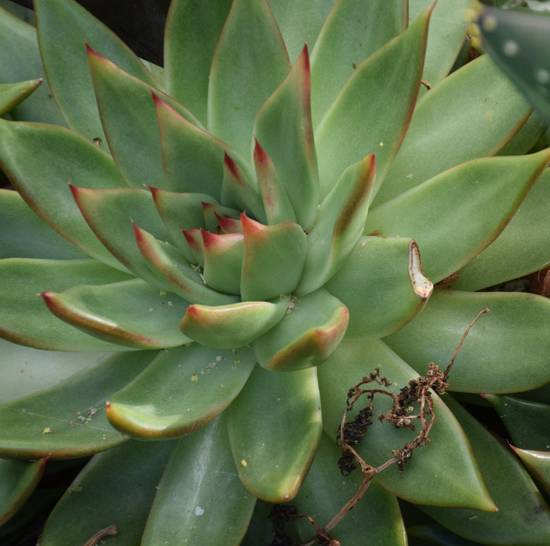
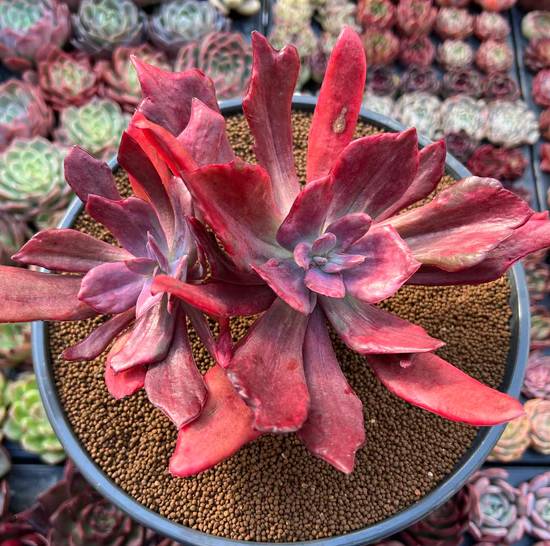
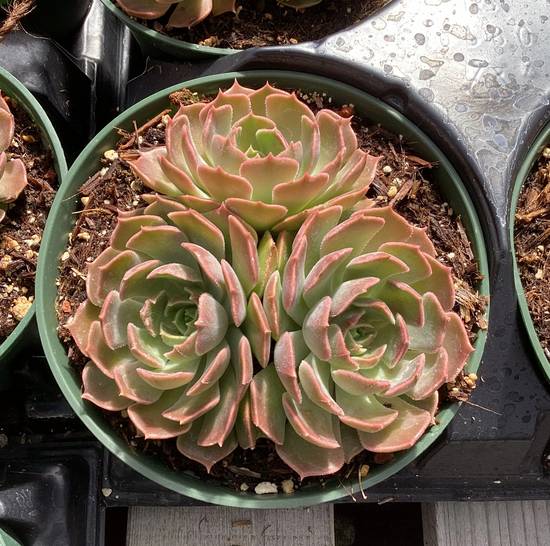
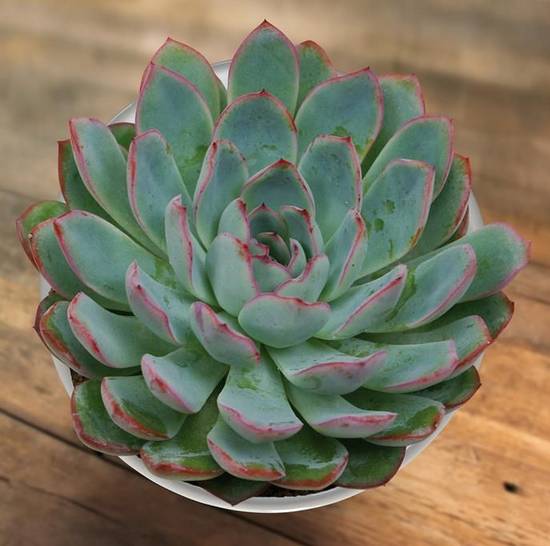
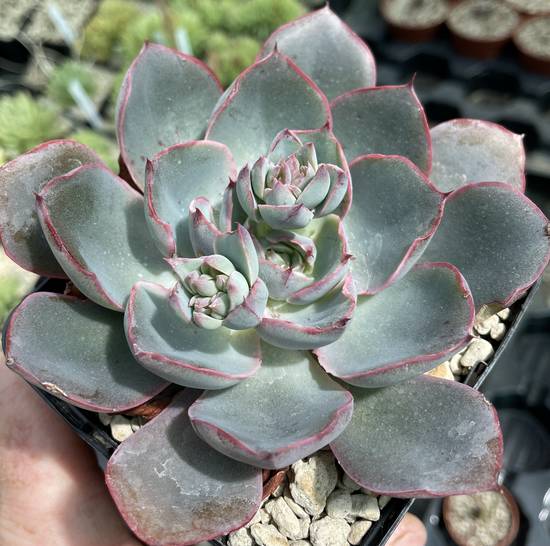
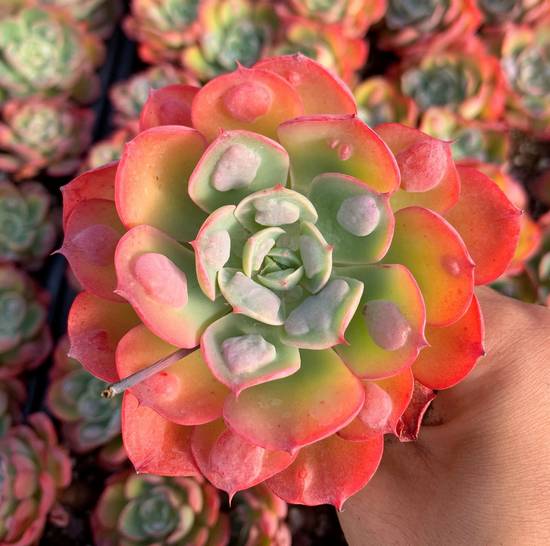
The foliage of Echeveria Raindrops is fleshy, often blue-green to turquoise, with slightly undulated edges. The famous "drops" — rounded protrusions in the center of each leaf — give this plant a fascinating three-dimensional appearance, highly sought after by collectors. When exposed to sunlight, the leaves often blush red, adding spectacular contrast.

This fairly compact cultivar forms medium-sized rosettes (10 to 20 cm in diameter) but always with a striking appearance. Uncommon in regular garden centers, Echeveria Raindrops remains a rare gem in the succulent world.

Echeveria Raindrops is a cultivar obtained from crosses involving Echeveria Gibbiflora. Although it does not grow in the wild, it derives its exceptional characteristics from its Mexican ancestors.

It is selected for its natural mutation forming growths called "caruncles," which become even more pronounced when the plant receives strong sunlight and slight stress.
Echeveria Raindrops loves sunlight, which plays a crucial role in the intensity of its colors and caruncles.

☀️ Outdoors: Direct sun at least 4–6 hours per day. East or south exposure preferred.

🏠 Indoors: Near a bright window; supplemental grow light may help.

⚠️ Insufficient light = loss of "drops" and faded foliage.
A fleshy plant like this requires precise watering without excess.

🌱 Spring / Summer: Every 10–15 days when soil is thoroughly dry.

🍂 Autumn / Winter: Greatly reduced watering (once per month at most).

💦 Advice: Never allow water to stagnate in the rosette.
Like many Echeverias, Raindrops dislikes cold and humidity.

🌡️ Ideal: 18–25 °C

❄️ Minimum: 5 °C if perfectly dry

🏠 Winter: Keep indoors in a bright, cool room.
🪨 Recommended mix: 50% cactus soil + 25% perlite + 25% pumice for optimal drainage.
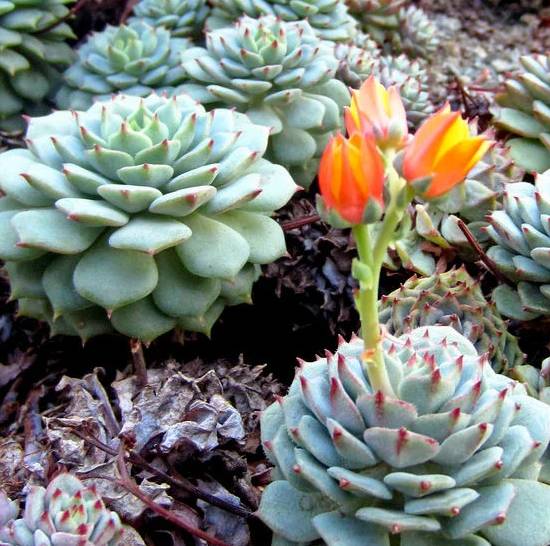
The flowering of Echeveria Raindrops is discreet but attractive, with stalks emerging in summer.

📅 Period: Summer

🌺 Flowers: Small bell-shaped blooms in pink-orange tones

🌿 Tip: Remove the stalk after flowering to promote rosette growth.
FAQ - Echeveria Raindrops

How can I enhance the raindrop effect on Echeveria Raindrops?
Expose it to direct sunlight and slightly reduce watering to enhance light stress.
What substrate should be used for Echeveria Raindrops?
A very well-draining mix with cactus soil, perlite, and pumice.
Can Echeveria Raindrops be propagated?
Yes, by leaf cuttings or offsets when available.
What is the size of a mature Echeveria Raindrops?
Up to 20 cm in rosette diameter, depending on growing conditions.
Can Echeveria Raindrops be grown indoors?
Yes, provided it receives abundant light.
How can I maintain the red colors of Echeveria Raindrops?
Good sun exposure and moderate stress help enhance the red coloration.
Is Echeveria Raindrops hardy?
No, protect it when temperatures drop below 8 °C.
What fertilizer should be used for Echeveria Raindrops?
A cactus fertilizer such as Or Brun Cactus every 4 to 6 weeks during the growing season.
Why do the raindrops sometimes disappear?
Lack of light, overwatering, or excess nitrogen can reduce this feature.
Does Echeveria Raindrops grow quickly?
Its growth is rather slow but steady under optimal conditions.