Echeveria Apus
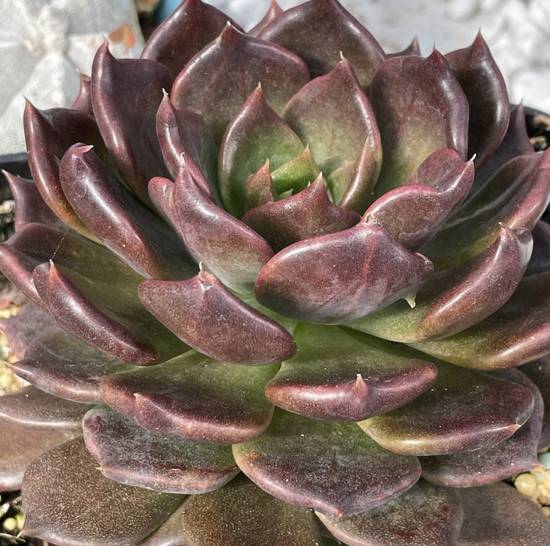
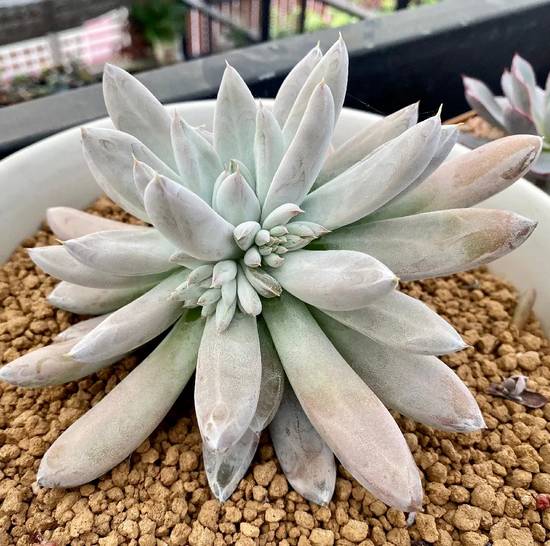
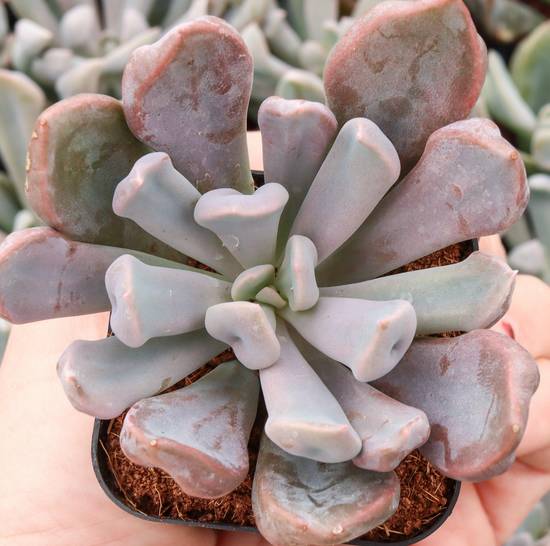
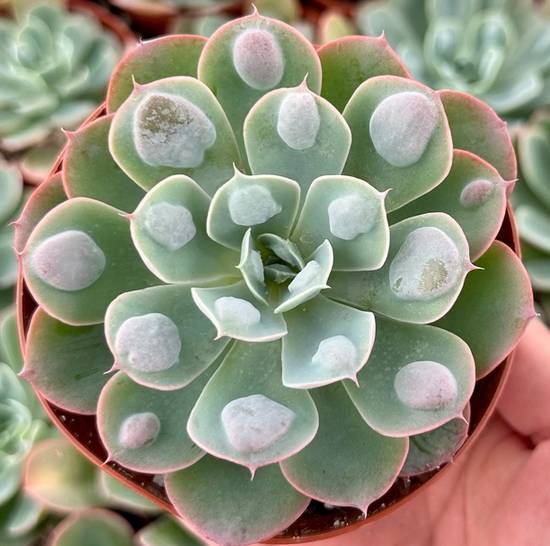
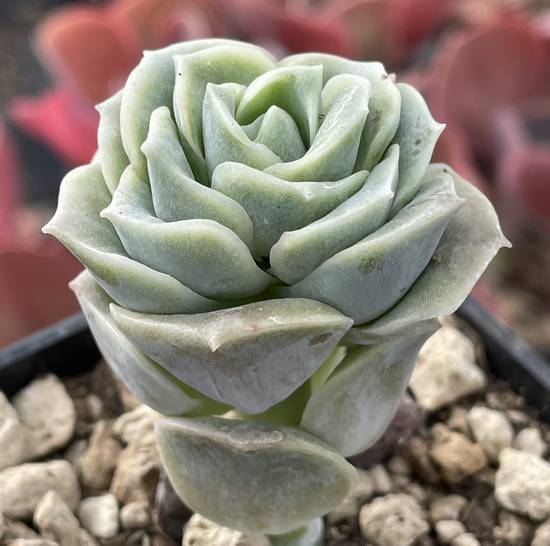
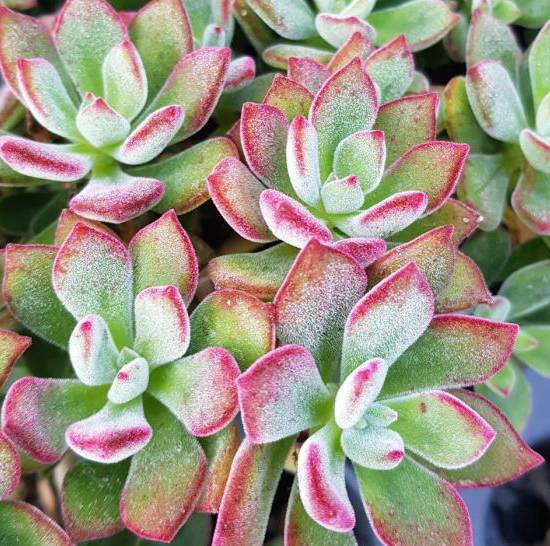
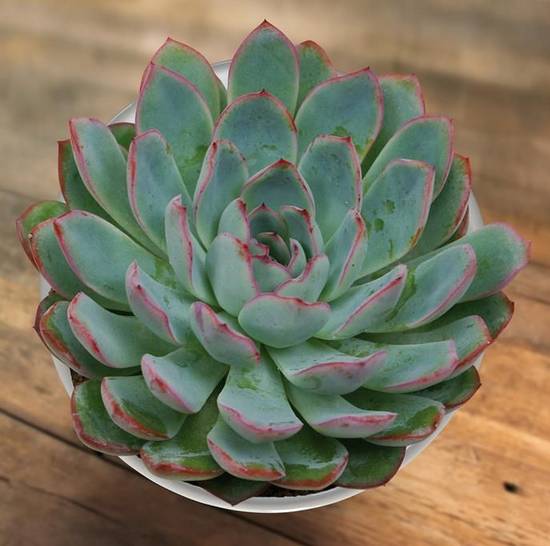
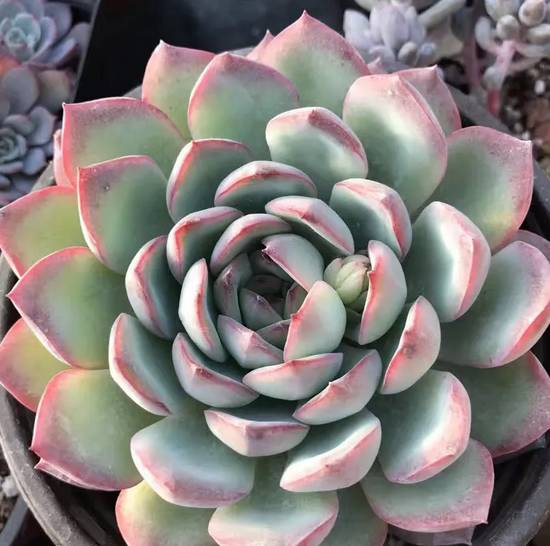
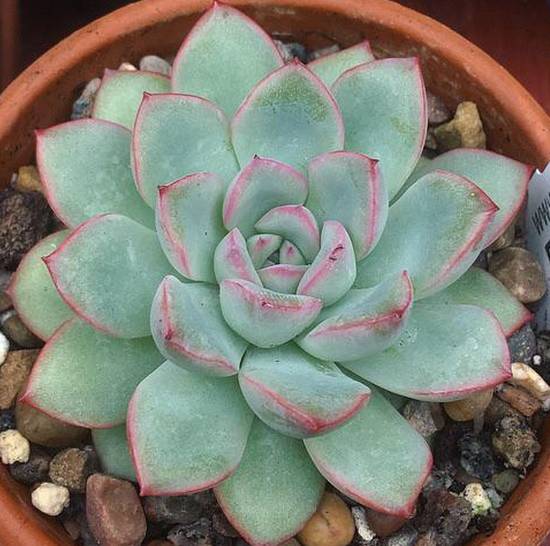
Graphic, bright and incredibly harmonious, Echeveria Apus is a little gem for succulent lovers. With its pastel colors and perfectly symmetrical shape, it immediately catches the eye. This variety is particularly appreciated for its subtle shades of powder pink, lavender and soft green, which vary depending on light and the seasons.
Its compact rosette, generally 10 to 15 cm in diameter, is formed of thick, fleshy leaves, slightly curved upward, covered with a fine farina that enhances its soft and velvety appearance. This cultivar is the result of a horticultural cross between two Echeveria with strong aesthetic qualities, which explains its very balanced look.
Echeveria Apus is a horticultural creation, not found in the wild. It nevertheless inherits the characteristics of its Mexican parents, notably the ability to store water in its leaves and withstand periods of drought.
Like many Echeveria hybrids, it is grown mainly for ornamental purposes indoors or in pots outdoors in regions with mild climates.
Like many Echeveria hybrids, it is grown mainly for ornamental purposes indoors or in pots outdoors in regions with mild climates.
To express its full decorative potential, Echeveria Apus needs a good amount of light.
☀️ Bright light: Ideally 4 to 6 hours of gentle sun per day. Morning sun is perfect.
🏠 Indoors: Place it near a south- or west-facing window.
🌈 Bonus: The more intense the light, the more vibrant its colors become.
☀️ Bright light: Ideally 4 to 6 hours of gentle sun per day. Morning sun is perfect.
🏠 Indoors: Place it near a south- or west-facing window.
🌈 Bonus: The more intense the light, the more vibrant its colors become.
Good watering, spaced but regular, is essential to maintain a compact rosette.
🌱 Spring / Summer: Water every 2 to 3 weeks, when the substrate is completely dry.
❄️ Autumn / Winter: Greatly reduce watering, or even stop if the plant is kept cool.
⚠️ Warning: Never allow water to stagnate in the rosette.
🌱 Spring / Summer: Water every 2 to 3 weeks, when the substrate is completely dry.
❄️ Autumn / Winter: Greatly reduce watering, or even stop if the plant is kept cool.
⚠️ Warning: Never allow water to stagnate in the rosette.
Echeveria Apus is moderately sensitive to cold.
🌡️ Ideal: Between 18 and 25°C
❄️ Minimum: 5°C occasionally when kept dry
🏠 Winter tip: Place it in a cool, bright room starting in October.
🌡️ Ideal: Between 18 and 25°C
❄️ Minimum: 5°C occasionally when kept dry
🏠 Winter tip: Place it in a cool, bright room starting in October.
Perfect drainage is essential for the health of Echeveria Apus.
🪨 Optimal substrate recipe: 50% special cactus soil + 25% perlite + 25% pozzolana
🪨 Optimal substrate recipe: 50% special cactus soil + 25% perlite + 25% pozzolana
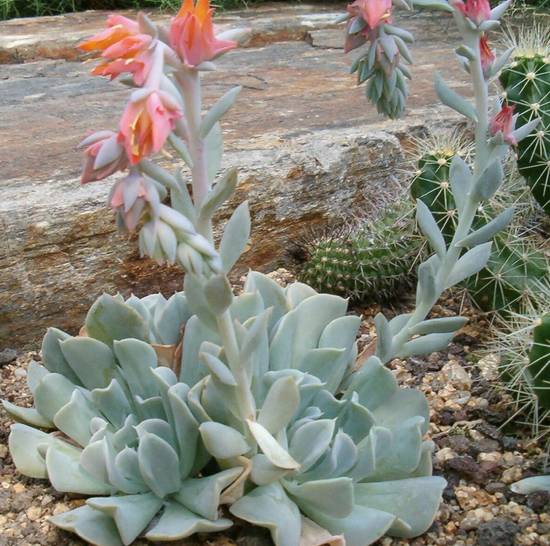
Although it is mainly admired for its leaves, Echeveria Apus can also offer a lovely bloom.
📅 Period: In spring or summer
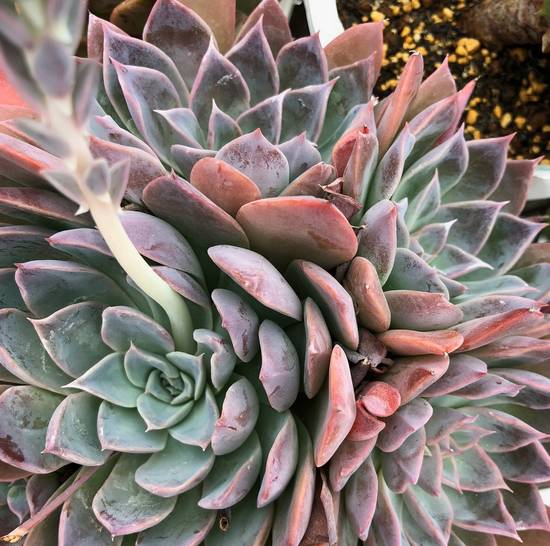
🌺 Flowers: Small pink-orange bell-shaped flowers borne on a slender flower stalk
✂️ Advice: Cut faded stalks to encourage rosette growth.
📅 Period: In spring or summer
🌺 Flowers: Small pink-orange bell-shaped flowers borne on a slender flower stalk
✂️ Advice: Cut faded stalks to encourage rosette growth.
FAQ - Echeveria Apus
How should Echeveria Apus be exposed to light?
Place it in gentle sun or bright light to intensify its colors.
How often should Echeveria Apus be watered?
Every 2 to 3 weeks in summer, very little in winter.
What is the best substrate for Echeveria Apus?
A mix of cactus soil, perlite, and pumice.
Can Echeveria Apus be grown indoors?
Yes, if it benefits from a bright location and controlled watering.
How can Echeveria Apus be propagated?
By leaf cuttings or offsets if it produces any.
What is the hardiness of Echeveria Apus?
It can briefly tolerate 5 °C but must be protected from frost and humidity.
Why are the leaves of my Echeveria Apus becoming soft?
Often due to overwatering or lack of light.
What fertilizer should be used for Echeveria Apus?
A gentle fertilizer such as Or Brun Cactus or Undergreen Jungle Fever.
When should I repot my Echeveria Apus?
Every 1 to 2 years in spring, or when the rosette becomes too large for the pot.
Can Echeveria Apus be grown outdoors?
Yes, in a well-drained pot in partial shade, except in winter in cold regions.