Echeveria Etna

Echeveria Etna
Echeveria Etna
Echeveria Etna

Echeveria Etna

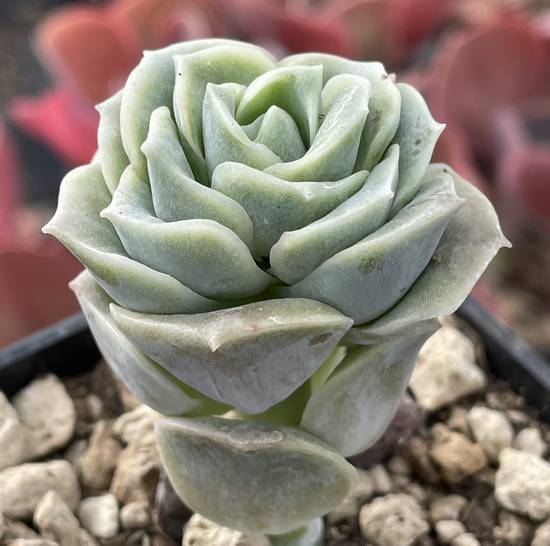
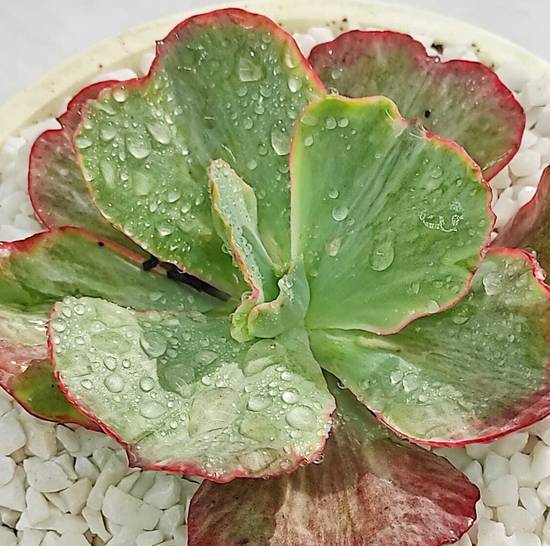
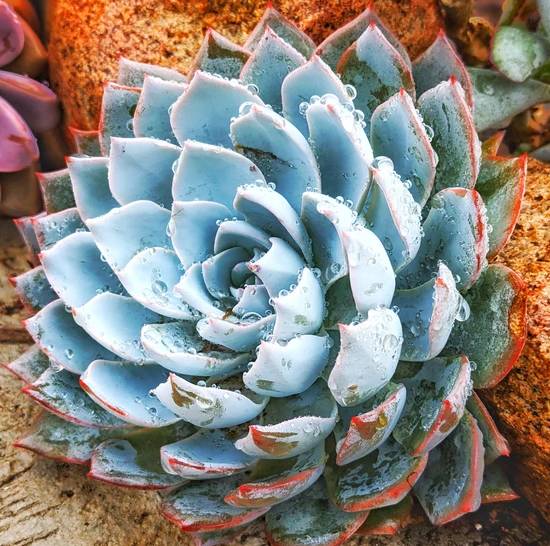
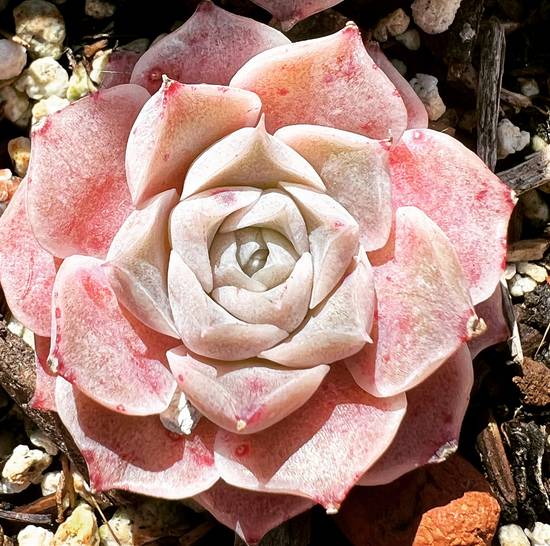
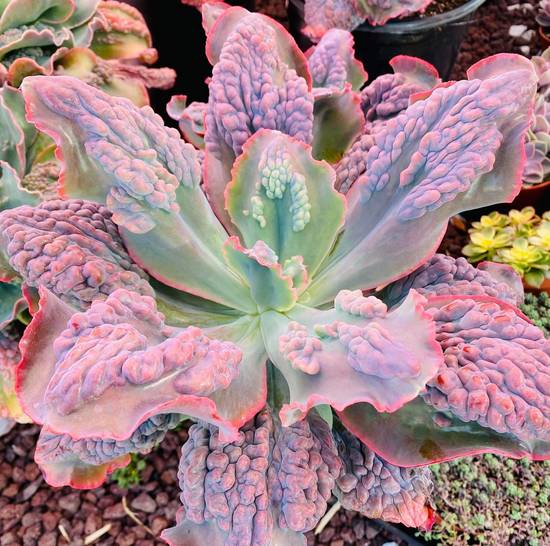
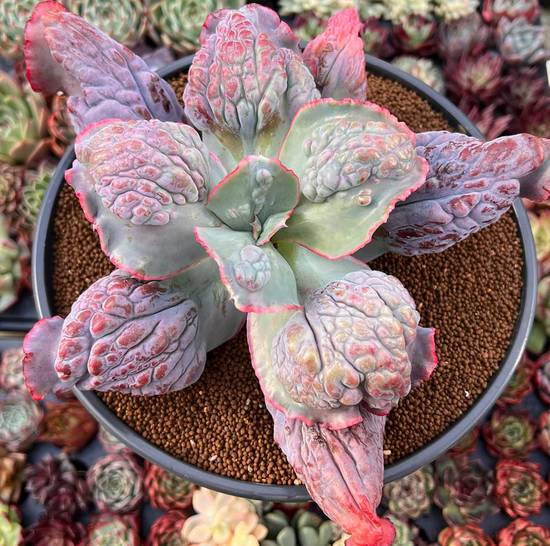
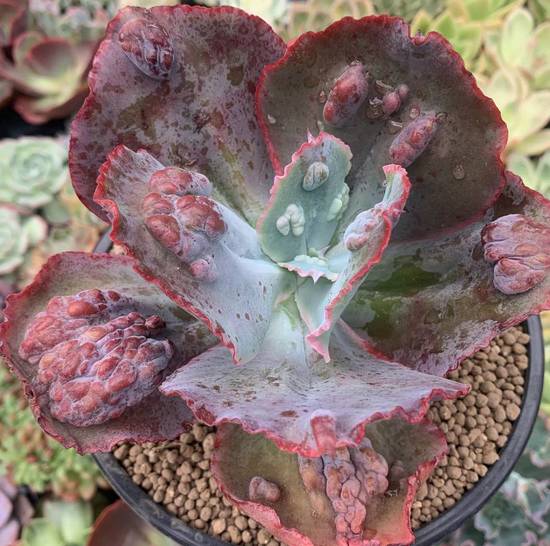
Spectacular and unmistakable, Echeveria Etna is a succulent that makes a statement in any collection. This rare cultivar, resulting from a cross between Echeveria Gibbiflora and Echeveria Shaviana, is immediately recognizable thanks to its fleshy, wavy leaves covered with wart-like protuberances, giving it an almost volcanic appearance – hence its evocative name.

Its large rosettes can reach up to 30 cm in diameter. The leaves range from dark violet to bluish purple, often coated with a light powdery bloom that softens their texture. When well exposed, it develops deeper tones from burgundy to steel gray, with shifting reflections depending on the light.

Echeveria Etna is a living work of art: each specimen is unique, with its own shapes and textures, making it a centerpiece in a succulent garden or potted collection.

This cultivar is of horticultural origin and does not occur in the wild. It was developed for its exceptional aesthetic qualities by combining the wavy characteristics of Echeveria Shaviana with the robust structure of Echeveria Gibbiflora. Its unique appearance has earned it a special place among the most sought-after Echeverias.
To reveal its full beauty, light is essential.

☀️ Outdoors: Loves morning sun or filtered light during the day. Full sun can be tolerated if introduced gradually.

🌤️ Indoors: A well-exposed south- or west-facing window is ideal.

💡 Tip: Good light enhances its colors and keeps leaves compact.
Like all Echeverias, it dislikes excess water, especially around its thick leaves.

🌱 Growing season: Water only when soil is dry. Every 10–15 days is sufficient.

🍂 Winter: Reduce drastically. In cool conditions, no watering may be needed for weeks.

⚠️ Warning: Avoid wetting the rosette; bottom watering is preferable.
Sensitive to cold but tolerates dry heat well.

🌡️ Ideal: 18–28 °C

❄️ Minimum: 5 °C. Bring indoors below 8 °C at night.

🏠 Overwintering: Cool, bright, ventilated room to encourage dormancy.
🪨 Ideal mix: 50% cactus soil + 25% perlite + 25% pumice for excellent drainage.
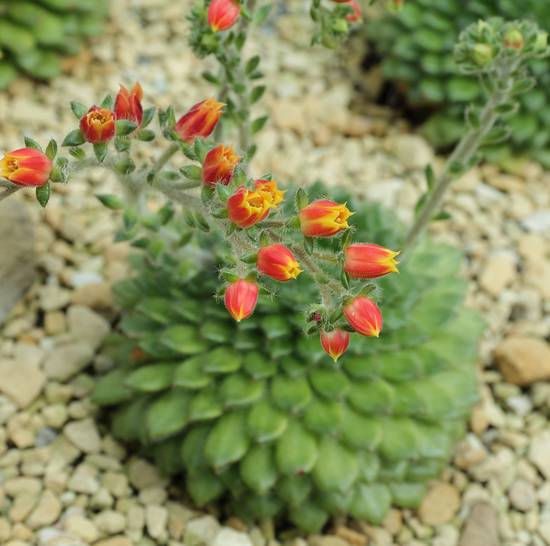
Though secondary to its foliage, its bloom adds welcome color.

📆 Period: Late spring to early summer

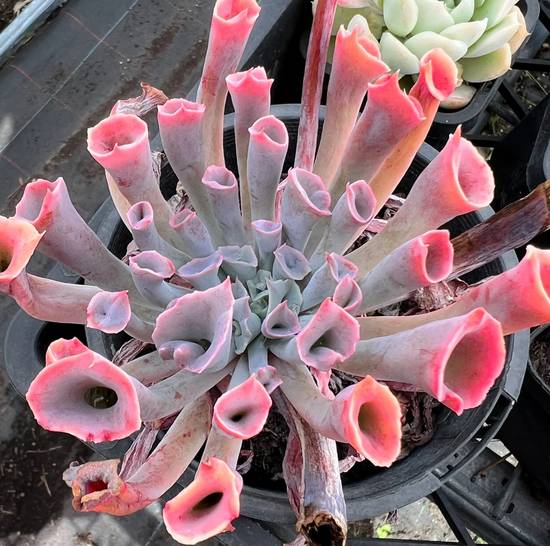
🌺 Flowers: Orange-pink bells on long flower stalks

🐝 Pollinators: Attracts bees and beneficial insects.
FAQ - Echeveria Etna

Can Echeveria Etna be grown indoors?
Yes, provided it receives strong light, such as in front of a well-exposed window.
What type of soil should be used for Echeveria Etna?
A mix of cactus soil, perlite, and pumice works perfectly.
Is Echeveria Etna hardy?
No, it does not tolerate frost and must be protected when temperatures drop.
How can the rosette shape be maintained?
Ensure bright exposure and rotate the pot regularly to prevent stretching.
Can Echeveria Etna be propagated?
Yes, but as it is often grafted, recovery may be slower.
How can the leaf color be enhanced?
Moderate light stress (more sun and less water) enhances purple tones.
What is the ideal watering frequency?
Every 10 to 15 days in summer, much less in winter. Always wait until the soil is dry.
Does Echeveria Etna bloom easily?
Yes, especially if mature, well exposed, and given slight winter stress.
What fertilizer should be used?
A diluted liquid cactus fertilizer once per month during the growing season.
Is Echeveria Etna toxic?
No, it is considered non-toxic to pets.