Echeveria Purple Star
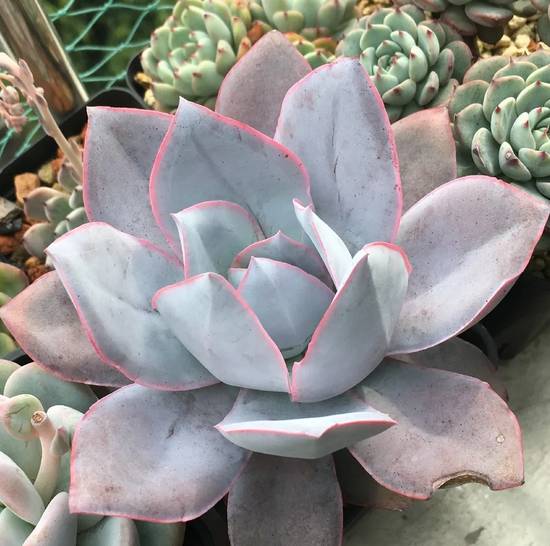
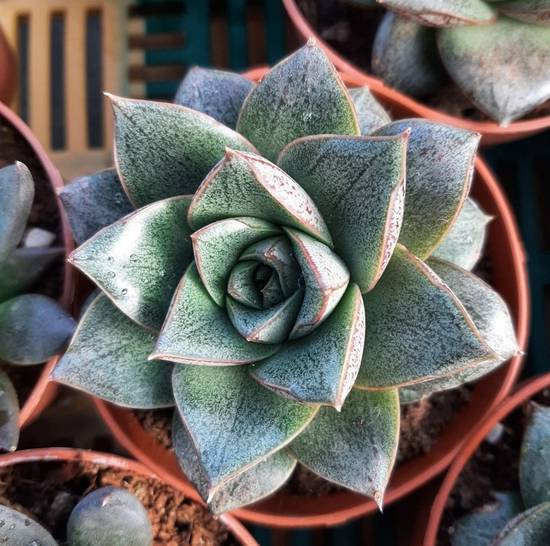
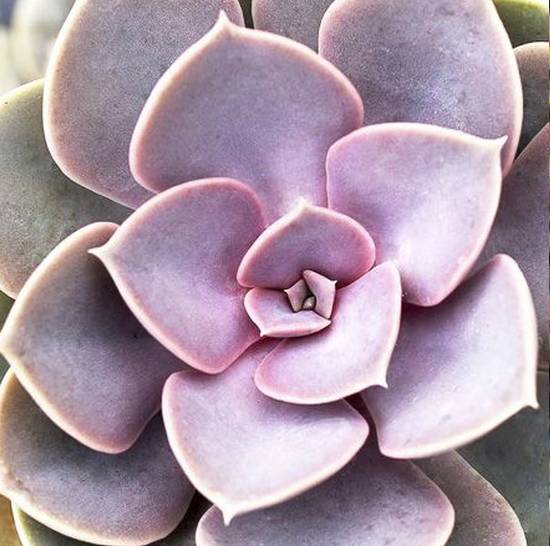
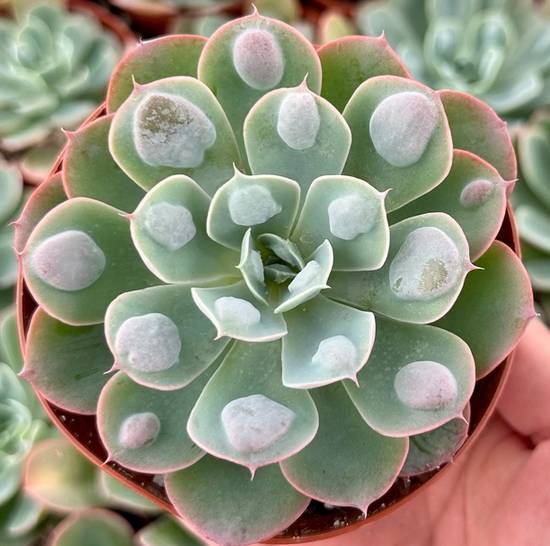
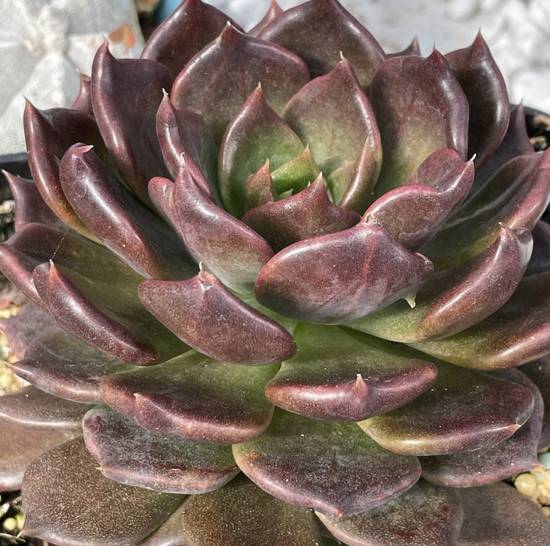
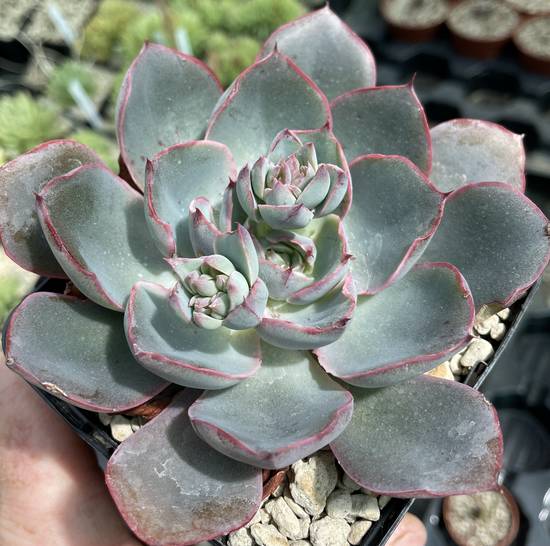
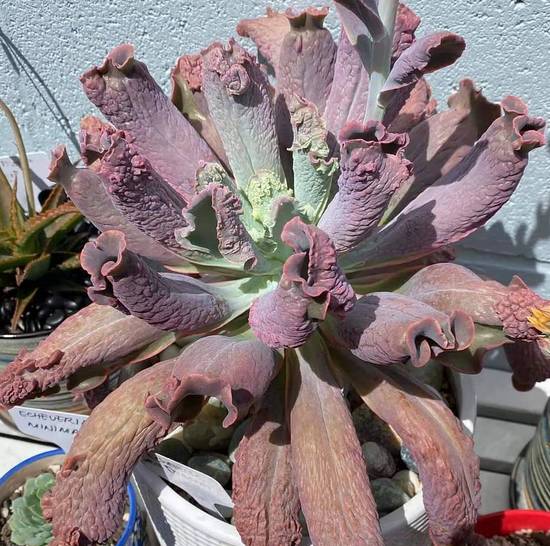
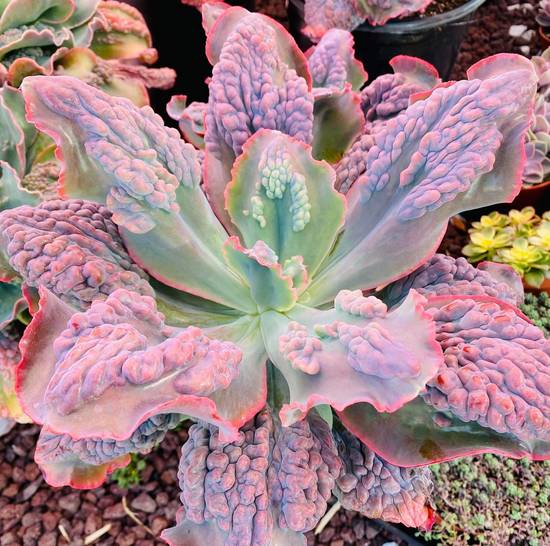
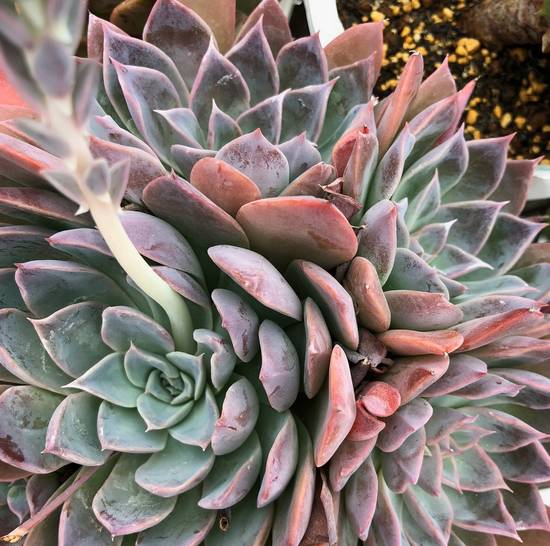
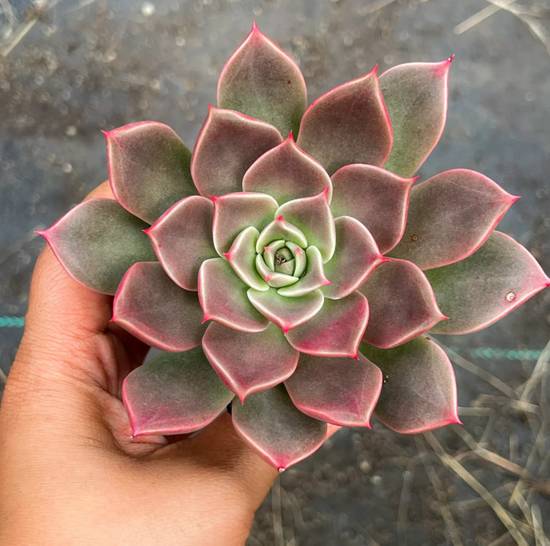
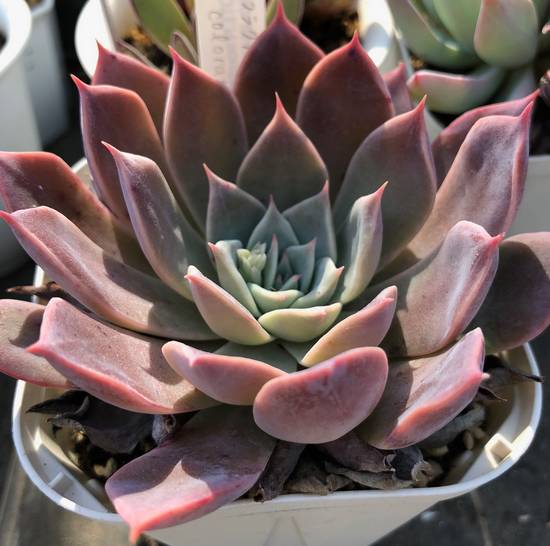
With its deep purple tones and star-shaped silhouette, Echeveria Purple Star is a true star among succulents. Its compact, perfectly shaped rosette offers a gradient of colors ranging from plum to dark purple, sometimes enhanced with a metallic sheen in direct light. Elegant, mysterious and sculptural, it draws every eye.
Each thick, pointed leaf seems carefully chiseled. Covered with a fine farina, they create a subtle contrast between matte and shine. Echeveria Purple Star is ideal for minimalist arrangements or more exotic displays. It remains compact throughout its life, making it perfect for small containers or open terrariums.
A horticultural hybrid resulting from meticulous crosses, this variety combines resilience, aesthetics and ease of cultivation. A collector’s plant equally suited to beginners and enthusiasts.
In its environment of origin, well-drained soil, cool nights and generous sun strengthen its pigments and compact shape.
🌞 Ideal exposure: Bright light, direct sun 4 to 6 hours per day to intensify purple pigments.
🌤️ Summer protection: If the sun is very strong (south or west exposure), provide slight shade during the hottest hours.
⚠️ Too little light leads to color loss and unattractive stretching.
🌱 Spring / Summer: Water moderately every 12 to 15 days, only when the substrate is dry deep down.
🍂 Autumn / Winter: Reduce significantly. Once or twice during the season is enough if the plant is kept cool.
💦 Never water the center of the rosette to avoid rot.
🌡️ Ideal: Between 20 and 28°C during the growing period.
❄️ Minimum threshold: 5°C occasionally, provided the substrate is completely dry.
🏠 Winter advice: Overwinter in bright light, in a room between 10 and 15°C, protected from humidity.
🪨 Recommended mix: cactus soil or special succulent substrate enriched with perlite for drainage and pozzolana to prevent compaction
🌸 Period: Spring or early summer.
🎨 Appearance: Red flower stalks bearing small orange bell-shaped blooms.
🕑 Duration: About 2 to 3 weeks.
✂️ Cut the flower stalk after blooming to concentrate energy on the rosette.